
Gas fireplace heat that's ready before the next cold front rolls in.
From Canton to Wills Point, Grand Saline, Van, Edom, and Ben Wheeler, Van Zandt County winters are mostly mild—until an Arctic front drops temperatures overnight. Find the right gas fireplace and connect with a trusted local dealer who can get it installed right.
Every Project Starts From One of These Five Situations
Short winters, sudden freezes, and a flame that never needs tending.
Van Zandt County sits in the Piney Woods-to-Blackland Prairie transition of East Texas, and its climate reflects it: a mild, short winter heating season and an average winter low around 35°F. That's a fraction of the winter heating load a true cold-climate town like Fargo, ND sees, which is exactly why most homes here don't need a wood stove running around the clock. What the county does see, occasionally and without much warning, is a hard Arctic front—the kind that dropped temperatures well below freezing during Winter Storm Uri in February 2021 and knocked out power across much of the ERCOT grid for days. That combination—mild average winters punctuated by real cold snaps and real grid risk—is the exact scenario a gas fireplace is built for.
Natural gas service through Atmos Energy reaches homes inside incorporated towns like Canton and Wills Point, but a lot of Van Zandt County is unincorporated, and propane from local suppliers is the standard fuel source out in the county. One quirk worth knowing: Van Zandt County itself, like most rural Texas counties, doesn't enforce a general residential building code outside of floodplain rules, so permitting for a new gas fireplace typically runs through the city—Canton, Wills Point, Grand Saline, or Van—if you're inside city limits. A trusted local dealer will know exactly which office to call and will pull whatever permit actually applies to your address.
Three steps. No salesperson until you're ready.
Tell us about your project
Your zip code, your situation, and the fuel you're leaning toward—or let the answers point you to one.
See what's actually available
The brands dealers within 100 miles genuinely carry—real options, never a catalog mirage.
Get your dealer & Project Guide
A trusted local dealer, plus the free Project Guide & Parts List that names every component of the job.
Frequently Asked Questions
How much does a gas fireplace installation cost in Van Zandt County?
Most gas fireplace and insert installations in this part of East Texas run somewhere between $3,800 and $9,500, depending on the unit, whether you're converting an existing masonry fireplace or building new, and whether a propane tank or new gas line has to be added. A direct-vent insert going into an existing wood firebox with propane already on site tends to land on the lower end. New construction, a from-scratch gas line run, or a fresh propane tank installation for a rural property outside Canton or Wills Point pushes toward the higher end. A local dealer will give you a firm number after seeing the home in person.
Can I convert my existing wood fireplace to gas?
Yes, and it's a common project in this county, where plenty of older homes were built with a wood-burning masonry fireplace that's been running on locally cut oak, pecan, or mesquite for years. A gas insert typically slides into that existing firebox and vents through the same chimney with a stainless liner, which keeps the cost down and preserves the look of the original hearth. If the home already has propane or is on Atmos Energy natural gas, the conversion is usually straightforward; if not, your dealer will scope out a propane tank or gas line as part of the project.
Do I need natural gas, or can I use propane?
Either works, and which one you use mostly comes down to where in the county you live. Atmos Energy serves natural gas inside Canton and Wills Point city limits, so homes there can often tie straight into an existing line. Outside those towns—which is most of Van Zandt County—propane from a local supplier is the standard setup, either from an existing tank or a new one installed alongside the fireplace. Nearly every gas fireplace on the market can be configured for either fuel; your installer just sets the correct orifice and regulator for what you've got.
Will my gas fireplace work during a power outage?
Most modern gas fireplaces will, and that matters more here than the county's mild average winter suggests. Units with intermittent pilot ignition (IPI) run on a small battery backup that keeps the fireplace working even when the grid is down—which is exactly what a lot of Van Zandt County households learned firsthand during Winter Storm Uri, when hard freezes and days-long ERCOT outages hit East Texas together. Valor fireplaces take it a step further and generate their own power through the pilot's thermocouple, so there's no battery to remember to check. Ask your local dealer about the ignition system on any model you're considering if outage backup is a priority.
What's the difference between a gas fireplace, gas insert, and gas stove?
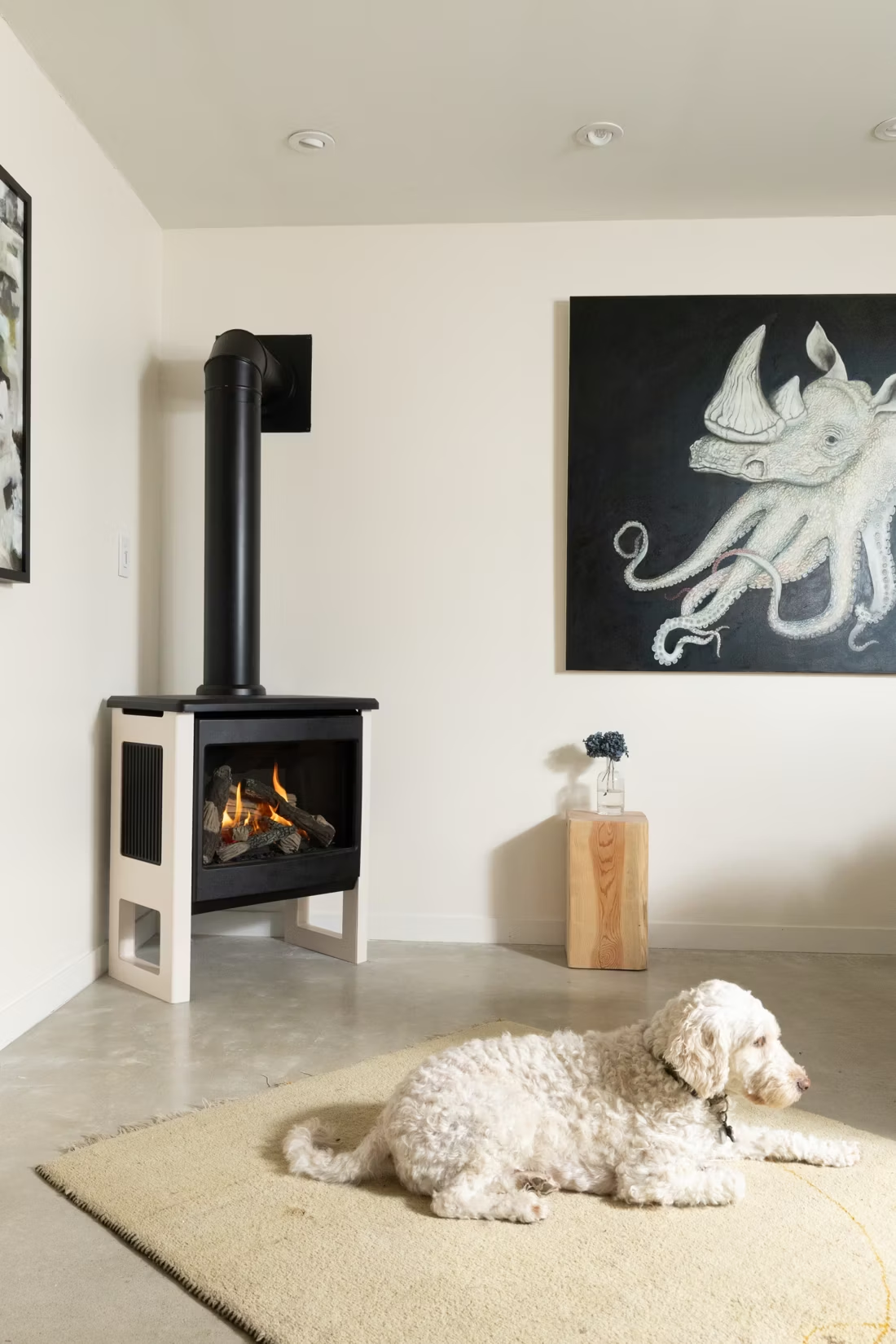
A gas fireplace is a built-in unit framed into a wall, typically used in new construction or a remodel. A gas insert is sized to drop into an existing masonry fireplace and uses the existing chimney as its vent path—the more common route for older Van Zandt County homes that already have a wood firebox. A gas stove is a freestanding cabinet-style unit that sits out on the floor, similar in footprint to a wood stove but running on gas. For most homes here with an existing fireplace, an insert is the simplest upgrade; new rooms or additions without a fireplace already in place are better suited to a built-in unit or freestanding stove.
Do I need a permit to install a gas fireplace in Van Zandt County?
It depends on where you are. Inside Canton, Wills Point, Grand Saline, or Van, the city building department handles permitting for both the appliance install and any gas line work, and a licensed gas-fitter is required for the line itself. Out in unincorporated Van Zandt County, there's no county-wide residential building code, so the permitting picture is looser—though your propane supplier or gas utility may still require an inspection before turning on service. A local dealer who works this county regularly will know which rule applies to your specific address and handle it as part of the install.
What's the difference between vented and vent-free gas fireplaces?
Vented gas fireplaces—direct-vent or B-vent—pull combustion air from outside and exhaust the byproducts back outside through a sealed system. Vent-free units burn fuel directly into the room with no outside venting at all; they're more efficient on paper but release some water vapor and trace combustion byproducts into the living space. Texas allows vent-free installation, and it shows up in some Van Zandt County homes, especially rural properties without an existing chimney or flue to work with. That said, direct-vent units remain the more common and more universally recommended choice for full-time heat and better indoor air quality—ask your dealer to walk through both options for your specific room.
How often should my gas fireplace be serviced?
Once a year is the standard recommendation for any gas appliance, including direct-vent fireplaces and inserts. A technician checks the burner, pilot assembly, venting, and gas connections, and cleans the glass and interior—a much smaller job than a wood chimney sweep, but still worth doing before the county's cold-front season hits in December and January. Expect to pay in the neighborhood of $125 to $200 for an annual inspection through a local hearth or propane service provider.
Gas vs. wood—which is right for my home?
Given Van Zandt County's mild, short winter heating season, most homes don't need wood heat to get through winter the way a household in Duluth, MN would. Wood still has a place here—oak, pecan, and mesquite are all locally available and burn well, and a wood stove or fireplace works fine with no power at all during an outage. But for the county's short heating season and its main hazard—sudden Arctic fronts and grid strain rather than months of sustained cold—a gas fireplace with battery-backup ignition covers the practical need with far less daily upkeep. A lot of local homeowners end up choosing gas for convenience in the main living space and keeping a wood-burning option, if they already have one, as a backup.
Why is my open fireplace making my house colder?
Open fireplaces suck—literally. As the fire burns, it consumes air your furnace already paid to heat and pulls it out through the chimney, so the house is actually colder after the fire goes out than before you lit it. An insert fixes this: it seals the chimney, puts fixed glass across the front, and turns that hole in your house into a real heat source.
Why is a fireplace insert so efficient?
An insert does two things: it seals the chimney completely, so you stop losing air you already paid to heat, and it radiates warmth into the room through the firebox and glass. Most add a heat-exchange fan that pulls cool room air underneath, wraps it around the hot firebox, and pushes it back out warm. Your home is more efficient before you've even lit the first fire.
Does a fireplace add value to my home?
On average, a fireplace adds back to the home about the same amount you spent installing it. Add the monthly savings from heating the rooms you actually use instead of the whole house—often hundreds of dollars a year—and the value case is strong before you even count what a fire does for how your family uses the room.
What is an in-home preview and do I need one?
It's a visit where a hearth professional measures your space, confirms the model you picked actually works in your home, and walks the specs—framing, gas line, venting, finish work—before anything is ordered. Some details you just can't know until you see the house. Never make a down payment without one; it's the single most-skipped step that burns buyers.
Stove and Fireplace Dealers in Van Zandt County
Listings include WhyFire partner dealers, dealers we have verified as authorized for the brands we recommend, and established local businesses that carry hearth products. Every listing shows which one it is. The ones marked Preferred run on WhyFire's software, so they can show you real pricing and book your appointment right here. No manufacturer pays for placement. How we verify dealers →
Clay Structures Inc
Fieldstone & Fireplaces
The Chimney Guy -Seven Points
East Texas Brick Co.
Tdi Air Conditioning
Find your gas fireplace in Van Zandt County.
Tell us a bit about your home in Canton, Wills Point, Grand Saline, Van, or anywhere else in the county, and we'll match you with a trusted local dealer and a free Project Guide & Parts List—the exact parts, including the vent kit, for your gas fireplace project.
Find Your Fireplace →