
A gas fireplace that keeps burning when Kaufman County loses power.
Travis Ranch winters are short and mild, but the grid isn't always reliable. Find the right gas fireplace for ambiance, zone heat, and outage-proof backup—and get matched with a trusted local dealer.
Every Project Starts From One of These Five Situations
Comfort heat for mild winters, real backup for hard freezes.
Travis Ranch sits at 463 feet in Kaufman County, part of the Dallas-Fort Worth exurb belt, with an average winter low around 34°F and a winter heating season that's just a fraction of what a place like Fargo, ND or Duluth, MN sees each winter. Wood stoves and pellet stoves are essentially non-existent here (climate zone 3A doesn't call for a primary wood-heat setup, and there's no local cutting-permit infrastructure since this is private ranchland, not national forest). But gas fireplaces are a different story: they're a genuine fit for the handful of cold snaps each winter, for the ambiance homeowners want on the 40-odd nights it actually gets chilly, and increasingly, for backup heat.
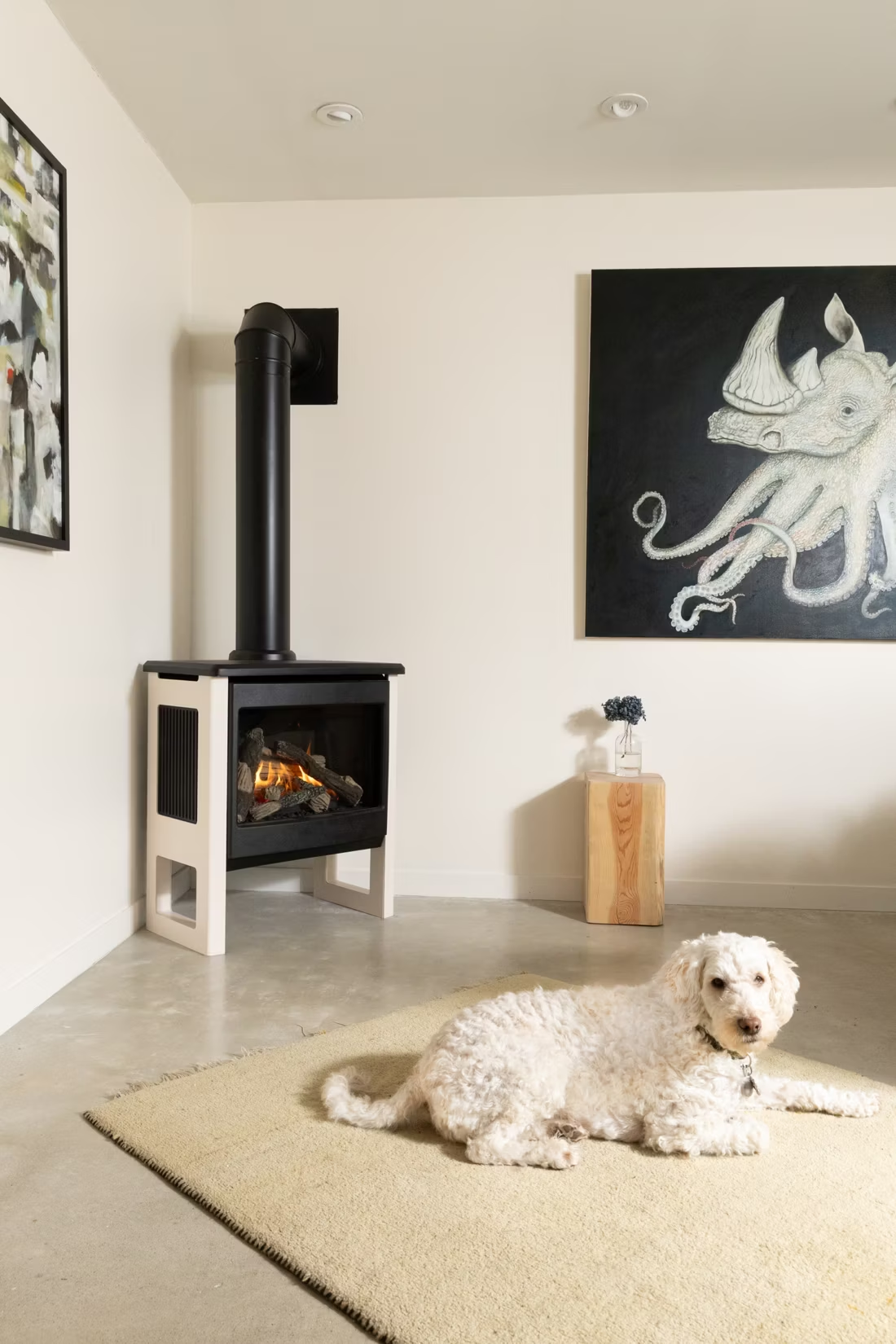
That last point matters more in Kaufman County than in most of Texas. Electric service here runs through Oncor Electric Delivery in the more built-up parts of Travis Ranch and through Trinity Valley Electric Cooperative and Farmers Electric Cooperative in the surrounding rural stretches—co-op territory that took real outages during Winter Storm Uri in February 2021. A direct-vent gas fireplace with battery-backup ignition (IPI) keeps producing real heat even when ERCOT can't. And because there's no natural gas utility serving most of Travis Ranch directly, most gas fireplace installs here run on propane—a tank, a regulator, and a direct-vent unit sized by a local dealer who knows the difference between a supplemental-heat build and a strictly decorative one.
Three steps. No salesperson until you're ready.
Tell us about your project
Your zip code, your situation, and the fuel you're leaning toward—or let the answers point you to one.
See what's actually available
The brands dealers within 100 miles genuinely carry—real options, never a catalog mirage.
Get your dealer & Project Guide
A trusted local dealer, plus the free Project Guide & Parts List that names every component of the job.
Frequently Asked Questions
How much does a gas fireplace installation cost in Travis Ranch?
Most propane-fueled direct-vent gas fireplace installs in Travis Ranch run $4,000 to $9,500, with the spread driven mostly by whether you already have a propane tank and regulator in place. A straightforward direct-vent unit added to a home with existing propane service sits toward the low end. New construction or a home needing its first propane tank set (plus the underground or above-ground line run to the fireplace) pushes toward the higher end. Converting an existing wood-burning fireplace to a gas log set or insert is usually cheaper—often $3,500 to $7,500—since it uses the existing chimney or firebox opening.
Do I need natural gas, or does everyone use propane out here?
Most of Travis Ranch and the surrounding unincorporated pockets of Kaufman County run on propane rather than natural gas mains—there isn't a natural gas utility serving the area the way Atmos Energy does closer into Dallas. That's not a downside for a gas fireplace; propane units perform identically to natural gas units, just fed from a tank instead of a pipeline. If you're in one of the newer subdivisions closer to Forney where gas mains have been extended, ask your dealer to confirm—but plan on propane unless you know otherwise.
Will my gas fireplace still work if the power goes out?
Yes, if it's built for it—and in Kaufman County, that's worth paying attention to. Trinity Valley Electric Cooperative and Farmers Electric Cooperative customers saw real outage time during Winter Storm Uri in 2021, and rolling outages aren't a purely theoretical risk here. Gas fireplaces with IPI (intermittent pilot ignition) run on AA battery backup and will light on demand even with the power out, as long as you keep fresh batteries in the unit. Valor fireplaces go a step further—their pilot generates its own electricity through the thermocouple, so there's no battery to forget. Ask your local dealer about ignition type specifically if outage backup is part of why you're buying.
Should I get a gas fireplace, insert, or just a log set?
If you already have a wood-burning masonry fireplace—common in older Travis Ranch and Forney-area homes—a gas log set or gas insert is usually the move rather than gutting the firebox. A log set is the cheapest option and gives you real flame in an existing wood fireplace, though it's less efficient as actual heat. A gas insert seals the firebox and vents through the chimney with a liner, turning that same fireplace into a genuine heat source rather than just ambiance. For new construction or additions without an existing fireplace, a built-in direct-vent gas fireplace or a freestanding gas stove are the options—both need a proper venting and gas line plan from the start.
Do I need a permit for a gas fireplace in Travis Ranch?
Yes—Kaufman County requires a building permit for new gas fireplace installations, and any propane line work needs to be done by a licensed gas-fitter or propane technician, not a general contractor. Most local hearth dealers coordinate the permit, the propane tank setup or gas line run, and the final inspection as one package, so you're not left juggling separate trades. If Travis Ranch has adopted its own building code separate from the county (worth confirming as the city continues to incorporate services), your dealer will know which office to file with.
Vented or vent-free—which makes sense for a Travis Ranch home?
Both are legal in Texas. Vented (direct-vent) units draw combustion air from outside and exhaust it back outside, which is the safer, more universally recommended choice and the one most local dealers will point you toward for a primary installation. Vent-free units burn directly into the room and release some moisture and combustion byproducts indoors, so they come with strict room-size and ventilation rules. Given how mild Travis Ranch winters run—most of the heating need is for a handful of cold weeks rather than months on end—some homeowners here do choose vent-free for a low-cost, no-chimney-needed ambiance unit in a den or bonus room. For anything doubling as real backup heat, go direct-vent.
How often does a gas fireplace need to be serviced?
Plan on an annual inspection, ideally in early fall before the first cold front comes through Kaufman County. A technician checks the burner, pilot or IPI ignition, propane line connections, and venting, and cleans the glass. This runs $125 to $225 locally and is a lot less involved than the annual chimney sweep a wood-burning setup would need—one of the practical advantages of gas in a climate where the fireplace only sees heavy use a few weeks a year.
What size gas fireplace do I actually need in Travis Ranch?
Less than you might think. With an average winter low of 34°F and a winter heating season that's just a fraction of what a house in Bismarck, ND or Helena, MT would face, most Travis Ranch homes don't need a fireplace to carry real heating load. A mid-size direct-vent unit (25,000-35,000 BTU) is plenty to warm a living or great room on the coldest mornings and double as backup heat during an outage. Larger linear or multi-side units are popular in newer Travis Ranch and Forney-area builds mainly for the visual statement, not because the BTU output is strictly necessary—your dealer can walk through both angles.
Gas vs. wood vs. electric—what actually makes sense here?
Wood heat is genuinely rare in Travis Ranch—oak, pecan, and mesquite are all over Kaufman County, but they're prized here for smoking brisket, not for stove fuel, and the mild winters don't justify the chimney, clearances, and cutting logistics a wood setup requires. Electric fireplaces are a legitimate option too, especially with Oncor and the local co-ops offering residential rates around 11 to 11.5 cents per kWh—they install for a few hundred dollars with no venting or gas line at all, but the heat output and flame realism are a step down. Gas splits the difference: real flame, real heat output, an install that (with propane) works anywhere in Travis Ranch, and—with the right ignition system—a genuine backup heat source when the co-op grid doesn't hold up.
Why is a fireplace insert so efficient?
An insert does two things: it seals the chimney completely, so you stop losing air you already paid to heat, and it radiates warmth into the room through the firebox and glass. Most add a heat-exchange fan that pulls cool room air underneath, wraps it around the hot firebox, and pushes it back out warm. Your home is more efficient before you've even lit the first fire.
Why is my open fireplace making my house colder?
Open fireplaces suck—literally. As the fire burns, it consumes air your furnace already paid to heat and pulls it out through the chimney, so the house is actually colder after the fire goes out than before you lit it. An insert fixes this: it seals the chimney, puts fixed glass across the front, and turns that hole in your house into a real heat source.
How much should I budget for a fireplace?
For an average home—covering the fireplace, the vent pipe, and basic installation—a budget between $3,900 and $5,500 gives you a lot of options across wood, gas, and pellet. By the time you add finish work, gas line, and electrical, the average complete installation lands between $5,000 and $12,000 all-in. In a remodel or new build, a good rule is to put about 2.5% of the total project cost toward the fireplace.
Can I install a fireplace myself?
If you're putting a fire in your house on purpose, it's best to work with an expert. Unless you're genuinely experienced in framing, gas line, vent pipe, and the national code on clearances to combustibles, have a professional do it—and ideally the same company that sells you the fireplace, so warranty, service, and liability all live under one roof.
Nearby Dealers
Hearth shops serving Travis Ranch and the surrounding area. Every listing shows whether it is a WhyFire partner, a dealer we have verified as authorized for the brands we recommend, or a local business carrying hearth products. No manufacturer pays for placement. How we verify dealers →
Jacksons Home & Garden
Elegant Fireside & Patio, LLC
Yard Art Patio & Fireplace - Allen
Golden Blount
Fuego Fireplaces
Clay Structures Inc
The Chimney Guy -Seven Points
Find your gas fireplace in Travis Ranch.
Tell us a bit about your home and propane setup, and we'll put together a free Project Guide & Parts List—the right gas fireplace or insert, the vent kit it needs, and a trusted local dealer to install it.
Find Your Fireplace →