
Clean, instant heat for Titus County's mild winters.
From Mount Pleasant to Talco and Winfield, Titus County winters rarely demand a roaring fire all night—they call for warmth you can switch on and off. Find the right gas fireplace or insert and connect with a trusted local dealer.
Every Project Starts From One of These Five Situations
Comfort without the wood pile.
Titus County sits in Climate Zone 3A in Northeast Texas, home to about 17,274 people centered around Mount Pleasant. With an average winter low near 32°F and roughly 2,702 heating degree days a year, the county's winters are a fraction of what a place like Duluth, Minnesota sees—this is a region where a few cold snaps a season, not months of sustained freeze, drive the need for heat. Oak, pecan, and mesquite grow throughout the county and have long fueled backyard fires and smokers as much as home heating, but for day-to-day warmth in the living room, gas has become the practical choice for a growing share of Titus County homeowners.
Natural gas service reaches Mount Pleasant and much of the surrounding incorporated area through Atmos Energy, while homes out toward Talco, Winfield, and the county's rural stretches typically run on propane from local suppliers. Either fuel works well in a modern direct-vent fireplace or insert: flip a switch for instant heat on a cold morning, flip it off when the sun comes back out, and skip the chimney sweeping and ash hauling that come with wood. For a county where winter is more about shoulder-season comfort than survival heat, that flexibility is the whole appeal.
Three steps. No salesperson until you're ready.
Tell us about your project
Your zip code, your situation, and the fuel you're leaning toward—or let the answers point you to one.
See what's actually available
The brands dealers within 100 miles genuinely carry—real options, never a catalog mirage.
Get your dealer & Project Guide
A trusted local dealer, plus the free Project Guide & Parts List that names every component of the job.
Frequently Asked Questions
How much does a gas fireplace installation cost in Titus County?
A typical gas fireplace or insert installation in Titus County runs roughly $3,500 to $9,000, depending on the unit, whether you're converting an existing masonry fireplace or building new, and whether a gas line needs to be extended. A direct-vent insert dropped into an existing fireplace with gas already nearby sits toward the lower end. New construction, a fresh gas line run, or a propane tank installation for a rural property outside Mount Pleasant will push costs toward the higher end. A local dealer can give you a firm number after seeing your home.
Can I convert my existing wood fireplace to gas?
Yes, and it's one of the more common upgrades in older Titus County homes, especially those with a masonry fireplace built for wood but rarely used for a full fire anymore. A gas insert typically slides into the existing firebox and vents through the same chimney using a stainless liner, which keeps costs down and preserves the look of the mantel and surround. Expect the project to land in the same $3,500-to-$9,000 range as a new install, with the low end applying to homes that already have a gas line nearby and the high end applying to homes needing a new gas run or a propane tank.
Do I need natural gas, or can I use propane?
Either works, and most gas fireplace models can be set up for one or the other. Natural gas service through Atmos Energy covers Mount Pleasant and much of the surrounding incorporated area, so if you already have gas appliances there, adding a fireplace usually just means tapping into an existing line. Outside those service boundaries—including much of rural Titus County toward Talco and Winfield—propane is the standard fallback, supplied by regional propane companies with either an existing tank or a new tank setup. Tell your local dealer which fuel you have access to and they'll spec the right orifice and regulator for the unit.
Will my gas fireplace work if the power goes out?
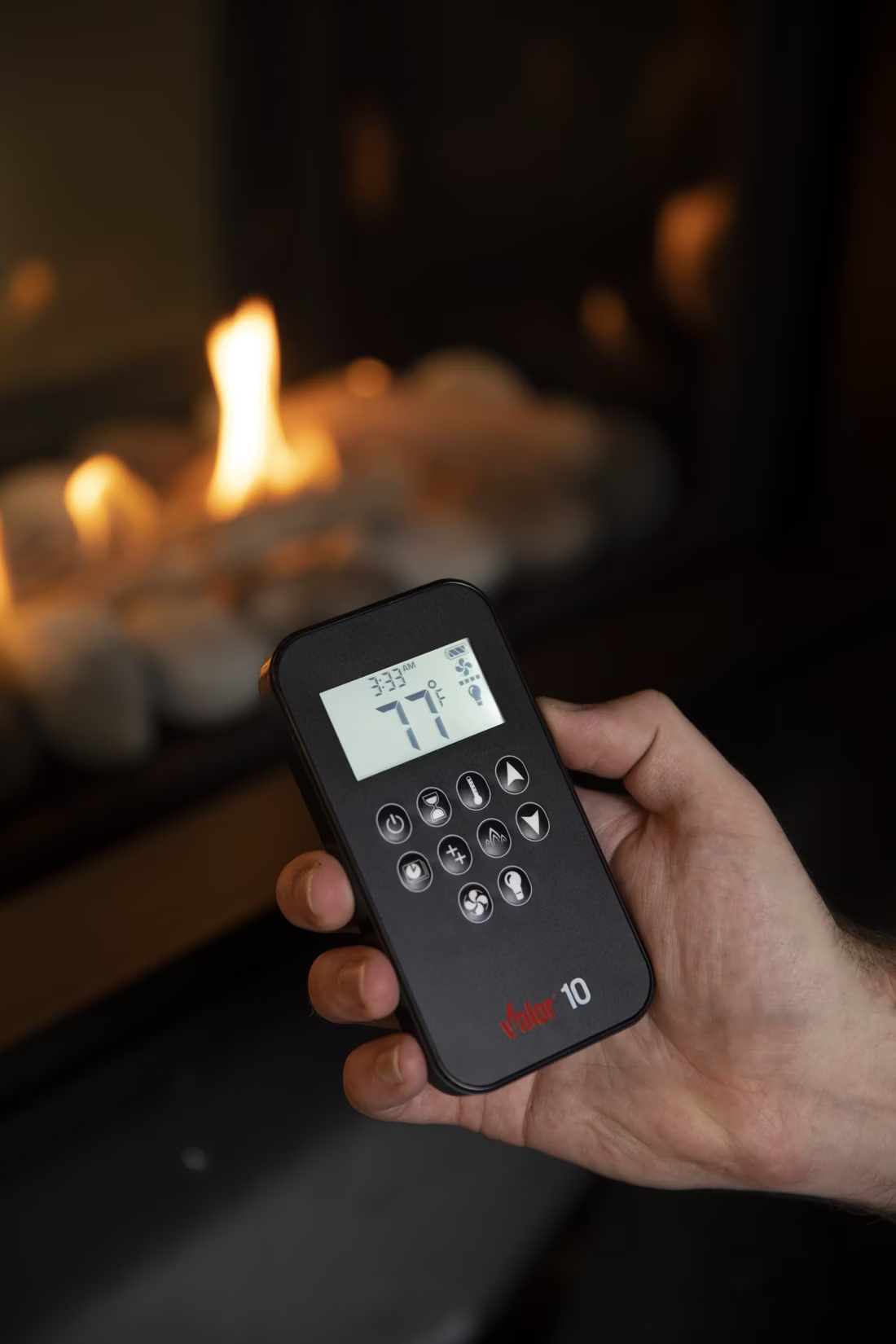
Most modern gas fireplaces are built to run through a power outage. Units with intermittent pilot ignition (IPI) include a small battery backup that kicks in the moment power drops, so the fireplace lights and operates as normal—the only maintenance item is keeping fresh batteries on hand. Valor fireplaces take a different approach: their pilot generates its own electricity through the thermocouple, so there's no battery to remember at all. That distinction matters in this part of Texas, where ice storms and grid strain have knocked out power for days at a stretch in recent winters. Ask your local dealer which ignition system a unit uses before you decide.
What's the difference between a gas fireplace, gas insert, and gas stove?
A gas fireplace is a fully built-in unit framed into a wall, typically chosen for new construction or a remodel. A gas insert is sized to drop into an existing masonry firebox, sealing it up and venting through the existing chimney with a liner—the common choice for older Titus County homes with a fireplace already in place. A gas stove is a freestanding cast-iron or steel unit that sits on the floor, similar in footprint to a wood stove but running on natural gas or propane. For most homeowners here upgrading an existing wood-burning fireplace, the insert is the simplest and least invasive route.
Do I need a permit to install a gas fireplace in Titus County?
Yes. New gas fireplace installations require a building permit, and the gas line work itself needs to be done by a licensed gas-fitter and typically requires its own permit, whether you're inside Mount Pleasant city limits or in unincorporated Titus County. Most established local dealers handle the permitting and inspection scheduling as part of the installation, which is one of the practical reasons to go through a certified hearth retailer rather than a general handyman for gas line work.
What's the difference between vented and vent-free gas fireplaces?
Vented gas fireplaces—direct-vent or B-vent—pull combustion air from outside and exhaust the byproducts back outside through a sealed flue. Vent-free (or ventless) units burn fuel directly into the room without external venting, which makes them cheaper to install but means some water vapor and trace combustion byproducts stay indoors. Vent-free units are legal in Texas but come with room-sizing rules and oxygen depletion sensor requirements that a local dealer will walk you through. In a county with Titus County's mild climate, most homeowners end up choosing direct-vent for the cleaner installation and no restrictions on room size, but vent-free remains a legitimate option for a smaller supplemental space like a den or sunroom.
How often should my gas fireplace be serviced?
Plan on an annual inspection, ideally in early fall before the first cold snap rolls through. A technician checks the burner, pilot assembly, venting, and gas connections, and cleans the glass and interior—a much lighter lift than a wood chimney sweep, but still important since Titus County's gas fireplaces often sit unused for months at a stretch during the warmer part of the year and benefit from a check before the first real use of the season.
Gas vs. wood—which is right for my Titus County home?
Wood has deep roots here—oak, pecan, and mesquite are abundant locally and prized as much for smoking meat as for heat, and a wood fire keeps working even if the power's out. But with Titus County averaging only about 2,702 heating degree days a year and winter lows hovering around freezing rather than well below it, most households don't need wood as a primary heat source the way a colder-climate home would. Gas fits that reality well: instant on-off operation, no ash or creosote, and a clean flame you can enjoy on a chilly evening without committing to tending a fire. Many homeowners here keep both—gas in the main living space for daily comfort, an outdoor wood setup or occasional fireplace fire for backup heat, ambiance, or weekend cooking.
Is my gas fireplace wasting gas?
If it was installed more than 15 years ago, probably. Older gas fireplaces keep a standing pilot light burning all the time, and that little flame can cost a couple hundred dollars a year. Newer models use pilot-on-demand ignition—the pilot lights only when you use the fireplace and goes out when you turn it off.
Why is my open fireplace making my house colder?
Open fireplaces suck—literally. As the fire burns, it consumes air your furnace already paid to heat and pulls it out through the chimney, so the house is actually colder after the fire goes out than before you lit it. An insert fixes this: it seals the chimney, puts fixed glass across the front, and turns that hole in your house into a real heat source.
Can a fireplace actually lower my heating bill?
Yes—by creating a comfort zone. A furnace heats every square foot of the house just to warm the one room you're in; a gas fireplace on low burns roughly a sixth of the gas a typical furnace does. Set the furnace around 55–60 degrees as a baseline, then heat the rooms your family actually uses. Families who heat this way commonly save $20–$60 a month.
Does a fireplace add value to my home?
On average, a fireplace adds back to the home about the same amount you spent installing it. Add the monthly savings from heating the rooms you actually use instead of the whole house—often hundreds of dollars a year—and the value case is strong before you even count what a fire does for how your family uses the room.
Stove and Fireplace Dealers in Titus County
Listings include WhyFire partner dealers, dealers we have verified as authorized for the brands we recommend, and established local businesses that carry hearth products. Every listing shows which one it is. The ones marked Preferred run on WhyFire's software, so they can show you real pricing and book your appointment right here. No manufacturer pays for placement. How we verify dealers →
Fireside Corner
Youngs Brothers Buck Stove
Find your gas fireplace in Titus County.
Tell us about your home and we'll match you with a trusted local dealer and send over your free Project Guide & Parts List—a plan for your Titus County gas fireplace project with the exact parts, including the vent kit, and a recommended installer.
Find Your Fireplace →