
Find your electric fireplace in Throckmorton County.
Zone heat and real-flame ambiance for ranch and manufactured homes across Throckmorton County—no chimney, no gas line, no venting. Find the right unit and connect with a trusted local dealer.
Every Project Starts From One of These Five Situations
Instant heat and ambiance, without the venting.
Throckmorton County sits in the Rolling Plains of North Texas, with a population under 1,000 spread across a lot of open ranch country. Winters here (zone 3B) are mild and short compared to the northern half of the country—hard freezes happen, but the heating season is nowhere near what a place like Bismarck ND or Duluth MN sees. Oak, pecan, and mesquite grow throughout the county and plenty of ranch families still burn them in an outdoor pit or a backyard smoker, but as a primary or supplemental home heat source, wood-burning appliances just aren't common here—the climate doesn't demand it, and dry rangeland brush makes an open-flame stove a harder sell for a lot of homeowners.
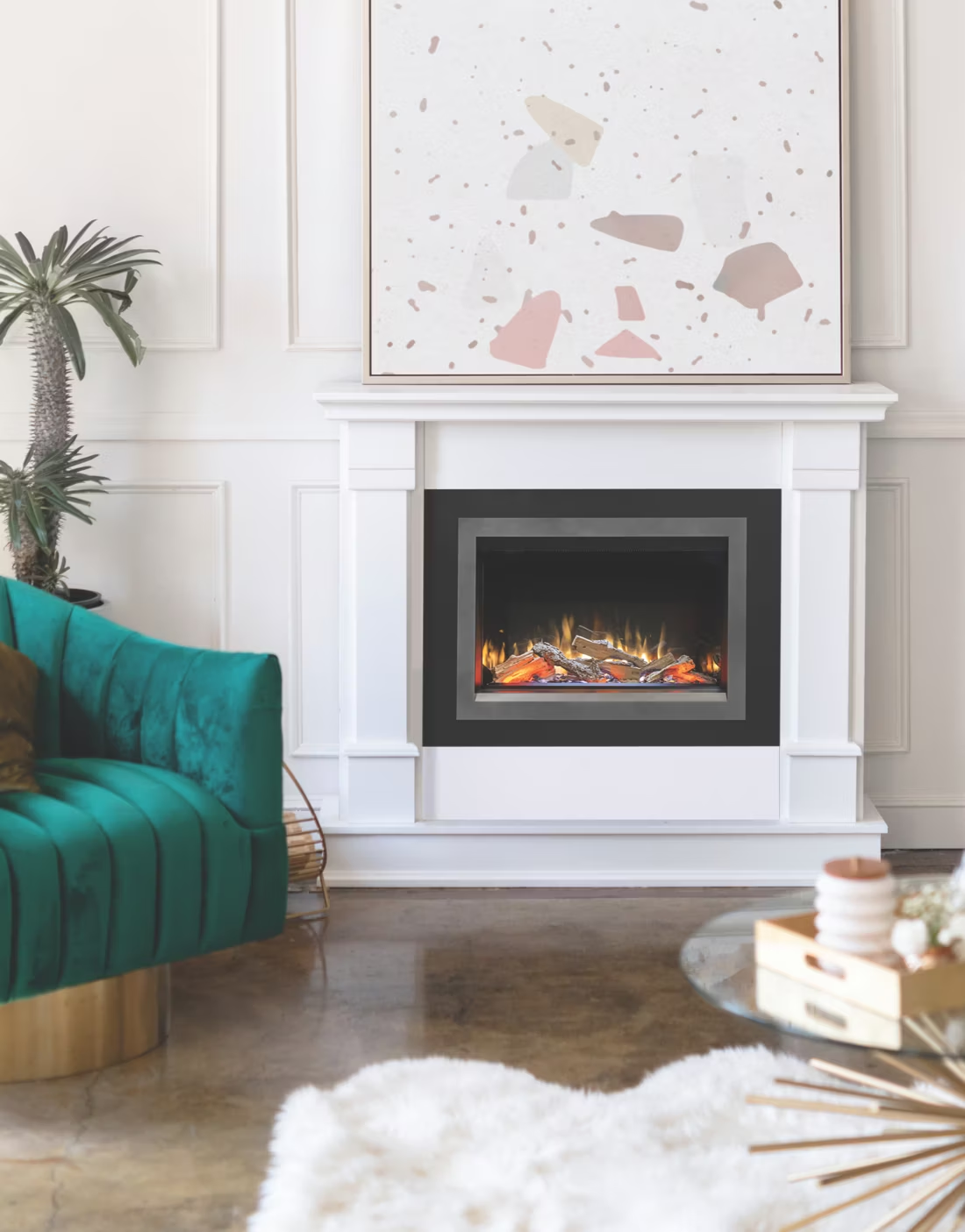
That's exactly where electric fireplaces fit in. A plug-in insert or a built-in electric unit gives you real-looking flame and supplemental warmth in a specific room—the living room, a primary bedroom, a converted porch—without a flue, a gas line, or a masonry chimney to maintain. That matters in a county with a lot of manufactured and modular homes, where retrofitting venting is expensive or simply not possible. Most homes here are served by a rural electric cooperative, which handles day-to-day supplemental heating fine, though an electric unit isn't a substitute for backup heat during an extended outage the way a wood stove would be. For most Throckmorton County households, a well-placed electric fireplace is a low-maintenance way to add warmth and glow to a room without touching the structure of the house.
Three steps. No salesperson until you're ready.
Tell us about your project
Your zip code, your situation, and the fuel you're leaning toward—or let the answers point you to one.
See what's actually available
The brands dealers within 100 miles genuinely carry—real options, never a catalog mirage.
Get your dealer & Project Guide
A trusted local dealer, plus the free Project Guide & Parts List that names every component of the job.
Frequently Asked Questions
How much does an electric fireplace installation cost in Throckmorton County?
Most electric fireplace projects in Throckmorton County run $600 to $1,800. A basic plug-in insert or wall-mounted unit that uses an existing outlet is on the low end—often closer to $600 to $900 including mounting. A built-in electric fireplace that requires a dedicated 120V or 240V circuit, some minor framing, or a mantel surround runs toward the higher end. Because there's no venting, chimney, or gas line involved, electric installs are typically the fastest and least invasive hearth project you can do, which is part of why they're a common choice in a county with a lot of manufactured and modular housing stock.
Will an electric fireplace actually heat a room, or is it just for looks?
Both. Most electric fireplaces include a real heating element—typically a 1,500-watt unit that can noticeably warm a single room, similar to a space heater but built into a more finished cabinet or insert. Given Throckmorton County's mild zone 3B winters, that's usually enough to take the edge off a cold front without running the central system harder than it needs to. If you just want the flame effect without heat, most units let you run the visual on its own, which is common in warmer months.
Do I need a permit to install an electric fireplace in Throckmorton County?
In most cases, no. Because electric fireplaces don't involve venting, gas lines, or structural chimney work, a straightforward plug-in or wall-mounted install usually doesn't trigger a building permit. If your project involves adding a new dedicated electrical circuit—common for larger built-in units—an electrician may need to pull an electrical permit depending on the scope of work. A local dealer or electrician can tell you quickly whether your specific installation needs one.
What's the difference between an electric insert, a wall-mount, and a mantel package?
An electric insert is designed to slot into an existing fireplace opening—a good option if you have an old, unused masonry fireplace and want to convert it without touching the chimney. A wall-mount unit hangs flat against a wall like a large TV, with no surround needed, and works well in newer or open-concept rooms. A mantel package pairs a smaller electric unit with a full surround and shelf, giving you a more traditional look in a room that never had a fireplace at all. For a lot of Throckmorton County homes without an existing masonry fireplace, wall-mount and mantel packages are the more common route.
Can an electric fireplace be a backup heat source if the power goes out?
No—electric fireplaces require power to run, so they won't help during an outage, and that's worth planning around in a rural county served by a cooperative electric utility where storm-related outages can mean a longer wait for repair crews than in a denser service area. If backup heat during outages is a priority, that's a conversation about a propane or wood-burning appliance instead. Many Throckmorton County homeowners choose electric for daily comfort and ambiance and keep a separate plan—propane heater, generator, or otherwise—for outage situations.
Where can I buy an electric fireplace near Throckmorton County?
With Throckmorton County's population under 1,000, there isn't a hearth showroom in the county itself. Most homeowners here work with dealers based in Abilene or Wichita Falls, both roughly an hour's drive, who cover the surrounding Rolling Plains counties for sales and installation. A trusted local dealer will size the right unit for your room, handle any electrical coordination, and get you a straightforward install rather than a big-box unit that may not fit your space or wiring.
Electric vs. propane—which makes more sense for my Throckmorton County home?
Propane delivers more heat output and can serve as real backup heat during a power outage, which matters for rural ranch properties. It does require a tank, a gas line, and venting for most units, along with ongoing propane delivery costs. Electric fireplaces skip all of that—no tank, no venting, no fuel deliveries—but they only run when the power is on and put out less heat than a propane appliance of similar size. For a supplemental unit in a living room or bedroom where convenience and easy installation matter most, electric is usually the simpler choice. For a room that needs real backup heat, propane is worth a look instead.
How much maintenance does an electric fireplace need?
Very little. There's no chimney to sweep, no creosote, and no annual gas line inspection. Maintenance is mostly dusting the unit, occasionally cleaning the glass front, and replacing the heating element or LED flame bulbs after several years of regular use—most quality units are rated for 20,000+ hours of flame-effect operation. This low-maintenance profile is a big part of why electric units are popular in Throckmorton County's smaller and manufactured homes, where owners want warmth and ambiance without adding another system to service.
Is wood heat an option in Throckmorton County, given how mild the winters are?
Technically yes, but it's uncommon as a primary or even regular supplemental heat source here. Zone 3B winters are short and generally mild, so the demand simply isn't what it is farther north, and a lot of the oak, pecan, and mesquite that grows locally ends up in a smoker or a backyard fire pit rather than an indoor stove. A small number of rural homeowners with a lot of acreage and standing timber do install a wood stove for backup heat or off-grid capability, but for most Throckmorton County homes looking for everyday warmth and ambiance, an electric fireplace is the more practical fit.
Can I put a TV above my fireplace?
Yes—with an asterisk. Fireplaces are hot and TVs don't like heat. Either put a mantel between them to deflect rising warmth, or choose a fireplace with heat-management technology that creates a cool zone on the wall above—the wall stays around 125 degrees, barely warm, while the room still gets full heat. If you like clean lines and don't want a mantel, heat management is the answer.
What fireplace styles should I know before shopping?
Four cover most of the market: screen-front traditional (mesh front, open feel, fits craftsman homes), traditional door set (the classic look you grew up with), modern linear (wide, low, the statement piece for entertaining), and clean face contemporary (no trim—your tile or stone runs right to the fire's edge). Walk in knowing those four terms and you're ahead of most buyers.
Can a fireplace actually lower my heating bill?
Yes—by creating a comfort zone. A furnace heats every square foot of the house just to warm the one room you're in; a gas fireplace on low burns roughly a sixth of the gas a typical furnace does. Set the furnace around 55–60 degrees as a baseline, then heat the rooms your family actually uses. Families who heat this way commonly save $20–$60 a month.
How much should I budget for a fireplace?
For an average home—covering the fireplace, the vent pipe, and basic installation—a budget between $3,900 and $5,500 gives you a lot of options across wood, gas, and pellet. By the time you add finish work, gas line, and electrical, the average complete installation lands between $5,000 and $12,000 all-in. In a remodel or new build, a good rule is to put about 2.5% of the total project cost toward the fireplace.
Stove and Fireplace Dealers in Throckmorton County
Listings include WhyFire partner dealers, dealers we have verified as authorized for the brands we recommend, and established local businesses that carry hearth products. Every listing shows which one it is. The ones marked Preferred run on WhyFire's software, so they can show you real pricing and book your appointment right here. No manufacturer pays for placement. How we verify dealers →
The Ember Shop, Inc.
Find your electric fireplace in Throckmorton County.
Tell us a bit about your home and we'll put together a free Project Guide & Parts List—the right electric fireplace or insert for your room, plus a match with a trusted local dealer who can install it.
Find Your Fireplace →