
Warmth on demand for Terrell Hills' short, mild winters.
With winter lows averaging 40°F and just 1,527 heating degree days a year, Terrell Hills doesn't need a furnace-grade fireplace—it needs one that lights instantly on the handful of genuinely cold nights each winter. I'll match you with a trusted local dealer who knows what fits an enclave of established homes like this one.
Every Project Starts From One of These Five Situations
On-demand comfort, not survival heat.
Terrell Hills is a small, fully incorporated enclave inside San Antonio—about 5,045 people on roughly a single zip code, 78209, sitting at 795 feet in climate zone 2A. Winters here average a 40°F low and rack up only 1,527 heating degree days a year, a fraction of what a place like Duluth, MN or Fargo, ND logs in a single January. That mild profile is exactly why gas fireplaces do well in Terrell Hills: homeowners want real, instant heat for the genuinely cold snaps and cold evenings, without committing to a wood-burning routine for a heating season that barely lasts ten weeks.
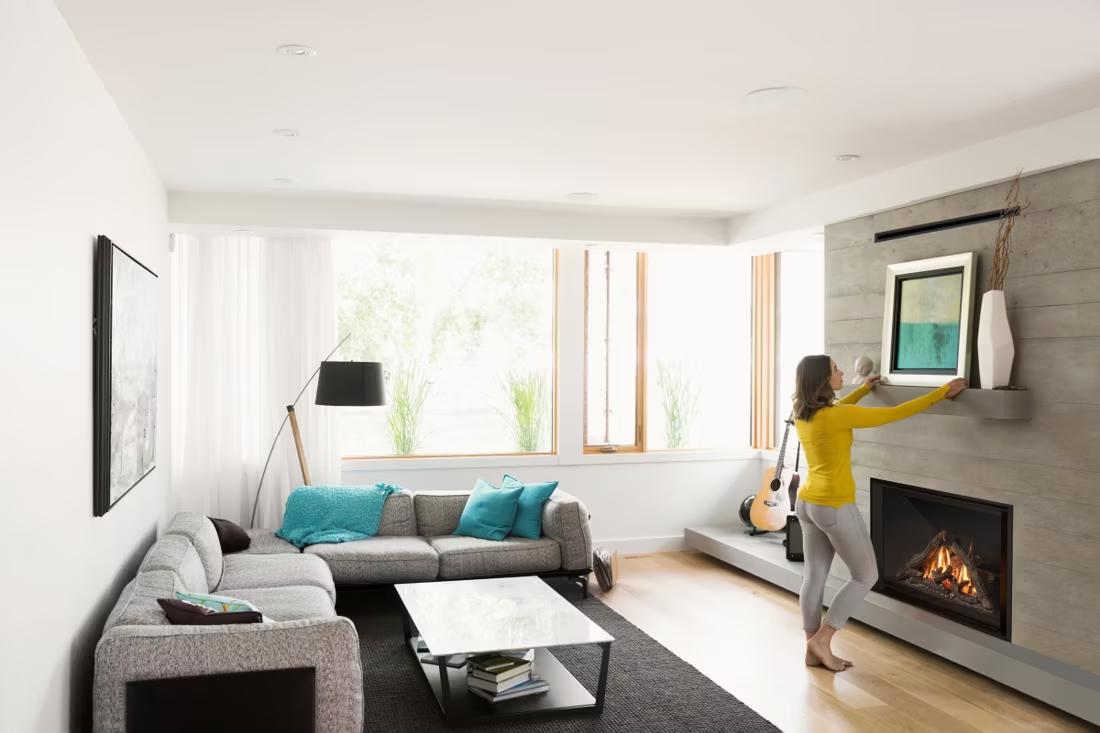
Many of the homes here are established mid-century and revival-style houses with existing masonry fireplaces originally built for the oak, pecan, and mesquite that grow throughout South Texas—wood species still commonly split and burned in the area. A gas insert or log set converts that same masonry opening into something you use on a Tuesday night in December without hauling wood or cleaning ash the next morning. With no local air quality restrictions on burning, either fuel is fair game here; the choice mostly comes down to convenience versus tradition, and given how short the cold season runs, convenience usually wins.
Three steps. No salesperson until you're ready.
Tell us about your project
Your zip code, your situation, and the fuel you're leaning toward—or let the answers point you to one.
See what's actually available
The brands dealers within 100 miles genuinely carry—real options, never a catalog mirage.
Get your dealer & Project Guide
A trusted local dealer, plus the free Project Guide & Parts List that names every component of the job.
Frequently Asked Questions
How much does a gas fireplace installation cost in Terrell Hills?
Most gas fireplace and insert installations run roughly $3,500 to $9,000 in the Terrell Hills area, with the low end covering a direct-vent insert dropped into an existing masonry firebox—common in the neighborhood's older homes—and the high end covering a new built-in unit for a remodel, complete with framing and a fresh gas line run. Because Terrell Hills' cold season is short, a lot of homeowners opt for a mid-range unit sized for occasional use rather than the largest available insert, which keeps costs toward the lower half of that range.
Can I convert my existing wood-burning fireplace to gas?
Yes, and it's a common project here. Many Terrell Hills homes have masonry fireplaces built decades ago for burning oak or pecan, and a gas insert or log set typically drops into that same opening using a liner run through the existing chimney. Given how mild the winters are—average lows around 40°F—plenty of owners make the switch purely for convenience, so they can enjoy the fireplace on a cool evening without stacking or seasoning wood for a heating season that's over almost as soon as it starts.
Do I need natural gas service, or can I use propane?
Most homes in this part of Bexar County have natural gas service available, and it's the simpler route if your house is already piped for a gas range or water heater. If your property isn't on the gas main, propane with a small tank is a straightforward fallback, and most fireplace inserts and log sets can be configured for either fuel. Your local dealer will confirm which service reaches your specific block before finalizing the install.
Will my gas fireplace still work if the power goes out?
Most will, and that's worth planning for in this part of Texas—ERCOT grid strain during winter storms like February 2021's Uri showed that even a mild-climate area can lose power during the exact cold snap you'd want heat. Units with IPI (intermittent pilot ignition) run their electronics on AA battery backup, so they still light without utility power. Valor fireplaces take it a step further: their pilot's thermocouple generates its own electricity, so there's no battery at all. If backup heat during an outage matters to you, ask your dealer which ignition system is on any model you're considering.
What's the difference between a gas fireplace, insert, and stove?
A gas fireplace is a built-in unit framed into a wall—typical for a remodel or new construction. A gas insert fits inside an existing masonry firebox, which is the more common upgrade in Terrell Hills given how many homes here already have a wood-style fireplace built decades ago. A gas stove is a freestanding unit on its own hearth pad, less common in this neighborhood's traditional floor plans but occasionally used in a sunroom or converted porch. For most Terrell Hills homeowners with an existing fireplace opening, an insert is the simplest and least invasive route.
Do I need a permit to install a gas fireplace in Terrell Hills?
Yes. As its own incorporated municipality, Terrell Hills handles building permits through the City of Terrell Hills rather than unincorporated Bexar County, and gas line work requires a separate permit pulled by a licensed gas-fitter. Most hearth dealers who work in this pocket of San Antonio are familiar with the city's process and will handle the permit and final inspection as part of the installation.
Vented vs. vent-free gas fireplaces—which is better for my home?
Direct-vent units draw combustion air from outside and exhaust it back outside through sealed venting, making them the safer, code-compliant choice for any home. Vent-free units burn directly into the room and are legal in Texas within room-size limits, and since Terrell Hills has no local air quality restrictions, some homeowners consider them for a simple log-set upgrade. Even so, most dealers still recommend direct-vent for a primary living space, reserving vent-free for occasional-use rooms like a den or sunroom.
How often should a gas fireplace be serviced in Terrell Hills?
An annual check-up in the fall—before the handful of genuinely cold weeks each winter—is enough for most units here, since a Terrell Hills fireplace typically runs far fewer hours per season than one in a colder climate. A technician inspects the burner, pilot, gas connections, and venting, and cleans the glass. Expect to pay somewhere in the $150-$250 range for a standard visit, and don't skip it just because the season is short—an ignition failure is still an ignition failure on the one cold night you actually want the heat.
Gas vs. wood vs. electric—what makes the most sense in Terrell Hills?
Wood—oak, pecan, or mesquite—still has a following here for the ambiance and the tradition of an existing masonry fireplace, but with only 1,527 heating degree days a year, few households burn it as anything more than occasional-use heat. Electric fireplaces are an easy, low-cost option too, especially with residential electric rates in the area running as low as roughly 9.9 to 12.5 cents per kWh through co-ops like Karnes Electric and Guadalupe Valley Electric, and they need no venting at all. Gas splits the difference: real flame and real heat output on demand, without the wood-hauling or the electric-only glow, which is why it remains the most requested upgrade for existing fireplace openings in this neighborhood.
Is my gas fireplace wasting gas?
If it was installed more than 15 years ago, probably. Older gas fireplaces keep a standing pilot light burning all the time, and that little flame can cost a couple hundred dollars a year. Newer models use pilot-on-demand ignition—the pilot lights only when you use the fireplace and goes out when you turn it off.
Why is a fireplace insert so efficient?
An insert does two things: it seals the chimney completely, so you stop losing air you already paid to heat, and it radiates warmth into the room through the firebox and glass. Most add a heat-exchange fan that pulls cool room air underneath, wraps it around the hot firebox, and pushes it back out warm. Your home is more efficient before you've even lit the first fire.
Does a fireplace add value to my home?
On average, a fireplace adds back to the home about the same amount you spent installing it. Add the monthly savings from heating the rooms you actually use instead of the whole house—often hundreds of dollars a year—and the value case is strong before you even count what a fire does for how your family uses the room.
Can I install a fireplace myself?
If you're putting a fire in your house on purpose, it's best to work with an expert. Unless you're genuinely experienced in framing, gas line, vent pipe, and the national code on clearances to combustibles, have a professional do it—and ideally the same company that sells you the fireplace, so warranty, service, and liability all live under one roof.
Nearby Dealers
Hearth shops serving Terrell Hills and the surrounding area. Every listing shows whether it is a WhyFire partner, a dealer we have verified as authorized for the brands we recommend, or a local business carrying hearth products. No manufacturer pays for placement. How we verify dealers →
Home & Patio
Area – San Antonio, Tx
Orange County Bldg Materl
Installed Building Products, LLC
Bbq Outfitters
Parrish & Company Inc - San Antonio
Pico Propane Operating
Let's map out your gas fireplace project in Terrell Hills.
Tell me about your home and your existing fireplace opening, and I'll match you with a trusted local dealer and send a free Project Guide & Parts List with the exact vent kit and parts your Terrell Hills project needs.
Find Your Fireplace →