
Instant heat, no chimney required, for Somervell County homes.
From ranch houses outside Glen Rose to cabins near Dinosaur Valley State Park and Fossil Rim, electric fireplaces bring real ambiance and supplemental warmth without a flue, a gas line, or a wood pile. Find the right unit and get matched with a trusted local dealer.
Every Project Starts From One of These Five Situations
Mild winters mean electric heat makes sense here.
Somervell County is small—under 200 square miles along the Paluxy River—and its winters are mild by any measure: an average low of 31°F and a fairly short, light heating season, placing it in Climate Zone 3A. Compare that to a place like Fargo, ND, which has a much longer, far more demanding heating season, and it's clear why Somervell County homes rarely need a heating system built for extreme cold. Instead, most homeowners want targeted, room-by-room warmth for the handful of genuinely cold nights each winter, plus a fireplace that looks good the other 350 days of the year.
That's exactly the niche electric fireplaces fill here. There's no chimney to build, no gas line to run, and no cutting or hauling oak, pecan, or mesquite—all common locally but more work than most people want for occasional use. Electric units plug into a standard outlet or, for larger built-ins, run off a dedicated 240V circuit that a licensed electrician can add in an afternoon. That simplicity matters in a county with a lot of manufactured and modular housing outside Glen Rose, plus a growing number of short-term rental cabins near Fossil Rim Wildlife Center and Dinosaur Valley State Park, where owners want a fireplace feature without the liability or upkeep of real wood-burning. Inside Glen Rose city limits, the Glen Rose Building Department handles electrical permits for new circuits; most of unincorporated Somervell County doesn't enforce a general building code, though the electrical work itself should still be pulled and inspected.
Three steps. No salesperson until you're ready.
Tell us about your project
Your zip code, your situation, and the fuel you're leaning toward—or let the answers point you to one.
See what's actually available
The brands dealers within 100 miles genuinely carry—real options, never a catalog mirage.
Get your dealer & Project Guide
A trusted local dealer, plus the free Project Guide & Parts List that names every component of the job.
Frequently Asked Questions
How much does an electric fireplace installation cost in Somervell County?
A basic plug-in electric insert or mantel unit runs $400 to $900 installed, since it typically just needs an existing standard outlet. Larger built-in units—the kind set into a wall or custom surround—run $1,500 to $2,800 once you factor in a dedicated 240V circuit, which most electricians in the Glen Rose area can add in a single visit. Costs stay on the lower end for retrofits into an existing fireplace opening and climb for new-construction framing or custom mantels. Local dealers will give you a firm number after seeing the room and the electrical panel.
What size electric fireplace do I need for my room?
Most electric fireplaces are sized by room square footage rather than by climate, since Somervell County's mild winters (a fairly short, light heating season, average lows around 31°F) mean you're rarely asking the unit to be a home's sole heat source. A 1,000 to 1,500-watt insert comfortably supplements a bedroom or den up to about 400 square feet; larger 1,500-watt-plus built-ins can take the edge off an open living area up to 1,000 square feet. For guest cabins or Airbnb units near Fossil Rim or Dinosaur Valley State Park, a mid-size wall-mount unit is usually enough—guests want the visual, not whole-structure heating.
Do I need a permit to install an electric fireplace in Somervell County?
A simple plug-in unit that uses an existing outlet typically doesn't require a permit anywhere in the county. If you're adding a dedicated 240V circuit for a larger built-in, that electrical work should be permitted and inspected—inside Glen Rose city limits that goes through the Glen Rose Building Department, and in unincorporated Somervell County it's handled directly by a licensed electrician following state electrical code, since the county doesn't run a separate building permit office. Either way, hiring a licensed electrician for the circuit work is worth it for insurance and resale purposes, even where no formal inspection is required.
What's the difference between an electric insert, a wall-mount, and a built-in?
An electric insert slides into an existing fireplace opening (masonry or zero-clearance) and is the easiest retrofit for a home that already has a fireplace shell but no interest in burning wood or running gas. A wall-mount unit hangs like a flat-screen TV and works well in a den, bedroom, or rental cabin with no existing hearth. A built-in is framed into a wall or custom surround during a remodel or new construction and gives the most finished, permanent look. For most Somervell County homes with an old wood-burning fireplace they no longer want to feed, an insert is the simplest upgrade.
How much does an electric fireplace cost to run?
Most electric fireplaces draw 1,000 to 1,500 watts on heat settings, which costs roughly 12 to 20 cents per hour depending on your electric rate—most Somervell County homes are served by either United Cooperative Services or Oncor Electric Delivery. Given the county's mild winters, most owners run the heater setting only on the coldest handful of nights and use the flame effect on its own (a few watts) the rest of the season for ambiance. That's a fraction of what it costs to run a whole-house HVAC system, which is part of why electric fireplaces are popular for guest houses and rental cabins where owners don't want a big utility bill from an occasional-use space.
Will my electric fireplace still work during a power outage?
No—this is worth being direct about. Electric fireplaces require power to run the heater, blower, and flame effect, so they go dark along with everything else during an outage. If backup heat during an ice storm or grid outage matters to you, a wood stove or a battery-backed gas unit is a better primary choice, with an electric fireplace serving as your everyday, no-mess supplemental heat and ambiance rather than your emergency plan.
Are electric fireplaces a good fit for rental cabins near Fossil Rim and Dinosaur Valley State Park?
Yes—it's one of the more common installs in this part of the county. Short-term rental owners near Fossil Rim Wildlife Center and Dinosaur Valley State Park like electric units because there's no ash, no creosote, no gas line liability, and no risk of a guest leaving a real fire unattended. A wall-mount or insert with a remote and adjustable flame brightness gives guests the cozy visual they book for, while the low, predictable running cost keeps utility bills manageable between bookings.
How long do electric fireplace heating elements last, and do they need maintenance?
Most electric fireplace heating elements and LED flame effects are rated for 20,000 to 30,000 hours of use—often a decade or more of typical seasonal use in a Somervell County home. There's no chimney to sweep and no gas line to inspect; maintenance is mostly dusting the vents and occasionally replacing the blower fan if it starts to squeak. That low-maintenance profile is a big part of the appeal for second homes and rental properties where nobody's checking on the unit every week.
Electric vs. wood or gas—which fireplace is right for my Somervell County home?
Wood offers real ambiance and works without power, and there's no shortage of oak, pecan, and mesquite locally if you want to cut and season your own—but it's more work than most people want for a county with only a fairly short, light heating season each year. Gas gives instant, higher-output heat and can be plumbed for propane where natural gas isn't available, but it means running a gas line and venting. Electric wins on simplicity: no venting, no fuel storage, and the lowest installation cost, at the tradeoff of no heat during a power outage and lower maximum output than wood or gas. For a mild-winter county where most fireplaces are used more for atmosphere than survival heat, electric is often the most practical answer—especially in guest spaces, additions, and rental cabins.
Can I put a TV above my fireplace?
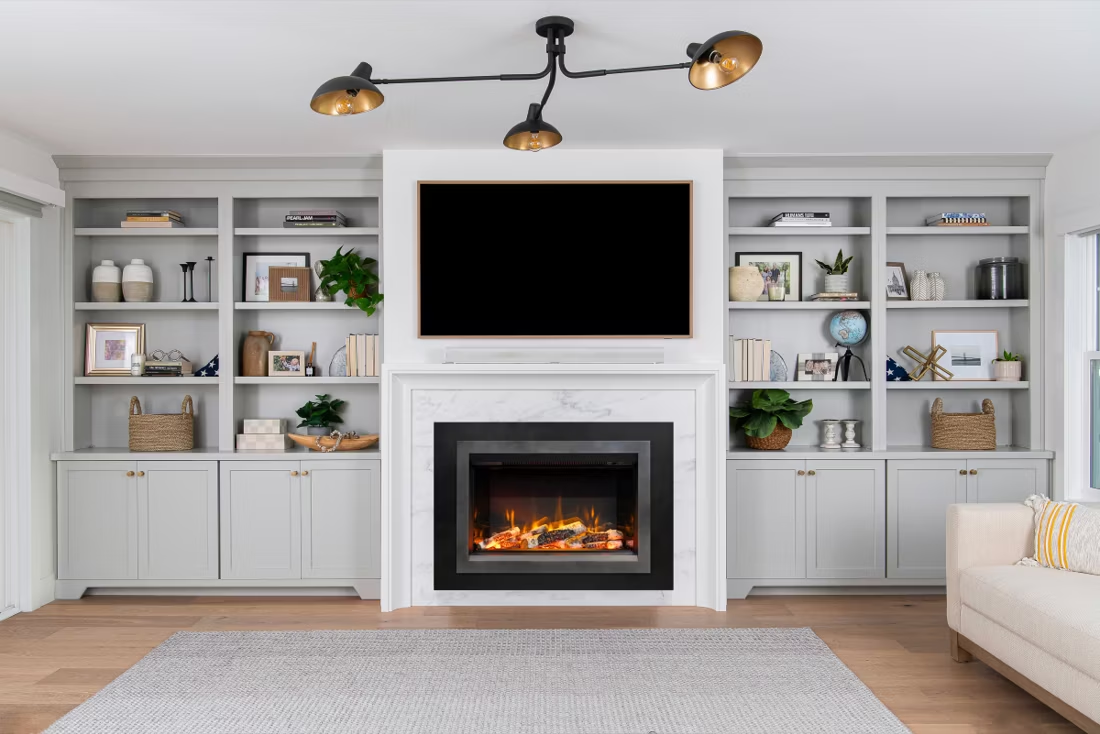
Yes—with an asterisk. Fireplaces are hot and TVs don't like heat. Either put a mantel between them to deflect rising warmth, or choose a fireplace with heat-management technology that creates a cool zone on the wall above—the wall stays around 125 degrees, barely warm, while the room still gets full heat. If you like clean lines and don't want a mantel, heat management is the answer.
Does an electric fireplace need a vent or chimney?
No—that's its superpower. An electric fireplace needs a wall and an outlet, period. No vent pipe, no gas line, no clearances to design around, which is why it works in bedrooms, offices, apartments, and walls where venting a gas or wood unit would be impractical or impossible. Installation is typically the simplest and least expensive of any fireplace type.
Can I install a fireplace myself?
If you're putting a fire in your house on purpose, it's best to work with an expert. Unless you're genuinely experienced in framing, gas line, vent pipe, and the national code on clearances to combustibles, have a professional do it—and ideally the same company that sells you the fireplace, so warranty, service, and liability all live under one roof.
Can a fireplace actually lower my heating bill?
Yes—by creating a comfort zone. A furnace heats every square foot of the house just to warm the one room you're in; a gas fireplace on low burns roughly a sixth of the gas a typical furnace does. Set the furnace around 55–60 degrees as a baseline, then heat the rooms your family actually uses. Families who heat this way commonly save $20–$60 a month.
Stove and Fireplace Dealers in Somervell County
Listings include WhyFire partner dealers, dealers we have verified as authorized for the brands we recommend, and established local businesses that carry hearth products. Every listing shows which one it is. The ones marked Preferred run on WhyFire's software, so they can show you real pricing and book your appointment right here. No manufacturer pays for placement. How we verify dealers →
David's Stove Shop Inc
Rodak's Coffee And Bbq Grills
Texas Building Supply
Find your electric fireplace in Somervell County.
Tell us a bit about your home or cabin and we'll match you with the right electric insert, wall-mount, or built-in—plus a free Project Guide & Parts List and a trusted local dealer to install it.
Find Your Fireplace →