
Instant Heat for Sinton's Blue Norther Nights.
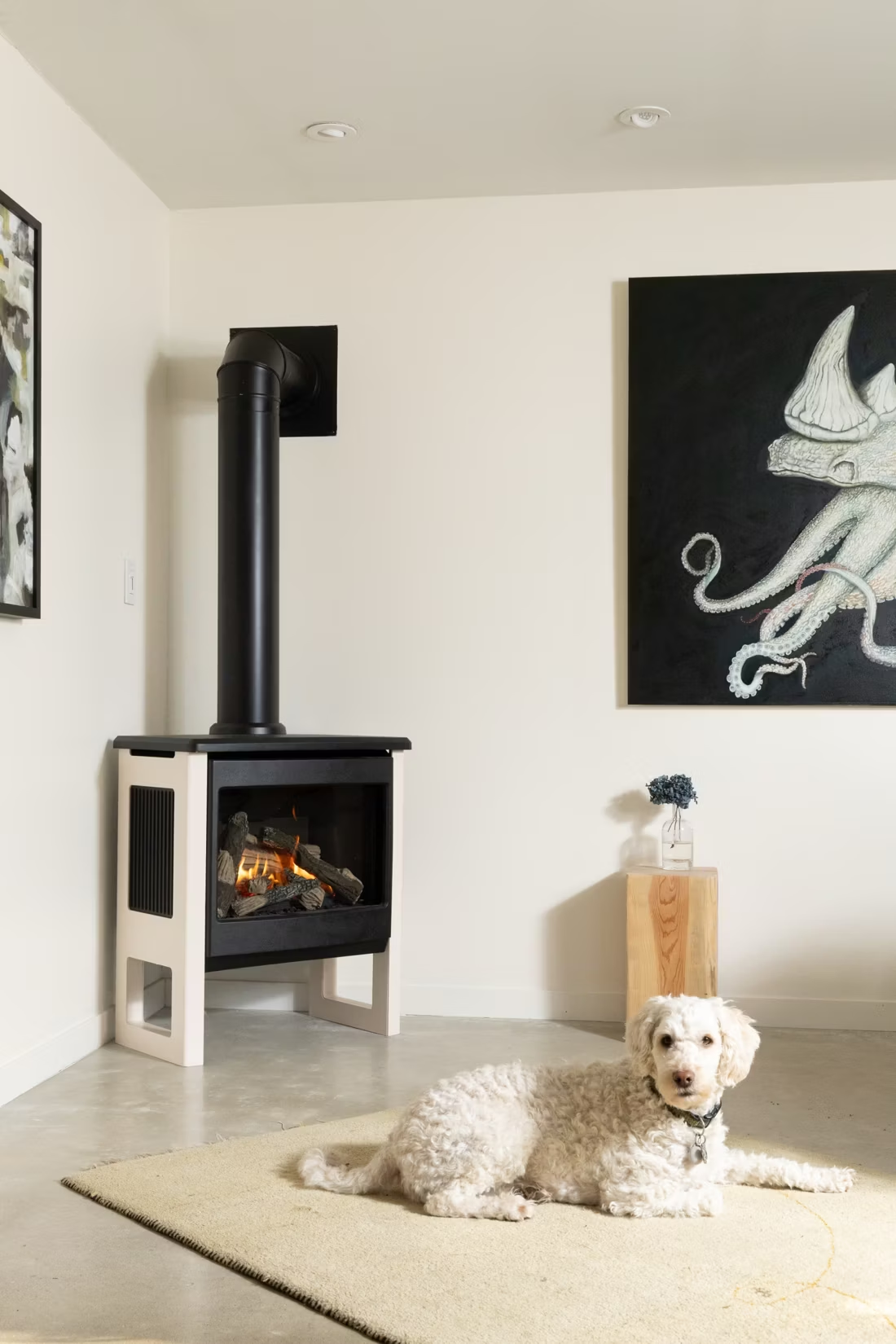
Gas fireplaces give San Patricio County homeowners instant, no-maintenance warmth for the handful of nights each winter a cold front actually demands it—plus the ambiance people want the rest of the year.
Every Project Starts From One of These Five Situations
Built for ambiance, ready when a cold front hits.
Sinton is the county seat of San Patricio County, sitting on the flat Coastal Bend plain about 20 minutes north of Corpus Christi Bay at just 45 feet of elevation. Climate zone 2A means long, humid summers and winters mild enough that Sinton has a very short, light heating season—for comparison, Duluth, Minnesota has a heating season roughly eight times as demanding. The average winter low here sits near 45°F, and most days from November through February need nothing more than a light jacket. What Sinton does get, occasionally, is a 'Blue Norther'—an arctic front that can drop temperatures into the 20s or 30s for a day or two before moving right back out.
Because the cold here comes in short, unpredictable bursts rather than a sustained season, a gas fireplace does exactly what the situation calls for: flip it on for the cold snap, flip it off the next morning, no wood to split or stove to feed all winter. Sinton and most of San Patricio County aren't served by a municipal natural gas main, so the large majority of local gas fireplace installations run on propane, stored in a tank on the property—a routine setup for local dealers. Wood stoves and pellet stoves, common in colder states, are essentially absent here; the oak, pecan, and mesquite that grow around San Patricio County are put to work smoking brisket far more often than heating a house that needs supplemental heat maybe a dozen days a year.
Three steps. No salesperson until you're ready.
Tell us about your project
Your zip code, your situation, and the fuel you're leaning toward—or let the answers point you to one.
See what's actually available
The brands dealers within 100 miles genuinely carry—real options, never a catalog mirage.
Get your dealer & Project Guide
A trusted local dealer, plus the free Project Guide & Parts List that names every component of the job.
Frequently Asked Questions
How much does a gas fireplace installation cost in Sinton?
Most gas fireplace installations in Sinton run between roughly $3,500 and $9,000, with the spread driven mainly by whether propane infrastructure already exists on the property. A direct-vent gas insert going into an existing masonry fireplace on a home that already has a propane tank sits toward the lower end. A new built-in gas fireplace for a remodel or new construction—including a fresh propane line run and, if needed, a new tank installation—lands toward the higher end. Local dealers will walk your property and give you a firm number after seeing your existing setup.
Will my gas fireplace run on natural gas or propane?
Almost certainly propane. Sinton and the surrounding unincorporated parts of San Patricio County don't have a natural gas main running to most residential properties, so propane is the standard fuel for gas fireplaces here—delivered by a local supplier and stored in an above-ground or buried tank. Installation and tank placement fall under Railroad Commission of Texas LP-gas rules, which is why it matters that whoever runs your gas line holds a current LP-gas license. If your home happens to already have piped natural gas from an industrial or commercial connection nearby, your dealer can confirm that during the site visit, but for the overwhelming majority of Sinton homeowners, propane is the answer.
Do I really need a gas fireplace if Sinton winters are this mild?
Honestly, most Sinton homes don't need one as a primary heat source—with such a short, mild heating season, a central AC/heat pump system already covers the handful of chilly weeks fine. Homeowners here typically add a gas fireplace for three reasons instead: the look and resale value of a fireplace in the main living space, instant supplemental warmth during a Blue Norther without running the whole HVAC system, and backup comfort if a hurricane-related outage knocks out power for a stretch. It's a legitimate, popular addition in this climate—just don't expect it to carry the heating load the way it would in a colder state.
Will my gas fireplace work during a power outage?
Yes, if you choose the right ignition system—and that's worth thinking through given the Gulf Coast's hurricane season. Units with IPI (intermittent pilot ignition) run on AA battery backup that kicks in automatically the moment the power drops from AEP Texas Central or San Patricio Electric Cooperative, so the fireplace still lights on demand. Valor's gas fireplaces take it a step further: the pilot's thermocouple generates its own electricity, so there's no battery to remember to replace at all. For a coastal county where a tropical system can knock out power for days, either option gives you working heat and light when the grid doesn't.
What's the difference between a gas fireplace, gas insert, and gas stove?
A gas fireplace is a fully built-in unit installed into a framed wall or new construction opening. A gas insert is sized to slide into an existing masonry fireplace, sealing it up and converting an open hearth into an efficient, glass-front unit that vents through the existing chimney with a liner. A gas stove is a freestanding cabinet unit that sits on the floor, similar in shape to a wood stove but running on gas. For the older homes around downtown Sinton with an existing wood-burning fireplace, an insert is usually the simplest upgrade. Newer construction without an existing chimney is better suited to a built-in fireplace.
Do I need a permit to install a gas fireplace in Sinton?
Within city limits, new gas fireplace work typically requires a building permit through the City of Sinton, and any propane line installation must be performed by an installer licensed by the Railroad Commission of Texas for LP-gas work. Properties in unincorporated San Patricio County fall under county permitting rules instead, along with the same LP-gas licensing requirement for the line and tank work. Most local hearth dealers coordinate the permit and the propane contractor together, so you're not left managing two separate trades.
Should I get a vented or vent-free gas fireplace?
Vented (direct-vent) gas fireplaces pull combustion air from outside and exhaust it back outside through a sealed pipe—clean, safe, and code-compliant everywhere. Vent-free units burn directly into the room and release some moisture and combustion byproducts into your living space. Texas allows vent-free units within sizing and ventilation limits, but it's worth thinking twice in San Patricio County specifically: Gulf Coast humidity is already high, and homes here run air conditioning hard for much of the year, so adding extra moisture indoors from a vent-free unit works against the rest of the house. Most local dealers steer Sinton customers toward direct-vent units for that reason.
How often should my gas fireplace be serviced?
Plan on an annual inspection, ideally before the first cold front of the season. A technician checks the burner, pilot assembly, gas connections, and venting, and cleans the glass and interior. It's a lighter service than sweeping a wood chimney, but salt-laden Gulf air moving inland from Corpus Christi Bay can accelerate corrosion on metal components faster than it would further inland, so skipping a year isn't worth the risk. Most local service providers charge in the $150–$250 range for a standard annual visit.
Gas vs. electric fireplace—which makes more sense in Sinton?
With San Patricio County's mild, short heating season, both are realistic options, but they solve different problems. A gas fireplace delivers real, meaningful heat output during a Blue Norther or a power outage, at the cost of a propane line and tank setup. An electric fireplace needs no gas line or venting at all—just a standard outlet—and runs on electricity from AEP Texas Central Company or San Patricio Electric Cooperative at Sinton's residential rate of roughly $0.14 per kWh, making it cheap to operate for ambiance but not a meaningful heat source on its own. For a primary living space where you want genuine backup warmth, gas usually wins. For a bedroom, rental property, or purely decorative install, electric is often the simpler, lower-cost choice.
Is my gas fireplace wasting gas?
If it was installed more than 15 years ago, probably. Older gas fireplaces keep a standing pilot light burning all the time, and that little flame can cost a couple hundred dollars a year. Newer models use pilot-on-demand ignition—the pilot lights only when you use the fireplace and goes out when you turn it off.
Why is my open fireplace making my house colder?
Open fireplaces suck—literally. As the fire burns, it consumes air your furnace already paid to heat and pulls it out through the chimney, so the house is actually colder after the fire goes out than before you lit it. An insert fixes this: it seals the chimney, puts fixed glass across the front, and turns that hole in your house into a real heat source.
Does a fireplace add value to my home?
On average, a fireplace adds back to the home about the same amount you spent installing it. Add the monthly savings from heating the rooms you actually use instead of the whole house—often hundreds of dollars a year—and the value case is strong before you even count what a fire does for how your family uses the room.
How much should I budget for a fireplace?
For an average home—covering the fireplace, the vent pipe, and basic installation—a budget between $3,900 and $5,500 gives you a lot of options across wood, gas, and pellet. By the time you add finish work, gas line, and electrical, the average complete installation lands between $5,000 and $12,000 all-in. In a remodel or new build, a good rule is to put about 2.5% of the total project cost toward the fireplace.
Nearby Dealers
Hearth shops serving Sinton and the surrounding area. Every listing shows whether it is a WhyFire partner, a dealer we have verified as authorized for the brands we recommend, or a local business carrying hearth products. No manufacturer pays for placement. How we verify dealers →
Martini Brick
C.c. Chimney
Kitchen & Bath Showplace
The Design Haus Of Victoria
Victoria Builder Supply Co Inc.
Find your gas fireplace in Sinton.
Tell us a bit about your home and propane setup, and we'll match you with a trusted local dealer and send over a free Project Guide & Parts List—the exact parts, including the vent kit, for your Sinton gas fireplace project.
Find Your Fireplace →