
Instant gas heat for Shelby County's piney woods winters.
Shelby County winters are mild—lows averaging around 36°F—but a gas fireplace still earns its place in Center, Tenaha, Timpson, and Joaquin homes for the cold snaps and the convenience of heat with no wood to split. Find the right unit and get matched with a trusted local dealer.
Every Project Starts From One of These Five Situations
Clean heat that fits a mild East Texas winter.
Shelby County sits deep in the Piney Woods of East Texas, with roughly 2,241 heating degree days a year and winter lows that average in the mid-30s rather than the single digits you'd see up in Duluth or Fargo. Wood heat still has a real presence here—oak, pecan, and mesquite are all common locally, and plenty of older homes around Center and Tenaha were built around a wood-burning masonry fireplace. But for day-to-day comfort during the shorter, milder heating season, a growing number of Shelby County homeowners are choosing gas: no wood to stack, no ash to haul, and a fire that's ready at the flip of a switch on a 34-degree February morning.
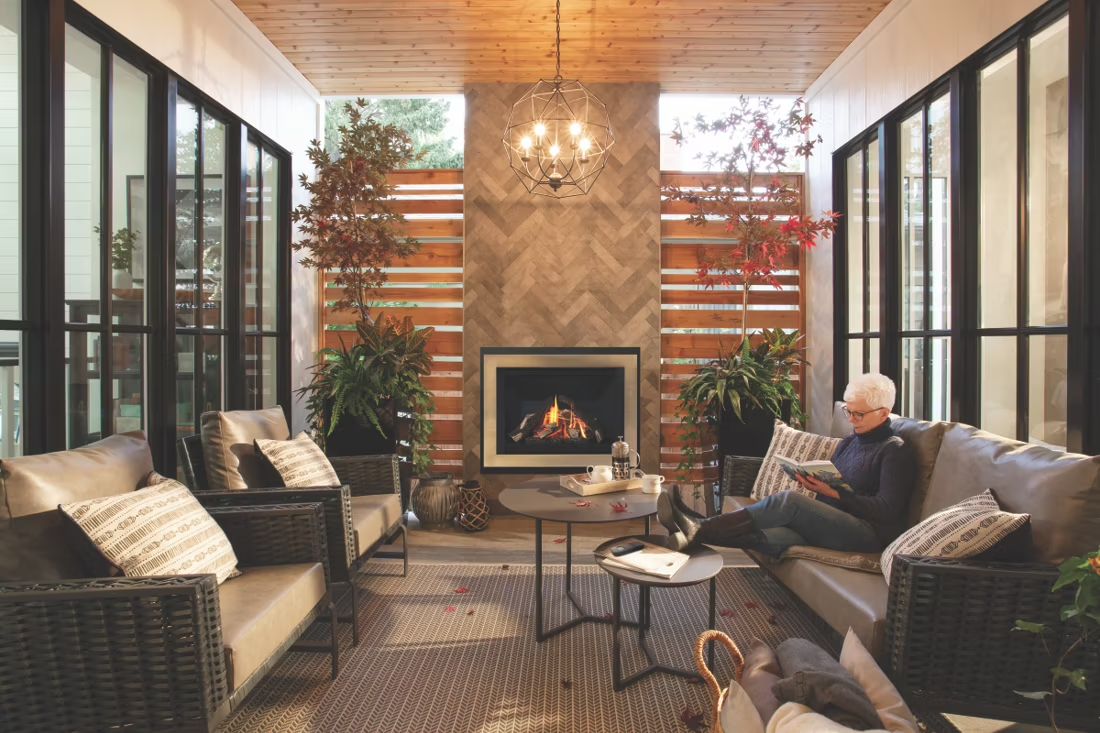
Inside the city limits of Center, natural gas service is available through Atmos Energy, which makes adding a gas fireplace to an existing home fairly straightforward if you're already on the line for a furnace or water heater. Out in the rest of the county—Tenaha, Timpson, Joaquin, and the unincorporated areas in between—propane from a local supplier is the standard fuel source, and most gas fireplace models can be configured for either. Either way, a properly sized and vented gas fireplace gives you reliable heat for supplemental use in the living room, the den, or a converted sunporch, without the smoke and upkeep of a wood-burning setup.
Three steps. No salesperson until you're ready.
Tell us about your project
Your zip code, your situation, and the fuel you're leaning toward—or let the answers point you to one.
See what's actually available
The brands dealers within 100 miles genuinely carry—real options, never a catalog mirage.
Get your dealer & Project Guide
A trusted local dealer, plus the free Project Guide & Parts List that names every component of the job.
Frequently Asked Questions
How much does a gas fireplace installation cost in Shelby County?
Most gas fireplace installations in Shelby County run somewhere between $3,500 and $9,000, with the low end covering a direct-vent gas insert dropped into an existing masonry fireplace where gas is already piped nearby, and the high end covering a new built-in unit that requires framing, venting through an exterior wall, and a fresh gas line run. If you're on propane rather than Atmos Energy's natural gas line—which is the case for most homes outside Center—and you don't already have a tank, that adds to the project cost. A local dealer will give you a firm number after seeing your fireplace opening and gas access in person.
Can I convert my existing wood fireplace to gas?
Yes, and it's one of the more common projects for the older homes around Center and Tenaha that were originally built with a wood-burning masonry fireplace. A gas insert fits into the existing opening and vents through the same chimney using a stainless liner, so you keep the look of the fireplace while gaining instant on-off heat and losing the ash, creosote, and firewood storage. Whether you convert to natural gas (if you're on the Atmos Energy line in Center) or propane depends on what's already run to your house—your local dealer will confirm which makes sense before quoting the job.
Do I need natural gas, or can I run a fireplace on propane?
Either works, and which one you use largely comes down to where you live in the county. Homes inside Center generally have access to Atmos Energy's natural gas line, so if you already run gas appliances there, adding a fireplace is a simple tie-in. Out in Tenaha, Timpson, Joaquin, and the unincorporated parts of Shelby County, propane from a local delivery supplier is the norm, either from an existing tank or a new tank set specifically for the fireplace. Most gas fireplace models can be configured for either fuel with the correct orifice and regulator, so fuel type rarely limits which unit you can choose.
Will my gas fireplace still work if the power goes out?
Most modern gas fireplaces with IPI (intermittent pilot ignition) run on a battery backup—typically standard AA batteries inside the unit—so they'll light and operate normally even with the grid down. That's worth planning for in Shelby County: East Texas isn't immune to the kind of grid strain that hit the state during Winter Storm Uri in February 2021, when ice and freezing temperatures knocked out power across the region for days. Some manufacturers, notably Valor, go a step further and generate the pilot's own electricity through the thermocouple, so there are no batteries to remember at all. Ask your dealer about the ignition system on any unit you're considering if outage backup matters to you.
What's the difference between a gas fireplace, gas insert, and gas stove?
A gas fireplace is a fully built-in unit framed into a wall—the right call for new construction or a remodel with no existing fireplace. A gas insert slides into an existing masonry fireplace opening and uses the existing chimney as its vent path, which is the common route for older Center and Tenaha homes with a wood-burning hearth already in place. A gas stove is a freestanding cabinet-style unit that sits on the floor, similar in footprint to a wood stove, and works well in a room without any fireplace opening at all. Most Shelby County homeowners with an existing fireplace end up choosing an insert.
Do I need a permit to install a gas fireplace in Shelby County?
Yes—a gas fireplace installation requires both a building permit and a gas line permit, and the gas line work itself has to be done by a licensed gas-fitter. Inside Center, that permit runs through the city; in the unincorporated parts of Shelby County, it runs through the county. Most reputable local dealers handle the permitting and inspection scheduling as part of the installation, so you're not left coordinating separate trades for the venting, gas line, and framing yourself.
What's the difference between vented and vent-free gas fireplaces?
Vented gas fireplaces—direct-vent or B-vent—pull combustion air from outside and exhaust the byproducts back outside through sealed venting. Vent-free (or "ventless") units burn directly into the room air with no external venting, which makes installation simpler but releases some moisture and combustion byproducts indoors, so they come with strict room-size and ventilation rules. Vent-free units are legal in Texas, and you'll see them in some Shelby County homes for their installation simplicity, but direct-vent units are the more universally recommended choice—they deliver real heat output without any tradeoff on indoor air quality. A local dealer can walk you through both if you're weighing the choice for a specific room.
How often should a gas fireplace be serviced?
Plan on an annual inspection, ideally before the first cold snap of the season rolls through in November or December. A technician checks the burner, pilot assembly, gas connections, and venting, and cleans the glass and interior. It's a quicker, less involved job than sweeping a wood chimney, but skipping it is how small issues—a dirty pilot, a failing thermocouple—turn into no-heat situations on the one week a year you actually need the fireplace. Expect to pay roughly $150 to $250 for a standard annual service call in Shelby County.
Gas vs. wood—which makes more sense for a Shelby County home?
Wood has deep roots here—oak, pecan, and mesquite are all readily available locally, and a wood-burning fireplace or insert gives you heat even if the power's out and the gas line is fine but you'd rather not run it. Gas wins on convenience: no wood to buy, split, or store, no ash cleanup, and instant heat for the kind of short, mild cold spells Shelby County actually gets most winters. Given the county's modest 2,241 heating degree days, most homeowners here aren't relying on either fuel as their sole heat source—it's supplemental to central HVAC. For that use case, gas is usually the easier day-to-day choice, while wood stays popular for the ambiance and backup value in older Center and Tenaha homes that already have a working chimney.
Why is my open fireplace making my house colder?
Open fireplaces suck—literally. As the fire burns, it consumes air your furnace already paid to heat and pulls it out through the chimney, so the house is actually colder after the fire goes out than before you lit it. An insert fixes this: it seals the chimney, puts fixed glass across the front, and turns that hole in your house into a real heat source.
Can I put a TV above my fireplace?
Yes—with an asterisk. Fireplaces are hot and TVs don't like heat. Either put a mantel between them to deflect rising warmth, or choose a fireplace with heat-management technology that creates a cool zone on the wall above—the wall stays around 125 degrees, barely warm, while the room still gets full heat. If you like clean lines and don't want a mantel, heat management is the answer.
Can a fireplace actually lower my heating bill?
Yes—by creating a comfort zone. A furnace heats every square foot of the house just to warm the one room you're in; a gas fireplace on low burns roughly a sixth of the gas a typical furnace does. Set the furnace around 55–60 degrees as a baseline, then heat the rooms your family actually uses. Families who heat this way commonly save $20–$60 a month.
Should the dealer who sells my fireplace also install it?
Ideally, yes. A fireplace project involves vent pipe, gas line, electrical, and often tile or stone. Hire three or four separate trades and you own the liability and the game of telephone between them. One company selling and installing means one accountable party, start to finish—ask about factory training, on-time completion records, and what happens if an inspection fails.
Stove and Fireplace Dealers in Shelby County
Listings include WhyFire partner dealers, dealers we have verified as authorized for the brands we recommend, and established local businesses that carry hearth products. Every listing shows which one it is. The ones marked Preferred run on WhyFire's software, so they can show you real pricing and book your appointment right here. No manufacturer pays for placement. How we verify dealers →
O'Neal Gas Inc.
Fireplace Specialties
Custom-Bilt Cabinet & Supply
Acme Brick
Find your gas fireplace in Shelby County.
Tell us a bit about your home and we'll send you a free Project Guide & Parts List—a plan for your Shelby County gas fireplace project with the exact parts, including the vent kit, and our recommended local dealer.
Find Your Fireplace →