
Warm up the ranch house without the chimney.
Schleicher County's mild winters—averaging 32°F lows and just 2,490 heating degree days—mean most homes don't need a full wood-burning setup to stay comfortable. Find the right electric unit and connect with a trusted local dealer.
Every Project Starts From One of These Five Situations
The heat you actually need, most winters.
Schleicher County, home to about 1,936 residents and the county seat of Eldorado, sits on the Edwards Plateau where ranching runs the local economy and winters are short. At Climate Zone 3B with roughly 2,490 heating degree days a year, the county sees a fraction of the cold that places like Bismarck, ND or Fargo, ND log every winter—most cold snaps are brief, and a hard freeze rarely lasts more than a few days. That changes the math on heating. Instead of sizing a home for weeks of sub-zero nights, most Schleicher County households need supplemental, on-demand warmth for the handful of genuinely cold mornings each year.
That's where electric fireplaces earn their place. Many of the older stone and frame ranch houses scattered around Eldorado, Mertzon Road, and the surrounding rangeland were never built with a chimney, and adding one for a wood or gas unit is a major project. An electric insert or wall-mount unit sidesteps that entirely—no venting, no flue, no gas line, just a dedicated circuit and a wall. Plug-in models run on a standard household outlet; larger built-ins typically need a 240V circuit an electrician can add in an afternoon. For bunkhouses, guest quarters, or a living room that just needs a heat boost on a 28-degree morning, electric delivers real warmth and the look of a fire without asking a rancher to add a masonry chimney to a house that's stood without one for eighty years.
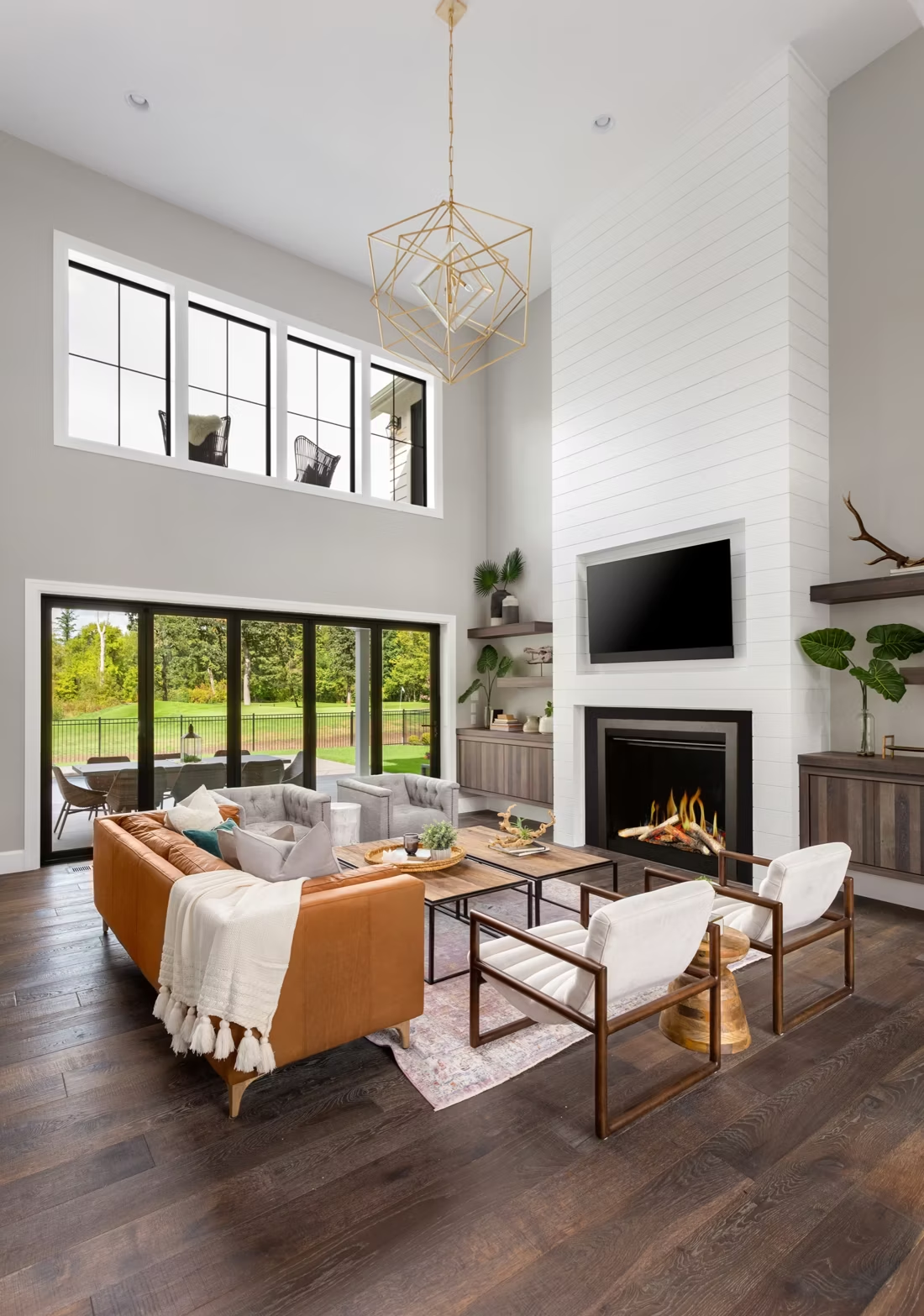
Three steps. No salesperson until you're ready.
Tell us about your project
Your zip code, your situation, and the fuel you're leaning toward—or let the answers point you to one.
See what's actually available
The brands dealers within 100 miles genuinely carry—real options, never a catalog mirage.
Get your dealer & Project Guide
A trusted local dealer, plus the free Project Guide & Parts List that names every component of the job.
Frequently Asked Questions
How much does an electric fireplace installation cost in Schleicher County?
Plug-in electric fireplaces (freestanding units or inserts that use a standard 120V outlet) typically run $500 to $1,200 installed, with most of that being the unit itself since no electrical work is needed. Built-in wall units or larger inserts that require a dedicated 240V circuit run higher, generally $1,500 to $3,000, once you factor in an electrician to run new wiring—a common need in older Eldorado-area ranch homes that weren't wired for a second heat source. Local dealers can tell you which category a given unit falls into before you commit.
What type of electric fireplace works best in an older ranch home without a chimney?
For Schleicher County's stone and frame ranch houses without an existing chimney, a wall-mount or freestanding electric unit is usually the simplest path—it doesn't require any masonry opening or venting, just a wall with wiring access. If the home already has an old wood-burning fireplace opening that's no longer used, an electric insert can be set into that opening for a built-in look without touching the existing masonry. Freestanding cabinet-style units are a popular choice for homes where residents want to move the unit between rooms or take it along if they relocate.
Do I need a permit to install an electric fireplace in Schleicher County?
Plug-in units that run on a standard 120V outlet generally don't require a permit anywhere in the county. Built-in units wired to a dedicated 240V circuit involve electrical work that should meet National Electrical Code standards—Schleicher County doesn't maintain a large building permit office given its size, so the practical step is hiring a licensed electrician who will pull whatever inspection is required for the circuit itself. Any local dealer installing a hardwired unit will coordinate this as part of the job.
Will my electric fireplace still work if the power goes out?
No—this is the one real tradeoff with electric heat. Unlike a wood stove burning local oak or mesquite, an electric fireplace stops producing heat the moment power drops, and rural lines around Schleicher County can go down during ice events or high wind. For households that want a backup heat source that works without the grid, pairing an electric fireplace for daily convenience with a wood stove or propane heater for outages is a common approach among ranch families in the area.
Why choose electric heat in a county where wood is so easy to come by?
Oak, pecan, and mesquite are all common on Schleicher County ranchland, and plenty of households already burn wood for warmth or ambiance. But wood heat means cutting, hauling, storing, and tending a fire—work that makes sense for a primary heat source through a real cold spell, less so for a guest room or a den that just needs to take the chill off some mornings. Electric fireplaces give you instant, thermostat-controlled heat with none of the mess, which is why many local homes use both: wood or propane for serious cold, electric for daily convenience and the rooms without a chimney.
What size electric fireplace do I need for my home?
Electric fireplaces are rated by BTU output and typically list a recommended square footage on the box—most units in the 4,600–5,200 BTU range comfortably supplement heat for a 400–1,000 square foot living space, which covers most single rooms in Schleicher County homes. Since winter lows here average around 32°F rather than the deep negatives seen farther north, you're generally sizing for supplemental comfort rather than whole-home heating, so most households do fine with a mid-range unit rather than the largest model on the shelf.
Where's the best place to install an electric fireplace in my home?
The most popular spots are a living room accent wall, a den without an existing fireplace, or an old wood-burning fireplace opening that's been sitting unused. Wall-mount units work well under a TV or as a standalone focal point; insert-style units slide into an existing opening for a built-in look. Because there's no venting requirement, placement is really about where you want the heat and the visual—not about chimney location, which opens up rooms that could never have hosted a wood or gas fireplace.
Does my local utility affect what electric fireplace I can install?
Most rural Schleicher County homes are served by a regional electric cooperative rather than a large investor-owned utility, and the grid here is generally reliable but can be sensitive to ice storms and high wind events common to the Edwards Plateau. A standard plug-in electric fireplace draws about as much power as a hair dryer, so it won't strain a typical residential service. If you're adding a larger built-in unit on a dedicated 240V circuit, it's worth mentioning to your electrician so the circuit is sized correctly for your home's existing panel capacity.
Electric vs. propane—which is right for my home?
Propane is the more common primary heat source for homes outside natural gas service areas like Schleicher County, and it keeps working during a power outage—a real advantage on the ranch. Electric fireplaces can't heat a whole home through a hard freeze and won't run without power, but they install anywhere with no gas line or venting, cost less upfront, and are simple to operate. Many local households run propane or a wood stove for genuine cold and use an electric unit in a secondary room or as a supplemental, no-hassle source of everyday warmth.
Do electric fireplaces actually produce heat?
Yes—most put out around 4,800–5,000 BTUs from a standard outlet, which comfortably warms a bedroom, office, or den as a comfort-zone heater. What they won't do is carry a whole house the way wood, gas, or pellet can. Think of electric as ambiance-first with honest supplemental heat: flames on with no heat in July, flames plus warmth in January.
Can I put a TV above my fireplace?
Yes—with an asterisk. Fireplaces are hot and TVs don't like heat. Either put a mantel between them to deflect rising warmth, or choose a fireplace with heat-management technology that creates a cool zone on the wall above—the wall stays around 125 degrees, barely warm, while the room still gets full heat. If you like clean lines and don't want a mantel, heat management is the answer.
Can I install a fireplace myself?
If you're putting a fire in your house on purpose, it's best to work with an expert. Unless you're genuinely experienced in framing, gas line, vent pipe, and the national code on clearances to combustibles, have a professional do it—and ideally the same company that sells you the fireplace, so warranty, service, and liability all live under one roof.
Does a fireplace add value to my home?
On average, a fireplace adds back to the home about the same amount you spent installing it. Add the monthly savings from heating the rooms you actually use instead of the whole house—often hundreds of dollars a year—and the value case is strong before you even count what a fire does for how your family uses the room.
Stove and Fireplace Dealers in Schleicher County
Listings include WhyFire partner dealers, dealers we have verified as authorized for the brands we recommend, and established local businesses that carry hearth products. Every listing shows which one it is. The ones marked Preferred run on WhyFire's software, so they can show you real pricing and book your appointment right here. No manufacturer pays for placement. How we verify dealers →
Unlimited Air
Area – San Angelo, Tx
Find your electric fireplace in Schleicher County.
Tell us a bit about your home and we'll put together a free Project Guide & Parts List for your Schleicher County electric fireplace project, matched with a trusted local dealer who can install it right.
Find Your Fireplace →