
Find a Gas Fireplace Built for Sanger's Mild Winters.
Instant, reliable heat for the occasional North Texas cold snap—without tending a fire or stacking wood. Find the right unit and connect with a trusted local dealer.
Every Project Starts From One of These Five Situations
Efficient warmth for the nights that actually need it.
Sanger sits in climate zone 3A on the rolling prairie north of the Dallas-Fort Worth metro, at just 672 feet of elevation. With an average winter low around 33°F and roughly 2,577 heating degree days a year—a fraction of what a place like Bismarck, ND or Duluth, MN sees—most homes here don't need a heating system built to run all winter. What they need is something that comes on fast during a January cold snap or an ice-storm week, then sits idle the rest of the year. A gas fireplace fits that pattern better than almost anything else on the market.
Many Sanger homes, especially in the newer subdivisions that have grown up along the US-77 and I-35 corridor, are already piped for natural gas; older properties and homes on the outskirts of town sometimes rely on propane instead, particularly where gas line extensions haven't caught up with newer construction. Either way, a direct-vent gas fireplace delivers real, immediate heat at the flip of a switch or a wall switch remote. It's also worth remembering February 2021: when Winter Storm Uri knocked out ERCOT-connected power to much of North Texas for days, homeowners with a gas fireplace on a battery-backed ignition system had heat when the rest of the house didn't. That's not a hypothetical benefit here—it's a real reason Sanger homeowners ask about gas.
Three steps. No salesperson until you're ready.
Tell us about your project
Your zip code, your situation, and the fuel you're leaning toward—or let the answers point you to one.
See what's actually available
The brands dealers within 100 miles genuinely carry—real options, never a catalog mirage.
Get your dealer & Project Guide
A trusted local dealer, plus the free Project Guide & Parts List that names every component of the job.
Frequently Asked Questions
How much does a gas fireplace installation cost in Sanger?
For a typical North Texas home, a gas fireplace or insert installation runs roughly $3,500 to $9,000, depending on the unit, whether a gas line already reaches the install location, and the venting path required. Converting an existing wood-burning firebox—common in Sanger's builder-grade ranch homes from the 1990s and 2000s—to a direct-vent gas insert tends to land on the lower-to-middle end since the chimney chase already exists. New construction or additions that need a fresh gas line run from the meter push toward the higher end. A local dealer can give you a firm number after walking your home.
Can I convert my existing wood-burning fireplace to gas?
Yes, and it's one of the most common projects in Sanger. A lot of the town's housing stock includes a builder-grade wood-burning firebox that rarely gets used—Sanger's mild winters and the extra work of sourcing and stacking oak, pecan, or mesquite firewood mean many of these fireplaces sit cold most of the year. A gas log set or direct-vent insert drops into that existing masonry or prefab firebox, uses the chimney you already have (often with a stainless liner), and turns an unused fireplace into a fireplace you'll actually run on a cold night. Most conversions run $2,500 to $6,000 depending on whether it's a vented log set or a full sealed insert.
Do I need natural gas service, or does propane work too?
Both work fine. If your home is on natural gas already—common in the older, more established parts of Sanger—adding a fireplace is usually a straightforward tap off an existing line. Homes on larger lots or in newer developments still waiting on gas line extensions typically run on propane instead, either from an existing tank or a new tank set by a local propane supplier. Most gas fireplace models can be configured for either fuel; your installer sets the correct orifice and regulator for whichever you have.
Will a gas fireplace still work if the power goes out?
For North Texas homeowners, this is often the deciding factor. Units with IPI (intermittent pilot ignition) run on AA batteries built into the unit, so they light and heat normally even when the grid is down—as it was for many ERCOT customers during Winter Storm Uri in February 2021. Some manufacturers, like Valor, go a step further: their gas fireplaces generate their own electricity through the pilot's thermocouple, so there's no battery to remember to replace. Given how a single Panhandle cold front can still knock out power locally, it's worth asking your dealer about the ignition system on any unit you're considering.
What's the difference between a gas fireplace, gas insert, and gas stove?
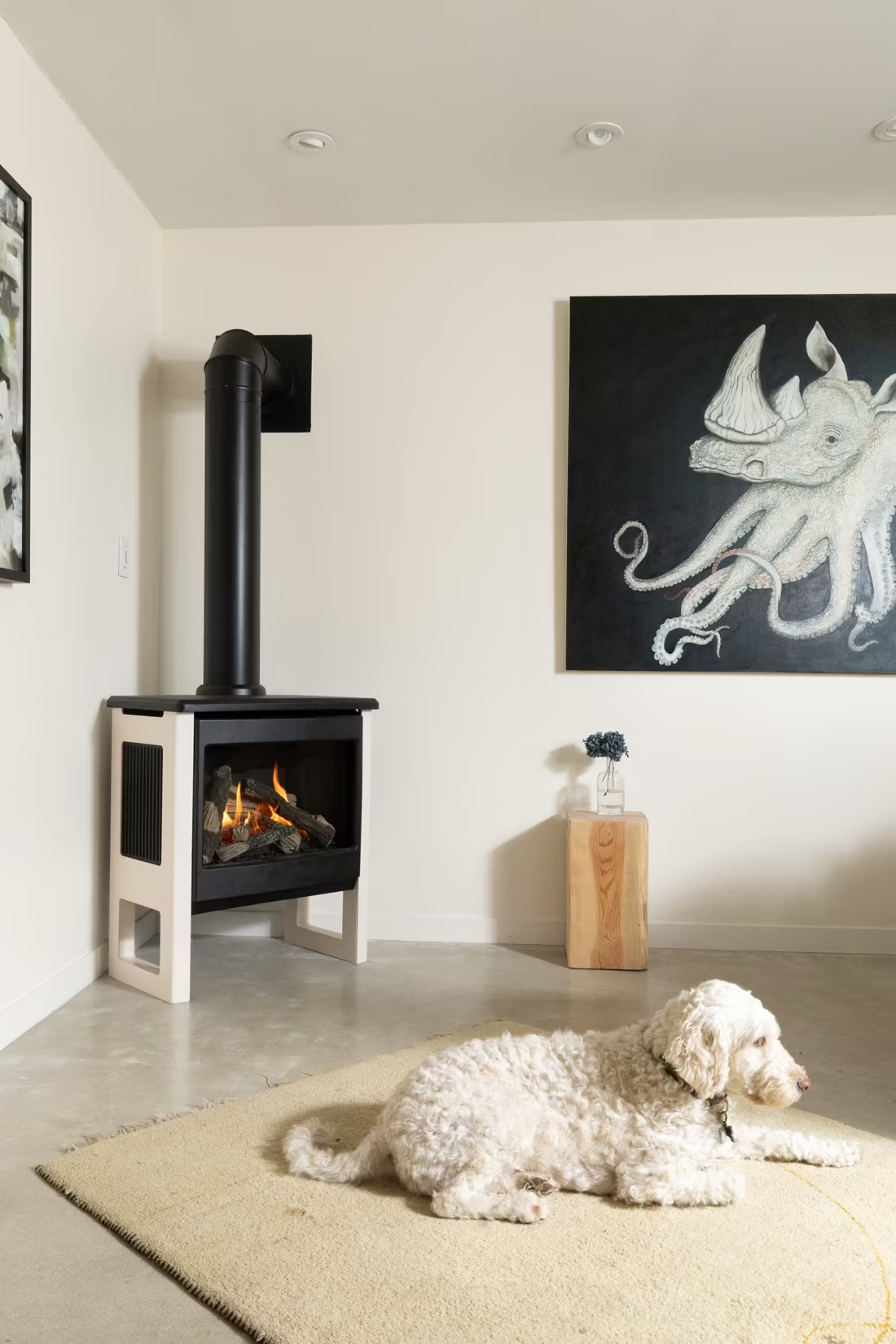
A gas fireplace is a fully built-in unit framed into a wall—the standard choice for new construction and the open-concept living rooms common in Sanger's newer homes. A gas insert is sized to slide into an existing masonry or prefab wood-burning firebox, sealing it up and venting through the existing chimney chase. A gas stove is a freestanding cast-iron or steel unit that sits on the floor. For the many Sanger homes with an existing but underused wood firebox, an insert is usually the simplest upgrade. Homes without a fireplace already framed in are better suited to a built-in unit or a freestanding stove.
Do I need a permit to install a gas fireplace in Sanger?
Generally yes. Inside city limits, the City of Sanger Building Inspections Department requires a permit for gas line work and any new fireplace installation, and the gas connection itself has to be run by a licensed gas-fitter. Properties outside the city limits fall under Denton County's permitting process instead. A reputable local dealer will pull these permits as part of the install and coordinate the inspection, so you're not stuck managing multiple trades yourself.
Vented vs. vent-free gas fireplaces—which should I choose?
Vented (direct-vent) gas fireplaces draw combustion air from outside and exhaust the byproducts back outside through a sealed pipe—the cleanest and most universally code-compliant option. Vent-free units burn gas directly into the room and are legal in Texas, provided the room meets minimum size requirements and the unit has an oxygen depletion sensor. Vent-free can be a reasonable fit for a smaller, tightly sealed room where running a vent isn't practical, but for most Sanger living rooms and dens, a direct-vent unit is the more common recommendation—full heat output with no indoor air quality tradeoffs.
How often does a gas fireplace need to be serviced?
Plan on an annual inspection, ideally before the first cold front of the season arrives in North Texas. A technician checks the burner, pilot assembly, venting, and gas connections, and cleans the glass and interior—a much smaller job than chimney sweeping for a wood-burning unit, but still important for safety, especially on units that sit unused for most of the year given Sanger's short heating season. Local gas appliance service providers typically charge $150 to $250 for this visit.
Gas vs. electric fireplace—which makes more sense in Sanger?
Given how mild Sanger's winters run—2,577 heating degree days a year is light compared to most of the country—both are reasonable options, but they serve different needs. A gas fireplace produces real, substantial heat output and can serve as a genuine backup heat source during a cold snap or power outage. An electric fireplace, drawing power from Oncor, Texas-New Mexico Power, or Denton County Electric Cooperative at around 13.8 cents per kWh, costs far less to install (typically $400 to $1,200) and produces flame-effect ambiance with modest supplemental heat, but offers no backup if the grid goes down. For a primary living space where you want real winter heat on demand, gas is usually the better fit; for a bedroom, office, or secondary room where ambiance matters more than BTUs, electric is often the simpler, cheaper choice.
Can I put a TV above my fireplace?
Yes—with an asterisk. Fireplaces are hot and TVs don't like heat. Either put a mantel between them to deflect rising warmth, or choose a fireplace with heat-management technology that creates a cool zone on the wall above—the wall stays around 125 degrees, barely warm, while the room still gets full heat. If you like clean lines and don't want a mantel, heat management is the answer.
What's the difference between an insert and a zero-clearance fireplace?
An insert is a fireplace that slides into a pre-existing wood-burning fireplace—if you don't have one, there's nothing to insert it into. A zero-clearance fireplace is built into a framed wall, which makes it the answer for remodels and new construction. Simple test: existing masonry fireplace means insert; blank or framed wall means zero-clearance.
How much should I budget for a fireplace?
For an average home—covering the fireplace, the vent pipe, and basic installation—a budget between $3,900 and $5,500 gives you a lot of options across wood, gas, and pellet. By the time you add finish work, gas line, and electrical, the average complete installation lands between $5,000 and $12,000 all-in. In a remodel or new build, a good rule is to put about 2.5% of the total project cost toward the fireplace.
Can a fireplace actually lower my heating bill?
Yes—by creating a comfort zone. A furnace heats every square foot of the house just to warm the one room you're in; a gas fireplace on low burns roughly a sixth of the gas a typical furnace does. Set the furnace around 55–60 degrees as a baseline, then heat the rooms your family actually uses. Families who heat this way commonly save $20–$60 a month.
Nearby Dealers
Hearth shops serving Sanger and the surrounding area. Every listing shows whether it is a WhyFire partner, a dealer we have verified as authorized for the brands we recommend, or a local business carrying hearth products. No manufacturer pays for placement. How we verify dealers →
Sweeps N Ladders
Heffley's Hearth & Home
Find the right gas fireplace for your Sanger home.
Tell us a bit about your house and we'll put together a free Project Guide & Parts List—the exact parts, including the vent kit, and a trusted local Sanger-area dealer to install it.
Find Your Fireplace →