
Warm, instant heat for San Saba County's mild winters.
With only about 2,306 heating degree days a year along the San Saba River, most homes here need a little supplemental warmth, not a furnace-replacing wood stove. Find the right electric fireplace or insert, and connect with a trusted local dealer.
Every Project Starts From One of These Five Situations
Mild winters make electric heat the practical choice.
San Saba County sits in the Texas Hill Country along the San Saba River, home to the pecan orchards that earned the town of San Saba its nickname as the Pecan Capital of the World. It's a small county—about 3,369 residents spread across ranch land, riverfront acreage, and the town itself—and the climate matches its mild reputation. In Zone 3A, winter lows average around 33°F and the county logs roughly 2,306 heating degree days a year, a fraction of what a place like Duluth, MN or Bismarck, ND racks up in a single hard winter. Most years, the real heating season here runs from late November through February, with plenty of days in between that never need supplemental heat at all.
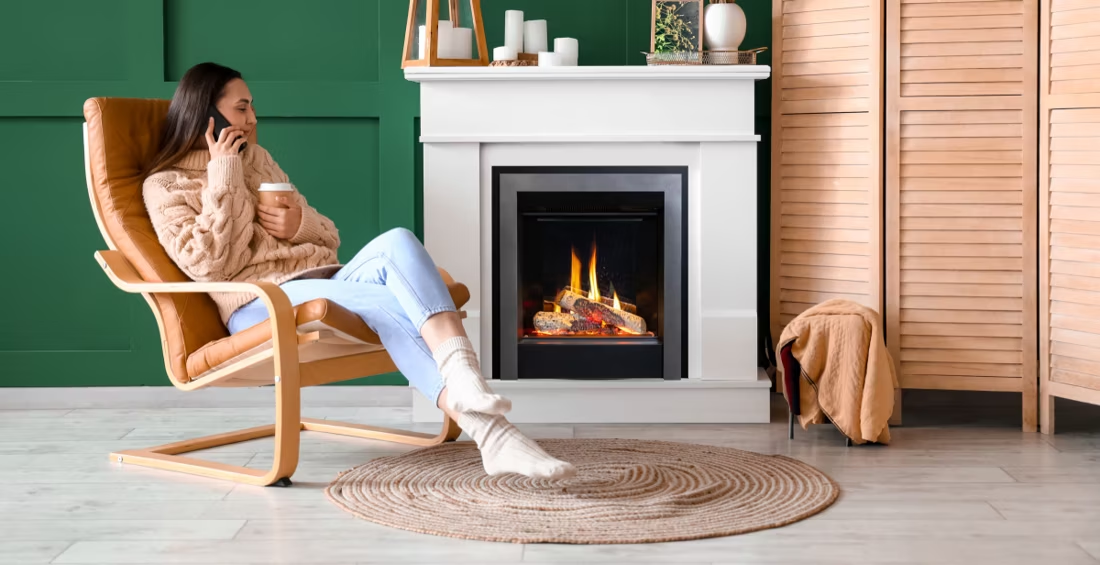
That's exactly the climate where electric fireplaces make the most sense. San Saba County homes typically rely on central HVAC—often propane or a heat pump—for whole-house heating, and an electric fireplace fills a different role: instant ambiance and zone heat in a living room, a primary bedroom, or a hunting cabin out along the river, without a chimney, gas line, or wood supply to maintain. Central Texas Electric Cooperative, headquartered right in San Saba, serves most of the county, and a plug-in or hardwired electric unit draws on that existing service rather than requiring new fuel infrastructure. For homeowners who already burn oak, pecan, or mesquite in a wood fireplace for tradition and want a second, no-fuss unit elsewhere in the house, electric is usually the easiest add.
Three steps. No salesperson until you're ready.
Tell us about your project
Your zip code, your situation, and the fuel you're leaning toward—or let the answers point you to one.
See what's actually available
The brands dealers within 100 miles genuinely carry—real options, never a catalog mirage.
Get your dealer & Project Guide
A trusted local dealer, plus the free Project Guide & Parts List that names every component of the job.
Frequently Asked Questions
How much does an electric fireplace installation cost in San Saba County?
A basic plug-in electric insert or mantel unit typically runs $300 to $900 installed, since it plugs into a standard 120V outlet and needs no venting or gas line. A built-in wall unit or a larger 240V hardwired fireplace runs higher—often $900 to $2,000—once an electrician is involved to run a dedicated circuit, which is common in older San Saba County ranch homes and mobile homes with limited panel capacity. Framing a recessed unit into an existing wall adds carpentry cost on top of that. A local dealer can give you a firm number after seeing your electrical panel and the wall or fireplace opening you're working with.
Do I need a permit to install an electric fireplace in San Saba County?
A simple plug-in electric fireplace generally doesn't require a permit—it's no different than plugging in any other appliance. Where a permit typically comes into play is when a hardwired 240V unit needs a new dedicated circuit run from your panel, since that's electrical work subject to county code. Given how small San Saba County is, licensed electricians are limited, so it's worth confirming your installer is properly licensed and pulls any required electrical permit rather than skipping that step. Most reputable local dealers build this into the install rather than leaving it to you.
Will an electric fireplace actually heat my home?
Most electric fireplaces are rated around 1,500 watts, which translates to roughly 4,800–5,100 BTU—enough to comfortably warm a single room, but not a whole house. Given San Saba County's mild climate zone (3A) and modest 2,306 heating degree days, that's usually plenty: on the coldest nights, when the average low sits around 33°F, an electric unit can carry a living room or bedroom on its own while central heat handles the rest of the house. If you're hoping to heat a large open-concept space or a poorly insulated older farmhouse, talk to a local dealer about unit placement and whether you'd be better served by two smaller units instead of one.
Electric vs. wood—which makes more sense for my home?
Wood has deep roots in San Saba County, where oak, pecan, and mesquite are all locally available—pecan especially, given the county's orchards. A wood fireplace or stove gives you real fire, works without power, and can meaningfully offset a heating bill in a hard freeze. But San Saba's mild winters mean many homes only need supplemental heat a handful of weeks a year, which is where electric earns its place: no ash, no chimney maintenance, no smoke, and it can go in a room—a bedroom, a den, a second living area—where running a flue or gas line isn't practical. Plenty of local homeowners run both: wood for tradition and backup heat, electric for convenience in the rooms that see daily use.
What types of electric fireplaces are available?
Electric inserts drop into an existing fireplace opening, masonry or zero-clearance, and are a common retrofit for older San Saba homes with a fireplace that no longer gets used for wood. Wall-mounted and recessed units work well in newer construction or a remodel where you want a linear, modern look without any existing hearth. Freestanding electric stoves mimic the footprint of a wood stove and can go almost anywhere near an outlet. Mantel packages pair an electric insert with surrounding cabinetry for a finished, built-in look. A local dealer can walk you through which fits your wall, your framing, and your electrical setup.
Are there electrical considerations specific to older or rural San Saba County homes?
Yes—a number of homes in San Saba County, particularly older ranch houses and mobile or manufactured homes, run on older electrical panels with limited spare capacity. Before installing a hardwired electric fireplace, it's worth having a licensed electrician confirm your panel can handle the added circuit, especially for a larger 240V unit. Plug-in units sidestep this issue almost entirely since they draw modest amperage from a standard outlet. If you're in a rural part of the county served by longer feeder lines, mentioning that to your installer helps them recommend a unit and circuit setup that won't trip breakers during regular use.
What will an electric fireplace cost to run through a San Saba County winter?
Running a 1,500-watt electric fireplace for a few hours a night through a typical San Saba County winter—with its modest 2,306 heating degree days—usually adds somewhere in the range of $10 to $25 a month to your Central Texas Electric Cooperative bill, depending on how many hours you run it and your specific rate. Most units let you run the flame effect without the heater engaged, which uses only a few watts and is a popular choice for ambiance during the county's long mild stretches when you want the look of a fire without any added heat.
What's the best electric fireplace for San Saba County's climate?
Because heating demand here is modest, the decision comes down more to look and placement than raw output. Realistic-flame models from brands like Dimplex or Napoleon give you convincing LED fire technology and a remote-controlled heater you can turn off entirely on the many mild days the county sees, running just the flame effect for atmosphere. For a den or bedroom that gets genuinely cold on the handful of hard-freeze nights each winter, look for a unit with a built-in thermostat so it cycles the heater rather than running full-blast constantly. A local dealer can match a specific model to your room size and wall setup.
Electric vs. pellet—which is right for my home?
Pellet stoves burn compressed wood pellets—regional brands like Forest Energy and Lignetics are commonly available—and can meaningfully heat a room or small home while producing far less ash than cordwood. But they require electricity to run the auger and blower, plus a pellet supply and periodic hopper loading. Electric fireplaces skip the fuel entirely: no bags to store, no hopper to fill, just a switch or remote. For San Saba County's mild winters, where most homes only need a room or two warmed on the coldest nights, electric is usually the simpler, lower-maintenance choice—pellet makes more sense if you want genuine supplemental heat output and don't mind managing fuel.
Can I put a TV above my fireplace?
Yes—with an asterisk. Fireplaces are hot and TVs don't like heat. Either put a mantel between them to deflect rising warmth, or choose a fireplace with heat-management technology that creates a cool zone on the wall above—the wall stays around 125 degrees, barely warm, while the room still gets full heat. If you like clean lines and don't want a mantel, heat management is the answer.
Do electric fireplaces actually produce heat?
Yes—most put out around 4,800–5,000 BTUs from a standard outlet, which comfortably warms a bedroom, office, or den as a comfort-zone heater. What they won't do is carry a whole house the way wood, gas, or pellet can. Think of electric as ambiance-first with honest supplemental heat: flames on with no heat in July, flames plus warmth in January.
Can a fireplace actually lower my heating bill?
Yes—by creating a comfort zone. A furnace heats every square foot of the house just to warm the one room you're in; a gas fireplace on low burns roughly a sixth of the gas a typical furnace does. Set the furnace around 55–60 degrees as a baseline, then heat the rooms your family actually uses. Families who heat this way commonly save $20–$60 a month.
How much should I budget for a fireplace?
For an average home—covering the fireplace, the vent pipe, and basic installation—a budget between $3,900 and $5,500 gives you a lot of options across wood, gas, and pellet. By the time you add finish work, gas line, and electrical, the average complete installation lands between $5,000 and $12,000 all-in. In a remodel or new build, a good rule is to put about 2.5% of the total project cost toward the fireplace.
Stove and Fireplace Dealers in San Saba County
Listings include WhyFire partner dealers, dealers we have verified as authorized for the brands we recommend, and established local businesses that carry hearth products. Every listing shows which one it is. The ones marked Preferred run on WhyFire's software, so they can show you real pricing and book your appointment right here. No manufacturer pays for placement. How we verify dealers →
Hoover True Value Hardware
C&G Products
Quality Fire
Fredericksburg Overhead Door
Gas Logs Express & Bbq
Georgetown Energy
Area – Georgetown, Tx
Jules Design Bar
Backyard & Patio Store - Austin
Parrish & Company Inc - Round Rock
Tri-Supply - Temple
Webco Distributing Company, Inc.
Schilling Fireplace & Wood Stoves
Tri-Co Propane
Top Hat Chimney Sweeps
EarthCore Industries
Find your electric fireplace in San Saba County.
Tell us a bit about your home and we'll match you with the right electric fireplace or insert, plus a free Project Guide & Parts List with the exact parts for your install and a recommended local dealer serving San Saba County.
Find Your Fireplace →