
Warmth without the woodpile, chimney, or gas line.
San Augustine County's winters rarely demand much—lows average around 35°F and the county logs about 2,183 heating degree days a year. An electric fireplace or insert gives you real ambiance and supplemental warmth without a permit fight or a flue. Tell us about your home and we'll match you with a local dealer.
Every Project Starts From One of These Five Situations
Electric heat makes sense where winters don't demand much.
San Augustine County sits deep in the East Texas Piney Woods, near Sam Rayburn Reservoir and the Angelina National Forest, in climate zone 3A. Winters here are short and mild by national standards—an average low near 35°F and roughly 2,183 heating degree days a season, a fraction of what a place like Duluth, MN or Bismarck, ND racks up in a single hard month. In a county of about 2,100 people spread across small towns and rural acreage, most homes don't need a heating system built for sustained deep cold. They need something that takes the chill off a January morning and looks good doing it.
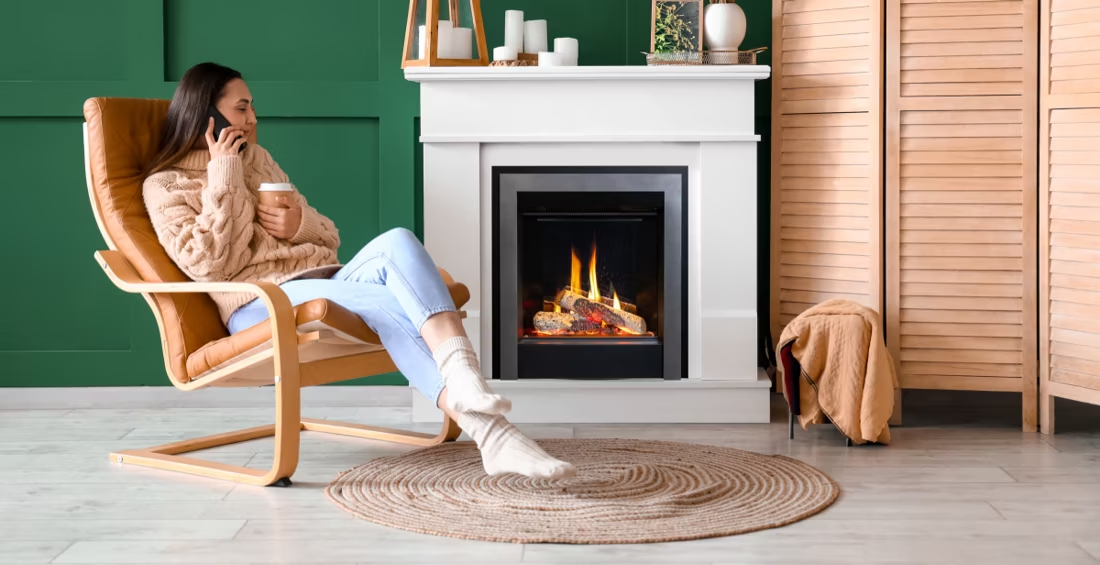
Oak, pecan, and mesquite are common locally—mostly split for the smoker, and plenty of homes still keep a wood fireplace or stove going on the coldest nights. But for day-to-day supplemental heat, a growing number of San Augustine County homeowners are turning to electric fireplaces and inserts: no chimney to maintain, no venting to size, and no cutting permit season to plan around. That matters in a county with a lot of manufactured and site-built rural homes where adding a masonry chimney or a new gas line isn't practical. An electric unit plugs in (or ties into a dedicated circuit), heats a room in minutes, and runs the flame effect year-round even when the heat's switched off.
Three steps. No salesperson until you're ready.
Tell us about your project
Your zip code, your situation, and the fuel you're leaning toward—or let the answers point you to one.
See what's actually available
The brands dealers within 100 miles genuinely carry—real options, never a catalog mirage.
Get your dealer & Project Guide
A trusted local dealer, plus the free Project Guide & Parts List that names every component of the job.
Frequently Asked Questions
How much does an electric fireplace installation cost in San Augustine County?
A plug-in electric insert or freestanding unit typically runs $400 to $1,500 installed, since most models just need a standard 120-volt outlet and no venting or framing work. A larger built-in wall unit or a model that needs a dedicated 240-volt circuit runs higher—often $1,500 to $3,500 once an electrician runs new wiring, which is common in older San Augustine County farmhouses that weren't built with a spare circuit near the intended fireplace location. Compare that to a wood or gas install in the county, which usually involves chimney work, venting, or a propane line—electric is consistently the lowest-cost path to a working fireplace here.
Do I need a permit to install an electric fireplace in San Augustine County?
Most plug-in electric fireplaces and inserts don't require a building permit since there's no venting, gas line, or structural chimney work involved. If your unit needs a new dedicated circuit or a panel upgrade, that electrical work should be pulled through your local building department and performed by a licensed electrician—this is really the only permit question that comes up with electric units in San Augustine County. A local dealer can tell you upfront whether your chosen model needs new wiring before you buy.
What size electric fireplace do I need for my home?
Because San Augustine County's mild winters (2,183 heating degree days) rarely call for whole-home heat, most electric fireplaces here are sized for zone heating—warming the room they're in rather than the whole house. A unit rated for 400–1,000 square feet comfortably handles a single living room or den, which covers most installs in the county's older frame homes and newer manufactured housing alike. If you're hoping the fireplace will meaningfully offset central heating costs on the handful of genuinely cold nights each winter, size up and look for a model with adjustable wattage output rather than a fixed low-wattage decorative unit.
Electric vs. gas—which is right for my home in San Augustine County?
Gas fireplaces in rural San Augustine County typically run on propane rather than piped natural gas, which means a tank, a delivery contract, and periodic refills—real convenience, but an ongoing fuel relationship. Electric skips all of that: no tank, no delivery, no combustion byproducts to vent. The tradeoff is heat output—a propane unit will out-heat an electric fireplace on the rare hard-freeze night. For most San Augustine County living rooms used for ambiance and everyday supplemental warmth, electric covers the need without the propane account. For a detached shop, cabin, or a room you want as a genuine backup heat source, propane gas is worth a look too.
Electric vs. wood—which is right for my home given the local wood culture?
Plenty of San Augustine County households already split oak, pecan, and mesquite for the smoker, so a wood stove or fireplace isn't a stretch culturally or logistically. Wood also works without electricity, which matters if your property loses power during a spring storm. But wood means ash, chimney maintenance, and burn-season upkeep for heat you may only need a few dozen nights a year given the county's mild climate. Electric trades that upkeep for instant on-off convenience and a flame effect you can run for atmosphere alone, with none of the smoke. Several county homes run both—wood for backup and character, electric for the den or bedroom where convenience wins.
What's the best electric fireplace for San Augustine's mild winters?
Since the heating job here is mostly supplemental rather than primary, look for a model with a strong LED flame display and a heater that can be switched off independently—you'll likely run the flame effect far more hours per year than the heat function. Wall-mounted linear units and mantel-style inserts both do well in San Augustine County's typical room sizes. If you want a unit that can genuinely take the edge off a rare hard freeze, prioritize one with a higher wattage heater (1,500W) and a thermostat rather than a single fixed heat setting.
Will my electric fireplace work during a power outage?
No—an electric fireplace needs power to run both the heater and the flame display, so it goes dark along with everything else in an outage. That's worth planning around in San Augustine County, where rural distribution lines through cooperatives like Deep East Texas Electric Cooperative can be slower to restore after ice or storm damage than in denser service areas. If backup heat during outages matters to your household, pair the electric fireplace with a wood stove or a battery-backed propane unit elsewhere in the house rather than relying on electric alone.
How much does it cost to run an electric fireplace?
A typical 1,500-watt electric fireplace heater costs roughly 15 to 25 cents an hour to run on heat mode at average East Texas electric rates—a few dollars for an evening's use. The flame-only mode, with the heater switched off, draws only a few watts and costs pennies per day, which is why so many owners leave the flame running for ambiance without worrying about the electric bill. Given San Augustine County's mild winters, most households use the heat function only a fraction of the year, keeping total seasonal operating cost well below what a comparable propane or wood setup requires in fuel.
What's the difference between an electric fireplace, insert, and stove?
An electric fireplace is typically a built-in or wall-mounted unit designed to look like a framed hearth. An electric insert is sized to slide into an existing masonry fireplace opening, which is a common upgrade for San Augustine County homes with an old wood-burning fireplace that's fallen out of use—you keep the mantel and surround, and gain a clean, low-maintenance heat source. An electric stove is a freestanding cabinet-style unit meant to mimic a wood stove's look, useful where you want a stove aesthetic without the venting a real wood stove requires. All three plug in or hardwire the same way; the choice comes down to what opening or footprint you're working with.
Can I put a TV above my fireplace?
Yes—with an asterisk. Fireplaces are hot and TVs don't like heat. Either put a mantel between them to deflect rising warmth, or choose a fireplace with heat-management technology that creates a cool zone on the wall above—the wall stays around 125 degrees, barely warm, while the room still gets full heat. If you like clean lines and don't want a mantel, heat management is the answer.
Does an electric fireplace need a vent or chimney?
No—that's its superpower. An electric fireplace needs a wall and an outlet, period. No vent pipe, no gas line, no clearances to design around, which is why it works in bedrooms, offices, apartments, and walls where venting a gas or wood unit would be impractical or impossible. Installation is typically the simplest and least expensive of any fireplace type.
What is an in-home preview and do I need one?
It's a visit where a hearth professional measures your space, confirms the model you picked actually works in your home, and walks the specs—framing, gas line, venting, finish work—before anything is ordered. Some details you just can't know until you see the house. Never make a down payment without one; it's the single most-skipped step that burns buyers.
Can I install a fireplace myself?
If you're putting a fire in your house on purpose, it's best to work with an expert. Unless you're genuinely experienced in framing, gas line, vent pipe, and the national code on clearances to combustibles, have a professional do it—and ideally the same company that sells you the fireplace, so warranty, service, and liability all live under one roof.
Stove and Fireplace Dealers in San Augustine County
Listings include WhyFire partner dealers, dealers we have verified as authorized for the brands we recommend, and established local businesses that carry hearth products. Every listing shows which one it is. The ones marked Preferred run on WhyFire's software, so they can show you real pricing and book your appointment right here. No manufacturer pays for placement. How we verify dealers →
O'Neal Gas Inc.
Find your electric fireplace in San Augustine County.
Tell us about your home and we'll put together your free Project Guide & Parts List—a plan for your electric fireplace project in San Augustine County, with the right unit, any electrical work it needs, and a trusted local dealer to install it.
Find Your Fireplace →