
Warm up Sabine County without a chimney.
Mild Piney Woods winters mean most Sabine County homes and Toledo Bend cabins don't need a full wood or gas system—just real ambiance and a little supplemental warmth. Find the right electric unit and connect with a trusted local dealer.
Every Project Starts From One of These Five Situations
A mild climate built for electric heat.
Sabine County sits deep in the East Texas Piney Woods, bordered by the Sabine National Forest and the shoreline of Toledo Bend Reservoir. Winters here are genuinely mild—climate zone 3A, an average winter low around 35°F, and just 2,183 heating degree days a year, a small fraction of what a place like Duluth MN or Bismarck ND racks up in a single cold month. That mild profile is exactly why electric fireplaces fit so naturally here: homeowners in Hemphill and around the county rarely need the heavy BTU output of a wood stove or gas furnace insert, but they still want the look, glow, and occasional warmth of a hearth in a living room, bedroom, or weekend cabin.
With no venting, chimney, or gas line required, an electric fireplace can go into almost any room on a standard or dedicated circuit—a real advantage for older Sabine County homes and lake properties where running new gas or masonry work isn't practical. Plenty of households here still burn oak, pecan, and mesquite in a wood stove or open hearth for cool-season heat and cooking flavor, and an electric unit pairs well as a second, no-mess source of warmth in another room. One honest tradeoff worth knowing: electric fireplaces need grid power to run, so during the ice storms that occasionally knock out rural cooperative lines in this part of East Texas, they won't provide backup heat the way a wood stove will.
Three steps. No salesperson until you're ready.
Tell us about your project
Your zip code, your situation, and the fuel you're leaning toward—or let the answers point you to one.
See what's actually available
The brands dealers within 100 miles genuinely carry—real options, never a catalog mirage.
Get your dealer & Project Guide
A trusted local dealer, plus the free Project Guide & Parts List that names every component of the job.
Frequently Asked Questions
How much does an electric fireplace installation cost in Sabine County?
Electric fireplace projects in Sabine County typically run anywhere from $300 for a simple plug-in insert or wall-mount unit to $2,000-$2,500 for a built-in model that requires a dedicated 240V circuit, custom framing, or a mantel surround. Because there's no chimney, gas line, or masonry work involved, electric is consistently the least expensive hearth option in the county—a big part of why it's a popular choice for lake cabins near Toledo Bend where owners want fireplace ambiance without a major construction project. A local dealer can give you a firm number once they know the unit and whether new wiring is needed.
What size electric fireplace do I need for my home?
Because Sabine County's mild winters mean electric units are mostly supplying supplemental heat and ambiance rather than carrying a whole house through freezing nights, sizing is more about the room than the climate. A 30- to 40-inch insert or wall-mount comfortably heats a single living room or bedroom in the 300-400 sq ft range, while larger built-in units can supplement a great room. If you're outfitting a smaller lake cabin near Toledo Bend Reservoir, a compact unit is usually plenty. A local dealer can walk through your specific layout and outlet or circuit situation before you buy.
Where can I find electric fireplace dealers near me in Sabine County?
With a county population under 4,200, Sabine County itself has limited hearth retail presence, so many homeowners in Hemphill and around the county end up sourcing units through dealers based in nearby Lufkin or Nacogdoches, or through electricians and general contractors familiar with local wiring codes. The key is working with someone who understands rural East Texas electrical service and can confirm whether your home's panel supports a dedicated circuit if the unit requires one. Find My Fireplace matches you with a trusted dealer who actually covers this part of the Piney Woods rather than leaving you to guess from a big-box listing.
What's the difference between an electric insert, a wall-mount, and a built-in electric fireplace?
An electric insert is designed to slide into an existing masonry fireplace opening, instantly converting an old wood-burning hearth into a clean, no-maintenance heat source—a common upgrade for older Sabine County farmhouses with an unused fireplace. A wall-mount unit hangs on any wall like a large TV and needs only a standard outlet, making it the simplest option for a cabin or secondary room. A built-in electric fireplace is framed into a wall or custom surround for a more finished, permanent look and typically calls for a dedicated circuit. For most Sabine County homes with an existing fireplace opening, an insert is the easiest upgrade; for new spaces or lake houses, a wall-mount or built-in gives more flexibility.
Do I need a permit to install an electric fireplace in Sabine County?
In most cases, no—a plug-in insert or wall-mount unit that uses an existing standard outlet typically doesn't require a permit since there's no venting, gas line, or structural chimney work involved. If your unit calls for a new dedicated 240V circuit or panel work, that electrical work generally does require a permit and should be pulled by a licensed electrician, which any reputable local dealer will coordinate for you. Because Sabine County is largely unincorporated, check with your local building official before starting any project that involves new wiring.
What's the best electric fireplace for Sabine County's climate?
Given the mild winter profile here—a 35°F average low and just over 2,000 heating degree days—most Sabine County homeowners do well with a model that offers a flame-only mode alongside the heater, since you'll likely run the fire for ambiance on summer evenings far more often than you'll need the heat setting. Look for a unit with a variable heat output in the 4,000-5,000 BTU range, which is plenty to take the chill off a room on a cool Piney Woods morning without overheating a small cabin. Realistic flame technology (LED or mirror-flicker style) has improved enough that many buyers choose electric for the cabin look alone, heat aside.
Will my electric fireplace still work if the power goes out?
No—unlike a wood stove burning local oak or mesquite, an electric fireplace is entirely dependent on grid power, so it stops producing heat and flame effect the moment the power drops. This matters in rural Sabine County, where ice storms and downed lines on cooperative service can mean outages lasting hours or longer. If backup heat during outages is a priority for your household, many local homeowners pair an electric fireplace for everyday convenience and ambiance with a wood stove or fireplace as a genuine off-grid backup.
Electric vs. wood—which is right for my Sabine County home?
Wood offers real backup heat during power outages, the lowest ongoing fuel cost if you're already cutting or sourcing local oak, pecan, or mesquite, and there are no air quality restrictions in Sabine County to worry about. Electric offers zero maintenance, no ash or creosote, instant on-off convenience, and a far lower installation cost since there's no chimney or venting to build. For a primary residence in Hemphill or out in the county, many homeowners keep a wood stove for cold snaps and outages while adding an electric unit in a second room for everyday ambiance. For a Toledo Bend weekend cabin used mostly in mild weather, electric alone is often all you need.
Electric vs. propane—which makes more sense here?
Since natural gas service isn't widely available in rural Sabine County, the real comparison for most homeowners is electric versus propane rather than electric versus natural gas. Propane fireplaces deliver more heat output and can run during a power outage with the right ignition system, but they require a tank, a fuel delivery contract, and gas line installation. Electric units skip all of that—plug in and go, with no ongoing fuel deliveries—which is why electric is often the simpler, lower-cost choice for supplemental warmth given how mild the county's winters run.
Does an electric fireplace need a vent or chimney?
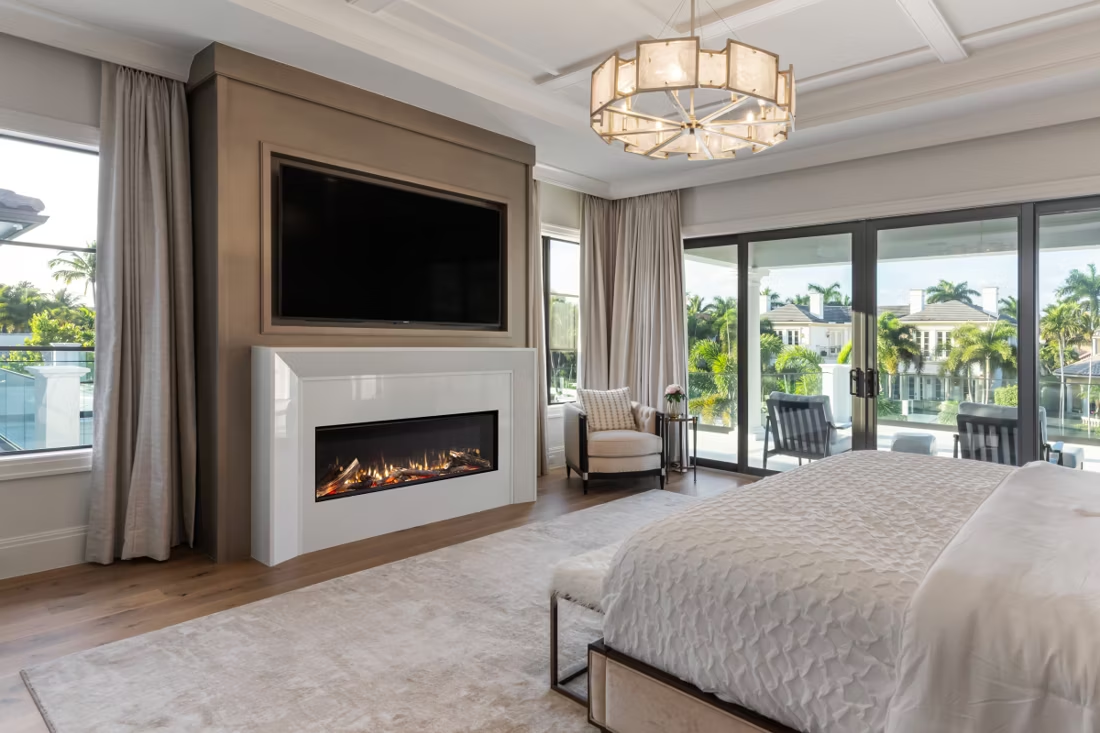
No—that's its superpower. An electric fireplace needs a wall and an outlet, period. No vent pipe, no gas line, no clearances to design around, which is why it works in bedrooms, offices, apartments, and walls where venting a gas or wood unit would be impractical or impossible. Installation is typically the simplest and least expensive of any fireplace type.
Do electric fireplaces actually produce heat?
Yes—most put out around 4,800–5,000 BTUs from a standard outlet, which comfortably warms a bedroom, office, or den as a comfort-zone heater. What they won't do is carry a whole house the way wood, gas, or pellet can. Think of electric as ambiance-first with honest supplemental heat: flames on with no heat in July, flames plus warmth in January.
Can a fireplace actually lower my heating bill?
Yes—by creating a comfort zone. A furnace heats every square foot of the house just to warm the one room you're in; a gas fireplace on low burns roughly a sixth of the gas a typical furnace does. Set the furnace around 55–60 degrees as a baseline, then heat the rooms your family actually uses. Families who heat this way commonly save $20–$60 a month.
Does a fireplace add value to my home?
On average, a fireplace adds back to the home about the same amount you spent installing it. Add the monthly savings from heating the rooms you actually use instead of the whole house—often hundreds of dollars a year—and the value case is strong before you even count what a fire does for how your family uses the room.
Stove and Fireplace Dealers in Sabine County
Listings include WhyFire partner dealers, dealers we have verified as authorized for the brands we recommend, and established local businesses that carry hearth products. Every listing shows which one it is. The ones marked Preferred run on WhyFire's software, so they can show you real pricing and book your appointment right here. No manufacturer pays for placement. How we verify dealers →
O'Neal Gas Inc.
Southern Lp Gas
Find your electric fireplace in Sabine County.
Tell us a bit about your home or cabin and we'll match you with the right electric fireplace or insert—plus a free Project Guide & Parts List and a trusted local dealer to install it.
Find Your Fireplace →