
Warmth and Ambiance Without the Venting Hassle.
Rosenberg's mild Gulf Coast winters make electric the simplest way to add real flame-look warmth to any room, no chimney or gas line required. Find the right unit and connect with a trusted local dealer.
Every Project Starts From One of These Five Situations
Mild winters make electric the practical choice.
Rosenberg sits in climate zone 2A on the edge of the Houston metro, where the average winter low hovers around 43°F and the area logs only about 1,208 heating degree days a year—a fraction of what a place like Duluth, MN or Fargo, ND racks up in a single cold snap. Most Fort Bend County homes are built around central air conditioning as the primary system, with heating treated as an afterthought. That's exactly the environment where electric fireplaces make sense: they add real, flame-look ambiance and useful zone heat for the handful of nights each winter that actually get cold, without asking a homeowner to run gas line or build a chimney they'll use three weeks a year.
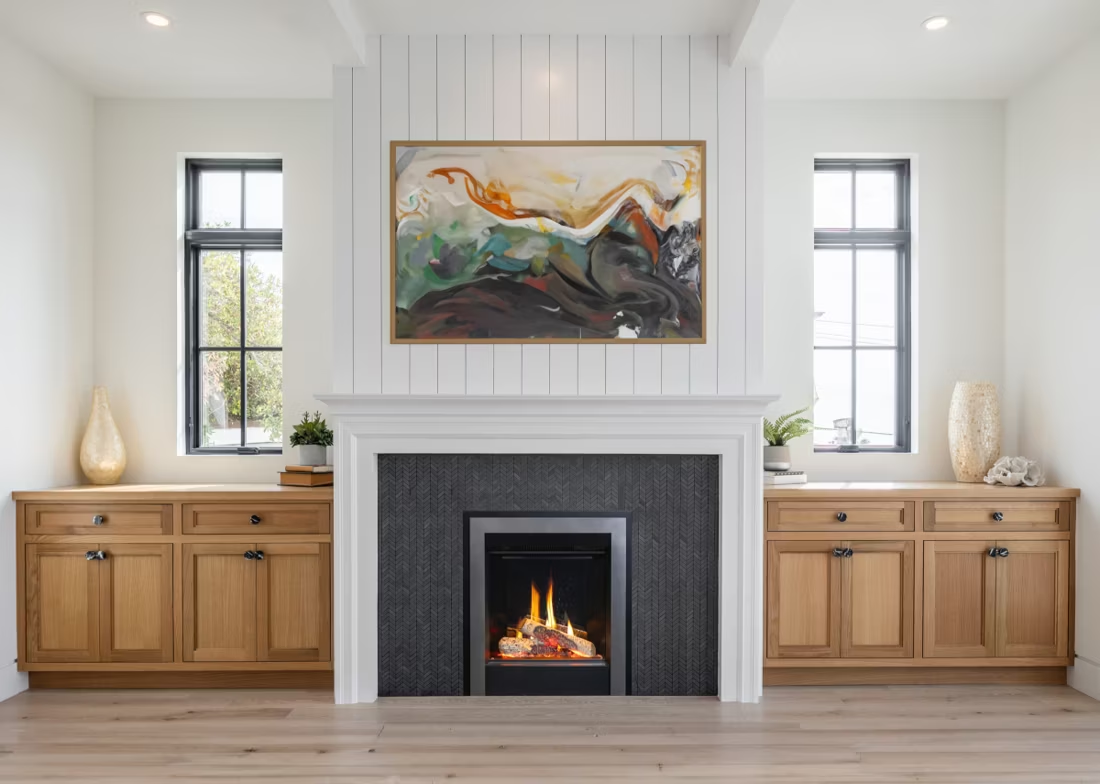
Electric units also sidestep the permitting and venting questions that come with wood or gas. A plug-in insert or wall-mounted unit typically needs nothing from the City of Rosenberg Building Department at all. That matters here: a lot of the housing stock near historic downtown Rosenberg has old masonry fireboxes that haven't burned wood in years, and an electric insert is often the cleanest way to bring one back to life. Newer construction in the master-planned communities around Fulshear Road and Reading Road, where there's no fireplace at all, is a good candidate for a built-in wall unit instead. Either way, CenterPoint Energy powers the outlet—the same utility already running your AC.
Three steps. No salesperson until you're ready.
Tell us about your project
Your zip code, your situation, and the fuel you're leaning toward—or let the answers point you to one.
See what's actually available
The brands dealers within 100 miles genuinely carry—real options, never a catalog mirage.
Get your dealer & Project Guide
A trusted local dealer, plus the free Project Guide & Parts List that names every component of the job.
Frequently Asked Questions
How much does an electric fireplace installation cost in Rosenberg?
A plug-in electric insert or freestanding unit runs $300 to $1,200 installed in most Rosenberg homes—often just the cost of the unit plus mounting, since it plugs into a standard 120V outlet. A built-in wall unit or a linear electric fireplace set into new framing runs $1,500 to $3,500, mainly because it usually calls for an electrician to add a dedicated circuit and a carpenter to build the surround. Neither approach requires the chimney or gas line work that drives up wood and gas installs, which is the main reason electric tends to be the budget-friendly option locally.
Do I need a permit to install an electric fireplace in Rosenberg?
In most cases, no. A plug-in insert or freestanding electric fireplace that uses an existing outlet doesn't trigger a permit through the City of Rosenberg Building Department. Where a permit does come into play is when a built-in unit requires new electrical work—a dedicated 120V or 240V circuit run by a licensed electrician—or structural framing for a mantel and surround. Your local dealer or electrician will know whether your specific installation crosses that line.
Will an electric fireplace actually heat my Rosenberg home?
It'll comfortably heat a single room. Most electric fireplaces put out 4,000 to 9,000 BTU from a 1,500-watt heater element, which is enough to warm a 400 to 1,000 square foot space—plenty for the nights Rosenberg dips into the 30s. What it won't do is replace your central heat pump or furnace on a whole-home basis, but with only about 1,208 heating degree days a year here, most homeowners don't need it to. Think of it as supplemental heat for the living room or bedroom during the coldest snaps, with the flame effect running year-round for ambiance even when the heater's off.
What happens to my electric fireplace during a power outage?
It won't run—electric units need continuous power for both the heater and the flame effect, so during a CenterPoint Energy outage from a Gulf Coast storm or hurricane, it goes dark along with everything else. This is worth being honest about: February 2021's Winter Storm Uri knocked out power across Fort Bend County for days during one of the few genuinely cold stretches Rosenberg sees, which is exactly when an electric fireplace would have been least useful. If backup heat during outages matters to you, a vented gas fireplace with a battery-backed ignition system is a better complement—many Rosenberg homeowners run electric for daily ambiance and keep gas as the storm-season fallback.
Wall-mounted, insert, or freestanding—which type fits my Rosenberg home?
If you own an older home near historic downtown Rosenberg with an existing masonry fireplace that no longer gets used for wood, an electric insert is usually the easiest upgrade—it slides into the existing firebox and plugs in, no chimney work needed. Newer construction in the subdivisions off FM 762 and Reading Road, where there's no fireplace opening at all, typically calls for a linear wall-mounted unit built into a media wall or accent wall. Renters and townhome owners often do best with a freestanding electric stove or mantel package that requires no installation at all—just plug it in and move it if you relocate.
How much does it cost to run an electric fireplace in Rosenberg?
At CenterPoint Energy's residential rate of about 17.4 cents per kWh, a 1,500-watt heater running on high costs roughly 26 cents an hour. Running the flame effect alone, without the heater—which is how most Rosenberg owners use it outside of a cold snap—draws only 50 to 100 watts, closer to a penny or two an hour. Given how few nights actually call for supplemental heat here, most owners find the annual running cost is modest compared to the ambiance they get out of it the rest of the year.
Can I put an electric insert into my existing wood-burning fireplace?
Yes, and it's one of the more common projects local dealers see in Rosenberg's older neighborhoods. An electric insert slides into the existing masonry firebox, and since it doesn't burn anything, the chimney can stay capped and sealed—no draft, no creosote, no need to sweep it. It's a straightforward way to bring a decorative but unused fireplace back into daily use without touching the chimney at all. Just measure the firebox opening carefully, since insert sizes vary and older Rosenberg fireboxes aren't always standard dimensions.
Electric vs. gas—which is right for my Rosenberg home?
Gas gives you real heat output and the option to keep running during a power outage if the unit has a battery-backed ignition, which matters here given how often Gulf Coast storms take out CenterPoint's grid. It requires a gas line and typically a bigger installation budget. Electric skips the gas line and venting entirely, costs less to install, and is easier to add to a room that doesn't already have a fireplace—but it's dependent on the same power supply as everything else in the house, and it won't help during an outage. For Rosenberg's mild winters, plenty of homeowners choose electric for everyday ambiance in a bedroom or den and reserve gas for the main living space where they want real backup heat.
What size electric fireplace do I need for my room?
For a bedroom or home office up to about 400 square feet, a compact wall-mounted or insert unit in the 1,000 to 1,500-watt range is plenty. Living rooms or open-concept spaces in the 400 to 1,000 square foot range do better with a full 1,500-watt unit, which is the standard maximum output for a 120V electric fireplace. If you're trying to heat something larger than that, you're better off treating the fireplace as ambiance and letting your central HVAC handle the actual heat load—Rosenberg's mild climate rarely demands more than that anyway.
Can I put a TV above my fireplace?
Yes—with an asterisk. Fireplaces are hot and TVs don't like heat. Either put a mantel between them to deflect rising warmth, or choose a fireplace with heat-management technology that creates a cool zone on the wall above—the wall stays around 125 degrees, barely warm, while the room still gets full heat. If you like clean lines and don't want a mantel, heat management is the answer.
Do electric fireplaces actually produce heat?
Yes—most put out around 4,800–5,000 BTUs from a standard outlet, which comfortably warms a bedroom, office, or den as a comfort-zone heater. What they won't do is carry a whole house the way wood, gas, or pellet can. Think of electric as ambiance-first with honest supplemental heat: flames on with no heat in July, flames plus warmth in January.
Does a fireplace add value to my home?
On average, a fireplace adds back to the home about the same amount you spent installing it. Add the monthly savings from heating the rooms you actually use instead of the whole house—often hundreds of dollars a year—and the value case is strong before you even count what a fire does for how your family uses the room.
Can I install a fireplace myself?
If you're putting a fire in your house on purpose, it's best to work with an expert. Unless you're genuinely experienced in framing, gas line, vent pipe, and the national code on clearances to combustibles, have a professional do it—and ideally the same company that sells you the fireplace, so warranty, service, and liability all live under one roof.
Nearby Dealers
Hearth shops serving Rosenberg and the surrounding area.
Electric Service in Rosenberg
An electric fireplace's heater draws about 1,500 watts—pennies per hour at local rates.
Find your electric fireplace in Rosenberg.
Tell us a bit about your home and we'll match you with the right electric fireplace or insert—and connect you with a trusted local dealer who can size the unit, handle any wiring, and get it installed correctly.
Find Your Fireplace →