
Warm, reliable heat for Reeves County's high desert winters.
From Pecos to the ranch country around Balmorhea and Toyahvale, Reeves County's winters are short and mild—but a cold front off the Chihuahuan Desert can still drop overnight lows into the 20s. Find the right gas fireplace or insert, and connect with a trusted local dealer who knows what this part of West Texas actually needs.
Every Project Starts From One of These Five Situations
Reliable heat built for oil-patch country.
Reeves County sits in the Chihuahuan Desert at roughly 2,600 feet, in Climate Zone 3B—hot, dry summers and winters mild enough that heating is a secondary concern for most of the year. Pecos, the county seat, anchors a sparse, spread-out population, with small communities like Balmorhea and Toyahvale scattered across ranch and oilfield land. Cold snaps do come through—enough to matter on the handful of nights each winter when a norther drops temperatures fast—but this isn't a county built around all-day, all-season heating.
That's exactly why gas fireplaces are the standard fit here. Pecos has natural gas utility service in town, and propane delivery is straightforward across the county's oilfield and ranch roads, since the same trucks and infrastructure already serving Permian Basin operations make tank refills easy even in remote spots. Wood-burning stoves are essentially not a factor in Reeves County—mild winters and hot summers don't justify the upkeep, even though oak, pecan, and mesquite grow along the Pecos River corridor. Pellet stoves are similarly rare here; regional brands like Forest Energy and Lignetics supply plenty of Texas homes, but they're not a common install in this climate. A gas fireplace gives Reeves County homeowners instant heat on the nights that need it and a good-looking fire the rest of the year, without the maintenance a wood or pellet setup would demand for so little payoff.
Three steps. No salesperson until you're ready.
Tell us about your project
Your zip code, your situation, and the fuel you're leaning toward—or let the answers point you to one.
See what's actually available
The brands dealers within 100 miles genuinely carry—real options, never a catalog mirage.
Get your dealer & Project Guide
A trusted local dealer, plus the free Project Guide & Parts List that names every component of the job.
Frequently Asked Questions
How much does a gas fireplace installation cost in Reeves County?
Gas fireplace and insert installations in this part of West Texas typically run $3,000 to $8,000, depending on the unit, whether you're running new gas line from an existing meter or propane tank, and how much venting work is involved. Homes in Pecos with existing natural gas service tend to land on the lower end since the fuel line is often already close by. Homes out toward Balmorhea, Toyahvale, or ranch properties running on propane may see slightly higher costs if a new tank or longer supply line is needed. A local dealer will give you a firm number after seeing your home.
Should I convert an old wood fireplace to gas?
It's an option, though older wood-burning fireplaces are uncommon in Reeves County to begin with—the mild Climate Zone 3B winters here never made wood heat a necessity the way it is farther north. If you do have an existing masonry fireplace, a gas insert can be fitted into it using the existing chimney as the vent path, giving you push-button heat without tearing anything out. For most Reeves County homes without an existing fireplace, a new direct-vent gas unit is the simpler and more common route.
Should I run my gas fireplace on natural gas or propane?
Either works well here. If you're in Pecos with natural gas utility service already running to your home, adding a fireplace on that line is usually the easiest and cheapest path. Outside city limits—in Balmorhea, Toyahvale, or out on ranch and oilfield land—propane is the default, and delivery is reliable given how much propane and fuel infrastructure already moves through this stretch of the Permian Basin. Most gas fireplace models can be set up for either fuel; your installer just configures the correct orifice and regulator for what you have.
Will my gas fireplace still work if the power goes out?
Most gas fireplaces with intermittent pilot ignition (IPI) run on battery backup and will light and operate normally during a power outage—just keep fresh batteries in the unit. That matters in Reeves County, where rural distribution lines mean an outage after a storm or high wind event can take longer to restore than it would in town. Valor fireplaces take a different approach: their pilot generates its own electricity through a thermocouple, so there's no battery to remember at all. Ask your local dealer about the ignition system on any unit you're considering if outage resilience matters to you.
What's the difference between a gas fireplace, gas insert, and gas stove?
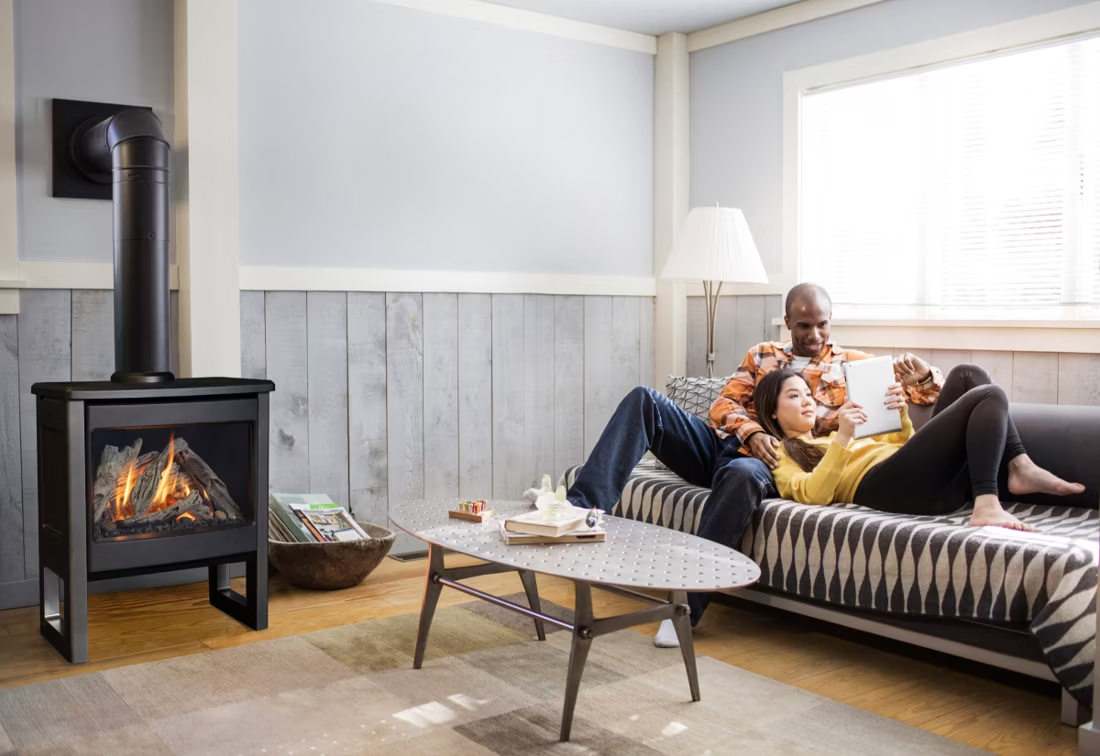
A gas fireplace is a built-in unit framed into a wall—the standard choice for new construction or a remodel. A gas insert drops into an existing masonry fireplace opening and uses the existing chimney as its vent, which is the right call if your Reeves County home already has a wood-burning fireplace you want to upgrade. A gas stove is a freestanding cabinet unit that sits on the floor and vents through a wall or roof, similar in footprint to a wood stove but running on gas. For most homes in Pecos and the surrounding county without an existing fireplace, a built-in unit or freestanding stove is the more common fit.
Do I need a permit to install a gas fireplace in Reeves County?
Yes—new gas fireplace installations require a building permit and gas line work performed or signed off by a licensed gas fitter, whether you're inside Pecos city limits or in unincorporated Reeves County. Most established hearth dealers handle the permitting and inspection coordination as part of the install, so you're not left chasing down paperwork yourself. Given air quality here isn't a regulatory concern—Reeves County has no burn bans or non-attainment designations to navigate—the permit process is mostly about gas line safety and proper venting, not emissions.
Vented or vent-free—which gas fireplace makes sense in a Reeves County home?
Vented (direct-vent) gas fireplaces draw combustion air from outside and exhaust it back outside through sealed venting—they're the safest option and the one most local dealers recommend by default. Vent-free units burn directly into the room and are legal in Texas, but they release some moisture and combustion byproducts indoors and come with strict room-size and ventilation requirements. In a dry desert climate like Reeves County's, some homeowners actually like the humidity a vent-free unit adds to a bone-dry house—but it's a tradeoff worth discussing with your dealer rather than assuming it's the better option.
How often does a gas fireplace need to be serviced?
Plan on an annual inspection—a technician checks the burner, pilot assembly, gas connections, and venting, and cleans the glass and interior. It's a much lighter lift than chimney sweeping for a wood stove, but skipping it is how small issues (a drifting pilot, a cracked gasket) turn into bigger ones. Given how few full-service hearth technicians cover this stretch of West Texas, it's worth scheduling service in the same visit as any other seasonal maintenance to avoid a long wait for a dedicated trip out to Pecos or beyond.
Gas vs. electric fireplace—which fits a Reeves County home better?
Gas delivers real heat output and the look of an actual flame—worth having on the handful of genuinely cold nights each winter. Electric fireplaces plug into a standard outlet, need no gas line or venting at all, and work well as supplemental ambiance in a den, bedroom, or a secondary home out toward Balmorhea where running gas service isn't practical. Given how mild Reeves County winters run most years, some homeowners choose electric specifically because they want the fireplace look without paying for heating capacity they'll rarely use. Either is a reasonable call—it comes down to whether you want backup heat or just the visual.
Can I put a TV above my fireplace?
Yes—with an asterisk. Fireplaces are hot and TVs don't like heat. Either put a mantel between them to deflect rising warmth, or choose a fireplace with heat-management technology that creates a cool zone on the wall above—the wall stays around 125 degrees, barely warm, while the room still gets full heat. If you like clean lines and don't want a mantel, heat management is the answer.
Is my gas fireplace wasting gas?
If it was installed more than 15 years ago, probably. Older gas fireplaces keep a standing pilot light burning all the time, and that little flame can cost a couple hundred dollars a year. Newer models use pilot-on-demand ignition—the pilot lights only when you use the fireplace and goes out when you turn it off.
What is an in-home preview and do I need one?
It's a visit where a hearth professional measures your space, confirms the model you picked actually works in your home, and walks the specs—framing, gas line, venting, finish work—before anything is ordered. Some details you just can't know until you see the house. Never make a down payment without one; it's the single most-skipped step that burns buyers.
Can a fireplace actually lower my heating bill?
Yes—by creating a comfort zone. A furnace heats every square foot of the house just to warm the one room you're in; a gas fireplace on low burns roughly a sixth of the gas a typical furnace does. Set the furnace around 55–60 degrees as a baseline, then heat the rooms your family actually uses. Families who heat this way commonly save $20–$60 a month.
Stove and Fireplace Dealers in Reeves County
Listings include WhyFire partner dealers, dealers we have verified as authorized for the brands we recommend, and established local businesses that carry hearth products. Every listing shows which one it is. The ones marked Preferred run on WhyFire's software, so they can show you real pricing and book your appointment right here. No manufacturer pays for placement. How we verify dealers →
Seal’s Energy Depot
Bill Placer's Chimney Sweep
Find your gas fireplace in Reeves County.
Tell us a bit about your home in Pecos, Balmorhea, or anywhere else in Reeves County, and we'll put together a free Project Guide & Parts List—the exact parts, including the vent kit, plus our recommended local dealer for your gas fireplace project.
Find Your Fireplace →