
Clean gas heat for Real County's short, sharp cold snaps.
From Leakey to Camp Wood to the ranches along the Frio and Nueces, Real County's winters are short and mostly mild—until they aren't. Find the right propane fireplace or insert and get matched with a trusted local dealer.
Every Project Starts From One of These Five Situations
Mild winters, occasional deep freezes.
Real County is one of the least populated counties in Texas—about 1,434 people spread across roughly 700 square miles of limestone canyons, cedar-covered ridgelines, and river bottoms along the Frio and Nueces. Sitting in IECC Climate Zone 2B, most winters bring cool nights rather than hard freezes, and a wood fire or gas flame is often more about atmosphere than survival heat. But Hill Country weather doesn't always cooperate—Winter Storm Uri in February 2021 dropped temperatures across this stretch of Texas into the single digits and knocked out power to rural feeders for days, and Real County residents remember it well.
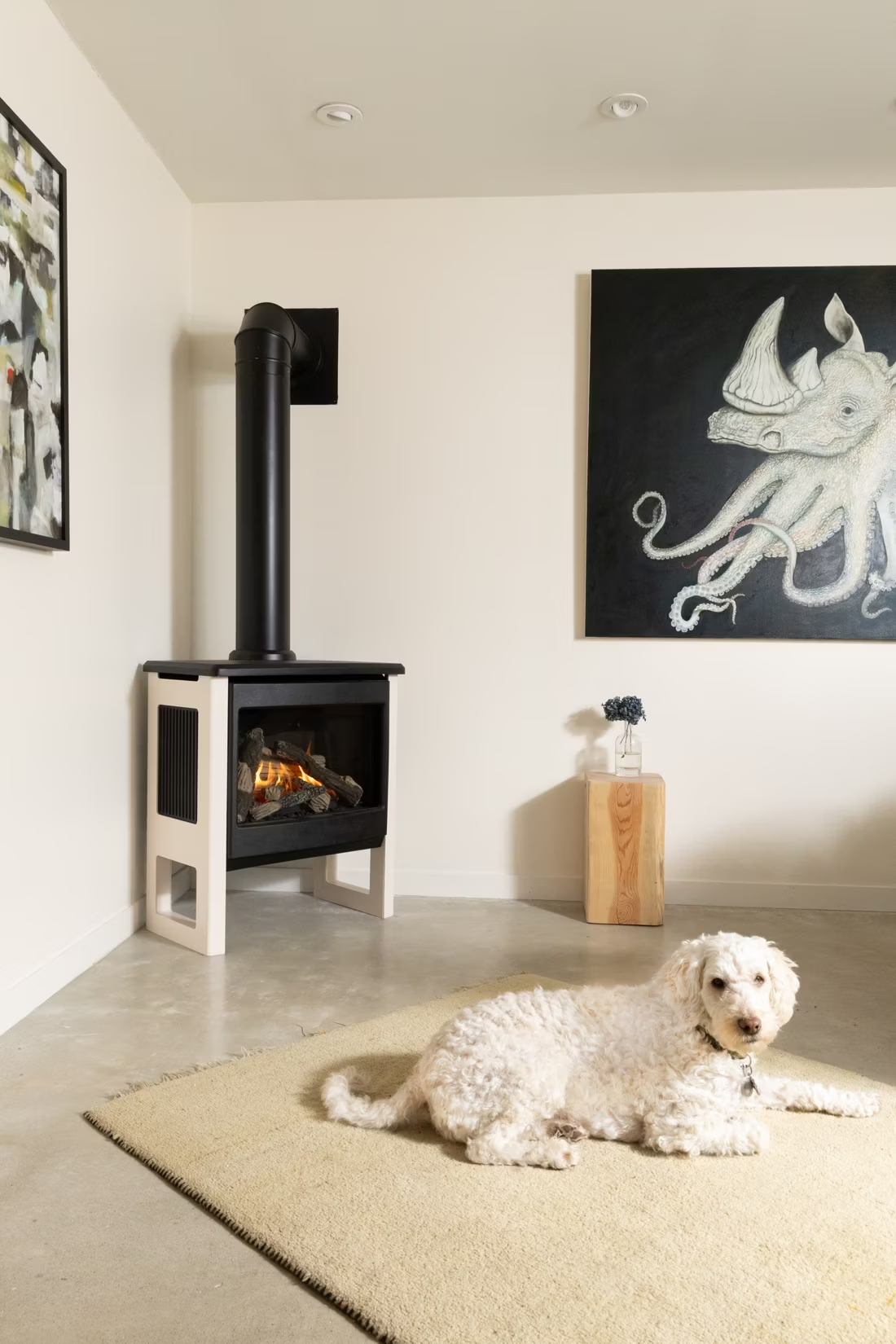
There's no natural gas utility infrastructure serving Leakey, Camp Wood, Rio Frio, or the unincorporated ranch country in between—homes here run on propane, delivered and stored in bulk tanks by regional suppliers. That makes propane gas fireplaces and inserts a natural fit: instant heat for cool evenings on the porch or in a limestone ranch house, no wood to split or haul, and—with the right ignition system—a unit that still lights during the kind of grid outages that hit rural Hill Country feeders hardest.
Three steps. No salesperson until you're ready.
Tell us about your project
Your zip code, your situation, and the fuel you're leaning toward—or let the answers point you to one.
See what's actually available
The brands dealers within 100 miles genuinely carry—real options, never a catalog mirage.
Get your dealer & Project Guide
A trusted local dealer, plus the free Project Guide & Parts List that names every component of the job.
Frequently Asked Questions
How much does a gas fireplace installation cost in Real County?
A typical propane fireplace or insert installation in Real County runs roughly $3,500 to $9,000, depending on the unit, whether you're converting an existing masonry fireplace or building new, and what propane tank setup you already have in place. Homes with an existing bulk propane tank and regulator are on the lower end. New construction or ranch houses needing a fresh propane line run from the tank to the hearth, plus venting and framing, land toward the higher end. Because there's no natural gas main anywhere in the county, every quote here assumes propane from the start—ask your local dealer to confirm tank sizing along with the fireplace itself.
Can I convert my existing wood fireplace to gas?
Yes, and it's a common project in the older stone ranch houses scattered through Leakey, Camp Wood, and the river communities. A propane insert typically drops into the existing masonry opening, using a stainless liner run up the original chimney for venting. Since there's no natural gas service in Real County, the conversion is built around propane from the outset—your dealer will size the line from your existing bulk tank and confirm the regulator can handle the added appliance. Expect the insert itself to run in the same $3,500-$9,000 range as a standalone install, with the final number depending on chimney condition and liner length.
Do I need natural gas, or does everyone use propane here?
Everyone here runs on propane. Real County has no natural gas utility mains—not in Leakey, not in Camp Wood, not along the Frio or Nueces river frontage. If your property already has a propane tank for a water heater, range, or generator, adding a fireplace is straightforward: your installer sets the correct orifice and confirms the regulator and line size can support the extra BTU load. If you don't have a tank yet, a local propane supplier will need to place one before installation—factor that lead time into your project timeline.
Will my gas fireplace work during a power outage?
Many will, and in Real County that matters. Rural feeders here can stay down for days after severe weather—Winter Storm Uri in 2021 was the clearest example, but summer storms and ice events have caused shorter outages too. Fireplaces with IPI (intermittent pilot ignition) run on battery backup and light on demand even with no grid power, as long as the batteries are fresh. Valor fireplaces go a step further: the pilot's thermocouple generates the small amount of electricity the unit needs, so there's no battery to remember at all. For a ranch house at the end of a long rural line, that's worth asking about directly.
What's the difference between a gas fireplace, gas insert, and gas stove?
A gas fireplace is a fully built-in unit framed into a wall—the right choice for new construction or a remodel with no existing hearth. A gas insert slides into an existing masonry fireplace opening, which fits a lot of the older stone construction found on Real County ranch properties. A gas stove is a freestanding cast-iron or steel unit that sits on the floor, useful for a cabin or bunkhouse without an existing fireplace. Given how many homes here already have a stone hearth, an insert is often the simplest and least invasive upgrade.
Do I need a permit to install a gas fireplace in Real County?
Building permits for gas appliance installations in Real County are handled through the county—for most projects outside city limits, that means coordinating with the Real County Courthouse in Leakey. Propane line work should be done by a licensed gas-fitter or propane technician regardless of permit requirements, since improper line sizing or fittings are a real safety issue. A certified local hearth dealer will typically coordinate the propane supplier, the line work, and any required inspection as one package rather than leaving you to manage separate trades.
What's the difference between vented and vent-free gas fireplaces?
Vented (direct-vent) gas fireplaces pull combustion air from outside and exhaust it back outside through a sealed pipe—the cleanest and most universally recommended option. Vent-free units burn propane directly into the room with no external venting; they're legal in Texas but come with strict room-size and ventilation requirements, plus an oxygen depletion sensor as a safety mechanism. In a well-sealed newer home, some Real County owners choose vent-free for a cabin or guest room where running a vent isn't practical. For a primary living space, direct-vent is the safer and more common choice—ask your local dealer to walk through both for your specific room.
How often should my gas fireplace be serviced?
Plan on an annual inspection, ideally in early fall before the first cool nights hit the canyons. A technician will check the burner, pilot assembly, propane line connections, and venting, and clean the glass and firebox interior. Given the distances between ranch properties in Real County, it's worth scheduling service alongside your propane delivery provider's annual visit if they offer appliance checks—it saves a separate trip out to more remote parts of the county like Rio Frio or Vance.
Gas vs. wood—which makes more sense in Real County?
Wood is genuinely abundant here—oak, pecan, and mesquite all grow locally, and mesquite in particular is a Hill Country staple for both the grill and the hearth, burning hot and long. For a ranch house that wants authentic fire and doesn't mind the work, wood is a natural fit and doesn't depend on a propane delivery truck making it out your road. Gas wins on convenience: no splitting or hauling, instant on-off operation, and—with the right ignition system—reliable heat during the outages that follow bad weather in this part of the Hill Country. Many properties here end up with both: a wood-burning stove in a bunkhouse or barn, propane in the main house for everyday use.
Why is a fireplace insert so efficient?
An insert does two things: it seals the chimney completely, so you stop losing air you already paid to heat, and it radiates warmth into the room through the firebox and glass. Most add a heat-exchange fan that pulls cool room air underneath, wraps it around the hot firebox, and pushes it back out warm. Your home is more efficient before you've even lit the first fire.
What do I measure to size a fireplace insert?
Four numbers tell you what fits: the front width, the front height, the back width, and the overall depth of your existing fireplace opening. Grab a tape measure, jot those down, and snap a photo of the wall—those two things do more to move your project forward than anything else you can do today.
What is an in-home preview and do I need one?
It's a visit where a hearth professional measures your space, confirms the model you picked actually works in your home, and walks the specs—framing, gas line, venting, finish work—before anything is ordered. Some details you just can't know until you see the house. Never make a down payment without one; it's the single most-skipped step that burns buyers.
How much should I budget for a fireplace?
For an average home—covering the fireplace, the vent pipe, and basic installation—a budget between $3,900 and $5,500 gives you a lot of options across wood, gas, and pellet. By the time you add finish work, gas line, and electrical, the average complete installation lands between $5,000 and $12,000 all-in. In a remodel or new build, a good rule is to put about 2.5% of the total project cost toward the fireplace.
Stove and Fireplace Dealers in Real County
Listings include WhyFire partner dealers, dealers we have verified as authorized for the brands we recommend, and established local businesses that carry hearth products. Every listing shows which one it is. The ones marked Preferred run on WhyFire's software, so they can show you real pricing and book your appointment right here. No manufacturer pays for placement. How we verify dealers →
Schilling Fireplace & Wood Stoves
Fredericksburg Overhead Door
Hill Country Fireplaces
Pico Propane Operating
Bbq Outfitters
Installed Building Products, LLC
Orange County Bldg Materl
Parrish & Company Inc - San Antonio
Area – San Antonio, Tx
Home & Patio
Find your gas fireplace in Real County.
Tell us about your home in Real County and we'll match you with a trusted local dealer, plus a free Project Guide & Parts List covering the exact parts—including the vent kit—for your propane fireplace or insert project.
Find Your Fireplace →