
Gas fireplaces built for Panhandle winters.
From Amarillo to the ranch country at the edge of the county, blue northers can drop the temperature 40 degrees in an afternoon. Find the right gas fireplace or insert, and connect with a trusted local dealer.
Every Project Starts From One of These Five Situations
Sitting on the gas fields, and it shows.
Potter County sits on the flat, wind-scoured high plains of the Texas Panhandle at roughly 3,600 feet elevation, with Amarillo as its anchor city. Winters here are moderate compared to true northern-tier cold—average lows sit around 22°F and the county's winter heating load is well short of what a place like Bismarck or Fargo racks up in a season. But the Panhandle's signature move is the blue norther: a cold front that can knock 30 to 40 degrees off the temperature in a matter of hours, often paired with 40-mph wind. That kind of swing is exactly what a gas fireplace handles well—instant heat, no warm-up lag, no fire to tend while a front blows through.
Potter County also happens to sit within the historic Panhandle natural gas field, one of the largest gas-producing regions in the country, which is part of why natural gas infrastructure here is deep and reliable rather than an afterthought. Atmos Energy serves Amarillo and most of the surrounding incorporated areas; propane fills in for homes further out in unincorporated Potter County where gas lines don't reach. Wood heat, by contrast, is genuinely uncommon here—a handful of older ranch homes still burn oak, pecan, or mesquite for ambiance, but with cheap, plentiful natural gas underfoot and frequent Panhandle grass-fire risk during dry, windy stretches, wood-burning never became the local default the way it has in forested regions.
Three steps. No salesperson until you're ready.
Tell us about your project
Your zip code, your situation, and the fuel you're leaning toward—or let the answers point you to one.
See what's actually available
The brands dealers within 100 miles genuinely carry—real options, never a catalog mirage.
Get your dealer & Project Guide
A trusted local dealer, plus the free Project Guide & Parts List that names every component of the job.
Frequently Asked Questions
How much does a gas fireplace installation cost in Potter County?
A gas fireplace installation in Potter County typically runs $3,800 to $9,500, depending on the unit, the venting path, and whether new gas line work is required. A direct-vent insert going into an existing masonry fireplace with a gas line already stubbed in sits at the lower end. A new built-in gas fireplace for a remodel or addition—with framing, venting through an exterior wall, and a fresh gas line run from the meter—lands in the middle to upper range. Homes on the far edges of the county relying on propane, or needing a new tank set, tend to run higher once tank installation and delivery are factored in. A local dealer will give you a firm number after seeing your home.
Can I convert my existing wood fireplace to gas?
Yes, and it's one of the more common projects for older homes in and around Amarillo—plenty of houses built in the mid-20th century have a masonry fireplace originally built to burn oak or mesquite, and converting it to a gas insert with a stainless liner run through the existing chimney is straightforward. Expect $3,800 to $8,000 depending on the insert and whether the home already has natural gas service or needs a new line run to the fireplace location. The conversion keeps the original masonry look while eliminating ash, smoke, and the need to source firewood in a region where it isn't the local norm.
Do I need natural gas, or can I use propane?
Either works, and which one you use largely comes down to where you live in the county. Atmos Energy provides natural gas service throughout most of Amarillo and the surrounding incorporated areas, and because Potter County sits within the Panhandle's own gas fields, service is generally reliable and reasonably priced. Homes further out in unincorporated parts of the county, or on larger rural properties outside the gas utility's footprint, typically run on a propane tank instead. Most gas fireplace models can be set up for either fuel—your installer configures the correct orifice and regulator for whichever you have.
Will my gas fireplace work if the power goes out?
Most modern gas fireplaces will. Units with intermittent pilot ignition (IPI) run on a battery backup that kicks in automatically when the power drops, so the fireplace still lights and operates normally—just keep fresh batteries in the unit, since it's easy to forget until you actually need it. Valor fireplaces work a bit differently: the pilot's thermocouple generates its own electricity, so there's no battery at all, ever. That distinction matters in Potter County, where high winds during a strong cold front or ice event can knock out power for hours at a time. Ask your local dealer which ignition system a given model uses.
What's the difference between a gas fireplace, gas insert, and gas stove?
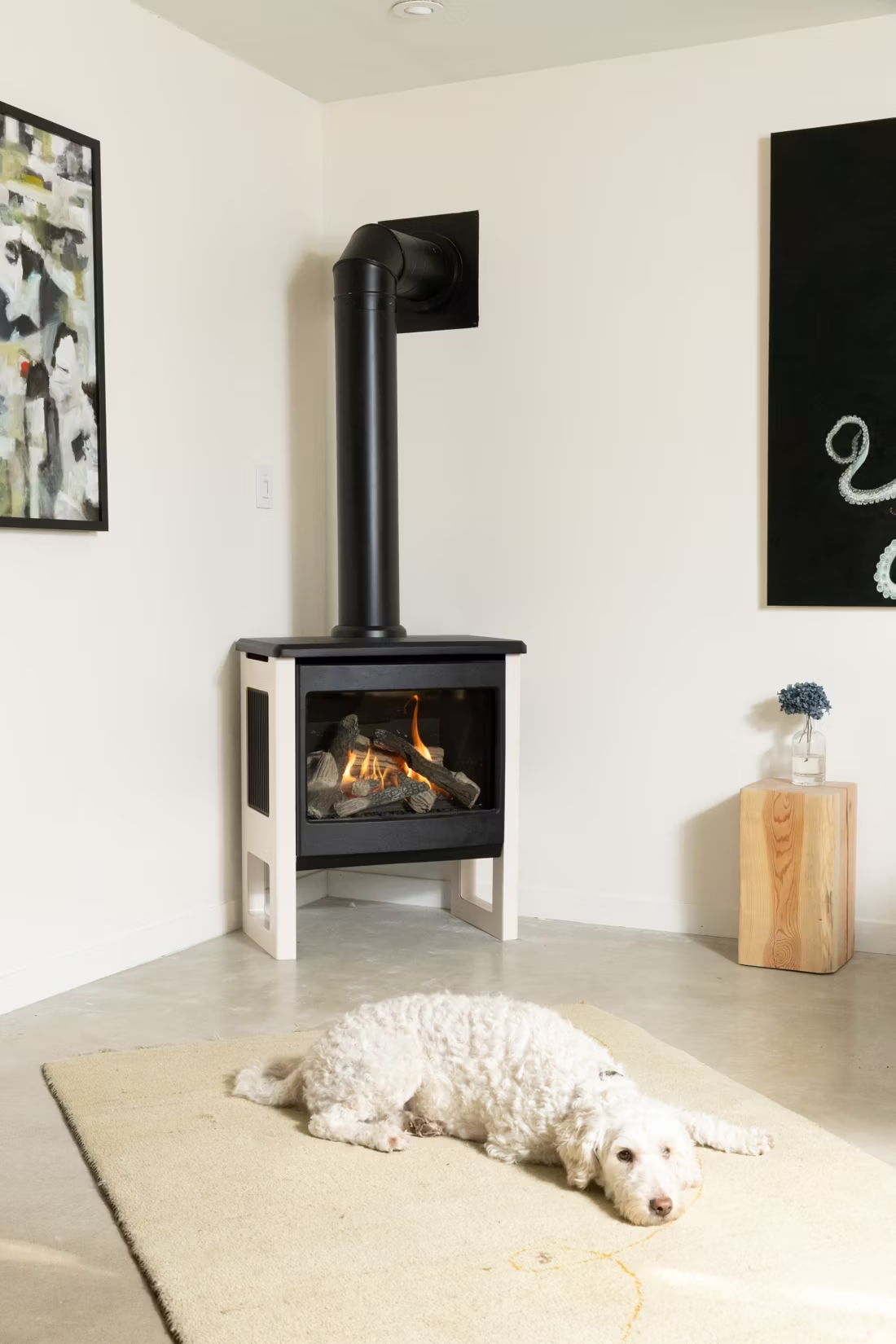
A gas fireplace is a fully built-in unit framed into a wall—the right choice for new construction or a remodel where there's no existing hearth. A gas insert is built to slide into an existing masonry fireplace opening, using the existing chimney as its vent path, which makes it the natural fit for the many older Amarillo homes with a wood-era fireplace already in place. A gas stove is a freestanding cabinet unit that sits out on the floor, similar in footprint to a wood stove but running on gas. For a house with an existing hearth, an insert is usually the simplest upgrade; for a room with no fireplace at all, a built-in or freestanding stove makes more sense.
Do I need a permit to install a gas fireplace in Potter County?
Yes. Inside Amarillo city limits, gas fireplace installations require both a building permit and a gas line permit through the City of Amarillo's Development Services / Building Safety division. In unincorporated parts of Potter County, permitting runs through the county building department instead. Gas line work specifically has to be done by a licensed gas-fitter, and most established hearth dealers handle the permitting, gas line coordination, and inspection scheduling as part of the installation, so you're not left juggling separate trades yourself.
What's the difference between vented and vent-free gas fireplaces?
Vented (direct-vent) gas fireplaces pull combustion air from outside and exhaust it back outside through a sealed pipe—they're the cleanest and most universally code-compliant option. Vent-free units burn without any outside venting at all, releasing some water vapor and combustion byproducts into the room, and they're legal in Texas with proper room-sizing and oxygen-depletion sensors. Given Potter County's dry high-plains climate and frequent wind, most local dealers steer homeowners toward direct-vent units—they perform more consistently in gusty conditions and don't add moisture to an already dry indoor environment during winter. Vent-free is available if a project calls for it, but it's the exception here, not the default.
How often should my gas fireplace be serviced?
Plan on an annual inspection, ideally before the first cold front rolls through in October or November. A technician checks the burner, pilot assembly, venting, and gas connections, and cleans the glass and firebox interior. It's a quicker, less involved visit than a wood-stove chimney sweep, but it matters just as much for safe operation—gas service providers in the Amarillo area typically charge $150 to $250 for a standard annual visit.
Should I consider wood heat instead of gas in Potter County?
For most homes here, no—wood-burning is genuinely uncommon in Potter County, and it's worth being straightforward about that. Natural gas is abundant and inexpensive locally since the county sits within the historic Panhandle gas field, there's no strong wood-heat tradition the way there is in forested parts of the country, and the region's dry, windy conditions make an outdoor wood pile and open burning less appealing given grass-fire risk during red-flag conditions. A small number of older homes still burn oak, pecan, or mesquite in an original masonry fireplace for atmosphere on occasion, but as a primary or supplemental heat source, gas is the practical and overwhelmingly common choice across the county.
Is my gas fireplace wasting gas?
If it was installed more than 15 years ago, probably. Older gas fireplaces keep a standing pilot light burning all the time, and that little flame can cost a couple hundred dollars a year. Newer models use pilot-on-demand ignition—the pilot lights only when you use the fireplace and goes out when you turn it off.
Why is my open fireplace making my house colder?
Open fireplaces suck—literally. As the fire burns, it consumes air your furnace already paid to heat and pulls it out through the chimney, so the house is actually colder after the fire goes out than before you lit it. An insert fixes this: it seals the chimney, puts fixed glass across the front, and turns that hole in your house into a real heat source.
How much should I budget for a fireplace?
For an average home—covering the fireplace, the vent pipe, and basic installation—a budget between $3,900 and $5,500 gives you a lot of options across wood, gas, and pellet. By the time you add finish work, gas line, and electrical, the average complete installation lands between $5,000 and $12,000 all-in. In a remodel or new build, a good rule is to put about 2.5% of the total project cost toward the fireplace.
Can I install a fireplace myself?
If you're putting a fire in your house on purpose, it's best to work with an expert. Unless you're genuinely experienced in framing, gas line, vent pipe, and the national code on clearances to combustibles, have a professional do it—and ideally the same company that sells you the fireplace, so warranty, service, and liability all live under one roof.
Stove and Fireplace Dealers in Potter County
Listings include WhyFire partner dealers, dealers we have verified as authorized for the brands we recommend, and established local businesses that carry hearth products. Every listing shows which one it is. The ones marked Preferred run on WhyFire's software, so they can show you real pricing and book your appointment right here. No manufacturer pays for placement. How we verify dealers →
Panhandle Outdoor Living & Fireplaces
Reid's Appliance Services
West Texas Brick
Boyd's Equipment
Find your gas fireplace in Potter County.
Tell us a bit about your home and we'll match you with a trusted local dealer and a free Project Guide & Parts List—the exact parts, vent kit, and installer recommendation for your gas fireplace project in Potter County.
Find Your Fireplace →