
Warm Evenings, Zero Wood Hauling in Pecan Plantation.
Propane-powered gas heat built for the mild Hood County winters and the occasional Texas grid outage. Find the right unit and connect with a trusted local dealer.
Every Project Starts From One of These Five Situations
Mild winters, but real heat when you want it.
Pecan Plantation sits along the Brazos River in Hood County at just 721 feet of elevation, where winter lows average a mild 31°F and the area logs roughly 2,575 heating degree days a year—a fraction of what a place like Bismarck, ND sees in a single January. Wood-burning fireplaces are essentially absent here; between the mild climate, the mature oak and pecan trees that give the community its name being mostly ornamental rather than firewood stock, and the Pecan Plantation Owners Association's restrictions on exterior storage and smoke, almost nobody heats with cordwood. Gas is the practical, clean answer for the handful of genuinely cold nights and for year-round ambiance.
There's no natural gas main serving this gated community, so propane is the standard fuel—delivered by tank rather than piped underground. That shapes the whole project: your installer sizes and places a propane tank (or taps an existing one), runs the gas line, and vents the unit through an exterior wall or roof. Electric service comes from Oncor, TNMP, or United Electric Cooperative depending on your section of the community, and after the February 2021 grid failure, a lot of Pecan Plantation homeowners specifically want a gas fireplace that keeps producing heat when the power drops—not just one that looks nice on a mantel.
Three steps. No salesperson until you're ready.
Tell us about your project
Your zip code, your situation, and the fuel you're leaning toward—or let the answers point you to one.
See what's actually available
The brands dealers within 100 miles genuinely carry—real options, never a catalog mirage.
Get your dealer & Project Guide
A trusted local dealer, plus the free Project Guide & Parts List that names every component of the job.
Frequently Asked Questions
How much does a gas fireplace installation cost in Pecan Plantation?
Most gas fireplace installations in Pecan Plantation run $3,500 to $9,500, with the spread driven mainly by propane infrastructure. If your lot already has a propane tank and a line stubbed near the install location, a direct-vent fireplace or insert lands on the lower end. If you need a new tank set and a longer buried line run to reach the house—common on the community's larger acreage lots—expect to be toward the upper end. A local dealer will walk your lot and give you a firm number before any work starts.
Do I need natural gas, or does everyone here use propane?
Propane is the fuel here. Pecan Plantation isn't served by a natural gas utility, so every gas fireplace in the community runs on propane from either a shared community tank arrangement or a private tank on your own lot. The good news is that nearly every gas fireplace and insert on the market today is available in a propane configuration—your installer just sets the correct orifice and regulator for propane's higher pressure and different burn characteristics. If you're moving from natural gas somewhere else, this is the one detail to flag with your dealer up front.
Do I need a permit to install a gas fireplace, and does the POA get involved?
Yes, on both counts. Hood County requires a building permit for the gas line and venting work, and because Pecan Plantation is a deed-restricted community, you'll also need sign-off from the Pecan Plantation Owners Association's architectural review process—particularly for anything visible from the exterior, like a new vent termination, flue cap, or propane tank placement. Most established local installers already know the POA's submittal requirements and can prepare the paperwork alongside the county permit, which saves you a separate trip through the approval process.
Will my gas fireplace still work if the power goes out?
It can, but the ignition system matters. Standard units with intermittent pilot ignition (IPI) run off a small battery backup—usually AA batteries in the unit—that kicks in automatically if the power drops, so the fireplace still lights on demand. After the 2021 winter freeze took down power across ERCOT territory for days, a lot of Pecan Plantation homeowners have specifically asked about Valor fireplaces, which generate their own electricity through the pilot's thermocouple and need no batteries at all. Either way, ask your dealer about the ignition system before you buy—a decorative gas fireplace with a standard wall switch and no battery backup won't help you during an outage.
What's the difference between a gas fireplace, gas insert, and gas stove?
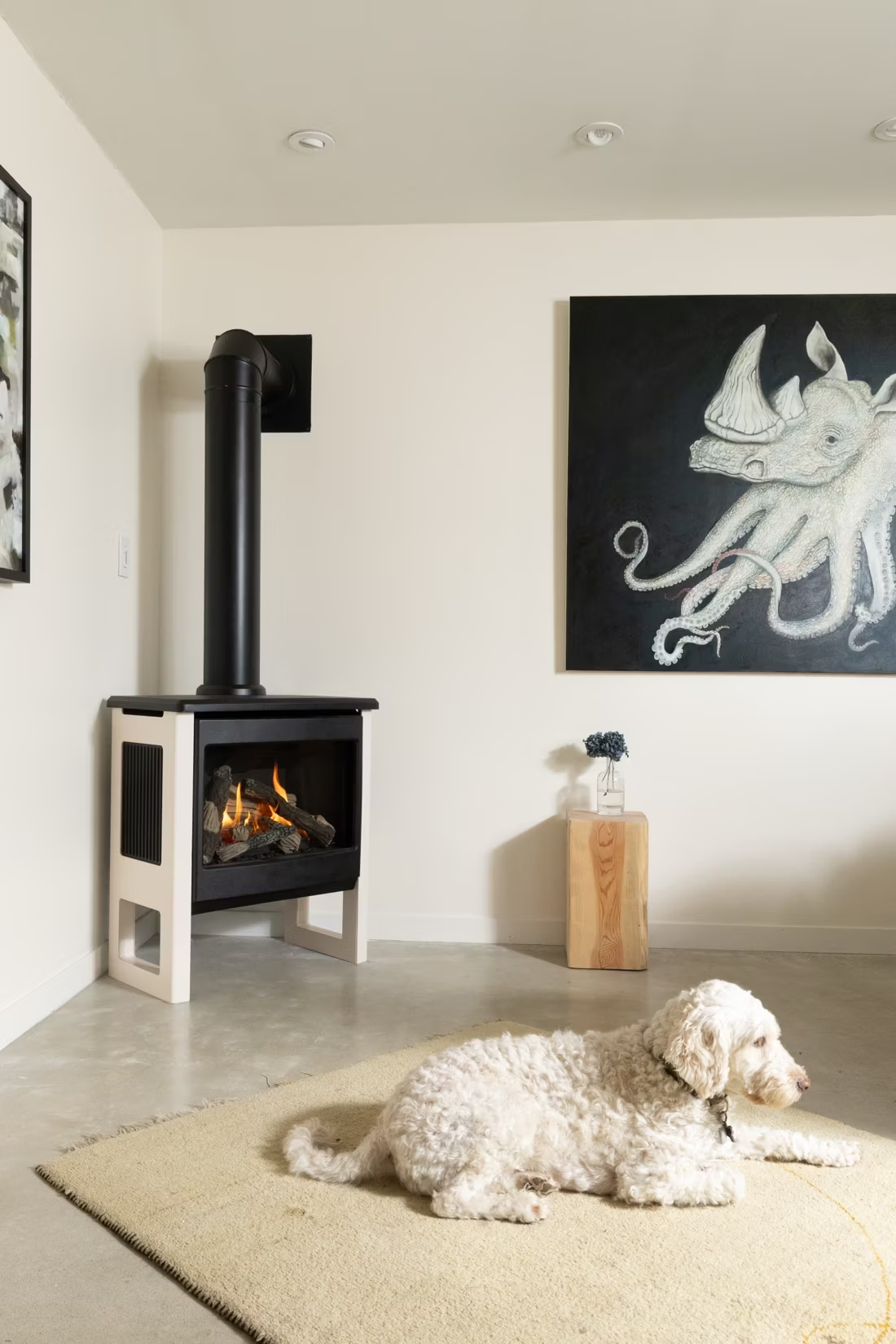
A gas fireplace is a fully built-in unit framed into a wall—the standard choice for new construction, which describes a good share of homes going up in Pecan Plantation's newer sections. A gas insert drops into an existing masonry or prefab wood-burning firebox, sealing it up and converting it to clean, efficient gas heat using the existing chase as the vent path. A gas stove is a freestanding cabinet-style unit, less common here but sometimes chosen for a den or guest casita. For homeowners with an existing but unused wood-burning fireplace, an insert is usually the simplest upgrade.
How long does a gas fireplace project take from approval to install?
Once the POA architectural review and Hood County permit are approved, the physical installation itself usually takes one to two days—longer if a new propane tank has to be set and buried, or if the gas line run to the house is long. The approval steps are typically the longer part of the timeline, which is why it pays to submit your POA paperwork as early as possible rather than waiting until the unit is on order.
Are vent-free gas fireplaces allowed in Pecan Plantation?
Texas permits vent-free (unvented) gas fireplaces, and they show up in some Hood County homes, but most Pecan Plantation installations are direct-vent units instead. Direct-vent fireplaces draw combustion air from outside and exhaust it back outside through a sealed vent, so there's no debate about indoor air quality, oxygen depletion sensors, or room-size restrictions. Given the community's larger, well-insulated homes and the POA's involvement in exterior venting anyway, direct-vent is the more common and more straightforward path—but ask your local dealer if a vent-free unit fits your specific room.
How often does a propane gas fireplace need to be serviced?
Plan on an annual inspection, same as any gas appliance. A technician checks the burner, pilot assembly, gas connections, and venting, and cleans the glass and interior—typically $150 to $250 for a standard visit in this area. Because propane systems also involve a tank and regulator, it's worth having your propane supplier check tank pressure and line integrity at the same time, especially before the handful of genuinely cold nights each winter when the fireplace actually gets real use.
Should I even consider wood, or is gas the only real option here?
For nearly everyone in Pecan Plantation, gas is the practical choice. The area's oak, pecan, and mesquite trees are part of the landscape rather than a firewood supply, winters are too mild (2,575 heating degree days) to justify cordwood logistics, and the POA's restrictions on wood storage and smoke make a wood-burning setup impractical for most lots. A very small number of homeowners keep a wood-burning fireplace purely for occasional ambiance on cold snaps, but propane gas is what actually gets installed, permitted, and used here—it's clean, it can be sized to run during a power outage, and it doesn't require a woodpile on a golf-course lot.
Is my gas fireplace wasting gas?
If it was installed more than 15 years ago, probably. Older gas fireplaces keep a standing pilot light burning all the time, and that little flame can cost a couple hundred dollars a year. Newer models use pilot-on-demand ignition—the pilot lights only when you use the fireplace and goes out when you turn it off.
Why is a fireplace insert so efficient?
An insert does two things: it seals the chimney completely, so you stop losing air you already paid to heat, and it radiates warmth into the room through the firebox and glass. Most add a heat-exchange fan that pulls cool room air underneath, wraps it around the hot firebox, and pushes it back out warm. Your home is more efficient before you've even lit the first fire.
What is an in-home preview and do I need one?
It's a visit where a hearth professional measures your space, confirms the model you picked actually works in your home, and walks the specs—framing, gas line, venting, finish work—before anything is ordered. Some details you just can't know until you see the house. Never make a down payment without one; it's the single most-skipped step that burns buyers.
Can a fireplace actually lower my heating bill?
Yes—by creating a comfort zone. A furnace heats every square foot of the house just to warm the one room you're in; a gas fireplace on low burns roughly a sixth of the gas a typical furnace does. Set the furnace around 55–60 degrees as a baseline, then heat the rooms your family actually uses. Families who heat this way commonly save $20–$60 a month.
Nearby Dealers
Hearth shops serving Pecan Plantation and the surrounding area. Every listing shows whether it is a WhyFire partner, a dealer we have verified as authorized for the brands we recommend, or a local business carrying hearth products. No manufacturer pays for placement. How we verify dealers →
David's Stove Shop Inc
Rodak's Coffee And Bbq Grills
Texas Building Supply
Brothers Supply Co.
Find your gas fireplace in Pecan Plantation.
Tell us a bit about your home and propane setup, and we'll match you with a trusted local dealer plus a free Project Guide & Parts List—the exact fireplace, vent kit, and install plan for your Pecan Plantation project.
Find Your Fireplace →