
Warm up your Parmer County home without a single vent.
No chimney, no gas line, no wood to haul—just clean supplemental heat for farmhouses and newer builds from Farwell to Bovina to Friona. Find the right unit and get matched with a trusted local installer.
Every Project Starts From One of These Five Situations
Why electric heat fits Parmer County's flat, treeless plains.
Parmer County sits on the Llano Estacado at roughly 4,000 feet, hard against the New Mexico line, where cotton, corn, and dairy operations dominate a landscape with almost no standing timber. Winters here aren't brutal by Panhandle standards—average lows around 22°F and a solidly moderate-to-long heating season put the county in climate zone 4B—but the near-constant wind off the open plains makes homes feel colder than the thermometer suggests, and older farmhouses in Farwell and Bovina often have drafty rooms that central heat never quite reaches.
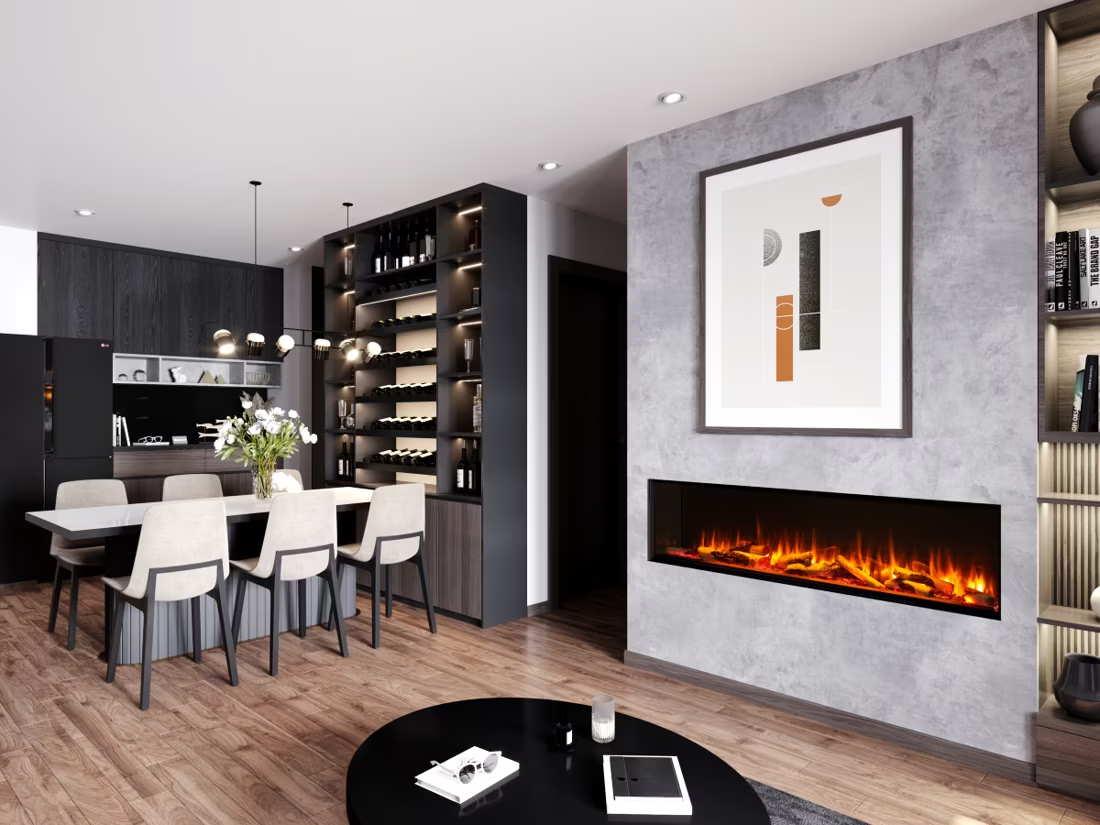
That combination—moderate cold, high wind chill, and a county with no meaningful local firewood supply—is exactly why electric fireplaces and inserts do well here. There's no chimney to build, no gas line to trench across a section of farmland, and no wood to source when the nearest real timber is a river-bottom windbreak instead of a forest. Homes served by rural cooperatives like Deaf Smith Electric Cooperative can add a 120V plug-in unit with zero electrical work, or have a licensed electrician run a dedicated 240V circuit for a built-in insert that heats a whole room. Either way, it's a practical answer for a county where the plains, not the woods, define the landscape.
Three steps. No salesperson until you're ready.
Tell us about your project
Your zip code, your situation, and the fuel you're leaning toward—or let the answers point you to one.
See what's actually available
The brands dealers within 100 miles genuinely carry—real options, never a catalog mirage.
Get your dealer & Project Guide
A trusted local dealer, plus the free Project Guide & Parts List that names every component of the job.
Frequently Asked Questions
How much does an electric fireplace installation cost in Parmer County?
A plug-in freestanding electric fireplace or stove—the simplest option, and common in Parmer County's manufactured and modular homes—typically runs $300 to $900 including delivery and setup, since it just plugs into a standard outlet. A built-in wall-mount or insert wired to a dedicated 240V circuit runs higher, generally $1,500 to $3,500, depending on whether an electrician needs to run new wiring from the panel, frame a recess, and install trim. Costs on the higher end are more common in rural parts of the county where an electrician may add a modest travel charge to reach a property outside Farwell, Friona, or Bovina.
What size electric fireplace do I need for a Parmer County home?
Most electric fireplaces and inserts are built to heat a single room—typically 400 to 1,000 square feet—rather than an entire house, which is why they work best as supplemental heat layered on top of central HVAC or a propane furnace. Older farmhouses around Bovina and Friona with high ceilings and single-pane windows will feel less heat gain from the same unit than a newer, better-insulated home, so it's worth sizing up if the room in question is drafty or the wind exposure on that side of the house is significant. A local installer can walk the room and give you an honest read on wattage needed before you buy anything.
Where can I find an electrician or installer for an electric fireplace near me?
With Parmer County's population under 7,000 spread across Farwell, Friona, and Bovina, there isn't a dense network of hearth specialty stores the way there would be in a larger market. Most installs here are handled by local licensed electricians familiar with both standard residential wiring and the mobile-home electrical codes common in the county's ag communities, sometimes in coordination with a hearth retailer from a nearby larger town such as Clovis, NM. Plug-in units don't require an electrician at all—any handy homeowner can place and level one. For a hardwired insert, ask specifically about experience running dedicated circuits, since that's the part of the job that matters most for safety and code compliance.
What's the difference between an electric fireplace, insert, and stove?
An electric fireplace is typically a wall-mount or built-in unit designed to look like a modern linear fireplace, often the centerpiece of a living room remodel. An electric insert is sized to slide into an existing fireplace opening—including an old wood-burning masonry fireplace—giving it flame visuals and real heat output without any venting work, which makes it a popular retrofit in older Parmer County farmhouses that have an unused hearth. An electric stove is a freestanding, cast-look unit that sits on the floor, often chosen for a shop, sunroom, or outbuilding on a rural property where running gas or propane isn't practical. All three plug in or hardwire—none require a chimney or vent pipe.
Do I need a permit to install an electric fireplace in Parmer County?
A plug-in freestanding electric fireplace generally doesn't require any permit—it's treated like any other appliance you plug into an outlet. A built-in unit that requires a licensed electrician to run a new dedicated circuit typically does need an electrical permit, which the electrician usually pulls as part of the job rather than leaving it to the homeowner. Because Parmer County's building and electrical permitting is handled at the county level rather than through a large city department, most installers here are used to coordinating directly with the county office and can tell you upfront whether your specific project needs a permit.
What's the best electric fireplace for Parmer County's wind and cold?
Because the cold here is more about wind chill than extreme low temperatures—winter lows average around 22°F with a solidly moderate-to-long heating season—look for a unit with a strong fan-forced or infrared heater in the 1,400 to 1,500-watt range rather than one marketed mainly for flame appearance. Infrared quartz models from brands like Dimplex hold heat well in drafty rooms and are a good fit for the older farmhouses common around Farwell and Bovina. If the fireplace is going into a shop, barn office, or other outbuilding without central heat, prioritize wattage and thermostat control over aesthetics, and confirm the circuit can handle the draw alongside other equipment already running on that line.
Will my electric fireplace still work if the power goes out?
No—and this is the one real tradeoff worth understanding before you buy. Unlike a wood stove, an electric fireplace or insert does nothing without power, and Parmer County's rural cooperative lines can go down during Panhandle ice events or high-wind storms, sometimes for an extended stretch on the more remote stretches of the county. If you're relying on electric heat as your only backup during winter outages, it's worth keeping a propane heater, generator, or other backup source on hand. For day-to-day supplemental warmth when the power is on, electric is simple and effective—it just isn't outage-proof.
Electric vs. propane—which is right for my Parmer County home?
Outside of Farwell, Friona, and Bovina proper, most Parmer County homes rely on propane rather than natural gas for primary heating, and that same propane infrastructure often supports a gas fireplace or log set as well. Propane delivers more heat per dollar over a long, cold stretch and can be sized to heat a larger space, but it requires a tank, a delivery contract, and proper venting. Electric fireplaces skip all of that—no tank, no gas line, no venting—but cost more to run per BTU and won't operate during a power outage. For whole-room or primary heat, propane tends to win; for a quick-install accent unit or supplemental heat in one room, electric is usually the simpler and cheaper path.
Why don't more Parmer County homes use wood heat?
Wood stoves are genuinely uncommon in Parmer County, and it's a fair question given that oak, pecan, and mesquite all grow in scattered river-bottom stands and windbreaks locally. The issue is scale: the Llano Estacado's flat, largely treeless plains never supported the kind of forest cover that makes a firewood economy practical, so there's no local cutting-permit tradition or steady supply the way you'd find in a timbered region. A small number of rural homeowners do run a wood stove for backup heat during outages or for the ambiance of a real fire, but for most Parmer County homes, an electric fireplace or a propane unit is the far more practical everyday choice.
Can I put a TV above my fireplace?
Yes—with an asterisk. Fireplaces are hot and TVs don't like heat. Either put a mantel between them to deflect rising warmth, or choose a fireplace with heat-management technology that creates a cool zone on the wall above—the wall stays around 125 degrees, barely warm, while the room still gets full heat. If you like clean lines and don't want a mantel, heat management is the answer.
How much does an electric fireplace cost to run?
With the heater on, a typical unit draws about 1,500 watts—at average electric rates that's roughly 20 cents an hour. Run the flame effect alone and it costs pennies; the flames are LED-driven and use about as much power as a light bulb. There's no pilot light, no fuel delivery, and essentially no maintenance.
What is an in-home preview and do I need one?
It's a visit where a hearth professional measures your space, confirms the model you picked actually works in your home, and walks the specs—framing, gas line, venting, finish work—before anything is ordered. Some details you just can't know until you see the house. Never make a down payment without one; it's the single most-skipped step that burns buyers.
How much should I budget for a fireplace?
For an average home—covering the fireplace, the vent pipe, and basic installation—a budget between $3,900 and $5,500 gives you a lot of options across wood, gas, and pellet. By the time you add finish work, gas line, and electrical, the average complete installation lands between $5,000 and $12,000 all-in. In a remodel or new build, a good rule is to put about 2.5% of the total project cost toward the fireplace.
Stove and Fireplace Dealers in Parmer County
Listings include WhyFire partner dealers, dealers we have verified as authorized for the brands we recommend, and established local businesses that carry hearth products. Every listing shows which one it is. The ones marked Preferred run on WhyFire's software, so they can show you real pricing and book your appointment right here. No manufacturer pays for placement. How we verify dealers →
Boyd's Equipment
Panhandle Outdoor Living & Fireplaces
Reid's Appliance Services
West Texas Brick
Ford Insulation And Fireplaces
Caprock Brick
Get your free electric fireplace plan for Parmer County.
Tell us about your home and we'll put together a free Project Guide & Parts List—the right unit, the electrical requirements, and a trusted local dealer or electrician to install it in Farwell, Friona, Bovina, or anywhere else in Parmer County.
Find Your Fireplace →