
Warmth on Demand, Even During East Texas Ice Storms.
Paris winters are mild most of the year, but when an ice storm rolls through the Red River Valley, a gas fireplace keeps the living room warm and lit. Find the right unit and connect with a trusted local dealer.
Every Project Starts From One of These Five Situations
Comfort and reliable backup for a mild but unpredictable climate.
Paris sits at just 593 feet in the Blackland Prairie region of Northeast Texas, with an average winter low of 33°F and only about 2,636 heating degree days a year—a fraction of what a place like Duluth, MN or Fargo, ND racks up in a single hard winter. Most years, a furnace alone handles the coldest stretches just fine. But Lamar County isn't immune to real cold: ice storms move through the Red River Valley most winters, and the February 2021 statewide freeze left parts of Texas, including this corner of the state, without power for days. A gas fireplace fills that gap—supplemental warmth on ordinary nights, and a genuine backup heat source when the grid goes down.
Wood heat never really took hold here the way it has in colder regions—oak, pecan, and mesquite are common trees around Lamar County, but locals are far more likely to feed them into a backyard smoker than a home hearth, and pellet stoves see almost no local demand for the same reason. Gas fills that role instead. Homes inside Paris city limits are typically served by piped natural gas, while properties in unincorporated parts of the county more often run on propane from a local supplier. Either way, the electric side of the equation—Oncor, Texas-New Mexico Power, and Lamar County Electric Cooperative all serve different pockets of the county—matters too, since it affects which backup ignition setup makes sense for your home.
Three steps. No salesperson until you're ready.
Tell us about your project
Your zip code, your situation, and the fuel you're leaning toward—or let the answers point you to one.
See what's actually available
The brands dealers within 100 miles genuinely carry—real options, never a catalog mirage.
Get your dealer & Project Guide
A trusted local dealer, plus the free Project Guide & Parts List that names every component of the job.
Frequently Asked Questions
How much does a gas fireplace installation cost in Paris?
Most gas fireplace and insert installations in Paris run somewhere between $3,000 and $7,500, with the lower end covering a direct-vent insert dropped into an existing masonry fireplace that's already near a gas line, and the higher end covering new construction or a remodel that needs framing, venting, and a fresh gas or propane line run. Because Paris winters are mild, most homeowners here are choosing a mid-size unit for ambiance and occasional supplemental heat rather than a large primary-heat appliance, which tends to keep costs toward the lower half of that range compared to colder markets. A local dealer can give you a firm number after seeing your fireplace or install location in person.
Can I convert my existing wood fireplace to gas?
Yes, and it's a common project in Paris's older neighborhoods, where many homes built before the 1980s have a brick masonry fireplace that was originally built for wood but rarely gets used—firewood is easy enough to come by locally, but with lows only occasionally dipping below freezing, most homeowners eventually get tired of the mess for the modest heat payoff. A gas insert uses the existing chimney (typically with a stainless liner) as its vent path, which keeps costs down and preserves the look of the original fireplace. Whether you're on natural gas or propane, your installer will need to run a new gas line to the firebox if one isn't already there.
Should I use natural gas or propane for my fireplace in Paris?
It depends on where you live. Homes within Paris city limits are commonly served by piped natural gas, so if your water heater or range already runs on gas, adding a fireplace to that line is usually straightforward. Out in unincorporated Lamar County, propane is more common, delivered by a local supplier and stored in an above-ground tank on the property. Nearly every gas fireplace, insert, and stove on the market can be configured for either fuel—your local dealer sets the correct orifice and regulator for whichever service you have.
Will my gas fireplace work if the power goes out?
Most modern gas fireplaces are built to keep running through a power outage. Units with an IPI (intermittent pilot ignition) system have a small battery backup that automatically takes over when the power drops, so the fireplace still lights on demand. That's not a small detail in Lamar County—whether your home is served by Oncor, Texas-New Mexico Power, or Lamar County Electric Cooperative, ice storms have knocked out power here for extended stretches, including during the February 2021 statewide freeze. Valor fireplaces take a different approach: the pilot's thermocouple generates its own electricity, so there's no battery to remember or replace at all. Ask your local dealer about the ignition system on any unit you're considering.
What's the difference between a gas fireplace, gas insert, and gas stove?
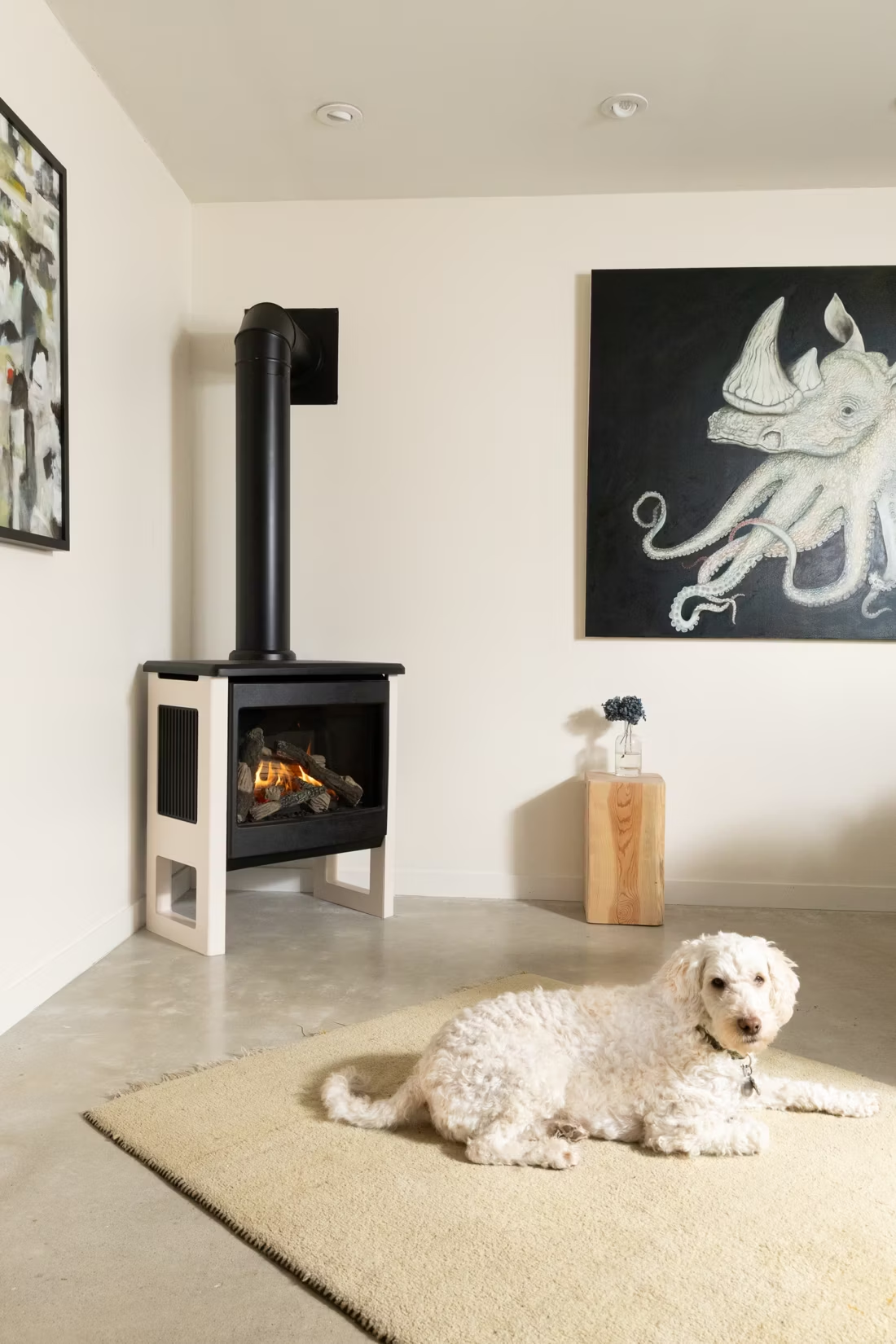
A gas fireplace is a fully built-in unit framed into a wall—the right choice for new construction or a room without an existing hearth. A gas insert slides into an existing masonry fireplace opening and uses the chimney you already have as its vent path, which is the more common project in Paris's older homes with unused wood fireplaces. A gas stove is a freestanding cabinet-style unit that sits on the floor, useful when you want gas heat in a room with no fireplace and no interest in a full built-in remodel. A local dealer can walk your space and tell you which format actually fits.
Do I need a permit to install a gas fireplace in Paris?
Generally yes. Projects inside city limits go through the City of Paris permit office, while homes outside city limits fall under Lamar County. Both a building permit and a gas line permit are typically required for a new installation, and the gas or propane line work has to be done by a licensed installer regardless of jurisdiction. Most hearth dealers who handle installations in Paris pull these permits as part of the job, so you're not left coordinating the gas fitter, the inspector, and the installer separately.
What's the difference between vented and vent-free gas fireplaces?
Vented (direct-vent) gas fireplaces pull combustion air from outside and exhaust the byproducts back outside through a sealed pipe—they're the cleanest, safest option and the most common choice statewide. Vent-free units burn gas directly into the room with no outside venting at all; they're legal in Texas but come with strict room-size minimums and oxygen depletion sensors, and they add some moisture and combustion byproducts to indoor air. For a Paris home, a direct-vent unit is the safer default and gives you more flexibility on where it can be installed, since it doesn't depend on an existing chimney. Vent-free can make sense for a small supplemental unit in a tight space—ask your local dealer to walk through both.
How often should a gas fireplace be serviced?
Once a year is the standard recommendation for any gas-burning appliance, including direct-vent fireplaces and inserts. A technician checks the burner, pilot assembly, gas connections, and venting, and cleans the glass and interior. In Paris, this typically runs $125 to $200 for an annual visit—on the lower end of what you'd see in bigger metro markets. Since these units run far fewer hours per season here than in colder climates, annual service is usually enough to catch problems before they become safety issues, rather than something you need to double up on mid-winter.
Should I even consider a wood fireplace instead of gas in Paris?
For most homes here, no—wood heat just doesn't make much sense given the climate. With only about 2,636 heating degree days a year and winter lows averaging 33°F, there isn't enough sustained cold to justify tending a wood fire for heat the way homeowners do in places like Bismarck, ND. Oak, pecan, and mesquite are all common locally, but they're far more likely to end up in a backyard smoker than a living room hearth. Gas gives you the same visual warmth and ambiance with none of the wood handling, and it doubles as real backup heat during the occasional ice storm—which is the more relevant cold-weather risk in Lamar County anyway.
Why is a fireplace insert so efficient?
An insert does two things: it seals the chimney completely, so you stop losing air you already paid to heat, and it radiates warmth into the room through the firebox and glass. Most add a heat-exchange fan that pulls cool room air underneath, wraps it around the hot firebox, and pushes it back out warm. Your home is more efficient before you've even lit the first fire.
What's the difference between an insert and a zero-clearance fireplace?
An insert is a fireplace that slides into a pre-existing wood-burning fireplace—if you don't have one, there's nothing to insert it into. A zero-clearance fireplace is built into a framed wall, which makes it the answer for remodels and new construction. Simple test: existing masonry fireplace means insert; blank or framed wall means zero-clearance.
Can I install a fireplace myself?
If you're putting a fire in your house on purpose, it's best to work with an expert. Unless you're genuinely experienced in framing, gas line, vent pipe, and the national code on clearances to combustibles, have a professional do it—and ideally the same company that sells you the fireplace, so warranty, service, and liability all live under one roof.
Can a fireplace actually lower my heating bill?
Yes—by creating a comfort zone. A furnace heats every square foot of the house just to warm the one room you're in; a gas fireplace on low burns roughly a sixth of the gas a typical furnace does. Set the furnace around 55–60 degrees as a baseline, then heat the rooms your family actually uses. Families who heat this way commonly save $20–$60 a month.
Nearby Dealers
Hearth shops serving Paris and the surrounding area.
Find your gas fireplace in Paris.
Tell us a bit about your home and we'll match you with a trusted local dealer and send over a free Project Guide & Parts List—the exact fireplace or insert, vent kit, and parts recommended for your Paris project.
Find Your Fireplace →