
Gas Heat Built for Panhandle Winters.
Instant, wind-proof warmth for a town that sits on top of one of the country's great natural gas fields. Find the right unit and get matched with a trusted local dealer.
Every Project Starts From One of These Five Situations
Gas heat runs as deep as the Panhandle Field itself.
Pampa grew up on natural gas. The Panhandle Field, discovered in the 1920s beneath Gray County and the surrounding plains, was once one of the largest gas fields on earth, and it's the reason companies like Cabot got their start here processing gas into carbon black and helium. That history matters for homeowners today: gas infrastructure in and around Pampa is mature, and most homes in town already have a gas meter feeding a furnace or water heater, which makes adding a fireplace or insert a much simpler project than it is in places where gas has to be trucked or piped in fresh.
Winters here aren't extreme by Great Plains standards—average lows sit around 23°F and the area logs roughly 4,175 heating degree days, well short of what a place like Fargo, ND deals with—but the wind sweeping across this stretch of the Llano Estacado adds a real chill factor and matters for how a direct-vent fireplace gets sited and capped. Outside the city limits, where Greenbelt Electric Cooperative rather than Southwestern Public Service serves rural homes, propane tanks are still common for households that never got a gas line run. Either way, a properly sized gas fireplace or insert gives you heat at the flip of a switch, with no ash, no wood stacking, and—with the right ignition system—heat that keeps working when an ice storm knocks the power out.
Three steps. No salesperson until you're ready.
Tell us about your project
Your zip code, your situation, and the fuel you're leaning toward—or let the answers point you to one.
See what's actually available
The brands dealers within 100 miles genuinely carry—real options, never a catalog mirage.
Get your dealer & Project Guide
A trusted local dealer, plus the free Project Guide & Parts List that names every component of the job.
Frequently Asked Questions
How much does a gas fireplace installation cost in Pampa?
Expect somewhere between $3,500 and $9,000 for a typical gas fireplace or insert installation in Pampa, with the spread driven mostly by venting and gas line work rather than the appliance itself. A direct-vent insert going into an existing masonry fireplace where a gas line is already nearby sits toward the low end. A new built-in gas fireplace for a remodel or an addition—with framing, a fresh gas line run, and exterior venting through brick or siding—lands in the middle to upper range. Homes on propane that also need a new tank set will run higher. A local dealer will give you a firm number after seeing the space.
Can I convert my existing wood-burning fireplace to gas?
Yes, and it's a common request from older Pampa homes built with a traditional masonry fireplace. A gas insert slides into the existing firebox and vents through a stainless liner run up the chimney you already have, so you keep the mantel and surround while swapping out the mess of ash and creosote for a switch or remote. In town, where most streets already have gas service, this usually costs somewhere in the $4,000 to $8,500 range. On propane, add the cost of the tank if you don't already have one on the property.
Should I use natural gas or propane for my fireplace?
If your home is already on natural gas—which describes most homes inside Pampa city limits given the area's gas infrastructure—sticking with natural gas is the easiest and usually the cheapest path, since there's no tank to buy or refill. Out on ranch and farm properties in Gray County, especially where Greenbelt Electric Cooperative rather than a municipal utility serves the area, propane is still the standard choice and works just as well in the same fireplace models with the correct orifice and regulator. Your dealer will configure the unit for whichever fuel you have on site.
Will a gas fireplace still work if the power goes out?
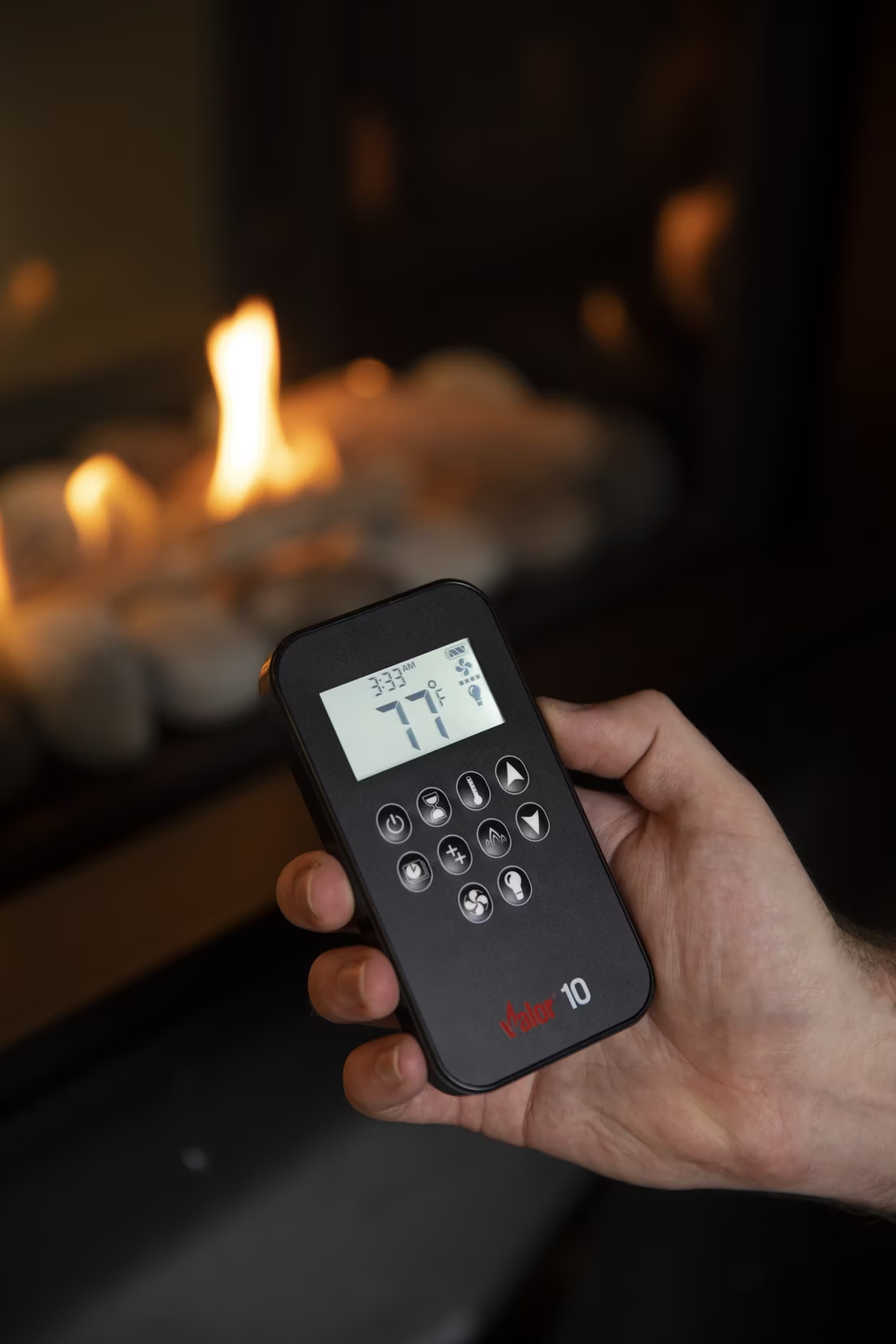
Most modern gas fireplaces will, which matters in a part of Texas where ice storms and high winds can take down rural power lines for hours at a time. Units with intermittent pilot ignition run on a small battery backup that kicks in the moment power drops, so the fireplace still lights on demand. Valor fireplaces go a step further and generate their own electricity through the pilot's thermocouple, so there are no batteries to remember at all. That's worth asking about if you're on Greenbelt Electric Cooperative's rural lines, where restoration after a bad ice storm can take longer than it does inside city limits on Southwestern Public Service.
What's the difference between a gas fireplace, insert, and stove?
A gas fireplace is a fully built-in unit framed into a wall, typically chosen for new construction or a remodel. A gas insert is sized to slide into an existing masonry firebox, using the chimney you already have to vent a sealed, efficient unit. A gas stove is a freestanding cabinet-style unit that sits on the floor like a wood stove but runs on gas or propane. Most Pampa homeowners calling about an old brick fireplace are best served by an insert; homes without an existing fireplace usually go with a built-in unit or a freestanding stove instead.
Do I need a permit to install a gas fireplace in Pampa?
Yes. Gas appliance installations go through the City of Pampa's building permitting process, and the gas line connection itself has to be run or inspected by a licensed gas fitter. This is one of the main reasons to work with an established hearth dealer rather than a handyman: they coordinate the gas line, the venting, and the inspection sign-off as one job instead of leaving you to chase down separate trades. There's no air-quality permitting concern to worry about here—Gray County doesn't have the burn-ban or non-attainment issues that complicate wood permitting in some other parts of the country.
Vented or vent-free—which makes more sense in Pampa?
Vented, direct-vent gas fireplaces pull combustion air from outside and exhaust it back outside through a sealed pipe, which is the standard, code-approved choice almost everywhere, including Texas. Vent-free units burn without any outside venting and are legal here, but they release some water vapor and combustion byproducts into the room and come with strict room-size and ventilation rules. One local wrinkle: because the Panhandle sees steady, sometimes strong prevailing winds, an installer needs to think about where a direct-vent termination cap sits on the exterior wall to avoid wind-driven backdraft. A local dealer who installs in this area regularly will already know the right placement.
How often does a gas fireplace need to be serviced?
Plan on an annual inspection, ideally in early fall before the first cold snap. A technician checks the burner, pilot assembly, gas connections, and venting, and cleans the glass and interior—a much quicker job than a wood chimney sweep, but it's what keeps the pilot lighting reliably and the glass from clouding over. Locally, this kind of annual service typically runs $125 to $200. It's cheap insurance against a fireplace that won't light on the first cold morning of the year.
Gas or wood—which fits my Pampa home better?
Wood has real advocates here—oak, pecan, and mesquite are all commonly burned locally, mesquite especially prized for its long, hot coals—and a wood stove keeps working with zero electricity if the power's out. But Pampa's winters, averaging around 23°F with roughly 4,175 heating degree days, are moderate compared to genuinely brutal cold climates like Fargo or Bismarck, ND, so the case for wood as a necessity rather than a preference is weaker here than it would be further north. Given how deeply natural gas infrastructure runs through this town, gas usually wins on convenience: no stacking, no ash, and heat at the push of a button. Many households end up with both—gas for daily use, a wood option for backup or atmosphere.
What's the difference between an insert and a zero-clearance fireplace?
An insert is a fireplace that slides into a pre-existing wood-burning fireplace—if you don't have one, there's nothing to insert it into. A zero-clearance fireplace is built into a framed wall, which makes it the answer for remodels and new construction. Simple test: existing masonry fireplace means insert; blank or framed wall means zero-clearance.
Why is a fireplace insert so efficient?
An insert does two things: it seals the chimney completely, so you stop losing air you already paid to heat, and it radiates warmth into the room through the firebox and glass. Most add a heat-exchange fan that pulls cool room air underneath, wraps it around the hot firebox, and pushes it back out warm. Your home is more efficient before you've even lit the first fire.
Can a fireplace actually lower my heating bill?
Yes—by creating a comfort zone. A furnace heats every square foot of the house just to warm the one room you're in; a gas fireplace on low burns roughly a sixth of the gas a typical furnace does. Set the furnace around 55–60 degrees as a baseline, then heat the rooms your family actually uses. Families who heat this way commonly save $20–$60 a month.
How much should I budget for a fireplace?
For an average home—covering the fireplace, the vent pipe, and basic installation—a budget between $3,900 and $5,500 gives you a lot of options across wood, gas, and pellet. By the time you add finish work, gas line, and electrical, the average complete installation lands between $5,000 and $12,000 all-in. In a remodel or new build, a good rule is to put about 2.5% of the total project cost toward the fireplace.
Nearby Dealers
Hearth shops serving Pampa and the surrounding area. Every listing shows whether it is a WhyFire partner, a dealer we have verified as authorized for the brands we recommend, or a local business carrying hearth products. No manufacturer pays for placement. How we verify dealers →
West Texas Brick
Reid's Appliance Services
Panhandle Outdoor Living & Fireplaces
Boyd's Equipment
Find your gas fireplace in Pampa.
Tell us about your home and we'll match you with a trusted local dealer and send you a free Project Guide & Parts List—the exact fireplace or insert, vent kit, and gas line plan for your Pampa project.
Find Your Fireplace →