
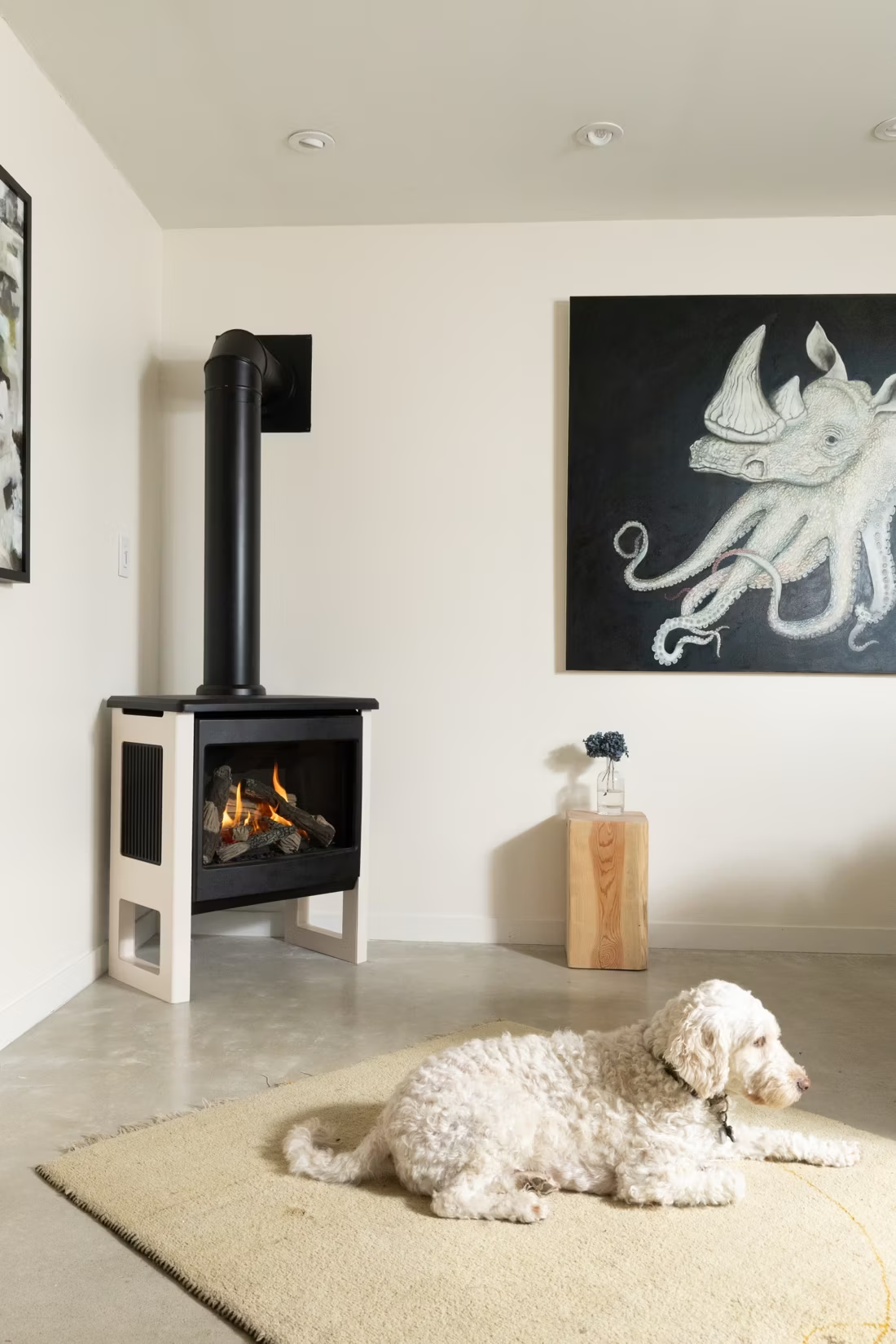
A gas fireplace built for mild Texas winters.
Northlake winters rarely demand serious heat output, which makes gas the fit for most new builds here—instant ambiance, low upkeep, and a clean look in a fast-growing community. Find the right unit and connect with a trusted local dealer.
Every Project Starts From One of These Five Situations
Built for new construction, not brutal cold.
Northlake sits in North Texas at just 642 feet elevation, in climate zone 3A, where winter lows average a mild 36°F and the area has a short, light heating season—a fraction of what a place like Bismarck, ND sees. This is a fast-growing Denton County community full of new-construction homes, and in that market, gas fireplaces are the default choice: builders spec them for ambiance and resale value far more often than for primary heat.
Oncor Electric Delivery, Texas-New Mexico Power, and Denton County Electric Cooperative all serve homes in the 76226, 76247, and 76262 zips, so most Northlake households already run on natural gas service or propane depending on the subdivision. A direct-vent gas fireplace or insert gives you real flame and instant warmth on the handful of genuinely cold nights each winter, without the maintenance burden of a wood-burning system that this climate simply doesn't call for.
Three steps. No salesperson until you're ready.
Tell us about your project
Your zip code, your situation, and the fuel you're leaning toward—or let the answers point you to one.
See what's actually available
The brands dealers within 100 miles genuinely carry—real options, never a catalog mirage.
Get your dealer & Project Guide
A trusted local dealer, plus the free Project Guide & Parts List that names every component of the job.
Frequently Asked Questions
How much does a gas fireplace installation cost in Northlake?
Most Northlake gas fireplace installs run $3,500 to $8,500, with the lower end covering a direct-vent unit in new construction where the gas line and framing are already roughed in—common in the area's newer subdivisions. The higher end applies to retrofits into an existing wall, custom mantel surrounds, or homes where a new gas line run is needed from the meter. Because so much of Northlake is recent construction, many homeowners find installs land toward the lower end compared to older-home retrofits elsewhere in Denton County.
Is a gas fireplace even necessary in a climate this mild?
Necessary for heat, no—Northlake's winter lows average 36°F and the area sees maybe a few dozen nights a year cold enough to want supplemental warmth. But that's exactly why gas fireplaces are so popular here: they're installed for ambiance, home value, and the occasional cold front, not as a primary heat source. A direct-vent gas fireplace gives instant flame on demand without the commitment of a wood-burning setup this climate doesn't really support.
Should I go with natural gas or propane for my fireplace?
It depends on your subdivision. Many newer Northlake developments are plumbed for natural gas, while some rural pockets of Denton County still rely on propane tanks. If your home already has a gas range, water heater, or furnace, you likely already know which fuel you're on—adding a fireplace to that existing line is usually the simpler path. Propane requires either an existing tank or a new tank setup through a local propane supplier, which a hearth dealer can help coordinate.
Will my gas fireplace still work if the power goes out?
Most will, with the right ignition system. Units with IPI (intermittent pilot ignition) run on AA battery backup that kicks in automatically when power drops, so the fireplace lights on demand just like normal. Valor fireplaces take a different approach—their pilot's thermocouple generates its own electricity, so there's no battery to remember at all. Given that Texas grid disruptions during winter storms have made headlines in recent years, that battery-free reliability is worth asking a local dealer about.
What's the difference between a gas fireplace, insert, and gas log set?
A gas fireplace is a fully built-in, framed unit—the standard choice in Northlake new construction. A gas insert fits into an existing masonry or prefab firebox, useful if you're upgrading a builder-grade wood-burning fireplace that's rarely been used. A vented gas log set drops into an existing masonry fireplace and burns real logs for looks with modest heat output, while a vent-free log set skips venting entirely but comes with room-size and ventilation restrictions. For most Northlake homeowners converting an unused wood fireplace, an insert or vented log set is the more practical upgrade than tearing into new construction framing.
Do I need a permit for a gas fireplace in Northlake?
Yes—the Town of Northlake requires a building permit for new gas fireplace installations, and any gas line work must be done by a licensed gas-fitter and inspected before it's covered by drywall or stone. Most hearth dealers handle the permit application and inspection scheduling as part of the installation, which is one reason it's worth working with a licensed installer rather than a handyman for gas line connections specifically.
Vented or vent-free—which makes more sense for a Northlake home?
Direct-vent gas fireplaces exhaust combustion byproducts outside through a sealed pipe and are the standard, code-friendly choice for new Texas construction—they're what most builders and dealers in the area install by default. Vent-free units burn without external venting and are legal in Texas, but they come with strict room-size and ventilation requirements and release some moisture and combustion byproducts indoors. For a Northlake home, especially anything built in the last decade with tight, energy-efficient construction, a direct-vent unit is the safer and more common recommendation.
How often does a gas fireplace need servicing?
Plan on an annual inspection, ideally in early fall before the first cold front rolls through North Texas. A technician checks the burner, pilot or ignition system, venting, and glass, and confirms the gas connections are tight. It's a lighter lift than wood-stove chimney sweeping—typically $150 to $225—but skipping it is the most common reason a fireplace won't light reliably once the weather finally turns.
Why don't more Northlake homes have wood-burning fireplaces?
With only a short, light heating season and winter lows averaging in the mid-30s, wood heat simply isn't a practical necessity here the way it is in colder parts of the country—even though oak, pecan, and mesquite are all common regional firewood species for the rare homeowner who does want one, often for outdoor fire pits or a cabin elsewhere. Most Northlake builders spec gas because it delivers the same visual warmth and ambiance without asking homeowners to source, store, and tend firewood for a handful of chilly nights each winter.
Is my gas fireplace wasting gas?
If it was installed more than 15 years ago, probably. Older gas fireplaces keep a standing pilot light burning all the time, and that little flame can cost a couple hundred dollars a year. Newer models use pilot-on-demand ignition—the pilot lights only when you use the fireplace and goes out when you turn it off.
Why is my open fireplace making my house colder?
Open fireplaces suck—literally. As the fire burns, it consumes air your furnace already paid to heat and pulls it out through the chimney, so the house is actually colder after the fire goes out than before you lit it. An insert fixes this: it seals the chimney, puts fixed glass across the front, and turns that hole in your house into a real heat source.
What is an in-home preview and do I need one?
It's a visit where a hearth professional measures your space, confirms the model you picked actually works in your home, and walks the specs—framing, gas line, venting, finish work—before anything is ordered. Some details you just can't know until you see the house. Never make a down payment without one; it's the single most-skipped step that burns buyers.
How much should I budget for a fireplace?
For an average home—covering the fireplace, the vent pipe, and basic installation—a budget between $3,900 and $5,500 gives you a lot of options across wood, gas, and pellet. By the time you add finish work, gas line, and electrical, the average complete installation lands between $5,000 and $12,000 all-in. In a remodel or new build, a good rule is to put about 2.5% of the total project cost toward the fireplace.
Nearby Dealers
Hearth shops serving Northlake and the surrounding area. Every listing shows whether it is a WhyFire partner, a dealer we have verified as authorized for the brands we recommend, or a local business carrying hearth products. No manufacturer pays for placement. How we verify dealers →
Alliance Materials, Inc.
Bbq Outfitters
Acme Brick Tile & Stone
Brothers Supply Co.
Pittman Supply Company
Fireside Innovations
Overhead Door Co. Of Dallas
Distrinctive Outdoor Environments, LLC
EarthCore Industries
Cosentino – Dallas
Find your gas fireplace in Northlake.
Tell us a bit about your home and we'll match you with a trusted local Denton County dealer, plus a free Project Guide & Parts List—the exact parts, vent kit, and recommended installer for your Northlake gas fireplace project.
Find Your Fireplace →