
Real fireplace ambiance for Nolan County's mild winters.
With winter lows averaging 31°F and only a light winter heating load each year, Nolan County homes need supplemental warmth more than survival heat. Find the right electric fireplace or insert and connect with a trusted local dealer.
Every Project Starts From One of These Five Situations
Zone heat and ambiance for a mild West Texas winter.
Nolan County sits on the Rolling Plains of west-central Texas, with Sweetwater as the county seat and Roscoe, Loraine, and rural ranch country making up the rest of the roughly 12,200 residents. In climate zone 3B, winters are short and mild—an average low of 31°F and only a light winter heating load each year, a fraction of what cold-climate places like Bozeman, MT or Duluth, MN see. Central HVAC and heat pumps handle the workload here; a fireplace is more about ambiance, a focal point in the living room, and the occasional cold front than it is about keeping a house alive through a hard freeze.
Nolan County is also home to some of the densest wind farm development in Texas—Sweetwater has long billed itself as the Wind Energy Capital of Texas, with turbines lining the mesas around town. Big Country Electric Cooperative, headquartered in nearby Roscoe, serves much of the rural county, and the grid here is built to carry serious electric load. That makes electric fireplaces an easy addition: no gas line, no chimney, no cutting permits for the oak, pecan, and mesquite that locals already burn in backyard pits and smokers. Many of Sweetwater's mid-century ranch homes never had a masonry chimney to begin with, so a zero-clearance electric unit slots into a wall or existing niche without any structural work.
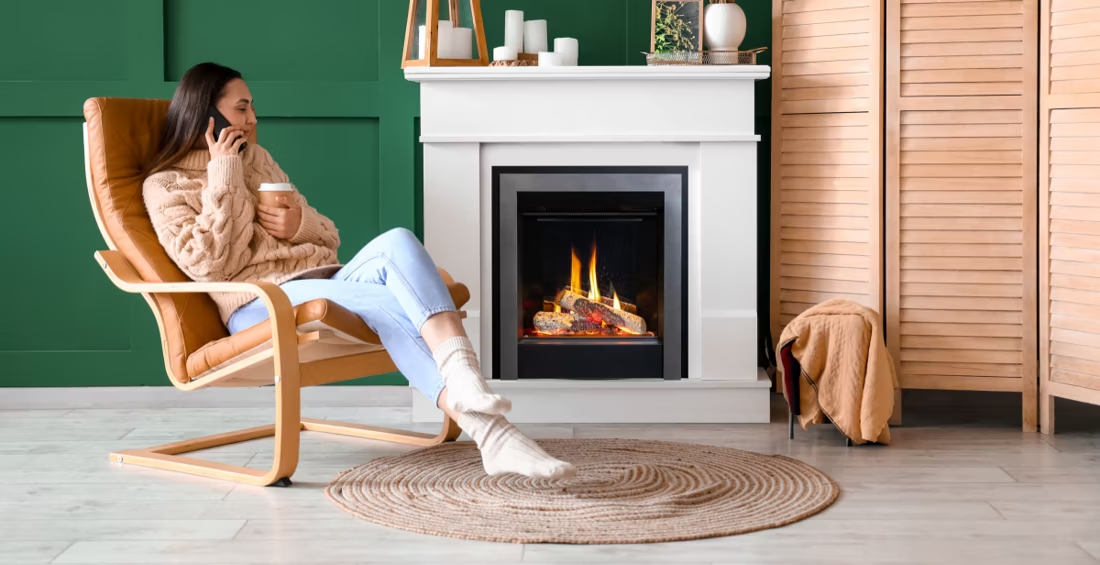
Three steps. No salesperson until you're ready.
Tell us about your project
Your zip code, your situation, and the fuel you're leaning toward—or let the answers point you to one.
See what's actually available
The brands dealers within 100 miles genuinely carry—real options, never a catalog mirage.
Get your dealer & Project Guide
A trusted local dealer, plus the free Project Guide & Parts List that names every component of the job.
Frequently Asked Questions
How much does an electric fireplace installation cost in Nolan County?
A plug-in electric fireplace insert or stove that uses an existing standard outlet typically runs $300 to $800 installed, since there's no venting or gas line to deal with. A built-in wall unit or a larger unit that needs a dedicated 120V or 240V circuit runs closer to $1,200 to $2,500 once a licensed electrician is involved. Most Nolan County installers are electricians first and fireplace dealers second, so the labor line item is usually straightforward—there's no chimney or venting to price out like there is with wood or gas.
What size electric fireplace do I need for my home?
Electric fireplaces are rated for zone heating, typically 4,000 to 5,000 BTU, which is enough to noticeably warm a single room in Nolan County's mild climate but isn't meant to replace central heat. For a living room or den in a typical Sweetwater or Roscoe home, a standard 36 to 50-inch insert or wall unit is plenty. If you're after visual impact more than heat—common here given how few days actually call for extra warmth—sizing is really about matching the unit to your wall or mantel opening rather than BTU output. A local dealer can measure your space and talk through both.
Do I need a permit to install an electric fireplace in Nolan County?
A plug-in unit that runs off an existing outlet generally doesn't require a permit. A built-in electric fireplace that needs new wiring or a dedicated circuit does—that work falls under electrical permitting through the City of Sweetwater Building Department if you're inside city limits, or Nolan County for rural installs, and it needs to be done by a licensed electrician. Most dealers who sell built-in units either employ a licensed electrician or coordinate with one, so the permit and inspection happen as part of the install rather than something you have to chase down yourself.
What's the difference between an electric fireplace, insert, and stove?
An electric fireplace is typically a built-in or wall-mounted unit designed to look like a framed fireplace, often with a mantel. An electric insert is sized to slide into an existing fireplace opening—useful if you have an old masonry firebox you want to convert to something cleaner and simpler. An electric stove is a freestanding cabinet-style unit that mimics a wood stove's footprint but plugs into a wall outlet with no venting at all. For most Nolan County homes without an existing fireplace, a built-in wall unit or a freestanding stove is the simplest path; homes with an old masonry opening are good candidates for an insert.
Will my electric fireplace work during a power outage?
No—this is worth being direct about. Electric fireplaces run entirely on household power, so if the grid goes down, the fireplace goes down with it. Nolan County's grid, anchored by Big Country Electric Cooperative and the surrounding wind infrastructure, is generally reliable, but West Texas ice events and severe thunderstorms do knock out power on occasion. If backup heat during an outage matters to you, some homeowners pair an electric fireplace for daily ambiance with a small wood-burning option using local oak or mesquite for the rare outage. If backup heat isn't a priority, electric alone is fine for the vast majority of Nolan County winters.
What's the best electric fireplace for Nolan County's climate?
Because heating demand here is genuinely light—a mild winter heating load compared to most of the country—many Nolan County homeowners lean toward electric fireplaces chosen more for the flame effect than for BTU output. Realistic LED flame technology from brands available through local dealers gives you the visual and ambiance of a fire without adding dry heat that fights your air conditioning once summer hits. If you do want the unit to double as supplemental heat during the occasional hard freeze, look for a model with a built-in fan-forced heater rated for the room size rather than a decorative-only unit.
Electric vs. propane fireplace—which makes more sense in Nolan County?
Natural gas infrastructure is limited outside Sweetwater's core, so propane is the usual gas alternative in rural Nolan County—but it means a tank, deliveries, and a gas line. Electric fireplaces skip all of that: no tank, no fuel deliveries, no annual gas appliance service. Given how mild the winters are here, most homeowners find the simplicity of electric outweighs the slightly higher heat output of propane. Propane still makes sense if you want a unit that can double as real backup heat during a power outage, since it doesn't depend on the grid.
How much maintenance does an electric fireplace need?
Very little. There's no chimney to sweep, no ash to clean, and no annual gas line inspection. Basic upkeep is dusting the unit and occasionally cleaning the glass front. LED flame elements are rated for 20,000+ hours of use, which typically outlasts the rest of the unit, and most manufacturers offer a straightforward warranty on the heating element and electronics. It's the lowest-maintenance option of any fuel type covered on this site, which is part of why it's popular in Nolan County's low-heating-demand climate.
Electric vs. wood—which is right for my Nolan County home?
Wood is still part of daily life here—oak, pecan, and mesquite are common backyard and smoker wood, and plenty of Nolan County homes keep a wood-burning stove or fireplace as a hedge against power outages. But wood requires a chimney, cutting or buying cordwood, and regular sweeping. Electric requires none of that, works instantly at the flip of a switch, and fits Nolan County's short, mild winters where extended wood-burning heat usually isn't necessary. For most homes here, electric covers the ambiance and light supplemental heat that's actually needed, while wood remains a backup or a secondary feature rather than the primary heat source.
Do electric fireplaces actually produce heat?
Yes—most put out around 4,800–5,000 BTUs from a standard outlet, which comfortably warms a bedroom, office, or den as a comfort-zone heater. What they won't do is carry a whole house the way wood, gas, or pellet can. Think of electric as ambiance-first with honest supplemental heat: flames on with no heat in July, flames plus warmth in January.
Can I put a TV above my fireplace?
Yes—with an asterisk. Fireplaces are hot and TVs don't like heat. Either put a mantel between them to deflect rising warmth, or choose a fireplace with heat-management technology that creates a cool zone on the wall above—the wall stays around 125 degrees, barely warm, while the room still gets full heat. If you like clean lines and don't want a mantel, heat management is the answer.
How much should I budget for a fireplace?
For an average home—covering the fireplace, the vent pipe, and basic installation—a budget between $3,900 and $5,500 gives you a lot of options across wood, gas, and pellet. By the time you add finish work, gas line, and electrical, the average complete installation lands between $5,000 and $12,000 all-in. In a remodel or new build, a good rule is to put about 2.5% of the total project cost toward the fireplace.
Can I install a fireplace myself?
If you're putting a fire in your house on purpose, it's best to work with an expert. Unless you're genuinely experienced in framing, gas line, vent pipe, and the national code on clearances to combustibles, have a professional do it—and ideally the same company that sells you the fireplace, so warranty, service, and liability all live under one roof.
Stove and Fireplace Dealers in Nolan County
Listings include WhyFire partner dealers, dealers we have verified as authorized for the brands we recommend, and established local businesses that carry hearth products. Every listing shows which one it is. The ones marked Preferred run on WhyFire's software, so they can show you real pricing and book your appointment right here. No manufacturer pays for placement. How we verify dealers →
Area – San Angelo, Tx
Unlimited Air
Find your electric fireplace in Nolan County.
Tell us a bit about your home and we'll match you with the right electric fireplace, insert, or stove—plus a free Project Guide & Parts List with the exact components and a trusted local dealer to install them.
Find Your Fireplace →