
Find the right electric fireplace for your Nacogdoches County home.
Mild East Texas winters mean electric heat is a genuinely practical, no-hassle choice here—from downtown Nacogdoches to Chireno and Garrison. Find the right unit and connect with a trusted local dealer.
Every Project Starts From One of These Five Situations
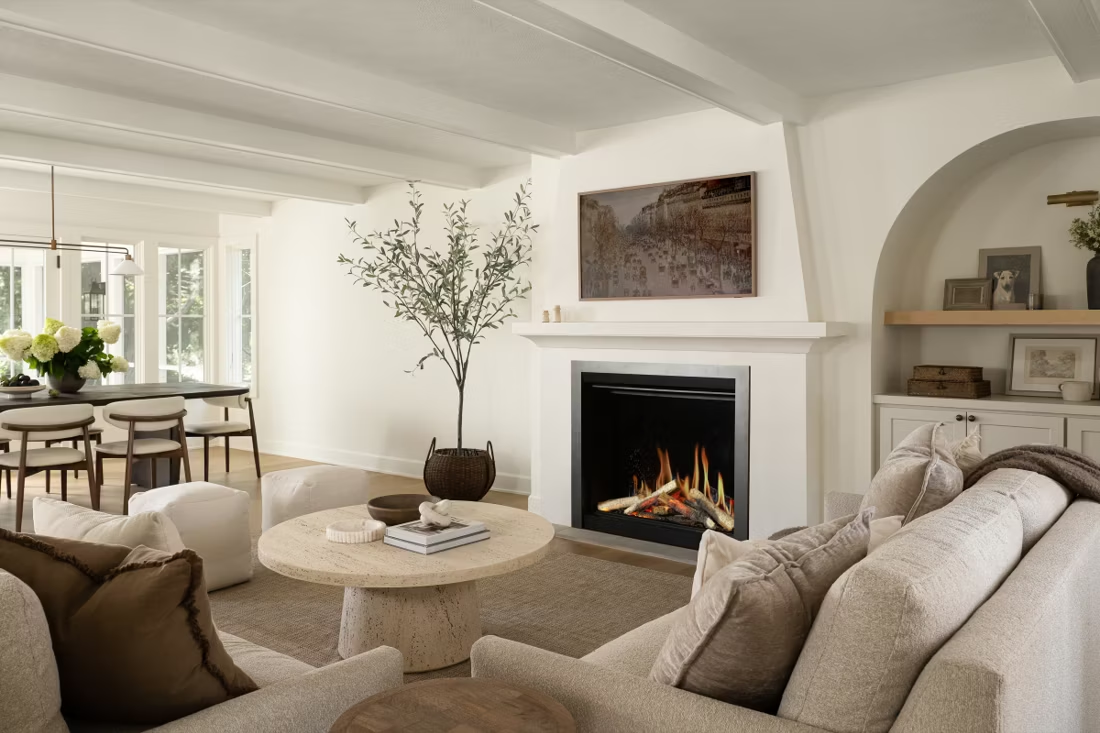
Ambiance and supplemental warmth, without the venting.
Nacogdoches County sits in climate zone 3A with only about 2,214 heating degree days a year—a fraction of what a place like Duluth, MN sees—and winter lows averaging around 36°F. That's a climate where a home rarely needs a dedicated all-day heat source; it needs quick, targeted warmth on the handful of genuinely cold nights each winter, plus a fireplace that looks good the other 350 days of the year. That's exactly what electric fireplaces are built for.
Because there's no chimney, no gas line, and no combustion byproducts to vent, electric units go into places wood and gas simply can't—an interior bedroom wall, a converted den, a rental property, an apartment above one of the shops near the Nacogdoches downtown square. Install costs are dramatically lower than a wood or gas project, there's no cutting permit paperwork through the local National Forest offices to deal with, and no air-quality restrictions to track. For most homes in Nacogdoches County, an electric fireplace is less about heating the whole house and more about supplemental warmth in the room you actually live in, paired with a real-flame-look feature that runs whether or not it's cold outside.
Three steps. No salesperson until you're ready.
Tell us about your project
Your zip code, your situation, and the fuel you're leaning toward—or let the answers point you to one.
See what's actually available
The brands dealers within 100 miles genuinely carry—real options, never a catalog mirage.
Get your dealer & Project Guide
A trusted local dealer, plus the free Project Guide & Parts List that names every component of the job.
Frequently Asked Questions
How much does an electric fireplace installation cost in Nacogdoches County?
Most electric fireplace installs in Nacogdoches County run $400 to $1,200. A plug-in insert or wall-mounted unit that drops into an existing opening or gets hung on a wall is on the low end—often just the cost of the unit plus a standard outlet. A built-in electric fireplace that requires a dedicated 120V or 240V circuit, framing, or a mantel surround runs toward the higher end, and a licensed electrician typically handles that portion. Because there's no venting or gas line work, electric installs are consistently the least expensive fireplace option available to Nacogdoches County homeowners.
Do I need a permit to install an electric fireplace in Nacogdoches County?
In most cases, no separate fireplace permit is required for a plug-in or wall-mounted electric unit—it's treated like any other appliance. If your project involves adding a new dedicated circuit or panel work, that electrical work typically does require a permit through the applicable building jurisdiction (the City of Nacogdoches or Nacogdoches County, depending on where the property sits), and it should be pulled by a licensed electrician. Local dealers can tell you up front whether your specific installation crosses that threshold.
Is an electric fireplace actually warm enough for Nacogdoches County winters?
For most rooms, yes. With winter lows averaging around 36°F and only about 2,214 heating degree days a year, Nacogdoches County doesn't see the sustained, deep-cold stretches that demand a high-output primary heat source. A mid-size electric insert or built-in unit with a 4,600–5,000 BTU heater can comfortably take the chill off a living room, bedroom, or sunroom on the coldest nights the area sees. Where electric falls short is heating an entire home during a hard freeze or ice storm—for that, most Nacogdoches County homeowners lean on central HVAC or a supplemental wood or gas unit, and use electric for the rooms and moments where instant, no-mess ambiance matters most.
What's the difference between an electric fireplace, insert, and stove?
An electric fireplace is typically a built-in unit set into a wall or mantel surround, designed to look like a traditional fireplace. An electric insert is sized to drop into an existing masonry firebox—a common upgrade for older Nacogdoches County homes with a fireplace that's rarely or never burned wood anymore. An electric stove is a freestanding cabinet-style unit that mimics a wood or pellet stove's footprint without any venting requirements. All three plug into standard household power, and the right choice mostly comes down to whether you're filling an existing opening, building new, or want a stove aesthetic in a spot with no fireplace at all.
Can an electric fireplace be used during a power outage?
No—electric fireplaces require household power to run the heater, blower, and flame-effect display, so they shut off during an outage just like any other plugged-in appliance. For East Texas homeowners concerned about ice-storm outages, which do happen periodically in this part of the state, a wood-burning stove or insert is the more reliable backup heat source since it needs no electricity at all. Many Nacogdoches County homes end up with an electric unit for everyday ambiance and a wood or gas appliance as the outage-proof backup.
Do electric fireplaces need a chimney or venting?
No. Electric fireplaces produce no combustion byproducts, so there's no chimney, flue, or vent pipe required—this is the core advantage over wood and gas units. That means an electric fireplace can go into an interior wall, a second-story bedroom, or a room with no existing masonry chimney anywhere in Nacogdoches or the surrounding county, without the structural work a vented appliance would demand.
How much does it cost to run an electric fireplace in Nacogdoches County?
Most electric fireplaces use 1,500 watts on the heater setting, which typically costs somewhere in the range of 15-20 cents per hour of use at current East Texas electricity rates—a fraction of the cost of running central heat to warm a single room. Many owners run the flame-effect display without the heater engaged for ambiance, which draws only a small amount of power (often under 100 watts). Given the mild climate here, most Nacogdoches County owners use the heater function occasionally rather than continuously through the winter.
Can I install an electric fireplace myself?
A basic plug-in or wall-mounted electric fireplace that uses a standard existing outlet is a straightforward DIY project for most homeowners—no different from hanging a TV or plugging in an appliance. Where it makes sense to bring in a licensed electrician is any project requiring a new dedicated circuit, a built-in unit with a custom surround, or hardwiring rather than a standard plug. Local hearth and electrical retailers in Nacogdoches County can advise on which category your specific unit falls into before you start.
Electric vs. gas—which is right for my Nacogdoches County home?
Gas fireplaces produce real, substantial heat output and can serve as a legitimate secondary heat source, but they require a gas line (natural gas is available in parts of the City of Nacogdoches; propane fills the gap elsewhere in the county) and venting work that runs into the thousands of dollars. Electric fireplaces cost a fraction of that to install, need no fuel line or venting, and go anywhere there's an outlet—but they can't outperform gas for raw heat output or serve as backup heat during a power outage. Given how mild winters are here, plenty of Nacogdoches County homeowners choose electric for secondary rooms and ambiance, and reserve gas or wood for the primary living space.
Can I put a TV above my fireplace?
Yes—with an asterisk. Fireplaces are hot and TVs don't like heat. Either put a mantel between them to deflect rising warmth, or choose a fireplace with heat-management technology that creates a cool zone on the wall above—the wall stays around 125 degrees, barely warm, while the room still gets full heat. If you like clean lines and don't want a mantel, heat management is the answer.
Do electric fireplaces actually produce heat?
Yes—most put out around 4,800–5,000 BTUs from a standard outlet, which comfortably warms a bedroom, office, or den as a comfort-zone heater. What they won't do is carry a whole house the way wood, gas, or pellet can. Think of electric as ambiance-first with honest supplemental heat: flames on with no heat in July, flames plus warmth in January.
Does a fireplace add value to my home?
On average, a fireplace adds back to the home about the same amount you spent installing it. Add the monthly savings from heating the rooms you actually use instead of the whole house—often hundreds of dollars a year—and the value case is strong before you even count what a fire does for how your family uses the room.
Can a fireplace actually lower my heating bill?
Yes—by creating a comfort zone. A furnace heats every square foot of the house just to warm the one room you're in; a gas fireplace on low burns roughly a sixth of the gas a typical furnace does. Set the furnace around 55–60 degrees as a baseline, then heat the rooms your family actually uses. Families who heat this way commonly save $20–$60 a month.
Stove and Fireplace Dealers in Nacogdoches County
Listings include WhyFire partner dealers, dealers we have verified as authorized for the brands we recommend, and established local businesses that carry hearth products. Every listing shows which one it is. The ones marked Preferred run on WhyFire's software, so they can show you real pricing and book your appointment right here. No manufacturer pays for placement. How we verify dealers →
Tdi Air Conditioning
East Texas Brick Co.
O'Neal Gas Inc.
Fireplace Specialties
Custom-Bilt Cabinet & Supply
Acme Brick
Fieldstone & Fireplaces
Bradley Brick LLC
Get your Nacogdoches County electric fireplace Project Guide & Parts List.
Tell us a bit about your home and we'll match you with a trusted local Nacogdoches County dealer and send over a free Project Guide & Parts List—the exact unit, mounting details, and electrical requirements for your space.
Find Your Fireplace →