
Gas fireplace warmth for Murillo's short, mild winters.
Real flame, instant on-off heat, and backup warmth for the rare Rio Grande Valley freeze—matched with a local dealer who knows propane and gas line work in Hidalgo County.
Every Project Starts From One of These Five Situations
Built for ambiance, ready for the rare freeze.
Murillo sits in Hidalgo County at 94 feet of elevation, deep in the Rio Grande Valley's subtropical climate zone 2A. With an average winter low near 49°F and only a light, short winter heating season each year, this isn't a place that needs a fireplace to survive winter the way Bozeman, Montana or Duluth, Minnesota do. Most Murillo homeowners who add a gas fireplace are after the look and feel of real flame in the living room, a focal point for holiday gatherings, or a supplemental heat source for the handful of nights each year when temperatures actually dip toward freezing.
That said, the Valley isn't immune to real cold. Winter Storm Uri in February 2021 knocked out power to much of Hidalgo County for days, including areas served by AEP Texas Central, Oncor, and Magic Valley Electric Cooperative. A gas fireplace with a battery-backed or self-powered ignition system is one of the few heat sources that keeps working when the grid doesn't. Because unincorporated communities like Murillo typically aren't reached by municipal natural gas mains, most installations here run on propane rather than piped gas—which changes tank placement and line-run planning but not the fireplace itself.
Three steps. No salesperson until you're ready.
Tell us about your project
Your zip code, your situation, and the fuel you're leaning toward—or let the answers point you to one.
See what's actually available
The brands dealers within 100 miles genuinely carry—real options, never a catalog mirage.
Get your dealer & Project Guide
A trusted local dealer, plus the free Project Guide & Parts List that names every component of the job.
Frequently Asked Questions
How much does a gas fireplace installation cost in Murillo?
Most gas fireplace and insert installations in the Murillo area run roughly $3,500 to $9,000, with the spread driven mostly by propane setup. If you already have a propane tank and regulator sized for a fireplace, a direct-vent insert or built-in unit lands on the lower end. If a new propane tank, line run, or regulator upgrade is needed—common for homes without an existing gas appliance—expect the higher end of that range. A local dealer will walk your property and give you a firm number rather than a phone estimate, since tank placement and line distance vary a lot from lot to lot out here.
Do I need natural gas, or should I plan for propane?
Plan for propane. Murillo is an unincorporated community in Hidalgo County, and areas like this generally aren't reached by natural gas mains the way McAllen or Edinburg's core neighborhoods might be. Nearly every gas fireplace installed out here runs on propane from a tank on the property, supplied by a regional propane provider. The good news is that almost every gas fireplace, insert, or stove on the market can be configured for propane with the correct orifice and regulator—you're not limited on style or brand, just on which fuel line feeds it.
Does a gas fireplace even make sense with winters this mild?
It's a fair question with only a light, short winter heating season each year and winter lows that average 49°F. For most of the season, a gas fireplace in Murillo is doing ambiance work more than heavy lifting—it's the fire people gather around on the handful of genuinely cold evenings and during holiday visits. But mild average temperatures don't rule out hard cold: the February 2021 freeze pushed Rio Grande Valley temperatures into the teens and 20s and knocked out power for days across Hidalgo County. A properly vented gas unit gives you real, reliable heat on those outlier nights, not just a look.
Will my gas fireplace still work if the power goes out?
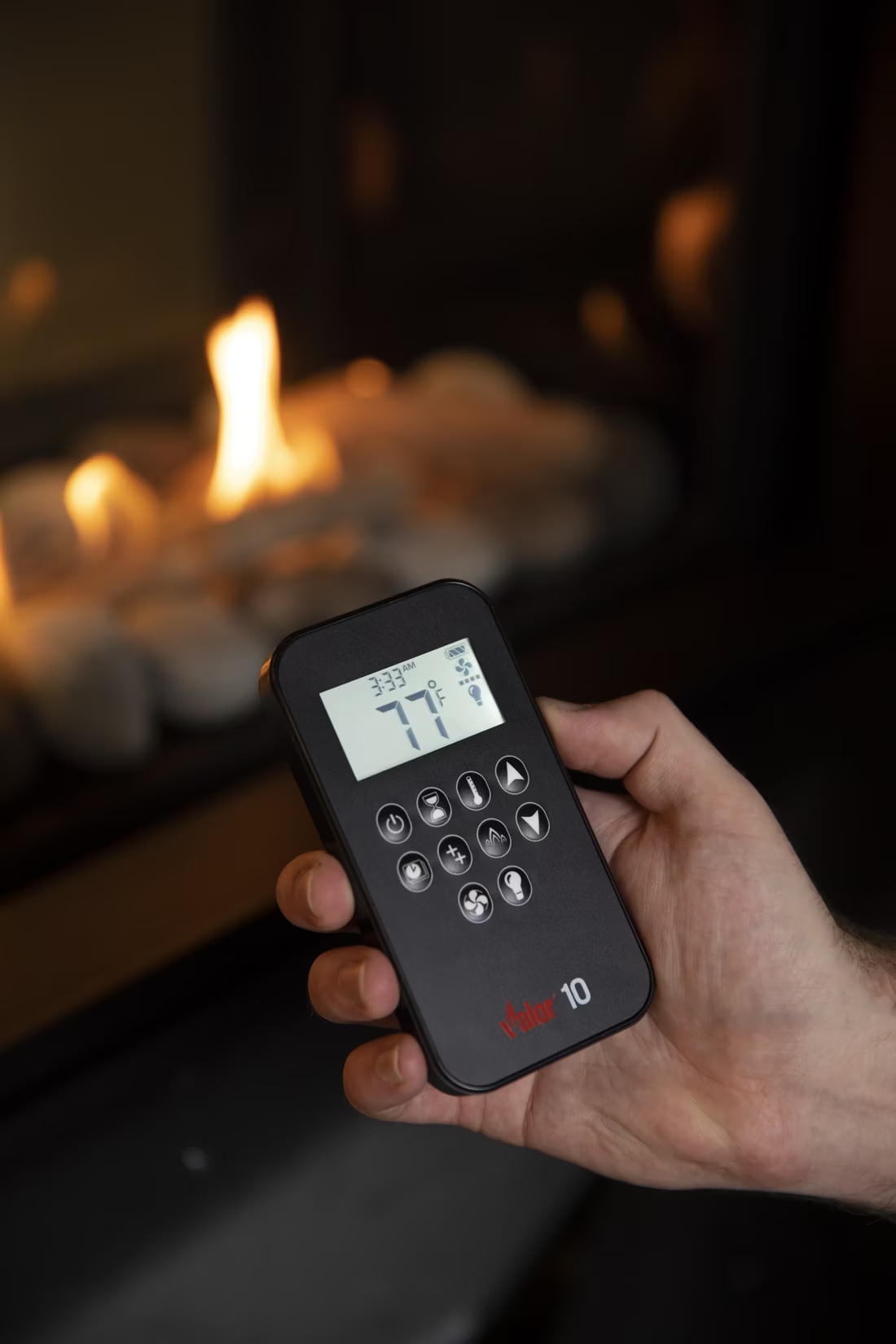
Most modern gas fireplaces are built to run on standing pilot or intermittent pilot ignition (IPI) with battery backup, so they'll still light and produce heat during an outage—which matters in a region where AEP Texas Central, Oncor, and Magic Valley Electric Cooperative territories all overlap and grid strain during hard freezes (like Winter Storm Uri) has led to multi-day outages. IPI units run off AA batteries that kick in automatically. Valor's lineup takes it a step further—their pilot generates its own electricity through a thermocouple, so there's no battery to remember to replace. Ask your dealer which ignition system a unit uses before you buy, especially if you're thinking about this fireplace as your cold-snap backup.
Do I need a permit to install a gas fireplace in Murillo?
Gas line and appliance work in Hidalgo County generally requires a permit and licensed gas-fitter, whether you're running propane or tying into an existing line. Because Murillo is unincorporated, permitting typically routes through the county rather than a city building department—your installer should confirm the correct jurisdiction and pull the permit as part of the job. This is one more reason to use a certified hearth dealer rather than a handyman: propane line work done wrong is a leak and fire risk, not just a code issue.
Vented or vent-free—which makes sense for a Rio Grande Valley home?
Vented (direct-vent) gas fireplaces exhaust combustion byproducts outside through a sealed pipe; vent-free units burn directly into the room. Texas permits vent-free units, and some Murillo homeowners choose them for retrofit simplicity when there's no existing chimney or exterior wall access. But in a humid Gulf climate, added indoor moisture from a vent-free unit is worth weighing against comfort—south Texas summers already bring plenty of humidity indoors. Direct-vent units cost a bit more to install but don't add moisture or combustion byproducts to your living space, and they're the option most local dealers recommend by default.
What's the difference between a gas fireplace, insert, and stove?
A gas fireplace is a built-in unit framed into a wall, typically chosen for new construction or a remodel. A gas insert drops into an existing masonry or wood-burning fireplace opening, which is common in older Hidalgo County homes that were originally built with a wood-burning hearth but never actually burned much wood given the climate. A gas stove is a freestanding cabinet-style unit that sits on the floor and vents through a wall or roof. For a Murillo home with an existing but rarely-used fireplace opening, an insert is usually the simplest upgrade path.
How often does a gas fireplace need servicing here?
Plan on an annual inspection, same as anywhere—a technician checks the burner, pilot or IPI system, venting, and gas connections, and cleans the glass. In the Rio Grande Valley's humid, insect-heavy climate, it's also worth having them check the vent termination and any outdoor propane connections for corrosion or nesting, which is a more regional concern here than it would be in a drier climate. Expect to pay in the $150–$250 range for a standard annual service call from a local gas appliance technician.
Gas vs. electric fireplace—which fits a Murillo home better?
Both are reasonable choices given how mild winters here are. Gas delivers real flame, higher heat output, and—with the right ignition system—keeps working through a power outage, which matters given the multi-day outages the Valley saw during Winter Storm Uri. Electric fireplaces are simpler to install (often just a standard outlet), cost less upfront, and area electric rates here run around $0.102 per kWh, so operating cost is modest for occasional ambiance use. If backup heat during a hard freeze or grid strain matters to you, gas has the edge. If you mainly want a low-cost, low-hassle flame effect for a bedroom or living room, electric is worth a look too—a local dealer can walk you through both.
Why is my open fireplace making my house colder?
Open fireplaces suck—literally. As the fire burns, it consumes air your furnace already paid to heat and pulls it out through the chimney, so the house is actually colder after the fire goes out than before you lit it. An insert fixes this: it seals the chimney, puts fixed glass across the front, and turns that hole in your house into a real heat source.
Can I put a TV above my fireplace?
Yes—with an asterisk. Fireplaces are hot and TVs don't like heat. Either put a mantel between them to deflect rising warmth, or choose a fireplace with heat-management technology that creates a cool zone on the wall above—the wall stays around 125 degrees, barely warm, while the room still gets full heat. If you like clean lines and don't want a mantel, heat management is the answer.
Can a fireplace actually lower my heating bill?
Yes—by creating a comfort zone. A furnace heats every square foot of the house just to warm the one room you're in; a gas fireplace on low burns roughly a sixth of the gas a typical furnace does. Set the furnace around 55–60 degrees as a baseline, then heat the rooms your family actually uses. Families who heat this way commonly save $20–$60 a month.
Can I install a fireplace myself?
If you're putting a fire in your house on purpose, it's best to work with an expert. Unless you're genuinely experienced in framing, gas line, vent pipe, and the national code on clearances to combustibles, have a professional do it—and ideally the same company that sells you the fireplace, so warranty, service, and liability all live under one roof.
Nearby Dealers
Hearth shops serving Murillo and the surrounding area. Every listing shows whether it is a WhyFire partner, a dealer we have verified as authorized for the brands we recommend, or a local business carrying hearth products. No manufacturer pays for placement. How we verify dealers →
Grill Street Outdoor Kitchens
Find your gas fireplace in Murillo.
Tell us about your home and whether you're on propane or exploring options, and we'll put together a free Project Guide & Parts List—the exact unit, venting or propane setup, and a trusted local dealer to install it right.# ... ...
Find Your Fireplace →