
Electric heat built for Montague County's mild winters.
From Bowie to Nocona to Saint Jo, Montague County winters rarely demand a wood-burning workhorse. An electric fireplace or insert gives you real ambiance and supplemental zone heat with no chimney, no venting, and no permit headaches. Find the right unit and connect with a trusted local dealer.
Every Project Starts From One of These Five Situations
A mild climate that doesn't need a furnace's worth of fire.
Montague County sits in climate zone 3A along the Red River, with an average winter low around 30°F and a mild, short heating season—a fraction of what a place like Duluth, MN racks up in a single season. Homes here don't need to hold a 20-hour overnight burn the way a stove in a genuinely cold climate does. What most Montague County homeowners actually want out of a fireplace is ambiance, a warm focal point in the living room, and a bit of supplemental heat on the occasional icy front that blows through Bowie, Nocona, or the smaller communities out toward Ringgold and St. Jo.
That's exactly what electric fireplaces do well. There's no masonry chimney to build, no venting to route through the roof, and no wood to split and stack—oak, pecan, and mesquite may be the county's traditional firewood, but plenty of homeowners here are just as happy to skip the woodpile entirely. Electric units plug into a standard outlet or a dedicated circuit, drop into an existing wood or gas fireplace opening as an insert, or install as a built-in during a remodel. Most homes in the unincorporated parts of the county are served by rural electric cooperatives rather than a single municipal utility, and any licensed local electrician can handle the wiring for a larger built-in unit without the trade coordination a gas or wood project requires.
Three steps. No salesperson until you're ready.
Tell us about your project
Your zip code, your situation, and the fuel you're leaning toward—or let the answers point you to one.
See what's actually available
The brands dealers within 100 miles genuinely carry—real options, never a catalog mirage.
Get your dealer & Project Guide
A trusted local dealer, plus the free Project Guide & Parts List that names every component of the job.
Frequently Asked Questions
How much does an electric fireplace installation cost in Montague County?
Plug-in electric fireplace inserts and freestanding units typically run $300 to $1,200 installed, since there's no venting or gas line work involved—you're mostly paying for the unit and, if needed, a surface mount or trim kit. Larger built-in electric fireplaces that require a dedicated 240-volt circuit run higher, usually $1,500 to $3,000, once electrical work and any surrounding cabinetry or mantel framing are included. Rural properties out toward Ringgold or Spanish Fort may see a modest travel charge added by the electrician or installer, but electric projects generally cost far less than a wood or gas install in the same home.
Does an electric fireplace actually produce heat, or is it just for looks?
Both, depending on the model. Most electric fireplaces include a fan-forced heater rated around 4,600–5,000 BTU, enough to comfortably heat a single room or open living area—which lines up well with Montague County's mild 30°F average winter low. On the coldest nights, an electric unit works as a supplemental heat source that lets you turn down the central system in the room you're actually using, rather than as a whole-home primary heater the way a wood stove would need to be in a colder climate. Every unit also lets you run the flame effect with the heater off, which is popular here for spring and fall evenings when heat isn't needed but ambiance is.
Can I convert my existing wood-burning fireplace to electric?
Yes, and it's a common project in Montague County's older farmhouses and ranch homes that have a masonry fireplace but rarely burn wood in it anymore. An electric insert slides into the existing firebox opening, plugs into a nearby outlet or a newly run circuit, and gives you flame-effect ambiance and supplemental heat without touching the chimney. Since there's no combustion, there's no need for a chimney liner, no clearance concerns, and no ongoing chimney sweep maintenance—a real advantage over converting to gas or keeping the fireplace as wood-burning.
Do I need a permit to install an electric fireplace in Montague County?
A simple plug-in electric fireplace or insert generally doesn't require a permit, since it's treated like any other appliance you plug into an existing outlet. A built-in electric fireplace that requires a new dedicated circuit is electrical work, and depending on whether the home is inside Bowie, Nocona, or another incorporated town versus unincorporated county land, that may need an electrical permit pulled by a licensed electrician. Your local dealer or installer can tell you which jurisdiction applies to your address and will typically handle the permit as part of the install.
Electric vs. propane—which makes more sense for my Montague County home?
Much of unincorporated Montague County isn't on a natural gas main, which leaves propane as the typical gas alternative—and propane fireplaces require a tank, a gas line, and ongoing fuel delivery. Electric skips all of that: no tank, no delivery schedule, no combustion byproducts to vent. The tradeoff is that electric fireplaces produce less raw heat output than a propane unit, so if you're looking for a serious secondary heat source for a larger room, propane may still win. For ambiance-first rooms, home offices, bedrooms, or rentals where simplicity matters most, electric is usually the easier and cheaper path.
What's the best electric fireplace for Montague County's climate?
Because winters here are mild by national standards, raw BTU output matters less than it would in a colder zone—you have more flexibility to choose based on design and features. Wall-mounted linear units from brands like Dimplex and Napoleon are popular for modern remodels, while insert-style units are the go-to for converting an existing masonry fireplace. If you do want the unit to double as meaningful supplemental heat during Montague County's occasional hard freezes, look for a model with a true 5,000 BTU heater rating rather than a lower-output decorative unit—your local dealer can match wattage to your room's square footage.
Will my electric fireplace work during a power outage?
No—and this is worth being upfront about in Texas. Unlike a wood stove, which needs no electricity at all, an electric fireplace goes dark the moment the grid does. Montague County has seen ERCOT-related outages during severe winter storms, and an all-electric heating and fireplace setup offers no backup in that scenario. If backup heat during a grid failure is a real priority for your household, it's worth pairing an electric fireplace with a wood or propane appliance elsewhere in the home rather than relying on electric alone.
Does a built-in electric fireplace need special wiring?
Smaller electric inserts and freestanding units typically run on a standard 120-volt outlet, the same as any other plugged-in appliance. Larger built-in units, especially wide linear models over 50 inches, often call for a dedicated 20-amp circuit or even 240-volt service to run the heater at full output without tripping a breaker shared with other household loads. A licensed electrician should handle that wiring, and it's worth confirming voltage and amperage requirements with your dealer before you buy the unit, since it affects the electrical work needed.
Electric vs. wood—which is right for my Montague County home?
Wood remains a strong choice for households that want real backup heat independent of the power grid, and Montague County has no shortage of local oak, pecan, and mesquite for those willing to split and stack it. Electric wins on convenience: instant on-off, zero maintenance, no chimney or clearance requirements, and a much lower install cost. Given the county's mild, short heating season, most homes don't need wood as a primary heat source the way a colder-climate house would—which is why electric has become the default choice for homeowners here who want fireplace ambiance without taking on a wood-burning appliance.
Do electric fireplaces actually produce heat?
Yes—most put out around 4,800–5,000 BTUs from a standard outlet, which comfortably warms a bedroom, office, or den as a comfort-zone heater. What they won't do is carry a whole house the way wood, gas, or pellet can. Think of electric as ambiance-first with honest supplemental heat: flames on with no heat in July, flames plus warmth in January.
Can I put a TV above my fireplace?
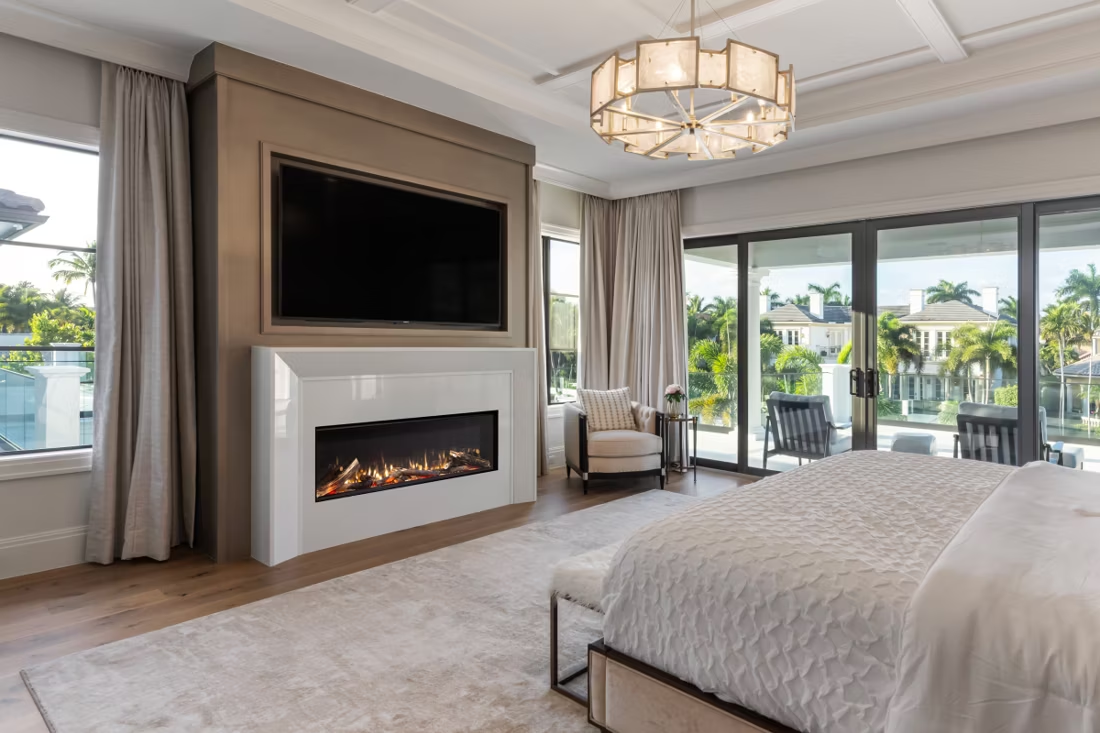
Yes—with an asterisk. Fireplaces are hot and TVs don't like heat. Either put a mantel between them to deflect rising warmth, or choose a fireplace with heat-management technology that creates a cool zone on the wall above—the wall stays around 125 degrees, barely warm, while the room still gets full heat. If you like clean lines and don't want a mantel, heat management is the answer.
Can I install a fireplace myself?
If you're putting a fire in your house on purpose, it's best to work with an expert. Unless you're genuinely experienced in framing, gas line, vent pipe, and the national code on clearances to combustibles, have a professional do it—and ideally the same company that sells you the fireplace, so warranty, service, and liability all live under one roof.
How much should I budget for a fireplace?
For an average home—covering the fireplace, the vent pipe, and basic installation—a budget between $3,900 and $5,500 gives you a lot of options across wood, gas, and pellet. By the time you add finish work, gas line, and electrical, the average complete installation lands between $5,000 and $12,000 all-in. In a remodel or new build, a good rule is to put about 2.5% of the total project cost toward the fireplace.
Stove and Fireplace Dealers in Montague County
Listings include WhyFire partner dealers, dealers we have verified as authorized for the brands we recommend, and established local businesses that carry hearth products. Every listing shows which one it is. The ones marked Preferred run on WhyFire's software, so they can show you real pricing and book your appointment right here. No manufacturer pays for placement. How we verify dealers →
The Ember Shop, Inc.
Heffley's Hearth & Home
Alliance Materials, Inc.
Polar Bear Chimney Sweep
Find your electric fireplace in Montague County.
Tell us a bit about your home and we'll match you with the right electric fireplace or insert—plus a free Project Guide & Parts List and a trusted local dealer to install it.
Find Your Fireplace →