
The Fireplace Upgrade That Fits Mission's Mild Winters.
No gas line, no chimney, no venting—just a real flame look and instant ambiance for Rio Grande Valley homes. Find the right unit and connect with a trusted local dealer.
Every Project Starts From One of These Five Situations
Warmth you want, not heat you need.
Mission sits in the Rio Grande Valley at just 115 feet of elevation, where the average winter low hovers around 53°F and the city sees only a light dusting of chilly days each year—a fraction of what a place like Duluth, MN racks up in a single cold month. Structural heating simply isn't the job most Mission homeowners need a fireplace to do.
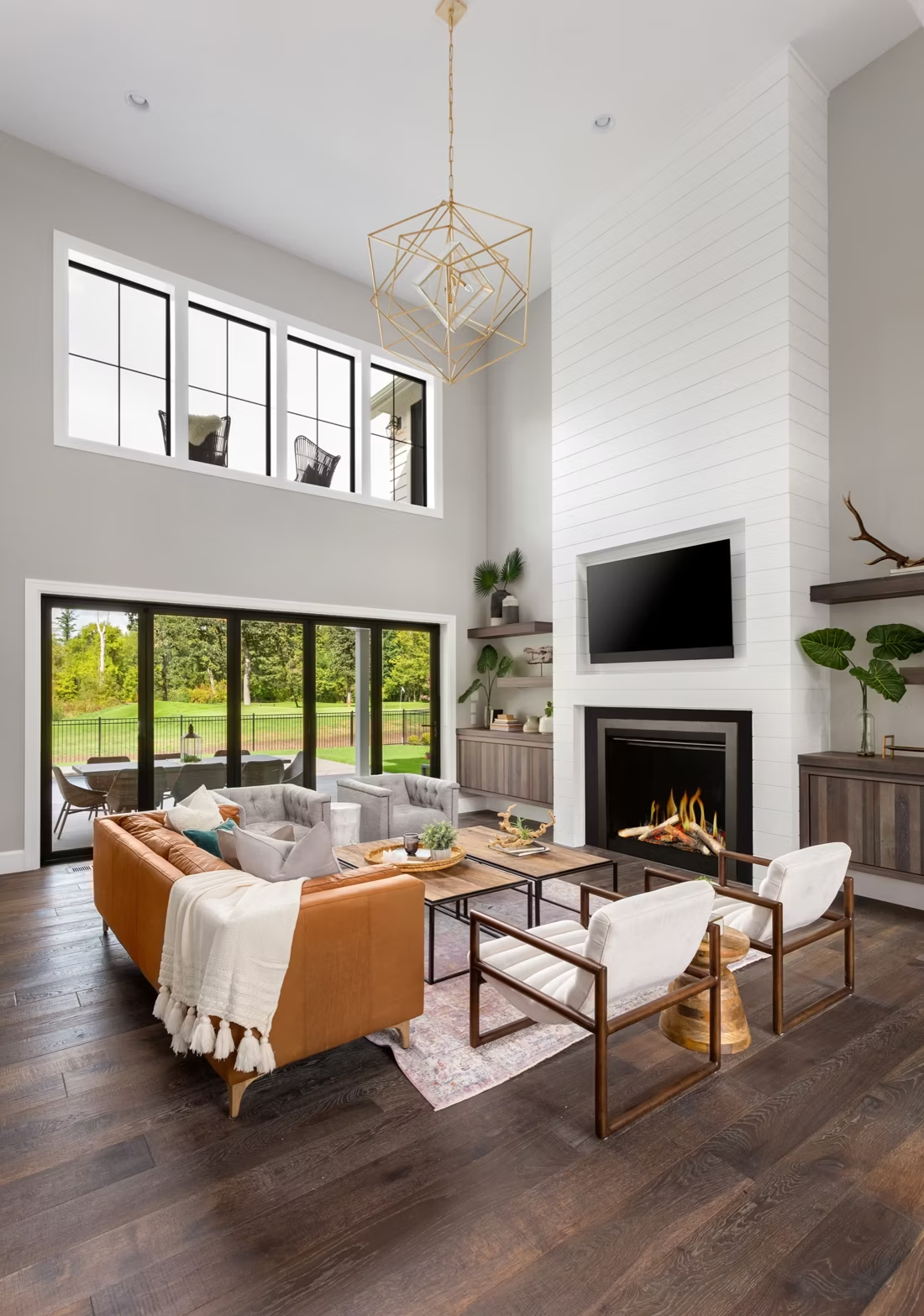
That's exactly why electric fireplaces do well here. There's no gas line to run, no chimney to build, and no combustion byproducts to vent—an electric insert, mantel package, or wall-mounted linear unit installs almost anywhere with a standard or dedicated circuit. Depending on where your home sits in Hidalgo County, your electricity comes from AEP Texas Central, Oncor Electric Delivery, or Magic Valley Electric Cooperative, and at roughly 10.2 cents per kWh, running one for a few hours of evening ambiance costs pennies. The tradeoff worth knowing: electric fireplaces need grid power to operate, so they won't serve as emergency heat during the kind of ERCOT-wide outages the Valley saw during Winter Storm Uri in February 2021—a real consideration even in a climate this mild.
Three steps. No salesperson until you're ready.
Tell us about your project
Your zip code, your situation, and the fuel you're leaning toward—or let the answers point you to one.
See what's actually available
The brands dealers within 100 miles genuinely carry—real options, never a catalog mirage.
Get your dealer & Project Guide
A trusted local dealer, plus the free Project Guide & Parts List that names every component of the job.
Frequently Asked Questions
How much does an electric fireplace installation cost in Mission?
Costs vary a lot by unit type. A plug-in freestanding electric stove or a simple insert that drops into an existing opening runs $300 to $1,200 installed, since it typically just needs an outlet. A built-in linear wall unit or a full mantel package with custom surround runs $1,500 to $4,500, and often calls for a dedicated 20-amp circuit, which adds $150 to $400 in electrician work. Because there's no gas line or chimney involved, electric is consistently the least expensive fireplace category to install in Mission—the local dealer you're matched with will scope the exact circuit and framing needs during an in-home visit.
Do I need a permit to install an electric fireplace in Mission?
A small plug-in unit generally doesn't require a permit since it uses an existing outlet. If your project involves a new dedicated circuit, in-wall wiring, or altering a wall for a built-in linear unit, that electrical work typically needs a permit through the City of Mission's Building and Development Services Department (or Hidalgo County if you're outside city limits). Most licensed electricians and hearth dealers pull this permit as part of the installation, so it's rarely something homeowners have to handle themselves.
Which electric utility serves my home, and does it affect my fireplace choice?
Depending on the exact address, Mission homes are served by AEP Texas Central Company, Oncor Electric Delivery, or Magic Valley Electric Cooperative. All three deliver power at a similar residential rate, currently around 10.2 cents per kWh locally, so the utility itself doesn't really change which fireplace makes sense. What does matter is your panel capacity—larger linear units and heaters that draw close to 1,500 watts benefit from their own circuit, and your dealer or electrician can confirm your panel has room before installation.
Will an electric fireplace actually heat my house?
Not in the way a furnace does, and in Mission that's usually fine. With only a light dusting of chilly days each year and winter lows averaging 53°F, most homes here don't need whole-house heat from a fireplace—they need a focal point that can take the chill off a single room on the occasional cold snap. Most electric units are rated to comfortably heat 400 to 1,000 square feet as supplemental zone heat. Many owners in the Valley run the flame effect year-round with the heater switched off, since the visual is the main draw for most of the year.
Will my electric fireplace work if the power goes out?
No—electric fireplaces are fully dependent on grid power, so they shut down the moment the electricity does. That's a real difference from gas units, which can often run on battery-backed ignition during an outage. The Rio Grande Valley is on the ERCOT grid and did see significant outages during Winter Storm Uri in February 2021, so if backup heat during a rare freeze is a priority for you, it's worth discussing a gas option with your local dealer alongside electric. For everyday ambiance and the mild cold snaps Mission usually sees, electric remains the simpler and cheaper choice.
Electric vs. gas fireplace—which is right for a Mission home?
Gas fireplaces are also common here, especially in homes already plumbed for natural gas or set up with a propane tank, and they offer higher heat output plus the option of battery-backed operation during outages. Electric fireplaces skip the gas line and venting entirely, cost less upfront and to install, and can go in almost any room—including interior walls, apartments, and rentals where gas or venting isn't an option. Given Mission's mild climate and low heating demand, most homeowners choose based on look and installation flexibility rather than heat output, and electric wins on both simplicity and cost for that use case.
What type of electric fireplace works best in South Texas homes?
Linear wall-mounted units are popular in newer Mission construction because they suit the open, modern floor plans common in the area and mount flush without any structural changes. For homes with an existing fireplace opening—less common here than in colder states, but present in some older or custom builds—an electric insert can fill that space directly. Mantel packages work well as a standalone focal point in a living room that has no existing fireplace at all. A local dealer can walk you through which fits your framing and electrical setup.
Do electric fireplaces hold up in Mission's heat and humidity?
Yes. Electric units have no combustion, no venting, and no exposure to outside air, so the Valley's summer heat and humidity don't affect performance the way they can with masonry or vented appliances. Most owners simply run the flame effect without the heater switched on for most of the year, reserving actual heat output for the handful of nights that dip into the 40s. LED flame technology also runs cool to the touch relative to older halogen models, which matters in a climate where the AC is working overtime much of the year.
What about wood-burning options—are they available in Mission?
Wood-burning fireplaces and stoves are essentially a non-factor here. With average winter lows around 53°F and minimal heating demand, there's little practical need for a wood-burning appliance, and most Mission homes were never built with a chimney to support one. Oak, pecan, and mesquite are all common regionally, but locally they show up in smokers and grills far more than in indoor hearths. For the rare homeowner drawn to the look of a wood fire, an electric unit with realistic flame technology is generally the more practical route in this climate.
Can I put a TV above my fireplace?
Yes—with an asterisk. Fireplaces are hot and TVs don't like heat. Either put a mantel between them to deflect rising warmth, or choose a fireplace with heat-management technology that creates a cool zone on the wall above—the wall stays around 125 degrees, barely warm, while the room still gets full heat. If you like clean lines and don't want a mantel, heat management is the answer.
Do electric fireplaces actually produce heat?
Yes—most put out around 4,800–5,000 BTUs from a standard outlet, which comfortably warms a bedroom, office, or den as a comfort-zone heater. What they won't do is carry a whole house the way wood, gas, or pellet can. Think of electric as ambiance-first with honest supplemental heat: flames on with no heat in July, flames plus warmth in January.
How much should I budget for a fireplace?
For an average home—covering the fireplace, the vent pipe, and basic installation—a budget between $3,900 and $5,500 gives you a lot of options across wood, gas, and pellet. By the time you add finish work, gas line, and electrical, the average complete installation lands between $5,000 and $12,000 all-in. In a remodel or new build, a good rule is to put about 2.5% of the total project cost toward the fireplace.
Can a fireplace actually lower my heating bill?
Yes—by creating a comfort zone. A furnace heats every square foot of the house just to warm the one room you're in; a gas fireplace on low burns roughly a sixth of the gas a typical furnace does. Set the furnace around 55–60 degrees as a baseline, then heat the rooms your family actually uses. Families who heat this way commonly save $20–$60 a month.
Nearby Dealers
Hearth shops serving Mission and the surrounding area.
Electric Service in Mission
An electric fireplace's heater draws about 1,500 watts—pennies per hour at local rates.
Aep Texas Central Company
Oncor Electric Delivery Company LLC
Magic Valley Electric Coop Inc
Find your electric fireplace in Mission.
Tell us a bit about your home and we'll match you with the right electric fireplace, insert, or mantel package—plus a free Project Guide & Parts List and a trusted local dealer to install it.
Find Your Fireplace →