
Find the right electric fireplace for your Milam County home.
With mild winters and only a short, light heating season each year, Milam County homes rarely need a serious heat source—but a lot of homeowners still want the ambiance and easy zone heat an electric unit provides. Get matched with a vetted local dealer.
Every Project Starts From One of These Five Situations
Mild winters, modest heating needs—electric fits the bill.
Milam County sits in climate zone 2A, with an average winter low around 39°F and a short, mild heating season—a fraction of what a place like Duluth or Bismarck racks up in a single cold month. That's not a climate that demands a high-output wood stove or a gas furnace supplement. It's a climate where most of the heating need is short, occasional cold snaps rather than a five-month burn season, which is exactly the situation electric fireplaces are built for.
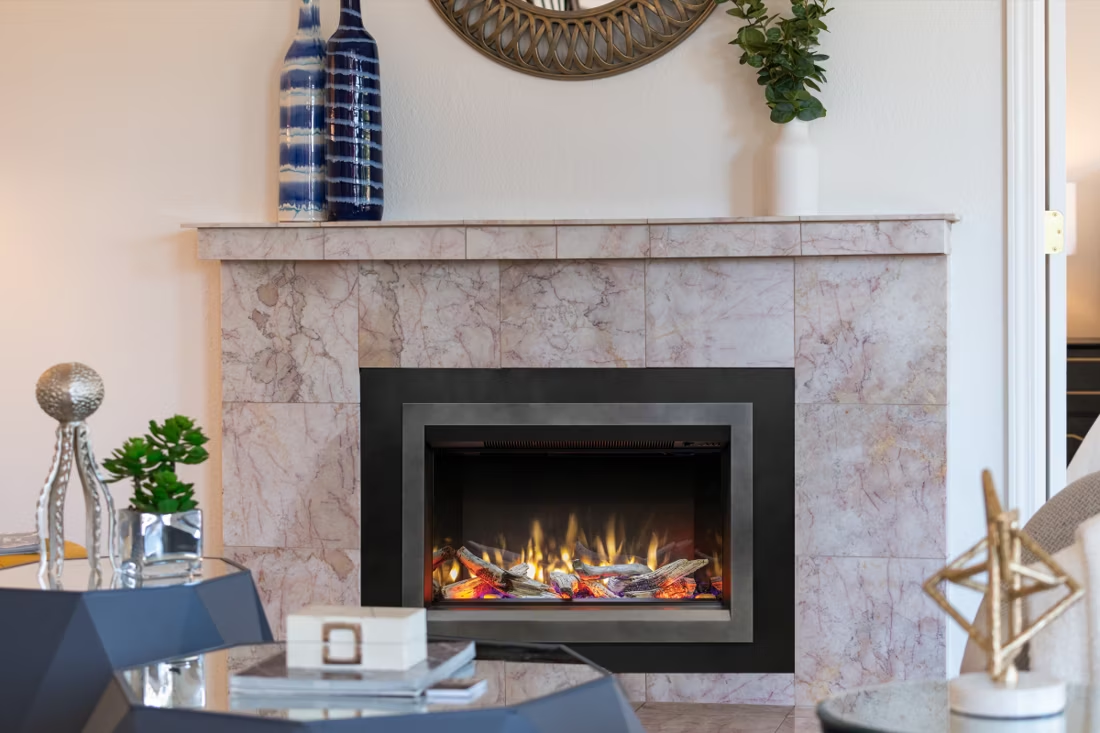
Across Cameron, Rockdale, Thorndale, Milano, and the rural stretches of the county, electric inserts and freestanding units are increasingly common in living rooms, primary bedrooms, and converted spaces where homeowners want real ambiance and supplemental warmth without adding a flue, running a gas line, or dealing with mesquite and oak firewood. No venting, no permit headaches, no combustion byproducts—just plug it in. For a county with mild winters and no wood-smoke air quality concerns to speak of, that simplicity is a genuine advantage, not a compromise.
Three steps. No salesperson until you're ready.
Tell us about your project
Your zip code, your situation, and the fuel you're leaning toward—or let the answers point you to one.
See what's actually available
The brands dealers within 100 miles genuinely carry—real options, never a catalog mirage.
Get your dealer & Project Guide
A trusted local dealer, plus the free Project Guide & Parts List that names every component of the job.
Frequently Asked Questions
How much does an electric fireplace installation cost in Milam County?
Most electric fireplace and insert installations in Milam County run $400 to $1,200. That range covers a plug-in insert dropped into an existing fireplace opening on the low end, up to a built-in wall unit that needs a dedicated 120V or 240V circuit run by an electrician on the high end. Because Milam County's mild climate means these units are almost always supplemental or ambiance-focused rather than whole-home heat, most homeowners land toward the lower end of that range with a straightforward insert or mantel-mounted unit.
Do electric fireplaces actually put out enough heat for Texas winters?
For Milam County, yes—comfortably. With winter lows averaging around 39°F and only a short, mild heating season each year, most homes need supplemental heat for cold snaps and cool evenings rather than sustained sub-freezing stretches. A standard electric insert rated around 4,600-5,000 BTU can noticeably warm a living room or bedroom on the handful of genuinely cold nights Cameron, Rockdale, or Thorndale see each winter. Electric units aren't designed to replace central heat in a harsh climate, but that's not the job they need to do here.
Do I need a permit to install an electric fireplace in Milam County?
In most cases, no—a plug-in electric insert or freestanding unit doesn't require a building permit since there's no venting, gas line, or structural chimney work involved. If you're having a built-in wall unit installed that requires a new dedicated electrical circuit, your electrician may need to pull an electrical permit depending on the jurisdiction—Cameron and Rockdale each handle permitting for work within city limits, while unincorporated parts of the county fall under Milam County's building requirements. A local dealer handling the install will know exactly what's needed for your address.
What's the difference between an electric insert and a built-in electric fireplace?
An electric insert is designed to drop into an existing fireplace opening—masonry or zero-clearance—and typically just needs a nearby outlet. It's the simplest and least expensive option for homeowners in Milam County who already have a fireplace they want to convert away from wood or want to stop using entirely. A built-in electric fireplace is a standalone unit installed into a framed wall, often as part of a new build or remodel, and usually requires a dedicated circuit run by an electrician. For most Cameron and Rockdale homes with an existing fireplace opening, an insert is the faster and cheaper path; new construction or homes without a fireplace typically go with a built-in.
Is wood or gas ever a better choice than electric in Milam County?
For some homes, yes. Milam County has no air quality restrictions on wood burning, and oak, pecan, and mesquite are all commonly available locally for anyone who wants the ambiance and heat output of a real fire. Gas is also a standard option where propane or natural gas service is available. But given the county's mild winter profile—average lows near 39°F and a heating season that stays short overall—many homeowners find that electric delivers the visual appeal of a fire and enough supplemental warmth for the handful of cold nights each year, without the wood handling, chimney maintenance, or gas line work the other fuels require. It comes down to whether you want the experience of a real fire or the simplicity of flipping a switch.
How much does it cost to run an electric fireplace in Milam County?
A typical electric fireplace insert draws somewhere between 750 and 1,500 watts on heat mode. Running one for a few hours on a cool evening costs a small fraction of what running central heat for the same period would cost, since you're only heating the room you're in rather than the whole house. Given Milam County's mild winters, most homeowners only run their unit on heat mode occasionally—for ambiance most of the year, and for actual supplemental warmth during the county's relatively rare cold snaps.
Can an electric fireplace go anywhere in my house?
Pretty much, since there's no venting or combustion byproducts to manage. Electric inserts, wall-mounted units, and freestanding electric stoves can go in bedrooms, home offices, basements, or apartments where a wood or gas unit wouldn't be practical or allowed. The main consideration is electrical—a small plug-in unit works with a standard outlet, while a larger built-in model may need a dedicated circuit. This flexibility is part of why electric fireplaces have become popular in Cameron and Rockdale-area homes for rooms that don't have an existing fireplace or chimney to work with.
Are electric fireplaces good for renters or manufactured homes in Milam County?
Yes—this is one of the strongest use cases for electric. Plug-in inserts and freestanding electric stoves require no structural changes, no venting, and no permanent installation, which makes them a practical option for renters, manufactured homes, and older farmhouses throughout rural Milam County where adding a wood-burning chimney or gas line isn't realistic or worth the investment. A local dealer can point you toward compact freestanding models that work well in smaller manufactured-home floor plans.
What should I look for in an electric fireplace dealer near me?
Look for a dealer who will actually walk your specific space—room size, existing fireplace opening if you have one, and available electrical circuits—rather than just pointing you to a catalog. In a county without a dense concentration of hearth retailers, it's worth working with a trusted dealer who carries a few well-reviewed brands and can speak honestly about which unit fits your home, rather than a big-box store selling whatever's on the shelf. That's exactly the kind of match we make.
Can I put a TV above my fireplace?
Yes—with an asterisk. Fireplaces are hot and TVs don't like heat. Either put a mantel between them to deflect rising warmth, or choose a fireplace with heat-management technology that creates a cool zone on the wall above—the wall stays around 125 degrees, barely warm, while the room still gets full heat. If you like clean lines and don't want a mantel, heat management is the answer.
Does an electric fireplace need a vent or chimney?
No—that's its superpower. An electric fireplace needs a wall and an outlet, period. No vent pipe, no gas line, no clearances to design around, which is why it works in bedrooms, offices, apartments, and walls where venting a gas or wood unit would be impractical or impossible. Installation is typically the simplest and least expensive of any fireplace type.
How much should I budget for a fireplace?
For an average home—covering the fireplace, the vent pipe, and basic installation—a budget between $3,900 and $5,500 gives you a lot of options across wood, gas, and pellet. By the time you add finish work, gas line, and electrical, the average complete installation lands between $5,000 and $12,000 all-in. In a remodel or new build, a good rule is to put about 2.5% of the total project cost toward the fireplace.
Can a fireplace actually lower my heating bill?
Yes—by creating a comfort zone. A furnace heats every square foot of the house just to warm the one room you're in; a gas fireplace on low burns roughly a sixth of the gas a typical furnace does. Set the furnace around 55–60 degrees as a baseline, then heat the rooms your family actually uses. Families who heat this way commonly save $20–$60 a month.
Stove and Fireplace Dealers in Milam County
Listings include WhyFire partner dealers, dealers we have verified as authorized for the brands we recommend, and established local businesses that carry hearth products. Every listing shows which one it is. The ones marked Preferred run on WhyFire's software, so they can show you real pricing and book your appointment right here. No manufacturer pays for placement. How we verify dealers →
Denio's Furniture Flooring
Tri-Co Propane
Top Hat Chimney Sweeps
Get your free Project Guide & Parts List for an electric fireplace in Milam County.
Tell us about your home and we'll match you with a trusted local dealer and put together a free Project Guide & Parts List—the exact unit and parts recommended for your space, no big-box guesswork.
Find Your Fireplace →