
Real fire ambiance for Hill Country homes, minus the vent.
McCulloch County winters rarely demand a woodstove's worth of heat. An electric fireplace gives Brady-area homes the look and warmth they actually need, without a chimney, gas line, or permit headache. Find the right unit and connect with a trusted local dealer.
Every Project Starts From One of These Five Situations
Mild winters, modest heat, maximum flexibility.
McCulloch County sits on the edge of the Edwards Plateau in central Texas, with Brady—the self-proclaimed 'Heart of Texas'—as the county seat and around 5,652 residents spread across the rest of the county in places like Melvin, Rochelle, and Lohn. Climate zone 3B and an average winter low of 35°F mean heating loads here are light. At 2,231 heating degree days, McCulloch County runs a fraction of the load you'd see in a place like Duluth, MN or Bismarck, ND, where woodstoves and furnaces work around the clock for months. Here, a fireplace's job is mostly ambiance and short-burst comfort on the handful of genuinely cold nights each winter.
That's exactly the profile electric heat is built for. Local oak, pecan, and mesquite are prized in this part of Texas—but more often for the smoker than the hearth, since actual home heating demand rarely justifies the work of a wood-burning setup. An electric fireplace or insert plugs into an existing outlet or a simple 240V circuit, needs no chimney or flue, and can go into a ranch home, a Brady bungalow, or a room far from the nearest HVAC vent without any structural changes. Power in the county comes through a mix of the local rural electric cooperative and Brady's municipal utility depending on where you live, and either way, running an electric unit on the county's mild winter nights costs pennies compared to heating a whole house.
Three steps. No salesperson until you're ready.
Tell us about your project
Your zip code, your situation, and the fuel you're leaning toward—or let the answers point you to one.
See what's actually available
The brands dealers within 100 miles genuinely carry—real options, never a catalog mirage.
Get your dealer & Project Guide
A trusted local dealer, plus the free Project Guide & Parts List that names every component of the job.
Frequently Asked Questions
How much does an electric fireplace installation cost in McCulloch County?
Plug-in electric fireplaces and inserts that run on a standard 120V outlet typically cost $300 to $900 installed, since there's no venting, gas line, or chimney work involved—often just placement and a cord. Built-in electric fireplaces or larger inserts that need a dedicated 240V circuit run higher, generally $1,500 to $3,500, mostly for the electrician's time to run new wiring. Because McCulloch County's mild climate (2,231 heating degree days) rarely calls for a high-output unit, most local homeowners land on the lower end of that range with a mid-size model sized for supplemental heat rather than whole-room primary heating.
What size or wattage electric fireplace do I need for my home?
Most electric fireplaces top out around 1,500 watts of heat output regardless of size, which is enough to noticeably warm a 300-400 square foot room. Given McCulloch County's average winter low of just 35°F, that's plenty for the majority of homes here—you're rarely fighting single-digit nights the way a stove owner in a place like Bozeman, MT would be. The bigger sizing question in this climate is usually the visual size of the unit (to match your mantel or wall) rather than raw heat output. A local dealer can walk through your room dimensions and tell you whether a 1,000-watt or 1,500-watt unit makes sense.
Who installs electric fireplaces in McCulloch County?
Plug-in units don't require a professional at all—you can place and plug in most freestanding or wall-mount models yourself. Built-in units and inserts that need a dedicated circuit should go through a licensed electrician, and several hearth dealers serving the county offer turnkey installation that includes both the unit and the wiring. Since there's no venting or gas work involved, installation timelines here are usually measured in hours, not days—a meaningful difference from the wood and gas installs that dominate colder-climate counties.
What's the difference between an electric fireplace, insert, and stove?
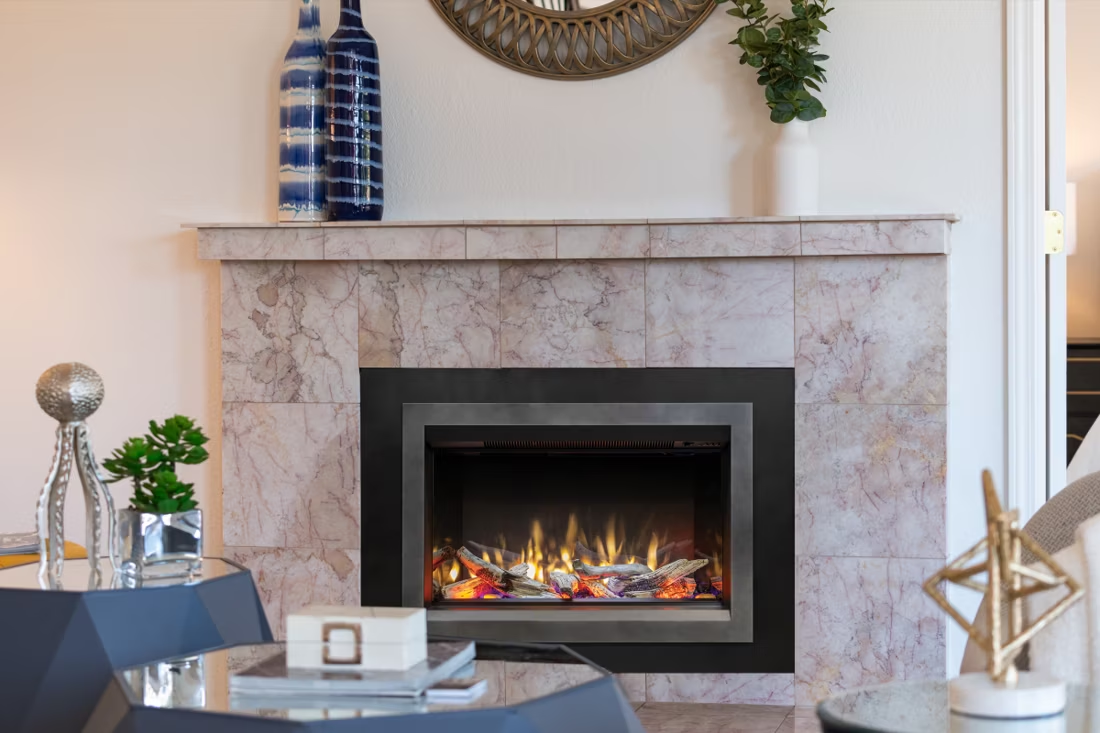
A built-in electric fireplace is designed to be framed into a wall, much like a TV, and is common in new construction or remodels around Brady. An electric insert is sized to slide into an existing masonry fireplace opening—a popular option for older McCulloch County homes that were originally built with wood-burning fireplaces but rarely use them given how mild the winters run. An electric stove is a freestanding, cabinet-style unit that mimics a wood or gas stove's footprint without needing a hearth pad or clearance to combustibles. For homes with an existing but unused fireplace, an insert is usually the simplest upgrade.
Do I need a permit to install an electric fireplace in McCulloch County?
Plug-in units generally don't require any permit anywhere in the county. If you're inside Brady's city limits and adding a new 240V circuit for a built-in unit, the city typically requires an electrical permit, which your electrician can pull. Out in the unincorporated parts of the county—where most of McCulloch County's land area sits—there's no formal building permitting authority for this kind of work, though hiring a licensed electrician for any new circuit is still strongly recommended for safety and insurance purposes.
What's the best electric fireplace for McCulloch County's climate?
Because actual heat output matters less here than in colder counties, McCulloch County homeowners tend to prioritize flame realism and finish over raw wattage. Units with water-vapor flame technology, like Dimplex's Opti-myst line, or LED flame effects from Napoleon and Amantii, give a convincing fire look that works whether or not you turn the heater on—useful on the many McCulloch County evenings that are cool but not cold enough to need supplemental heat. Save the highest-wattage models for a room that's genuinely hard to heat, like a converted garage or a sunroom with poor insulation.
How much does it cost to run an electric fireplace in McCulloch County?
A typical 1,500-watt electric fireplace run on high draws about 1.5 kWh per hour. At residential electric rates in this part of Texas, that works out to roughly 18 to 25 cents an hour of heater use—and with McCulloch County's mild 2,231 heating degree days, most households only run the heater setting on the coldest handful of nights each winter, using the flame-only setting the rest of the time at essentially no added cost. That's a fraction of what a whole-house furnace or heat pump costs to run over the same hours.
Electric vs. wood—which makes more sense for a McCulloch County home?
Wood is deeply tied to this part of Texas—oak, pecan, and mesquite are abundant locally and central to the region's cattle-and-BBQ culture—but most of that wood ends up in a smoker, not a fireplace, precisely because the mild winters here (35°F average low, 2,231 heating degree days) don't demand serious wood heat the way a Fargo, ND or Caribou, ME winter would. Wood fireplaces still exist in older county homes for ambiance, but they come with ash cleanup, chimney maintenance, and combustion byproducts that many homeowners would rather skip. Electric delivers the same visual warmth without any of that upkeep, which is why it's become the more practical choice for the county's actual heating needs.
Electric vs. gas—which is right for my home?
Gas fireplaces put out more heat and can run during a power outage, but they require either a natural gas line or a propane tank and typically cost more to install given the venting and fuel line work. In McCulloch County's mild climate, that extra heat output is rarely necessary, and much of the rural county relies on propane delivery rather than piped natural gas, which adds another layer of setup. Electric skips all of that—plug it in or wire a simple circuit, and you're done. For most McCulloch County homes looking for supplemental warmth and ambiance rather than a serious heating source, electric is the lower-friction choice.
Do electric fireplaces actually produce heat?
Yes—most put out around 4,800–5,000 BTUs from a standard outlet, which comfortably warms a bedroom, office, or den as a comfort-zone heater. What they won't do is carry a whole house the way wood, gas, or pellet can. Think of electric as ambiance-first with honest supplemental heat: flames on with no heat in July, flames plus warmth in January.
Can I put a TV above my fireplace?
Yes—with an asterisk. Fireplaces are hot and TVs don't like heat. Either put a mantel between them to deflect rising warmth, or choose a fireplace with heat-management technology that creates a cool zone on the wall above—the wall stays around 125 degrees, barely warm, while the room still gets full heat. If you like clean lines and don't want a mantel, heat management is the answer.
Can a fireplace actually lower my heating bill?
Yes—by creating a comfort zone. A furnace heats every square foot of the house just to warm the one room you're in; a gas fireplace on low burns roughly a sixth of the gas a typical furnace does. Set the furnace around 55–60 degrees as a baseline, then heat the rooms your family actually uses. Families who heat this way commonly save $20–$60 a month.
Can I install a fireplace myself?
If you're putting a fire in your house on purpose, it's best to work with an expert. Unless you're genuinely experienced in framing, gas line, vent pipe, and the national code on clearances to combustibles, have a professional do it—and ideally the same company that sells you the fireplace, so warranty, service, and liability all live under one roof.
Stove and Fireplace Dealers in McCulloch County
Listings include WhyFire partner dealers, dealers we have verified as authorized for the brands we recommend, and established local businesses that carry hearth products. Every listing shows which one it is. The ones marked Preferred run on WhyFire's software, so they can show you real pricing and book your appointment right here. No manufacturer pays for placement. How we verify dealers →
Fredericksburg Overhead Door
Unlimited Air
Area – San Angelo, Tx
Hoover True Value Hardware
Schilling Fireplace & Wood Stoves
Quality Fire
Find your electric fireplace in McCulloch County.
Tell us a bit about your home and we'll put together a free Project Guide & Parts List—the right electric fireplace or insert for your space, a plan for the wiring it needs, and a match with a trusted local dealer serving McCulloch County.
Find Your Fireplace →