
Electric heat that fits Mason County's mild winters.
No chimney, no wood pile, no gas line—just clean supplemental warmth for Hill Country homes and hunting cabins from Mason to Art. Find the right unit and connect with a trusted local dealer.
Every Project Starts From One of These Five Situations
The easiest way to add heat to a Hill Country home.
Mason County sits in the Llano Uplift country of Texas—granite outcrops, live oak mottes, mesquite savanna, and the Llano River running through pecan bottomland. With only about 2,158 residents spread across the county and a winter that averages a low of 34°F, this is a mild-winter climate zone (3B) with roughly 2,115 heating degree days—a fraction of what a place like Fargo, ND, or Bismarck, ND, racks up in a single season. Generations of Mason County ranch families have burned oak, pecan, and mesquite for heat and for the smokehouse, but full-time wood heat isn't a necessity here the way it is farther north.
That's exactly the gap electric fireplaces fill. There's no venting, no chimney, and no fuel storage—just a unit plugged into or wired to a dedicated circuit, running on power from Central Texas Electric Cooperative. For weekend ranch houses, hunting leases, and additions to older limestone or rock homes around the county seat, an electric insert or built-in gives you real, controllable ambiance and supplemental warmth on the handful of nights each winter that actually call for it—without the commitment of a masonry retrofit or a propane tank.
Three steps. No salesperson until you're ready.
Tell us about your project
Your zip code, your situation, and the fuel you're leaning toward—or let the answers point you to one.
See what's actually available
The brands dealers within 100 miles genuinely carry—real options, never a catalog mirage.
Get your dealer & Project Guide
A trusted local dealer, plus the free Project Guide & Parts List that names every component of the job.
Frequently Asked Questions
How much does an electric fireplace installation cost in Mason County?
A plug-in electric insert or freestanding unit—the kind that drops into an existing fireplace opening or sits against a wall on its own cord—typically runs $300 to $800 installed. A built-in wall unit or a larger insert that needs a dedicated 20-amp circuit run by a licensed electrician usually lands between $1,500 and $3,500, with the higher end covering custom stone or mantel surround work, which is common in older Mason County ranch homes with existing rock fireplace openings. Rural properties outside town may see a modest trip charge added by local electricians and installers.
Do I need a permit to install an electric fireplace in Mason County?
It depends on where the home sits. Inside the city limits of Mason, an electrical permit is typically required for any new circuit work, issued through the city. Outside town—which is most of the county—Mason County does not enforce a countywide residential building code, so there's often no formal permit process for a straightforward electric fireplace install. That said, National Electrical Code clearance and wiring standards still apply, and it's worth having a licensed electrician handle any dedicated circuit regardless of whether a permit is pulled, especially on older ranch wiring.
What's the difference between an electric insert, built-in, and freestanding electric fireplace?
An electric insert is sized to drop into an existing fireplace opening—a popular option for Mason County's older limestone and rock hearths that no longer get used for wood fires. A built-in electric fireplace is designed to be framed into a wall during a remodel or new construction, giving a cleaner, more permanent look with no visible firebox lip. A freestanding electric unit is furniture-style, plugs into a standard outlet, and can be moved room to room—a good fit for a hunting cabin or a weekend place where you don't want to commit to wiring work. Local dealers can walk through which fits your existing opening or floor plan.
Does electric heat make sense here, or should I just stick with wood?
Both have a real place in Mason County. Oak, pecan, and mesquite are all locally abundant and have heated ranch homes here for generations—mesquite in particular does double duty for smoking meat. But with a winter low averaging only 34°F and roughly 2,115 heating degree days, Mason County's climate is far milder than the wood-heat-dependent regions up north, so many homeowners don't want the commitment of chimney maintenance and firewood storage for the handful of genuinely cold nights each winter. Electric fireplaces fill that gap well as a supplemental or ambiance-focused option, especially in homes or cabins that are only occupied part-time.
Will an electric fireplace actually heat a room, or is it just for looks?
Most electric fireplaces are rated around 4,600 to 5,200 BTUs—enough to comfortably take the edge off a single room of 400 to 600 square feet, not enough to heat a whole ranch house. Given Mason County's mild winters, that's often plenty: on most nights you're supplementing a heat pump or central system rather than replacing it. If you're looking for a primary heat source for a larger, drafty older home, a wood stove or gas unit will outperform electric on raw BTU output—but for zone heat in a living room, bunkhouse, or cabin, electric does the job efficiently and without any venting.
What size electric fireplace do I need?
For a retrofit into an existing masonry opening—common in Mason's older rock and limestone ranch houses—sizing is driven by the opening itself; most inserts come in a handful of standard widths to match. For a wall-mount or built-in in a great room or new addition, a 50-inch unit generally suits a larger open living area, while a 30- to 40-inch unit is plenty for a bedroom, den, or cabin bunkroom. Because electric units are supplemental rather than whole-home heat sources, oversizing for BTU output matters less here than getting the visual scale right for the wall or opening.
What happens to my electric fireplace during a power outage?
It won't run—electric fireplaces depend entirely on grid power from Central Texas Electric Cooperative, and there's no battery or fuel backup built in. Ice events do occasionally hit the Hill Country and can knock out rural lines for a day or more. Because of that, many Mason County ranch families keep a wood stove or fireplace as a genuine backup heat source even after adding an electric unit for daily convenience—the two aren't mutually exclusive, and having both covers you whether the issue is convenience or an outage.
What brands of electric fireplaces do local dealers carry?
Dimplex, Napoleon, and Touchstone are among the most common electric fireplace brands stocked by hearth dealers serving Hill Country counties like Mason, ranging from simple plug-in inserts to larger built-in units with realistic flame effects and multi-speed heaters. Availability varies by dealer, and the right choice depends on whether you're retrofitting an existing opening, framing a new wall unit, or looking for a portable freestanding piece for a cabin. A local dealer matched to your project can confirm what's actually in stock and installable for your specific opening or wall.
Electric vs. propane—which fireplace fits Mason County better?
There's no natural gas main service through most of rural Mason County, so propane—not natural gas—is the local gas alternative, requiring either an existing tank or a new tank installation from a regional supplier. Propane fireplaces put out significantly more heat and, with the right ignition system, can run during a power outage. Electric units skip the tank, the gas line, and the venting entirely, installing in an afternoon, but they're grid-dependent and lower-output. For a primary living space that needs real heat, propane often wins; for supplemental warmth, ambiance, or a cabin where simplicity matters most, electric is usually the easier call.
Can I put a TV above my fireplace?
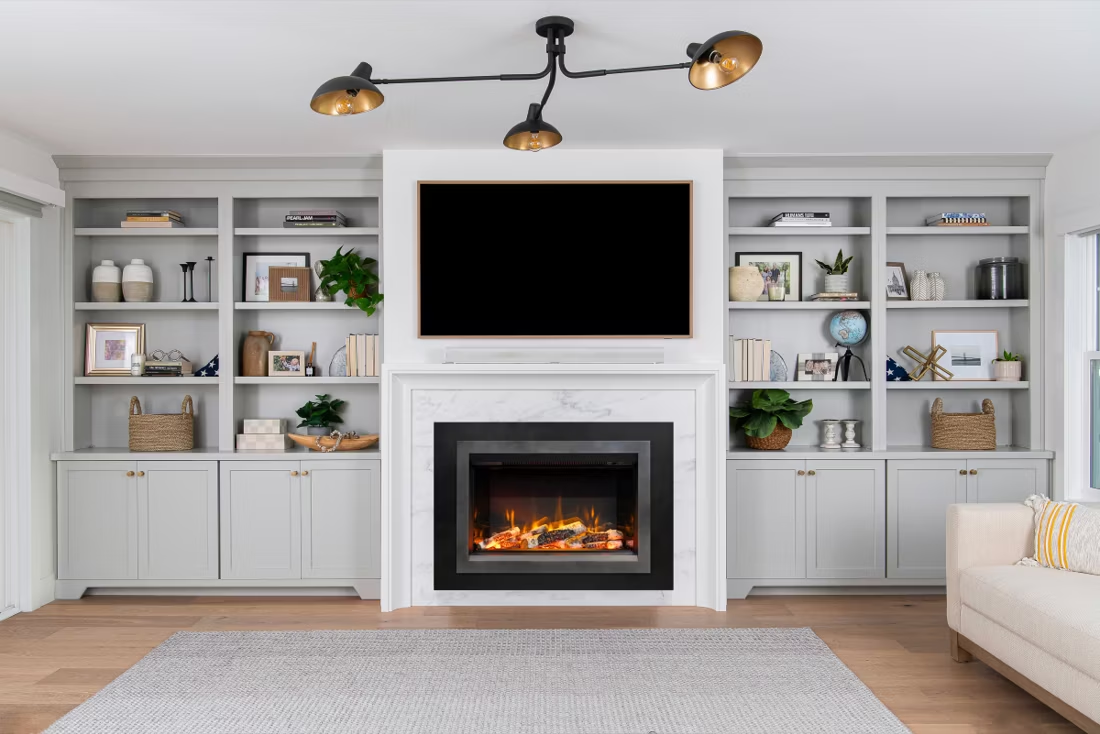
Yes—with an asterisk. Fireplaces are hot and TVs don't like heat. Either put a mantel between them to deflect rising warmth, or choose a fireplace with heat-management technology that creates a cool zone on the wall above—the wall stays around 125 degrees, barely warm, while the room still gets full heat. If you like clean lines and don't want a mantel, heat management is the answer.
Does an electric fireplace need a vent or chimney?
No—that's its superpower. An electric fireplace needs a wall and an outlet, period. No vent pipe, no gas line, no clearances to design around, which is why it works in bedrooms, offices, apartments, and walls where venting a gas or wood unit would be impractical or impossible. Installation is typically the simplest and least expensive of any fireplace type.
Can a fireplace actually lower my heating bill?
Yes—by creating a comfort zone. A furnace heats every square foot of the house just to warm the one room you're in; a gas fireplace on low burns roughly a sixth of the gas a typical furnace does. Set the furnace around 55–60 degrees as a baseline, then heat the rooms your family actually uses. Families who heat this way commonly save $20–$60 a month.
Can I install a fireplace myself?
If you're putting a fire in your house on purpose, it's best to work with an expert. Unless you're genuinely experienced in framing, gas line, vent pipe, and the national code on clearances to combustibles, have a professional do it—and ideally the same company that sells you the fireplace, so warranty, service, and liability all live under one roof.
Stove and Fireplace Dealers in Mason County
Listings include WhyFire partner dealers, dealers we have verified as authorized for the brands we recommend, and established local businesses that carry hearth products. Every listing shows which one it is. The ones marked Preferred run on WhyFire's software, so they can show you real pricing and book your appointment right here. No manufacturer pays for placement. How we verify dealers →
Fredericksburg Overhead Door
Schilling Fireplace & Wood Stoves
Hoover True Value Hardware
Find your electric fireplace in Mason County.
Tell us a bit about your home or cabin and we'll match you with a trusted local dealer, plus a free Project Guide & Parts List for your electric fireplace project in Mason County—including the exact parts and their installation recommendation.
Find Your Fireplace →