
Electric heat for Texas's emptiest county.
Loving County is the least populated county in the United States—roughly 15 residents spread across 673 square miles of Permian Basin ranchland near Mentone. Zone 3B winters are mild, so most homes need supplemental warmth, not a furnace overhaul. Find the right electric fireplace and connect with a trusted dealer within reach.
Every Project Starts From One of These Five Situations
Mild winters, minimal wiring, maximum simplicity.
Loving County sits along the Pecos River in far west Texas, at the heart of the Permian Basin oil patch. With a population hovering around 15, it's the least populated county in the country—the courthouse in Mentone, the county seat, essentially serves the whole roll call. Climate zone 3B means hot, dry summers and short, mild winters; the cold season here rarely delivers the sustained sub-freezing stretches that drive whole-home heating decisions elsewhere in Texas. Housing stock is a mix of ranch homes, older county buildings, and modular or manufactured housing tied to oilfield work.
Wood heat is essentially nonexistent here—oak, pecan, and mesquite grow along the river bottoms, but the arid brush country, high wildfire risk, and the total absence of any hearth retailer inside the county make wood stoves a non-factor. Propane fireplaces show up in some ranch and oilfield housing, but electric is the practical default for a county this sparse: no venting, no fuel storage, no chimney to maintain, and a straightforward install for homeowners who may be dozens of miles from the nearest hardware store in Pecos, Kermit, or Monahans. A wall-mounted or freestanding electric unit delivers ambiance and supplemental warmth without asking anyone to coordinate gas line work in a place where there's barely a line to call.
Three steps. No salesperson until you're ready.
Tell us about your project
Your zip code, your situation, and the fuel you're leaning toward—or let the answers point you to one.
See what's actually available
The brands dealers within 100 miles genuinely carry—real options, never a catalog mirage.
Get your dealer & Project Guide
A trusted local dealer, plus the free Project Guide & Parts List that names every component of the job.
Frequently Asked Questions
How much does an electric fireplace installation cost in Loving County?
Plug-in freestanding or wall-mount electric fireplaces that run on a standard 120V outlet typically cost $200 to $800 installed, since there's no venting or gas line to run—you're essentially hanging or setting the unit and plugging it in. Built-in electric fireplaces or larger units that need a dedicated 240V circuit run higher, usually $800 to $1,800, depending on how far the electrician has to run wire in an older ranch home or modular structure. Given the distances involved in Loving County, expect a modest travel charge if your electrician or installer is coming from Pecos, Kermit, or Monahans.
Do I need a permit to install an electric fireplace in Loving County?
Most plug-in electric fireplaces don't require any permit—you're just adding an appliance to an existing outlet. If your install involves new wiring or a dedicated circuit, an electrical permit may be needed through the county, which is administered out of the small courthouse in Mentone. Given Loving County's population of roughly 15, this isn't a high-volume permitting office, so plan for a short conversation rather than a bureaucratic process—but it's still worth confirming before work starts, especially in older ranch houses with outdated panels.
Is wood heat ever used in Loving County?
Rarely. Oak, pecan, and mesquite grow along the Pecos River corridor, and a handful of older ranch properties may have an inherited fireplace or chimney, but wood-burning stoves and inserts are not a realistic option for most homes here. The dry, brush-covered terrain carries real wildfire risk, and there is no hearth retailer, chimney sweep, or wood dealer based in the county—the nearest support would come from Pecos or Odessa. For county residents, electric heat sidesteps all of that.
Will an electric fireplace actually heat my home in this climate?
For most Loving County homes, yes, in the way that matters most—as supplemental heat for the shoulder-season chill and the occasional cold front that pushes through the Permian Basin. Zone 3B winters here are mild; most electric fireplace inserts put out around 4,600 to 5,000 BTU, comparable to a space heater, which is generally enough to take the edge off a room or a manufactured home during a cold snap. It's not designed to replace central heat in a large ranch house, but as the primary heat source for a smaller home or a secondary living space, it holds up well given how short and mild the cold season is.
What size electric fireplace do I need?
Sizing depends more on the room than the whole house here, since most electric units are zone heaters rather than whole-home systems. A compact insert or wall-mount (750-1,000 sq ft coverage) suits a bedroom or a single living area in a modular or manufactured home common to oilfield housing. Larger built-in units can handle a bigger ranch-house living room, but given how mild Loving County winters run, oversizing rarely pays off—most homeowners are better served by matching the unit to the specific room they want warmed rather than trying to heat an entire house electrically.
Electric vs. propane—which is right for my home?
Propane fireplaces put out more heat and can serve as a real backup heat source, but they require a tank, a gas line, and periodic delivery—a real consideration in a county this remote, where the nearest propane supplier is a drive away. Electric fireplaces trade some heat output for total simplicity: no tank, no delivery schedule, no venting, and an install that a local electrician can usually finish in an afternoon. For ranch homes and permanent residences, propane is worth considering as a heat source. For oilfield workforce housing, rentals, or homeowners who just want reliable ambiance without fuel logistics, electric is generally the easier call.
Can I install an electric fireplace in a manufactured or modular home?
Yes—electric fireplaces are one of the few hearth options well-suited to manufactured and modular housing, which makes up a meaningful share of the housing stock tied to oilfield work in and around Loving County. Because there's no real flame, clearance-to-combustible requirements are minimal compared to wood or gas units, and there's no roof penetration or venting to worry about. Wall-mounted units are popular for this housing type since they don't take up floor space in a smaller home; plug-in freestanding units are the simplest option of all for renters or transient workforce housing.
Who installs electric fireplaces in Loving County?
With a population of around 15, Loving County doesn't have a hearth retailer or dedicated installer based within its borders. Most homeowners here work with an electrician or dealer from a nearby town—Pecos, Kermit, or Monahans are the usual reference points for the surrounding Permian Basin. This is exactly the kind of gap Find My Fireplace is built to close: matching you with a trusted dealer who actually covers this stretch of west Texas, rather than leaving you to guess who's willing to make the drive.
What's the real advantage of electric heat in a county this remote?
Logistics. Loving County has essentially no retail infrastructure—no lumber yard, no propane counter, no hearth shop—so any fuel that requires ongoing delivery (firewood, propane) adds a real transportation burden on top of the base cost. An electric fireplace only needs the grid connection you already have. For a county where the nearest hardware store might be 30-plus minutes away, that difference matters more than it would in a denser Texas county.
Can I put a TV above my fireplace?
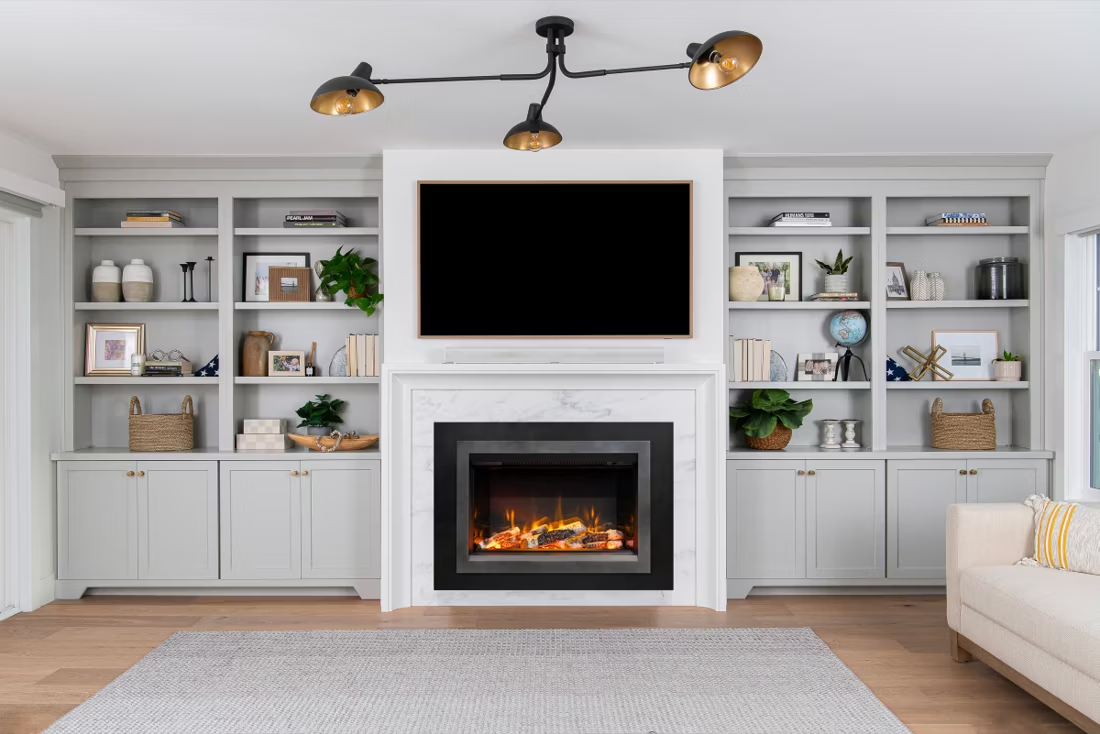
Yes—with an asterisk. Fireplaces are hot and TVs don't like heat. Either put a mantel between them to deflect rising warmth, or choose a fireplace with heat-management technology that creates a cool zone on the wall above—the wall stays around 125 degrees, barely warm, while the room still gets full heat. If you like clean lines and don't want a mantel, heat management is the answer.
Does an electric fireplace need a vent or chimney?
No—that's its superpower. An electric fireplace needs a wall and an outlet, period. No vent pipe, no gas line, no clearances to design around, which is why it works in bedrooms, offices, apartments, and walls where venting a gas or wood unit would be impractical or impossible. Installation is typically the simplest and least expensive of any fireplace type.
What is an in-home preview and do I need one?
It's a visit where a hearth professional measures your space, confirms the model you picked actually works in your home, and walks the specs—framing, gas line, venting, finish work—before anything is ordered. Some details you just can't know until you see the house. Never make a down payment without one; it's the single most-skipped step that burns buyers.
Does a fireplace add value to my home?
On average, a fireplace adds back to the home about the same amount you spent installing it. Add the monthly savings from heating the rooms you actually use instead of the whole house—often hundreds of dollars a year—and the value case is strong before you even count what a fire does for how your family uses the room.
Stove and Fireplace Dealers in Loving County
Listings include WhyFire partner dealers, dealers we have verified as authorized for the brands we recommend, and established local businesses that carry hearth products. Every listing shows which one it is. The ones marked Preferred run on WhyFire's software, so they can show you real pricing and book your appointment right here. No manufacturer pays for placement. How we verify dealers →
Seal’s Energy Depot
Bill Placer's Chimney Sweep
Find your electric fireplace in Loving County.
Tell us about your home and we'll match you with the right electric fireplace or insert, plus a trusted local dealer who actually covers this part of the Permian Basin—and a free Project Guide & Parts List with the exact parts for your install.
Find Your Fireplace →