
Get Real Fireplace Ambiance Without a Chimney in Longview.
Mild East Texas winters mean most Longview homes need supplemental warmth, not a whole-home heating system. Find the right electric fireplace or insert and connect with a trusted local dealer.
Every Project Starts From One of These Five Situations
Mild winters call for modern convenience, not a chimney.
Longview sits in the Piney Woods of East Texas at just 291 feet elevation, in climate zone 3A. Winter lows average around 36 degrees, and the city has just a short, mild heating season each year—a fraction of what a place like Duluth, Minnesota racks up in a single hard winter. That's why full wood or pellet heating systems rarely make sense here; local oak, pecan, and mesquite are far more likely to end up in a barbecue smoker than a woodshed. Homes in Gregg County are built to handle summer heat first, and heating is mostly a matter of taking the chill off a few weeks a year.
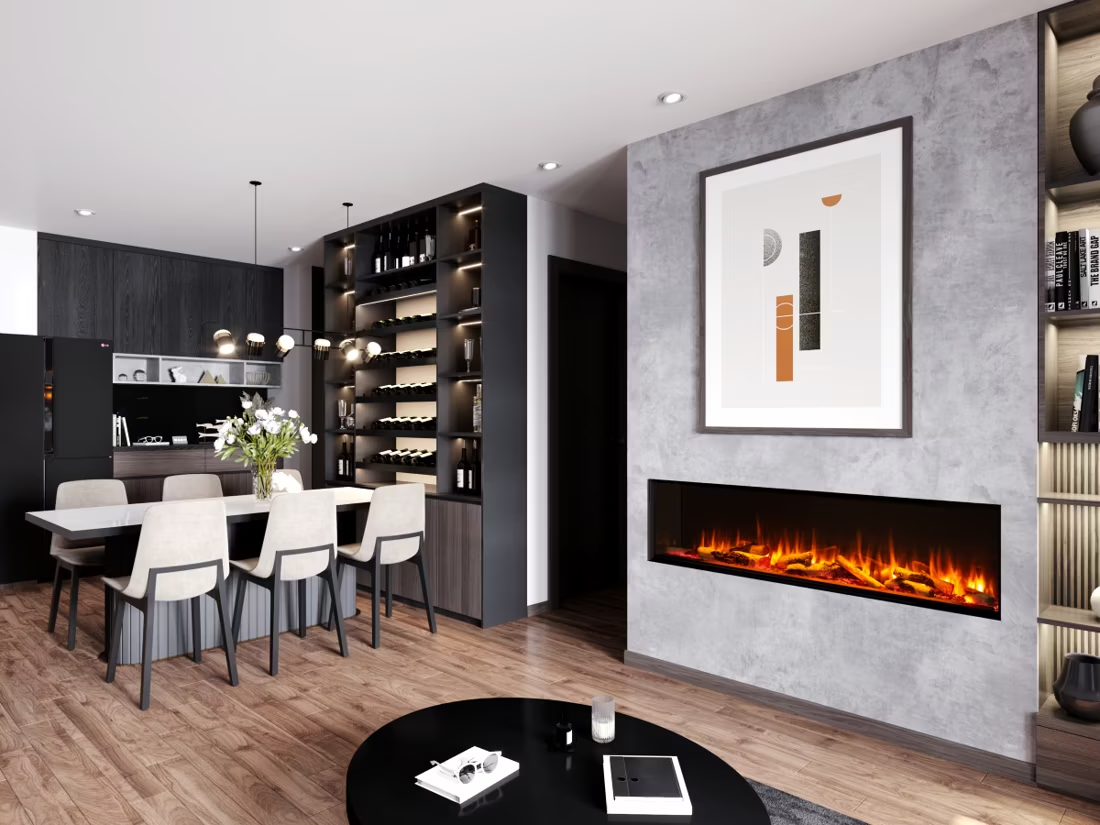
That's exactly the situation electric fireplaces are built for. No chimney, no gas line, no venting—just a unit that plugs in or wires into a wall and adds real ambiance plus a boost of zone heat on the rare cold snap. Longview homes are served by Southwestern Electric Power Company (SWEPCO), Rusk County Electric Cooperative, or Upshur Rural Electric Cooperative depending on address, with residential rates running roughly 12.4 to 13.5 cents per kWh—reasonable enough that running a 1,500-watt insert a few hours on a cold evening barely shows up on the bill.
Three steps. No salesperson until you're ready.
Tell us about your project
Your zip code, your situation, and the fuel you're leaning toward—or let the answers point you to one.
See what's actually available
The brands dealers within 100 miles genuinely carry—real options, never a catalog mirage.
Get your dealer & Project Guide
A trusted local dealer, plus the free Project Guide & Parts List that names every component of the job.
Frequently Asked Questions
How much does an electric fireplace installation cost in Longview?
A plug-in electric insert or freestanding unit typically runs $300 to $1,500 installed, since most just need an existing standard outlet and a mantel or surround to finish the look. A built-in wall unit or a wired electric fireplace that requires a dedicated 120V or 240V circuit run by a licensed electrician usually falls between $1,500 and $4,000, depending on wall construction and how far the unit sits from the electrical panel. Local dealers can give you a firm number after seeing your wall and framing situation.
Do I need a permit to install an electric fireplace in Longview?
Most simple plug-in electric fireplaces and inserts don't require a permit since there's no gas line or venting involved. If you're having a built-in unit hardwired into a new dedicated circuit, that electrical work typically does need a permit through the City of Longview or Gregg County, depending on your address—your electrician or installer will usually pull it as part of the job. It's worth confirming with whichever jurisdiction covers your property before work starts.
What size electric fireplace do I need for a Longview home?
Given the area's mild winters—average lows around 36 degrees and only a short, mild heating season each year—most Longview homeowners don't need a high-output heater, just enough supplemental warmth for a living room or bedroom on the coldest nights. A standard 1,500-watt unit comfortably heats 400 to 1,000 square feet as a room-by-room supplement. Unlike cold-climate cities where a stove has to carry the whole house through a Fargo-style winter, electric units here are mostly about ambiance with a heat boost when needed, so bigger isn't usually better.
Electric vs. gas fireplace—which is right for my Longview home?
Gas fireplaces are also a standard option in Longview and deliver a more authentic flame along with real heat output, but they require a gas line and venting work, which adds cost and complexity, especially in homes not already plumbed for gas. Electric fireplaces skip all of that—no venting, no gas line, and installation as simple as an outlet or a single dedicated circuit. For homeowners who want flexibility (renters, homes without gas service, or anyone converting a room that isn't near existing gas lines), electric is usually the faster, lower-cost path. For a primary living space where you want serious heat output and a real flame, gas is worth a look from a local installer.
Will my electric fireplace work during a power outage?
No—electric fireplaces need grid power to run, so they'll go dark along with everything else if SWEPCO, Rusk County Electric Cooperative, or Upshur Rural Electric Cooperative service is interrupted. East Texas has seen multi-day outages during winter ice storms, most notably in February 2021, so if reliable heat during an outage matters to you, an electric fireplace shouldn't be your only heat source. A gas fireplace with a battery-backed ignition system or a small generator is a better hedge for storm season; electric is best thought of as everyday ambiance and supplemental heat rather than an emergency backup.
What's the difference between an electric insert and a built-in wall unit?
An electric insert is designed to drop into an existing fireplace opening—masonry or old wood-burning firebox—and typically just needs a nearby outlet, making it a fast, low-cost upgrade for a fireplace you already have but never use. A built-in wall unit is framed into new construction or a wall cavity where no fireplace previously existed, usually requiring a dedicated circuit and some carpentry to build out the surround. For Longview homes with an unused masonry fireplace, an insert is the simpler and cheaper route. For a new room or a home without an existing fireplace, a built-in gives you more flexibility on placement.
How much does it cost to run an electric fireplace in Longview?
At Longview-area rates of roughly 12.4 to 13.5 cents per kWh, a standard 1,500-watt electric fireplace costs about 19 cents an hour to run on full heat. Used for ambiance a few hours a night during the cooler months—say four hours a day—that works out to under $25 a month, and most units let you run the flame effect alone with the heater off, which draws only a few watts. It's one of the cheapest ways to add fireplace ambiance in a climate that doesn't demand much heating to begin with.
What brands hold up well in East Texas humidity?
Look for units with sealed electronics and moisture-resistant housings, since Longview's humid subtropical climate can be tougher on electronics than a drier climate would be. Brands like Dimplex, Napoleon, and Touchstone are widely available through hearth dealers and have models rated for continuous use in humid conditions. A local dealer connected through Find My Fireplace can point you to models that have held up well for other customers in the area, rather than whatever happens to be in stock at a big-box store.
Would a wood or pellet stove make sense in Longview instead?
Not really, for most homes. With average winter lows around 36 degrees and only a short, mild heating season each year, Longview simply doesn't have the sustained cold that makes a wood or pellet heating system worthwhile—the oak, pecan, and mesquite common to East Texas are prized for smoking barbecue, not stacking for winter heat. A small number of rural properties or hunting camps might still run a wood stove for character or off-grid backup, but for the vast majority of Longview homeowners, an electric or gas fireplace is the more practical fit for the climate.
Can I put a TV above my fireplace?
Yes—with an asterisk. Fireplaces are hot and TVs don't like heat. Either put a mantel between them to deflect rising warmth, or choose a fireplace with heat-management technology that creates a cool zone on the wall above—the wall stays around 125 degrees, barely warm, while the room still gets full heat. If you like clean lines and don't want a mantel, heat management is the answer.
Do electric fireplaces actually produce heat?
Yes—most put out around 4,800–5,000 BTUs from a standard outlet, which comfortably warms a bedroom, office, or den as a comfort-zone heater. What they won't do is carry a whole house the way wood, gas, or pellet can. Think of electric as ambiance-first with honest supplemental heat: flames on with no heat in July, flames plus warmth in January.
How much should I budget for a fireplace?
For an average home—covering the fireplace, the vent pipe, and basic installation—a budget between $3,900 and $5,500 gives you a lot of options across wood, gas, and pellet. By the time you add finish work, gas line, and electrical, the average complete installation lands between $5,000 and $12,000 all-in. In a remodel or new build, a good rule is to put about 2.5% of the total project cost toward the fireplace.
Does a fireplace add value to my home?
On average, a fireplace adds back to the home about the same amount you spent installing it. Add the monthly savings from heating the rooms you actually use instead of the whole house—often hundreds of dollars a year—and the value case is strong before you even count what a fire does for how your family uses the room.
Electric Service in Longview
An electric fireplace's heater draws about 1,500 watts—pennies per hour at local rates.
Southwestern Electric Power Co
Rusk County Electric Coop, Inc
Upshur Rural Elec Coop Corp
Find your electric fireplace in Longview.
Tell us a bit about your home and we'll match you with the right electric fireplace or insert, plus a free Project Guide & Parts List and a trusted local dealer to install it.
Find Your Fireplace →