
Find the right electric fireplace for Limestone County.
Mild winters around Groesbeck, Mexia, and Thornton make electric heat a practical, no-mess option. Get matched with a trusted local dealer who installs it right.
Every Project Starts From One of These Five Situations
Ambiance and supplemental warmth without the chimney.
Limestone County sits in Zone 2A with an average winter low around 36 degrees and roughly 1,976 heating degree days a year—a fraction of what a place like Duluth, MN sees in a single hard month. That's a climate where a home's central HVAC handles the bulk of the heating load, and an electric fireplace is asked to do something more specific: warm up a den on a cold front night, add real ambiance to a living room, or take the edge off a room that runs cold without firing up the whole system.
That's a good match for what electric fireplaces do best. There's no chimney to build, no venting to size, and no combustion byproducts to worry about—a licensed electrician handles the circuit and a local dealer handles the unit, often with same-day or next-day installation. For Limestone County homeowners who want the visual of a fire without cutting or stacking oak, pecan, or mesquite, or dealing with gas line work, electric is often the simplest path to a finished hearth.
Three steps. No salesperson until you're ready.
Tell us about your project
Your zip code, your situation, and the fuel you're leaning toward—or let the answers point you to one.
See what's actually available
The brands dealers within 100 miles genuinely carry—real options, never a catalog mirage.
Get your dealer & Project Guide
A trusted local dealer, plus the free Project Guide & Parts List that names every component of the job.
Frequently Asked Questions
How much does an electric fireplace installation cost in Limestone County?
Most electric fireplace installations in Limestone County run $400 to $1,200. A plug-in insert or wall-mount unit on an existing outlet sits at the low end. Built-in units that need a dedicated 120V or 240V circuit run by a licensed electrician, or units set into custom cabinetry or a mantel surround, land toward the higher end. Because there's no venting or gas line involved, electric is consistently the least expensive fireplace fuel to install in the county—a factor that matters for a smaller, more rural county like Limestone where labor and material delivery both carry some distance cost.
Do I need a permit to install an electric fireplace in Limestone County?
In most cases, no—a plug-in electric fireplace or insert that uses an existing outlet doesn't trigger a permit requirement. If your installer needs to run a new dedicated circuit, that electrical work typically does require a permit and inspection, whether the project is inside city limits in Groesbeck or Mexia, or out in unincorporated Limestone County. Local dealers who install electric units regularly know which projects cross that line and will flag it before work starts.
Is an electric fireplace enough heat for a Limestone County home?
For most Limestone County homes, an electric fireplace is supplemental heat, not primary heat—and that's the right expectation given the climate. With winter lows averaging around 36 degrees and under 2,000 heating degree days a year, most homes rely on central HVAC for whole-house heating and use the electric fireplace to warm a specific room or add comfort on the occasional colder night. Most units put out 4,000 to 5,000 BTUs, enough to noticeably warm a mid-sized room, but they're not sized to replace a furnace here the way a wood stove might in a harsher climate.
What's the difference between an electric insert, a wall-mount unit, and a built-in?
An electric insert is designed to slide into an existing masonry fireplace opening, giving an old wood-burning fireplace new life without any chimney work—a common upgrade for older homes around Mexia and Groesbeck with fireplaces that no longer get used. A wall-mount unit hangs on the wall like a piece of art and plugs into a standard outlet, popular for dens and bonus rooms. A built-in is set into a wall cavity or custom cabinetry for a more finished, seamless look, usually as part of a remodel. All three run on standard household power; the main differences are installation complexity and finished appearance.
Can I install an electric fireplace myself, or do I need a professional?
A basic plug-in insert or wall-mount unit that uses an existing outlet is genuinely a DIY-friendly project for many homeowners. Where a professional matters is anything involving a new dedicated circuit, in-wall wiring, or a built-in installation that needs framing and finish work to look right. A local dealer will also make sure the unit is properly supported (some wall-mounts are heavier than they look) and that clearances around the unit meet the manufacturer's spec, which matters even though there's no open flame involved.
How much does it cost to run an electric fireplace?
Most electric fireplaces draw around 1,500 watts on the heat setting, which typically costs somewhere in the range of 15 to 20 cents per hour to run depending on local electricity rates. For occasional evening use in a Limestone County living room or den, that's a modest addition to a monthly bill—and most units let you run the flame visual with the heater off, which uses only a few watts, so you can get the ambiance without the heating cost during warmer months.
Do electric fireplaces work during a power outage?
No—electric fireplaces require power to operate, both the flame effect and the heat, so they won't provide backup heat during an outage. This is worth knowing for Limestone County homeowners who also deal with occasional severe weather and grid disruptions; if backup heat during an outage is a priority, a wood stove or a gas unit with battery-backup ignition is a better complementary choice alongside an electric fireplace used mainly for daily ambiance and supplemental warmth.
Electric vs. gas—which is right for my Limestone County home?
Gas delivers real, substantial heat output and can run during a power outage with the right ignition system, but it requires venting, a gas line, and a higher installation cost—typically several thousand dollars more than electric. Electric costs far less to install, needs no venting or gas work, and is nearly maintenance-free, but it produces modest heat and won't work without power. For a mild-winter county like Limestone, where most homes lean on central HVAC anyway, electric is often the practical choice for ambiance and secondary warmth in a specific room, while gas makes more sense as a primary heat source in a den or living area that sees regular use.
Are electric fireplaces realistic-looking, or do they look fake?
Modern electric fireplaces have improved considerably from the flickering-orange-light units of a decade ago. Current models use LED technology with layered flame effects, ember beds, and adjustable brightness and color settings that read convincingly as a real fire, especially at night. That said, quality varies a lot between budget and premium units—a local dealer who carries a few different lines can show you the difference in person before you buy, which is worth doing since photos and videos online don't always capture how a flame effect actually looks in your room.
Can I put a TV above my fireplace?
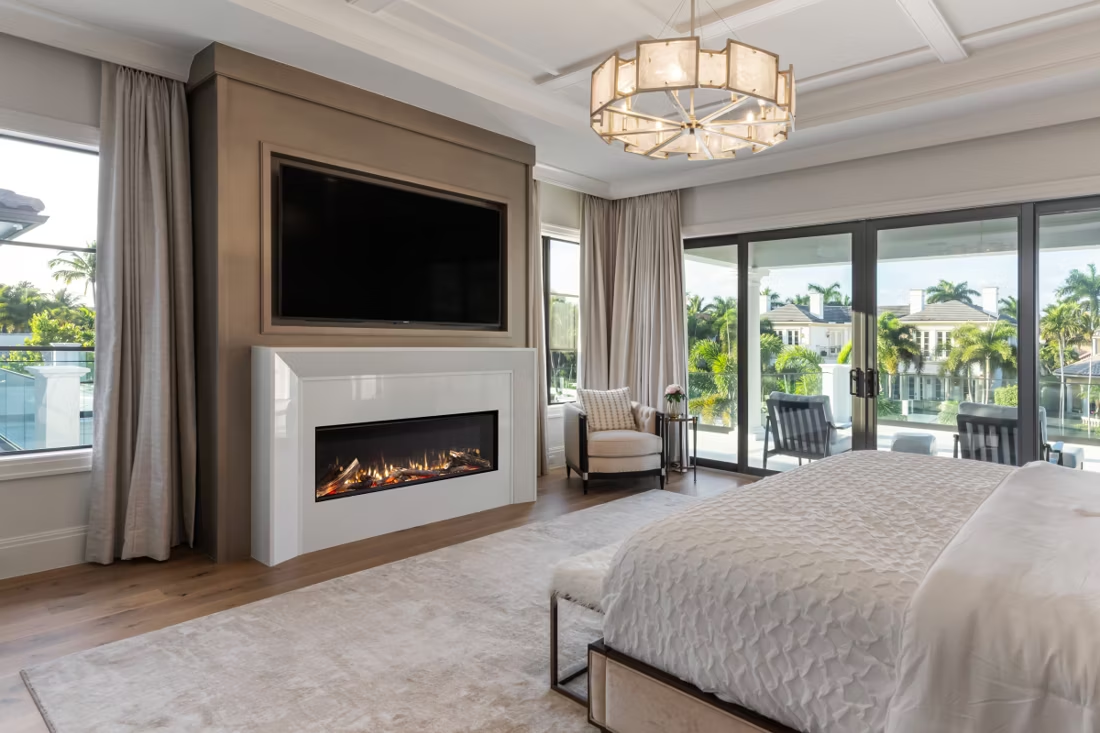
Yes—with an asterisk. Fireplaces are hot and TVs don't like heat. Either put a mantel between them to deflect rising warmth, or choose a fireplace with heat-management technology that creates a cool zone on the wall above—the wall stays around 125 degrees, barely warm, while the room still gets full heat. If you like clean lines and don't want a mantel, heat management is the answer.
Does an electric fireplace need a vent or chimney?
No—that's its superpower. An electric fireplace needs a wall and an outlet, period. No vent pipe, no gas line, no clearances to design around, which is why it works in bedrooms, offices, apartments, and walls where venting a gas or wood unit would be impractical or impossible. Installation is typically the simplest and least expensive of any fireplace type.
Can a fireplace actually lower my heating bill?
Yes—by creating a comfort zone. A furnace heats every square foot of the house just to warm the one room you're in; a gas fireplace on low burns roughly a sixth of the gas a typical furnace does. Set the furnace around 55–60 degrees as a baseline, then heat the rooms your family actually uses. Families who heat this way commonly save $20–$60 a month.
Does a fireplace add value to my home?
On average, a fireplace adds back to the home about the same amount you spent installing it. Add the monthly savings from heating the rooms you actually use instead of the whole house—often hundreds of dollars a year—and the value case is strong before you even count what a fire does for how your family uses the room.
Stove and Fireplace Dealers in Limestone County
Listings include WhyFire partner dealers, dealers we have verified as authorized for the brands we recommend, and established local businesses that carry hearth products. Every listing shows which one it is. The ones marked Preferred run on WhyFire's software, so they can show you real pricing and book your appointment right here. No manufacturer pays for placement. How we verify dealers →
Darden Building Materials
Backyard And Patio Store - Waco
The Chimney Guy -Seven Points
Fieldstone & Fireplaces
Clay Structures Inc
Denio's Furniture Flooring
Tri-Supply - Temple
Get your Limestone County electric fireplace project guide.
Tell us a bit about your home and we'll match you with a trusted local dealer, plus a free Project Guide & Parts List for your electric fireplace project in Limestone County—including the exact unit and mounting or circuit needs.
Find Your Fireplace →