
Instant heat, zero venting, for a county that barely needs a furnace.
From Cotulla to Encinal and the ranchland between, La Salle County winters rarely demand much more than an electric fireplace can deliver. Find the right unit and connect with a trusted local dealer.
Every Project Starts From One of These Five Situations
Built for a county that almost never needs to burn anything.
La Salle County sits in South Texas brush country along the Eagle Ford Shale, with Cotulla as the county seat and Encinal anchoring the southern end of the county. It's sparsely populated—just over 5,000 residents spread across nearly 1,500 square miles of ranchland and oilfield roads—and the climate is mild by any national standard. At Climate Zone 2B, La Salle County logs only about 1,004 heating degree days a year and an average winter low of 44°F. Compare that to a genuinely cold-climate county like the one around Bismarck, ND, which racks up 8,000+ heating degree days most winters, and it's clear why nobody here is sizing a home for a January cold front the way a Northern Plains homeowner would.
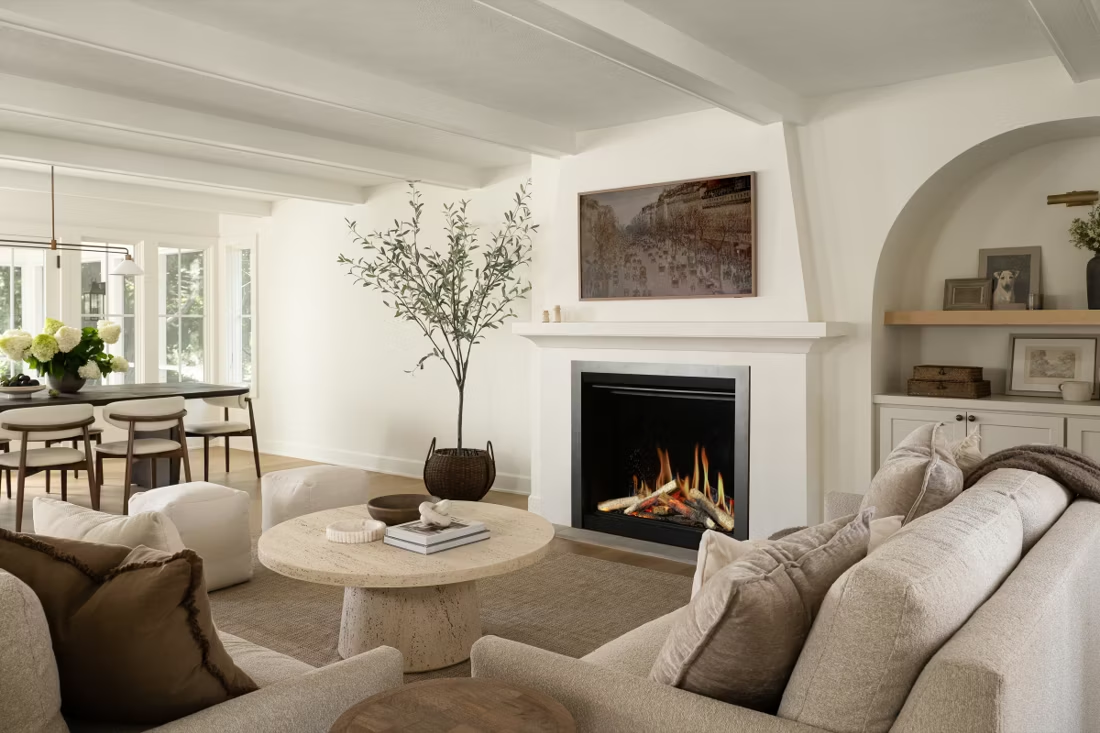
That low heating load is exactly why electric fireplaces make sense here. There's no chimney to build, no gas line to run, and no wood supply chain to maintain—you plug it in, or an electrician wires a 240-volt circuit, and you're done. AEP Texas serves most of the county's electric accounts, and a fireplace insert or wall unit draws a modest, predictable load compared to running a whole-home HVAC system on the occasional 30-degree morning. For ranch houses, oilfield workforce housing, and newer builds around Cotulla alike, electric heat is often the simplest way to add real warmth and fireplace ambiance without touching the roofline or the gas meter.
Three steps. No salesperson until you're ready.
Tell us about your project
Your zip code, your situation, and the fuel you're leaning toward—or let the answers point you to one.
See what's actually available
The brands dealers within 100 miles genuinely carry—real options, never a catalog mirage.
Get your dealer & Project Guide
A trusted local dealer, plus the free Project Guide & Parts List that names every component of the job.
Frequently Asked Questions
How much does an electric fireplace installation cost in La Salle County?
Electric fireplaces are the least expensive hearth option available in La Salle County, precisely because there's no chimney, gas line, or masonry involved. A plug-in insert or freestanding unit typically runs $300 to $1,200 including basic setup, while a larger built-in wall unit—the kind often framed into a living room feature wall in newer Cotulla-area homes—runs $1,500 to $3,000 once an electrician handles a dedicated 240-volt circuit. Because there's no venting or permit fee to add on top, the total stays well below what a comparable gas fireplace project would cost in the same house.
Do I need a permit to install an electric fireplace in La Salle County?
Most electric fireplace installations don't require a building permit, since there's no combustion, chimney, or gas line involved—it's simply a plug-in appliance or a hardwired unit on an existing or new circuit. If you're adding a dedicated 240-volt circuit for a larger built-in unit, the electrical work itself may need to be pulled by a licensed electrician through the county, particularly for installations outside the Cotulla or Encinal city limits where the county handles permitting directly. Ask your installer to confirm—most local electricians already know the local requirements.
Can an electric fireplace actually heat my whole room, or is it just for looks?
In La Salle County, more than most places, an electric fireplace can realistically carry the heating load for a room or even a whole small home. With only 1,004 heating degree days a year and an average winter low of 44°F, the coldest nights here don't demand much—nothing close to what a home in a place like International Falls, MN would need from a furnace. A mid-size electric insert or built-in unit puts out 1,500 to 5,000 BTUs, which is enough for a living room or open-concept ranch house on the handful of nights each winter when temperatures actually dip toward freezing. For a large home or during a hard freeze event, most homeowners still keep central HVAC as backup, but day-to-day, electric heat covers a lot of ground here.
Why isn't wood heat more common in La Salle County when there's so much oak, pecan, and mesquite around?
It's not a supply problem—oak, pecan, and mesquite all grow throughout the brush country and are some of the most prized woods in Texas, just mostly for the smoker rather than the fireplace. Cotulla-area cooks reach for mesquite and pecan for brisket and cabrito long before anyone reaches for them to heat a house. With only 1,004 heating degree days a year, there's simply not enough cold-weather demand to justify a wood stove installation, chimney maintenance, and a firewood supply chain the way there would be in a genuinely cold county. Homeowners who want fireplace ambiance in La Salle County generally choose electric instead, since it needs no venting, no fuel storage, and no annual chimney sweep.
Electric vs. gas fireplace—which makes more sense in La Salle County?
Gas fireplaces are available in La Salle County, typically running on propane since natural gas infrastructure is limited outside the immediate Cotulla area, and they remain a solid choice for homeowners who want a more traditional flame appearance or who already have a propane tank on the property for cooking or water heating. Electric fireplaces skip the tank, the gas line, and the annual appliance inspection entirely—you get instant heat and a realistic flame effect on LED units with essentially no ongoing maintenance. For a county with this little heating demand, the simplicity of electric usually wins out unless you specifically want the look and feel of a real gas flame.
Will my electric fireplace still work if the power goes out?
No—electric fireplaces are entirely dependent on grid power from AEP Texas, so an outage takes the fireplace down along with the lights. This matters more in rural parts of La Salle County, where outages tied to storms or grid maintenance can run longer than in town. Many ranch properties already run a generator for well pumps or livestock equipment, and that same generator can typically power a plug-in electric fireplace during an outage. If backup heat during power loss is a priority for your household, it's worth discussing with your local dealer whether a smaller propane or wood-burning unit makes more sense as a secondary source, even in a county where electric covers most day-to-day needs.
What type of electric fireplace works best for a La Salle County home?
For older ranch houses around Cotulla and Encinal, a freestanding or insert-style electric unit is usually the easiest retrofit—no reframing required, and it can go into an existing hearth opening or simply sit against a wall. For newer construction, a built-in wall unit framed into a feature wall gives a cleaner, more architectural look and typically throws more usable heat. Given the mild climate here, most homeowners prioritize the flame appearance and room ambiance over raw heat output, so a local dealer will usually walk you through LED flame quality and mantel styles as much as BTU ratings.
Where can I find a local dealer to install an electric fireplace in La Salle County?
With just over 5,000 residents spread across the county, La Salle County doesn't have a large concentration of hearth retailers the way a bigger South Texas market does—many homeowners end up working with dealers based in Cotulla, or with regional installers who cover La Salle County alongside nearby Laredo or the San Antonio corridor. That's exactly the kind of gap Find My Fireplace exists to close: rather than guessing which regional dealer actually services your address, we match you with a trusted local installer who can handle the electrical work and get the unit properly mounted or framed in.
What's the difference between a cheap plug-in electric fireplace and a professionally installed one?
A box-store plug-in unit gets you heat and a flame effect out of the box, but it's limited to whatever 120-volt outlet is nearby, has a fixed size and finish, and typically tops out around 1,500 watts of heat output. A professionally installed unit—wired to a dedicated 240-volt circuit by a licensed electrician—can deliver more consistent heat, integrate into custom cabinetry or a framed wall, and comes with a proper warranty backed by an installer who stands behind the work. For a primary living space in a La Salle County home, most homeowners find the difference in finish and heat performance worth the added electrical work.
Can I put a TV above my fireplace?
Yes—with an asterisk. Fireplaces are hot and TVs don't like heat. Either put a mantel between them to deflect rising warmth, or choose a fireplace with heat-management technology that creates a cool zone on the wall above—the wall stays around 125 degrees, barely warm, while the room still gets full heat. If you like clean lines and don't want a mantel, heat management is the answer.
Do electric fireplaces actually produce heat?
Yes—most put out around 4,800–5,000 BTUs from a standard outlet, which comfortably warms a bedroom, office, or den as a comfort-zone heater. What they won't do is carry a whole house the way wood, gas, or pellet can. Think of electric as ambiance-first with honest supplemental heat: flames on with no heat in July, flames plus warmth in January.
Can a fireplace actually lower my heating bill?
Yes—by creating a comfort zone. A furnace heats every square foot of the house just to warm the one room you're in; a gas fireplace on low burns roughly a sixth of the gas a typical furnace does. Set the furnace around 55–60 degrees as a baseline, then heat the rooms your family actually uses. Families who heat this way commonly save $20–$60 a month.
Can I install a fireplace myself?
If you're putting a fire in your house on purpose, it's best to work with an expert. Unless you're genuinely experienced in framing, gas line, vent pipe, and the national code on clearances to combustibles, have a professional do it—and ideally the same company that sells you the fireplace, so warranty, service, and liability all live under one roof.
Get your La Salle County electric fireplace project mapped out.
Tell us about your home and we'll send you a free Project Guide & Parts List—the right unit, the exact parts, and a trusted local dealer to install it.
Find Your Fireplace →