
Electric heat that fits South Texas winters.
With winter lows averaging 47°F and just 834 heating degree days a year, Kleberg County homes need ambiance and the occasional cold snap more than a full heating system. Find the right electric fireplace or insert and connect with a trusted local dealer.
Every Project Starts From One of These Five Situations
A gentle climate calls for a gentler heat source.
Kleberg County sits on the South Texas Gulf Coast, home to Kingsville, the King Ranch, and Naval Air Station Kingsville—a region where a hard freeze is a headline, not a routine. At 834 heating degree days, the county's heating demand is a fraction of what a place like Duluth, MN or Fargo, ND deals with in a single cold month. Most winters here bring damp, chilly evenings in the 40s and 50s rather than sustained deep-freeze weather, which is exactly the climate where electric fireplaces shine: real flame-effect ambiance, instant supplemental warmth for the occasional cold front, and none of the venting or fuel storage that a wood or full gas system would require.
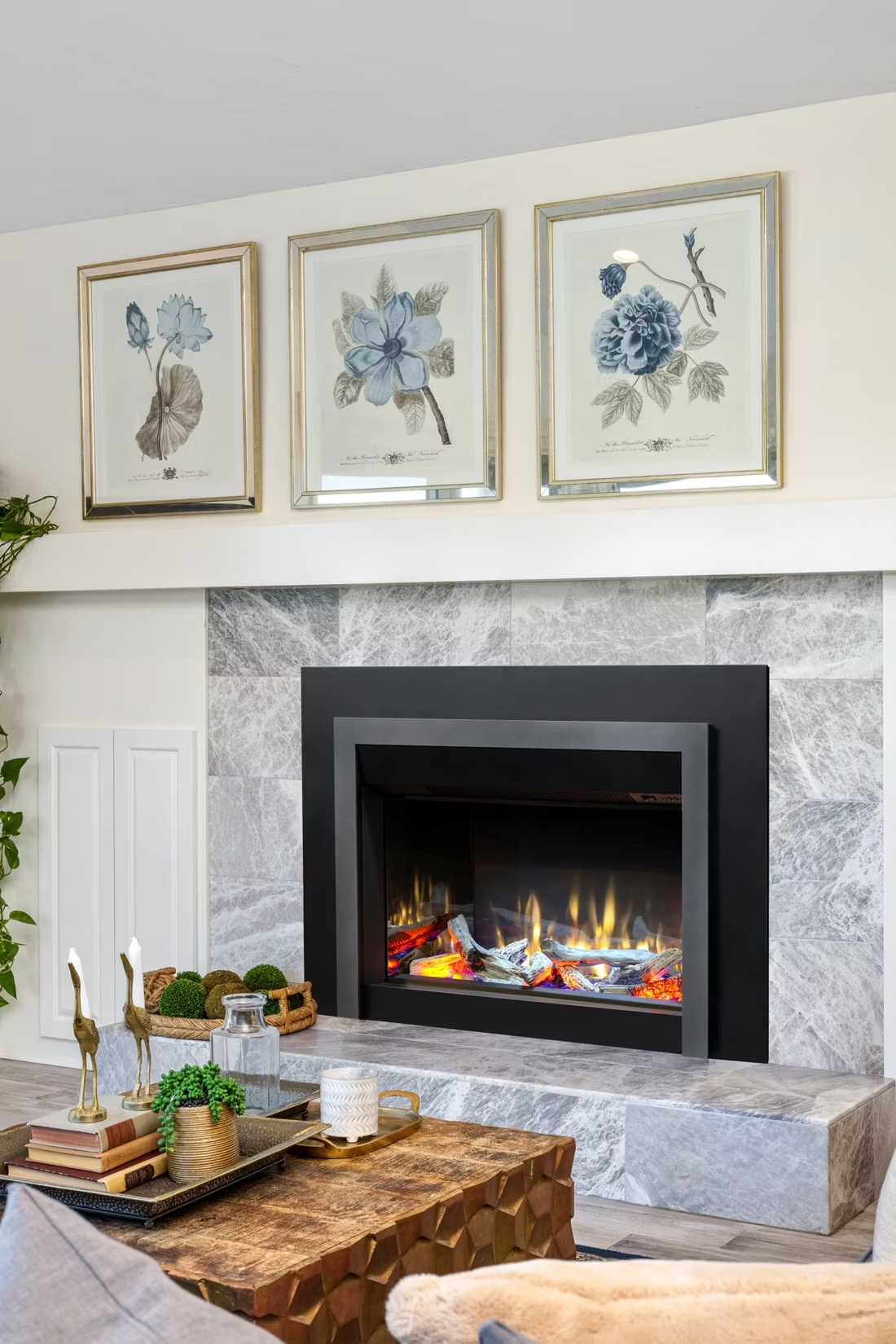
Because Kleberg County rarely needs a whole-home heating appliance, most electric fireplace projects here are about the room, not the furnace—a built-in linear unit over a media console, a mantel insert replacing an unused masonry fireplace, or a freestanding stove tucked into a den. Power in the county runs through AEP Texas, and a plug-in unit needs nothing more than a standard outlet, while a hardwired built-in typically calls for a dedicated 20-amp circuit run by a licensed electrician. Either way, there's no chimney, no combustion byproducts, and nothing for the county building department to inspect for venting clearances—which keeps most installs simple and fast.
Three steps. No salesperson until you're ready.
Tell us about your project
Your zip code, your situation, and the fuel you're leaning toward—or let the answers point you to one.
See what's actually available
The brands dealers within 100 miles genuinely carry—real options, never a catalog mirage.
Get your dealer & Project Guide
A trusted local dealer, plus the free Project Guide & Parts List that names every component of the job.
Frequently Asked Questions
How much does an electric fireplace installation cost in Kleberg County?
Plug-in electric fireplace inserts and freestanding units generally run $300 to $1,200 installed, since they need nothing more than an existing outlet and a compatible mantel or surround. Built-in linear electric fireplaces that require a dedicated circuit and finish carpentry typically run $1,500 to $3,500, depending on unit size and whether an electrician needs to run new wiring through an existing wall. Because Kleberg County's mild climate means most homeowners are buying for ambiance and light supplemental heat rather than primary heating, there's rarely a need for the largest, highest-output models—which keeps costs on the lower end compared to full heating-system installs elsewhere in Texas.
Will an electric fireplace actually keep my house warm?
For most Kleberg County homes, yes—as supplemental heat. With an average winter low around 47°F and only 834 heating degree days a year, the county rarely needs sustained whole-home heating the way a Northern climate does. A mid-size electric fireplace (1,500 watts, roughly 5,000 BTU equivalent) comfortably takes the chill off a living room or den during the cooler nights that run from December through February. It's not designed to replace central HVAC on the rare hard freeze, but for the vast majority of South Texas winter evenings, it's plenty.
Do I need a permit to install an electric fireplace in Kleberg County?
A plug-in electric fireplace or insert generally doesn't require a permit—it's treated like any other appliance you plug into a wall outlet. If you're installing a built-in unit that requires new wiring or a dedicated circuit, that electrical work typically needs a permit through the City of Kingsville or Kleberg County building department, depending on whether the property sits inside city limits. Most licensed electricians pull this permit as a routine part of the job, so it's rarely something the homeowner has to manage directly.
Electric vs. gas fireplace—which makes more sense in Kleberg County?
Gas fireplaces are common throughout Kleberg County and deliver real, consistent heat output, which matters for the handful of genuinely cold snaps South Texas sees each winter. Electric fireplaces trade some heat output for simplicity—no gas line, no venting, no combustion byproducts, and a much lower installed cost. For a primary living space in an older Kingsville home with an existing chimney, a gas insert may be worth the investment. For a den, bedroom, or secondary room where the goal is ambiance and light warmth on a 45-degree night, electric is usually the more practical and less expensive choice. Many households in the county end up with one of each.
Will my electric fireplace work if the power goes out?
No—and this is worth being upfront about. Electric fireplaces run entirely on grid power, so during an outage they shut off along with everything else. South Texas experienced this firsthand during the February 2021 freeze, when AEP Texas customers across the region lost power for extended stretches during the coldest weather the state had seen in decades. If backup heat during a grid failure is a real concern for your household, a vented gas unit or a battery-powered space heater is a better complement than relying on electric alone.
What kind of electric fireplace works best for Gulf Coast humidity?
Kleberg County's coastal humidity is generally kind to electric units—there's no ash, creosote, or combustion moisture to worry about the way there is with wood. The main consideration is placement: avoid installing a unit directly against an exterior wall that sees significant moisture intrusion, and make sure any built-in installation has adequate airflow around the electronics. Beyond that, most standard indoor-rated electric fireplaces and inserts hold up fine in the South Texas climate without special humidity-rated components.
Why doesn't Find My Fireplace push wood-burning options in Kleberg County?
Wood heat isn't a practical fit for most Kleberg County homes. The county has plenty of oak, pecan, and mesquite locally—mesquite in particular is prized for South Texas barbecue—but with only 834 heating degree days a year, there simply isn't enough sustained cold to justify a wood stove or fireplace as a heating appliance. A small number of rural properties still keep an open masonry fireplace for occasional use on genuinely cold nights, but it's the exception rather than the rule, which is part of why electric and gas dominate the local market.
Do I need an electrician, or can I install an electric fireplace myself?
A plug-in electric fireplace or insert is designed for straightforward DIY installation—plug it in, secure it to the wall or mantel per the manufacturer's bracket instructions, and you're done. A built-in linear electric fireplace that requires new wiring or a dedicated 20-amp circuit should go through a licensed electrician, both for safety and because AEP Texas service panels vary in available capacity from home to home. Local hearth dealers serving Kleberg County typically coordinate the electrician as part of a full installation package.
What size electric fireplace do I need for my Kleberg County home?
Sizing an electric fireplace in Kleberg County is mostly about the room, not the whole house, since you're heating for ambiance and supplemental warmth rather than fighting a cold climate. A 30-to-40-inch insert or built-in unit comfortably serves a standard living room or den in a Kingsville-area home. Larger ranch-style properties near King Ranch land with open-concept living spaces may want a 50-inch-plus linear unit or a second smaller unit in a bedroom. A local dealer can walk your space and recommend wattage and unit size based on your room's dimensions and how you plan to use it.
Can I put a TV above my fireplace?
Yes—with an asterisk. Fireplaces are hot and TVs don't like heat. Either put a mantel between them to deflect rising warmth, or choose a fireplace with heat-management technology that creates a cool zone on the wall above—the wall stays around 125 degrees, barely warm, while the room still gets full heat. If you like clean lines and don't want a mantel, heat management is the answer.
Do electric fireplaces actually produce heat?
Yes—most put out around 4,800–5,000 BTUs from a standard outlet, which comfortably warms a bedroom, office, or den as a comfort-zone heater. What they won't do is carry a whole house the way wood, gas, or pellet can. Think of electric as ambiance-first with honest supplemental heat: flames on with no heat in July, flames plus warmth in January.
Does a fireplace add value to my home?
On average, a fireplace adds back to the home about the same amount you spent installing it. Add the monthly savings from heating the rooms you actually use instead of the whole house—often hundreds of dollars a year—and the value case is strong before you even count what a fire does for how your family uses the room.
What is an in-home preview and do I need one?
It's a visit where a hearth professional measures your space, confirms the model you picked actually works in your home, and walks the specs—framing, gas line, venting, finish work—before anything is ordered. Some details you just can't know until you see the house. Never make a down payment without one; it's the single most-skipped step that burns buyers.
Stove and Fireplace Dealers in Kleberg County
Listings include WhyFire partner dealers, dealers we have verified as authorized for the brands we recommend, and established local businesses that carry hearth products. Every listing shows which one it is. The ones marked Preferred run on WhyFire's software, so they can show you real pricing and book your appointment right here. No manufacturer pays for placement. How we verify dealers →
Martini Brick
C.c. Chimney
Find your electric fireplace in Kleberg County.
Tell us a bit about your home and we'll put together a free Project Guide & Parts List—the exact parts your electric fireplace project needs, including any electrical circuit requirements, plus a match with a trusted local dealer serving Kleberg County.
Find Your Fireplace →