
Reliable gas heat for Kinney County's short, mild winters.
From Brackettville to Fort Clark Springs, most Kinney County homes don't need a furnace running much of the year—but a gas fireplace still earns its keep on cold fronts, during grid outages, and for everyday ambiance. Find the right unit and connect with a trusted local dealer.
Every Project Starts From One of These Five Situations
A fireplace for backup heat and everyday ambiance—not survival.
Kinney County sits in climate zone 2B with an average winter low around 38°F and a very light overall heating load—among the mildest heating climates in the country, closer to Laredo than to anything you'd call a cold-climate county. Most winters bring a handful of nights near freezing, not the sustained sub-zero stretches you'd see in a place like Bismarck or Duluth. That changes the calculus for a fireplace here: it's rarely the primary heat source for a Brackettville or Spofford home, but it's still valuable for the occasional hard freeze, for the ranch houses and weekend places scattered around Fort Clark Springs, and for the ambiance that a lot of homeowners want regardless of climate.
Kinney County is sparsely populated (under 3,000 residents) and rural enough that piped natural gas infrastructure generally doesn't reach most homes outside the small in-town clusters—propane is the standard fuel for the county's fireplaces, stoves, and ranges. That's a normal setup for this part of the Texas borderlands, and any local dealer working in Kinney County will be well versed in propane tank sizing, regulator setup, and line runs to outbuildings and ranch homes spread across larger lots. Wood-burning is uncommon here for actual heat—the mild winters don't call for it—though oak, pecan, and mesquite are all locally familiar species for the smoker and the occasional backyard fire pit.
Three steps. No salesperson until you're ready.
Tell us about your project
Your zip code, your situation, and the fuel you're leaning toward—or let the answers point you to one.
See what's actually available
The brands dealers within 100 miles genuinely carry—real options, never a catalog mirage.
Get your dealer & Project Guide
A trusted local dealer, plus the free Project Guide & Parts List that names every component of the job.
Frequently Asked Questions
How much does a gas fireplace installation cost in Kinney County?
Pricing depends heavily on whether you're installing a direct-vent unit into an existing masonry fireplace, adding a new propane tank, or running gas line to an outbuilding—all common scenarios on Kinney County's larger rural lots. As a general range for propane installations in rural West Texas counties like this one, expect somewhere between $3,500 and $8,000, with tank installation, longer line runs to a ranch home, or a fresh built-in unit pushing toward the higher end. A local dealer will give you a firm number after seeing your home and your existing propane setup, if any.
Do I need natural gas, or is propane the standard here?
Propane is the standard fuel for Kinney County. With a population under 3,000 spread across a large, rural county, piped natural gas infrastructure doesn't reach most homes outside small in-town pockets, if it reaches them at all. That means most gas fireplace installs in Brackettville, Fort Clark Springs, or out on ranch properties will run off a propane tank rather than a utility gas line. This isn't a limitation so much as the normal setup for the area—plenty of hearth models are built to run on propane from the factory, and your local dealer will configure the unit's orifice and regulator accordingly.
Do I need a permit to install a gas fireplace in Kinney County?
Most new gas fireplace installations require a building permit, and in a county this size that typically means a stop at the county courthouse in Brackettville rather than a dedicated building department. Propane tank installation may also involve a separate inspection depending on tank size and placement relative to the home. Because permitting varies by project type, it's worth confirming requirements before work starts—most established local dealers handle this coordination as part of the install so you're not tracking down county staff yourself.
Will my gas fireplace work if the power goes out?
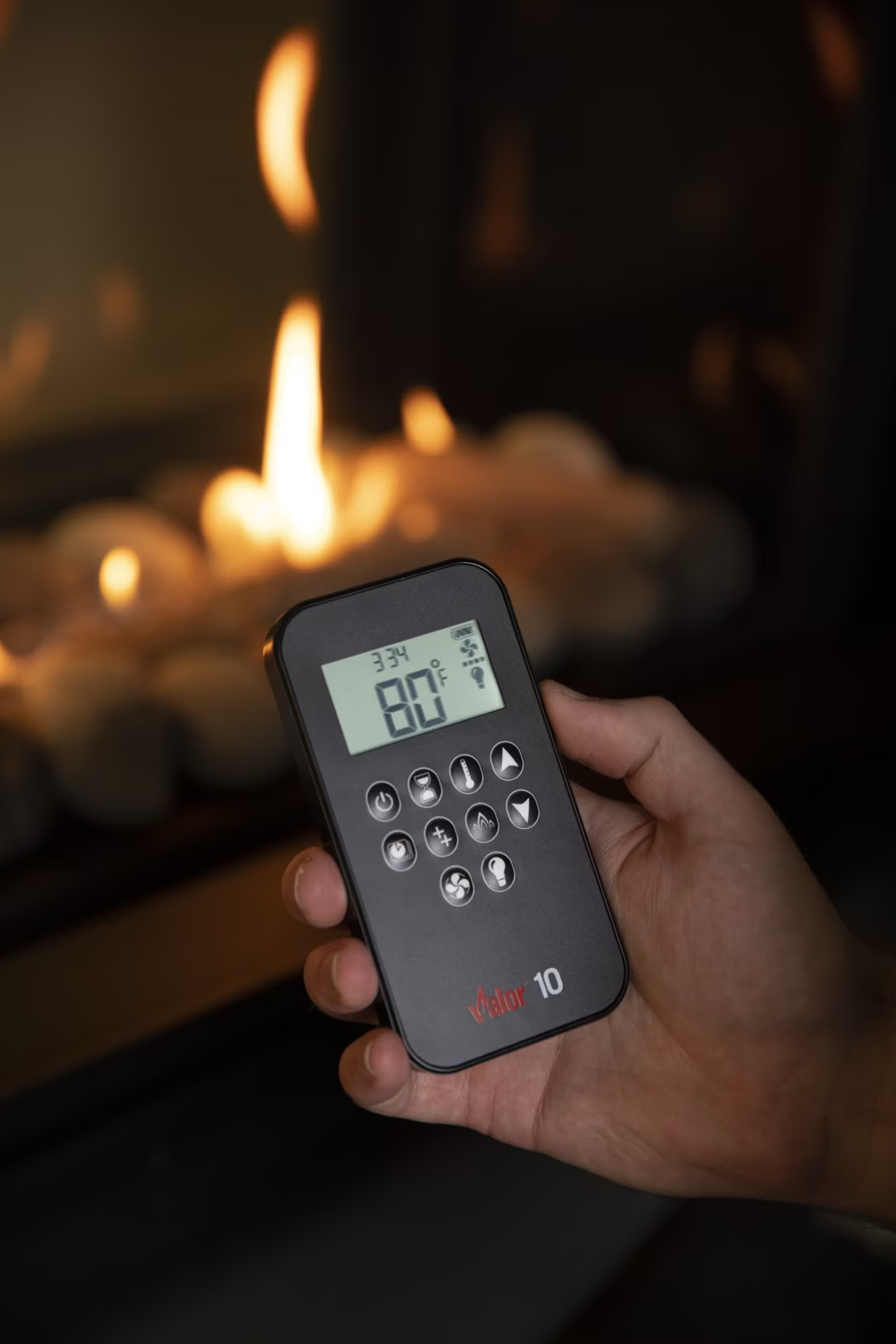
Yes, and this matters more in Kinney County than the mild winters might suggest—Texas has seen grid-wide outages during hard freezes, including the February 2021 event that left much of the state, ERCOT territory included, without power for days during genuinely cold weather. Most direct-vent gas fireplaces with intermittent pilot ignition include a battery backup that keeps the unit operable when the power drops. Valor fireplaces go a step further, generating their own electricity through the pilot's thermocouple so there's no battery to maintain. For a rural county where a downed line can mean a longer wait for restoration, that kind of backup heat is worth asking about.
What's the difference between a gas fireplace, insert, and stove?
A gas fireplace is a fully built-in unit, typically installed during new construction or a remodel. A gas insert drops into an existing masonry fireplace opening and uses the existing chimney as a vent path with a liner, converting an old wood-burning fireplace into a clean, efficient gas unit. A gas stove is a freestanding cabinet-style unit that sits on the floor, useful for homes without an existing fireplace opening. For the older ranch homes around Kinney County that already have a masonry fireplace but rarely use it for wood, an insert is often the simplest upgrade.
Are vent-free gas fireplaces allowed in Kinney County?
Texas permits vent-free (unvented) gas fireplaces, and they're a reasonable option for some Kinney County homes, especially rooms without an existing chimney or flue. That said, vent-free units release combustion byproducts—water vapor and small amounts of CO and NO₂—directly into the living space, so room size and ventilation requirements matter, and homeowners with respiratory sensitivities often prefer vented models. Direct-vent gas fireplaces, which draw combustion air from outside and exhaust it back outside through a sealed pipe, remain the more universally recommended choice and work well whether you're on propane or, in the rare case, natural gas.
How often does a gas fireplace need servicing?
An annual inspection is standard for any gas-burning appliance, gas fireplaces included. A technician checks the burner, pilot assembly, gas connections, and venting, and cleans the glass and interior components. Given the mild Kinney County climate, many homeowners use their fireplace lightly through the year rather than running it daily all winter—but light use doesn't eliminate the need for a yearly check, particularly on propane systems where tank and line connections should be verified along with the appliance itself.
Gas vs. wood—does wood heat make sense in Kinney County?
Not really, and that's a function of climate rather than preference. With such a light overall heating load and winter lows averaging 38°F, Kinney County simply doesn't have the sustained cold that makes wood heat practical as a primary or even reliable supplemental source the way it would in a place like Bozeman or Fargo. Local oak, pecan, and mesquite are all well-known species regionally—mesquite especially, for smoking—but they show up far more often in a backyard pit or a smoker than in a wood-burning fireplace insert. Gas, running on propane, is the more practical fit for Kinney County: instant heat on the handful of nights you actually want it, no wood storage or ash cleanup, and no fuel that goes unused most of the year.
What size gas fireplace do I need for my home?
Because Kinney County fireplaces are mostly supplemental rather than whole-home heat sources, sizing leans toward matching the room rather than maximizing BTU output. A living-room-sized direct-vent unit in the 20,000–30,000 BTU range comfortably heats a single large room or open living area in most Brackettville or Fort Clark Springs homes. Larger ranch-style layouts with open floor plans may call for a higher-output unit, but oversizing isn't usually necessary here the way it would be in a colder climate—a local dealer can walk through your floor plan and recommend a size that fits how you'll actually use it.
Can I put a TV above my fireplace?
Yes—with an asterisk. Fireplaces are hot and TVs don't like heat. Either put a mantel between them to deflect rising warmth, or choose a fireplace with heat-management technology that creates a cool zone on the wall above—the wall stays around 125 degrees, barely warm, while the room still gets full heat. If you like clean lines and don't want a mantel, heat management is the answer.
Why is a fireplace insert so efficient?
An insert does two things: it seals the chimney completely, so you stop losing air you already paid to heat, and it radiates warmth into the room through the firebox and glass. Most add a heat-exchange fan that pulls cool room air underneath, wraps it around the hot firebox, and pushes it back out warm. Your home is more efficient before you've even lit the first fire.
Can a fireplace actually lower my heating bill?
Yes—by creating a comfort zone. A furnace heats every square foot of the house just to warm the one room you're in; a gas fireplace on low burns roughly a sixth of the gas a typical furnace does. Set the furnace around 55–60 degrees as a baseline, then heat the rooms your family actually uses. Families who heat this way commonly save $20–$60 a month.
What is an in-home preview and do I need one?
It's a visit where a hearth professional measures your space, confirms the model you picked actually works in your home, and walks the specs—framing, gas line, venting, finish work—before anything is ordered. Some details you just can't know until you see the house. Never make a down payment without one; it's the single most-skipped step that burns buyers.
Stove and Fireplace Dealers in Kinney County
Listings include WhyFire partner dealers, dealers we have verified as authorized for the brands we recommend, and established local businesses that carry hearth products. Every listing shows which one it is. The ones marked Preferred run on WhyFire's software, so they can show you real pricing and book your appointment right here. No manufacturer pays for placement. How we verify dealers →
Schilling Fireplace & Wood Stoves
Find your gas fireplace in Kinney County.
Tell us a bit about your home and propane setup, and we'll match you with a trusted local dealer and send over a free Project Guide & Parts List—a plan for your gas fireplace project in Kinney County, including the vent kit and exact parts you'll need.
Find Your Fireplace →