
Add real fireplace ambiance to your Kaufman County home—no chimney required.
From the new subdivisions off I-20 in Forney and Heartland to established neighborhoods in Terrell, Kaufman, and Mabank, electric is the fastest-growing fireplace option in the county. Find the right unit and get matched with a local dealer who can install it correctly.
Every Project Starts From One of These Five Situations
A good match for fast-growing, mild-winter homes.
Kaufman County is one of the fastest-growing counties in Texas, and most of that growth—new subdivisions in Forney, Crandall, and along the US-80 and I-20 corridors—is production-built homes without masonry chimneys or gas stub-outs pre-run for a hearth. At the same time, the climate here (Zone 3A, hot-humid) has a light winter heating load, with winter lows averaging 33°F. That's a fraction of what a place like Duluth or Fargo sees, so most Kaufman County homeowners aren't looking for a primary heat source—they want the look and glow of a fireplace, occasional supplemental warmth on the handful of nights that dip into the 20s, and something that installs without tearing into a wall for venting or gas line.
That's exactly where electric fits. A built-in or wall-mount electric fireplace needs nothing more than a standard 120V outlet or, for larger units, a dedicated 240V circuit—no chimney, no combustion venting, no gas permit. Oncor delivers power to most of Kaufman County, and because Texas is a deregulated electric market, homeowners choose their own retail provider, but the physical install doesn't change either way. Worth noting: an electric fireplace still needs grid power to run, so it isn't backup heat during an ERCOT-related outage like the February 2021 freeze—but its low draw compared to space heaters makes it a sensible everyday choice for zone heating a den, bedroom, or converted garage suite in a county where true cold snaps are the exception, not the rule.
Three steps. No salesperson until you're ready.
Tell us about your project
Your zip code, your situation, and the fuel you're leaning toward—or let the answers point you to one.
See what's actually available
The brands dealers within 100 miles genuinely carry—real options, never a catalog mirage.
Get your dealer & Project Guide
A trusted local dealer, plus the free Project Guide & Parts List that names every component of the job.
Frequently Asked Questions
How much does an electric fireplace installation cost in Kaufman County?
A plug-in, freestanding, or wall-mount electric fireplace that uses an existing outlet typically runs $500 to $900 installed, including mounting hardware. A built-in electric insert or linear unit that requires a licensed electrician to run a dedicated 20-amp or 240V circuit—common in Forney and Heartland subdivisions where homeowners are finishing media walls or converting a fireplace niche—usually falls between $1,200 and $2,500. Costs stay on the lower end compared to gas or wood projects elsewhere in the county because there's no chimney, no venting, and no gas line work involved.
Will an electric fireplace actually heat my home in Kaufman County?
It'll take the chill off a room, but it shouldn't be your primary heat source. With Kaufman County having a light winter heating load and winter lows in the low 30s, most homeowners are using electric fireplaces for supplemental zone heat and ambiance rather than whole-house warmth—similar to how you'd use a space heater, but built into the room. Most units put out around 5,000 BTU on the heat setting, enough to warm a bedroom, den, or open living area on the handful of genuinely cold nights the county gets each winter.
Do I need a permit to install an electric fireplace in Kaufman County?
A simple plug-in unit that uses an existing outlet typically doesn't require a permit. If your project involves running new electrical circuit—the more common scenario for built-in or linear units in new-construction homes around Forney, Terrell, and Kaufman—you'll need an electrical permit through your city's building department (or Kaufman County's building department for unincorporated areas), and the work needs to be done by a licensed electrician. Local dealers who handle electric fireplace installs typically coordinate this permitting as part of the job.
Why don't more homes in Kaufman County have wood-burning fireplaces?
Wood heat just isn't a practical fit here. Kaufman County's hot, humid Zone 3A climate and mild winters mean there's little functional need for wood as a heat source, and most of the county's newer housing stock—the production subdivisions driving the county's growth—is built without masonry chimneys at all. Stored firewood also has to contend with Texas humidity and termite pressure in a way it doesn't in drier or colder regions. You'll still find oak, pecan, and mesquite burned in outdoor fire pits and smokers across the county, but indoor wood stoves and fireplaces are the exception rather than the rule.
What's the difference between a plug-in electric fireplace and a built-in insert?
A plug-in unit—freestanding or wall-mount—connects to a standard outlet and can be moved or removed without any construction work, which makes it a popular choice for renters and homeowners who want a fast upgrade. A built-in insert or linear electric fireplace is installed into a wall, media cabinet, or existing fireplace opening and usually requires a dedicated circuit, giving you a cleaner, more finished look that reads more like a real fireplace. In the newer Forney and Heartland subdivisions, built-in units are frequently added when homeowners finish out a media wall or convert an unused fireplace niche.
Can an electric fireplace go into an existing wood-burning fireplace opening?
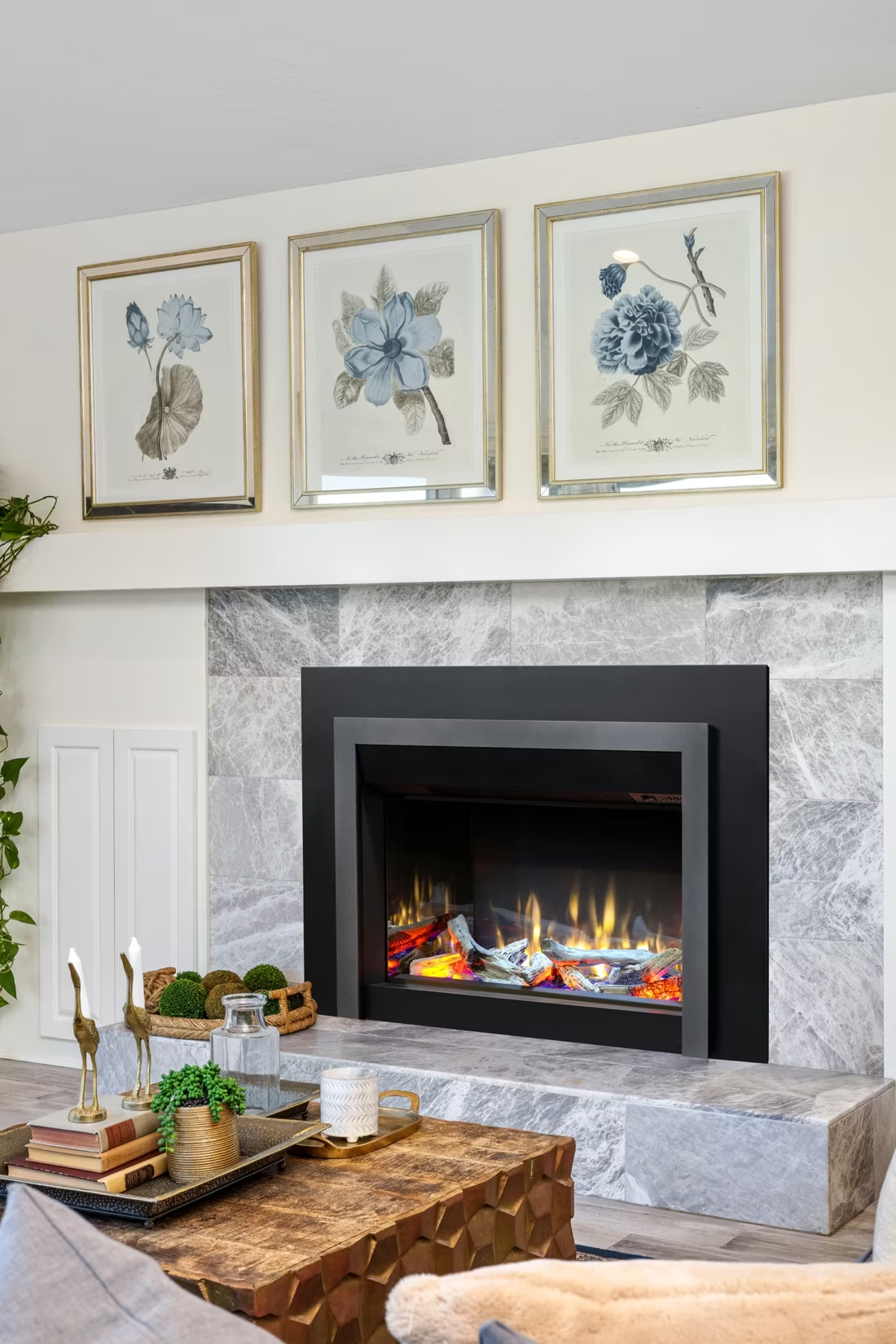
Yes—this is one of the more common projects for older homes in Terrell, Kaufman, and Mabank that were built with a traditional masonry fireplace that's rarely, if ever, used. An electric insert slides into the existing firebox opening, plugs into an outlet (or a new circuit run behind the surround), and gives you flame effect and supplemental heat without the maintenance, ash, or draft loss of an open masonry fireplace. No chimney sweep or liner work is needed since there's no combustion involved.
What brands of electric fireplaces are available through local Kaufman County dealers?
Dimplex, Napoleon, and Touchstone are among the most widely available electric fireplace brands through hearth dealers serving the Dallas-Fort Worth metro, including those covering Kaufman County. These brands range from simple wall-mount units to larger linear built-ins with realistic flame technology. A local dealer can walk you through which models fit your wall dimensions, your electrical setup, and whether you're prioritizing heat output or flame realism.
Electric vs. gas fireplace—which makes more sense for a Kaufman County home?
Both are common choices here, and the right one depends on your home's existing utilities. Gas is standard throughout much of the county—Atmos Energy serves natural gas to parts of Terrell and Forney, and propane fills in for homes further from city gas lines—and a gas fireplace delivers stronger, more consistent heat output along with the ability to run during a power outage if it has a battery-backup ignition. Electric skips the gas line and venting entirely, installs faster and cheaper, and is the simpler retrofit for an existing masonry fireplace or a media wall in a new build. For a primary living space where you want real heat output, gas often wins; for ambiance, flexibility, and lower upfront cost, electric is usually the better fit.
Is an electric fireplace a good option if the power goes out?
No—an electric fireplace requires grid power to run, so it won't function during an outage, including the kind of extended ERCOT-related outages Texas saw during the February 2021 freeze. If backup heat during power loss is a priority for your Kaufman County home, a gas unit with a battery-backup ignition system is a better safety net. Electric fireplaces are best thought of as everyday zone heat and ambiance rather than emergency heat.
Can I put a TV above my fireplace?
Yes—with an asterisk. Fireplaces are hot and TVs don't like heat. Either put a mantel between them to deflect rising warmth, or choose a fireplace with heat-management technology that creates a cool zone on the wall above—the wall stays around 125 degrees, barely warm, while the room still gets full heat. If you like clean lines and don't want a mantel, heat management is the answer.
Does an electric fireplace need a vent or chimney?
No—that's its superpower. An electric fireplace needs a wall and an outlet, period. No vent pipe, no gas line, no clearances to design around, which is why it works in bedrooms, offices, apartments, and walls where venting a gas or wood unit would be impractical or impossible. Installation is typically the simplest and least expensive of any fireplace type.
What is an in-home preview and do I need one?
It's a visit where a hearth professional measures your space, confirms the model you picked actually works in your home, and walks the specs—framing, gas line, venting, finish work—before anything is ordered. Some details you just can't know until you see the house. Never make a down payment without one; it's the single most-skipped step that burns buyers.
Can a fireplace actually lower my heating bill?
Yes—by creating a comfort zone. A furnace heats every square foot of the house just to warm the one room you're in; a gas fireplace on low burns roughly a sixth of the gas a typical furnace does. Set the furnace around 55–60 degrees as a baseline, then heat the rooms your family actually uses. Families who heat this way commonly save $20–$60 a month.
Stove and Fireplace Dealers in Kaufman County
Listings include WhyFire partner dealers, dealers we have verified as authorized for the brands we recommend, and established local businesses that carry hearth products. Every listing shows which one it is. The ones marked Preferred run on WhyFire's software, so they can show you real pricing and book your appointment right here. No manufacturer pays for placement. How we verify dealers →
Clay Structures Inc
The Chimney Guy -Seven Points
Find your electric fireplace in Kaufman County.
Tell us a bit about your home and we'll send you a free Project Guide & Parts List—the right electric fireplace or insert for your space, matched with a trusted local dealer who can install it correctly.
Find Your Fireplace →