
Gas fireplace warmth for Jim Wells County's mild winters.
From Alice to Premont, Orange Grove, and San Diego, gas gives you real flame on demand for the cold fronts that do roll through South Texas—no wood stacking, no waiting for a bed of coals to build.
Every Project Starts From One of These Five Situations
Heat that shows up on demand, not heat you have to plan for.
Jim Wells County sits in climate zone 2A with a very short, mild winter heating season and a typical winter low around 47°F—a fraction of what a place like Bismarck, ND or Duluth, MN sees in a single January week. Oak, pecan, and mesquite grow well here, but locally that wood goes into smokers and pits far more often than fireplaces; there simply isn't enough sustained cold for wood heat to make practical sense, and it isn't something I'd steer a Jim Wells County homeowner toward as a heating solution.
Gas is a different story. The county sits in the middle of Eagle Ford Shale country, and natural gas infrastructure runs through Alice and the surrounding communities via CenterPoint Energy, with propane filling in for homes further out in unincorporated parts of the county. A gas fireplace or insert gives you instant ambiance for most of the year and genuine, reliable heat during the cold snaps that do arrive—including the kind of hard freezes South Texas saw in February 2021, when grid reliability became a real concern and battery-backed gas units kept running when the power didn't.
Three steps. No salesperson until you're ready.
Tell us about your project
Your zip code, your situation, and the fuel you're leaning toward—or let the answers point you to one.
See what's actually available
The brands dealers within 100 miles genuinely carry—real options, never a catalog mirage.
Get your dealer & Project Guide
A trusted local dealer, plus the free Project Guide & Parts List that names every component of the job.
Frequently Asked Questions
How much does a gas fireplace installation cost in Jim Wells County?
Most gas fireplace and insert installations in Jim Wells County run roughly $3,500 to $8,500, depending on the unit, whether you're converting an existing masonry fireplace or building new, and whether a gas line already reaches the install location. A gas log set or insert dropped into an existing fireplace with gas already run to it lands on the lower end. New construction, a propane tank installation, or a gas line extension out to a rural property near Orange Grove or San Diego pushes costs toward the higher end. A local dealer will give you a firm number after seeing the space.
Can I convert my existing fireplace to gas?
Yes, and it's a common request even in a mild climate like Jim Wells County's, where homeowners want the look of a fire without dealing with ash or smoke. Many homes here, including builder-grade homes in Alice, already have a decorative wood-burning masonry fireplace that rarely gets used because the winters simply aren't cold enough to justify tending a wood fire. Converting to a gas insert or vented log set typically runs $3,500 to $7,000 and keeps the existing chimney as the vent path, giving you real flame at the flip of a switch instead of a fireplace that sits unused nine months of the year.
Do I need natural gas, or does propane work?
Either works, and which one applies depends on where in the county you are. Natural gas service through CenterPoint Energy reaches Alice and much of the surrounding developed area, so if you already have gas appliances there, adding a fireplace is straightforward. Out in unincorporated Jim Wells County—around Premont, Orange Grove, or the rural stretches near San Diego—propane from a local supplier is the standard fallback, either with an existing tank or a new tank set as part of the install. Nearly every gas fireplace model on the market can be configured for either fuel.
Will my gas fireplace work if the power goes out?
Most modern gas fireplaces will, which matters more in South Texas than people expect—the February 2021 winter storm knocked out power across the ERCOT grid for days, including in Jim Wells County. Units with IPI (intermittent pilot ignition) run on a small battery backup that kicks in automatically when the power drops, so the fireplace still lights on demand. Valor fireplaces take it a step further: their pilot assembly generates its own electricity through a thermocouple, so there's no battery to remember or replace. Ask your local dealer about the ignition system on any unit you're considering if backup heat during a grid event matters to you.
What's the difference between a gas fireplace, insert, and stove?
A gas fireplace is a built-in unit framed into a wall, typically chosen for new construction or a remodel. A gas insert is built to slot into an existing masonry fireplace opening, sealing it up and using the existing chimney to vent—the most common upgrade path for older Alice homes with an unused wood-burning fireplace. A gas stove is a freestanding cabinet-style unit that sits on the floor like a wood stove but burns gas, which works well if you don't have an existing fireplace opening to use. For most Jim Wells County homeowners with a builder-grade fireplace already in place, an insert is the simplest and most cost-effective route.
Do I need a permit to install a gas fireplace in Jim Wells County?
Within Alice city limits, gas fireplace installations require a building permit and a gas line permit through the City of Alice, and gas line work needs to be done by a licensed gas-fitter. For properties in unincorporated Jim Wells County—around Premont, Orange Grove, or San Diego—permitting runs through the county's development office. In either case, most local hearth dealers handle the permit paperwork as part of the installation, so it's rarely something you have to manage yourself.
Should I get a vented or vent-free gas fireplace?
Vented gas fireplaces (direct-vent or B-vent) pull combustion air from outside and exhaust it back outside, which makes them the cleanest and most universally code-compliant choice. Vent-free units burn directly into the room air and are legal in Texas, and they come up more often in Jim Wells County than in colder climates precisely because the mild winters here mean many homeowners want occasional ambiance rather than sustained heavy use—vent-free units are simple to install without any exterior venting run. That said, vent-free units still require correct room sizing and an oxygen depletion sensor, and a vented direct-vent unit remains the safer, more flexible choice if you want real heat output on the county's colder nights. A local dealer can walk you through both for your specific room.
How often does a gas fireplace need to be serviced?
An annual inspection is standard, even for a fireplace that only runs a few dozen times a year, which is typical for Jim Wells County's mild winters. A technician checks the burner, pilot assembly, gas connections, and glass, and confirms the venting is clear. Expect to pay roughly $150 to $250 for a standard annual visit—modest compared to wood-burning chimney maintenance, but still worth keeping on the calendar for safety.
Why gas instead of wood in Jim Wells County?
Wood heat just doesn't have a real job to do here. With only a very short, mild winter heating season and winter lows averaging in the high 40s, there's no sustained cold that calls for a wood stove or insert the way there would in a place like International Falls, MN. The oak, pecan, and mesquite common to South Texas are prized for smoking meat, not for keeping a house warm overnight. A small number of Jim Wells County homeowners still install a wood-burning unit for looks or a rustic touch, but for anyone actually wanting usable heat and real ambiance without the upkeep, gas is the practical choice—and it's what most local dealers will steer you toward for this climate.
Can I put a TV above my fireplace?
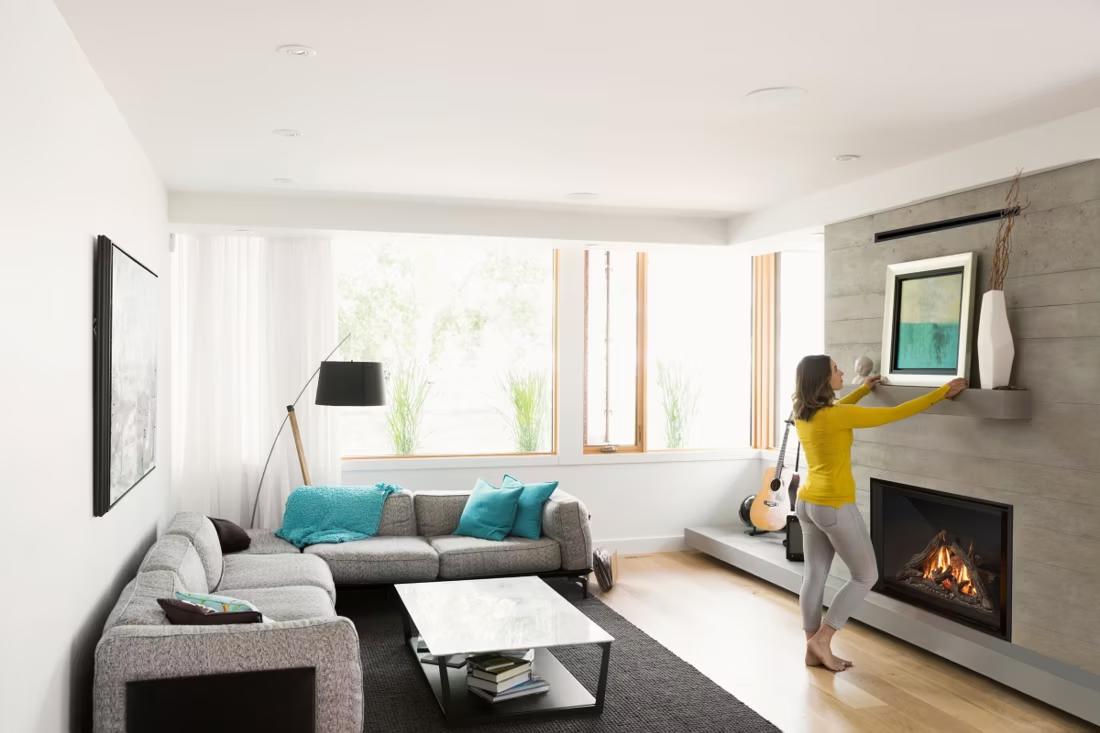
Yes—with an asterisk. Fireplaces are hot and TVs don't like heat. Either put a mantel between them to deflect rising warmth, or choose a fireplace with heat-management technology that creates a cool zone on the wall above—the wall stays around 125 degrees, barely warm, while the room still gets full heat. If you like clean lines and don't want a mantel, heat management is the answer.
Why is my open fireplace making my house colder?
Open fireplaces suck—literally. As the fire burns, it consumes air your furnace already paid to heat and pulls it out through the chimney, so the house is actually colder after the fire goes out than before you lit it. An insert fixes this: it seals the chimney, puts fixed glass across the front, and turns that hole in your house into a real heat source.
Can a fireplace actually lower my heating bill?
Yes—by creating a comfort zone. A furnace heats every square foot of the house just to warm the one room you're in; a gas fireplace on low burns roughly a sixth of the gas a typical furnace does. Set the furnace around 55–60 degrees as a baseline, then heat the rooms your family actually uses. Families who heat this way commonly save $20–$60 a month.
Does a fireplace add value to my home?
On average, a fireplace adds back to the home about the same amount you spent installing it. Add the monthly savings from heating the rooms you actually use instead of the whole house—often hundreds of dollars a year—and the value case is strong before you even count what a fire does for how your family uses the room.
Stove and Fireplace Dealers in Jim Wells County
Listings include WhyFire partner dealers, dealers we have verified as authorized for the brands we recommend, and established local businesses that carry hearth products. Every listing shows which one it is. The ones marked Preferred run on WhyFire's software, so they can show you real pricing and book your appointment right here. No manufacturer pays for placement. How we verify dealers →
Martini Brick
C.c. Chimney
Find your gas fireplace in Jim Wells County.
Tell us about your home in Alice, Premont, Orange Grove, or San Diego, and we'll match you with a trusted local dealer and send you a free Project Guide & Parts List—the exact parts, including the vent kit, for your gas fireplace project.
Find Your Fireplace →