
A gas fireplace for the rare cold snaps in Jim Hogg County.
Winters here average a mild 46°F low and barely 822 heating degree days a year, but when a Blue Norther rolls through the Rio Grande Plains, a gas fireplace turns that cold front into ambiance instead of a problem. Find the right unit and get matched with a trusted local dealer.
Every Project Starts From One of These Five Situations
Warmth on demand, for the nights a Blue Norther rolls through.
Jim Hogg County sits in the brush country of the Rio Grande Plains, where oak, pecan, and mesquite dot the ranchland around Hebbronville and climate zone 2A means long, hot summers and short, mild winters. With only about 822 heating degree days a year—a fraction of what a place like Fargo, ND racks up in a single cold month—most homes in the county have never needed a serious heating strategy. But South Texas still gets its Blue Northers: fast-moving cold fronts that can drop temperatures thirty or forty degrees in an afternoon and hold there for a day or two before warming back up.
That's the niche a gas fireplace fills here. It's less about all-winter heat and more about instant, reliable warmth for the handful of genuinely cold nights each year, plus the everyday value of a real flame in the living room. Jim Hogg County sits on productive oil and gas ground, but that doesn't automatically mean piped natural gas reaches your street—most rural homes here run gas appliances off a propane tank rather than a municipal utility line. Either fuel path works for a fireplace; a local dealer will tell you which makes sense for your specific address, size the unit for occasional-use heat rather than round-the-clock output, and handle the gas line and venting correctly the first time.
Three steps. No salesperson until you're ready.
Tell us about your project
Your zip code, your situation, and the fuel you're leaning toward—or let the answers point you to one.
See what's actually available
The brands dealers within 100 miles genuinely carry—real options, never a catalog mirage.
Get your dealer & Project Guide
A trusted local dealer, plus the free Project Guide & Parts List that names every component of the job.
Frequently Asked Questions
How much does a gas fireplace installation cost in Jim Hogg County?
A typical gas fireplace or insert installation in Jim Hogg County runs roughly $3,500 to $8,500. That's on the lower end of what you'll see nationally, mostly because most homes here are single-story ranch houses with short, straightforward direct-vent runs rather than multi-story venting or long gas line extensions. Homes that need a new propane tank set or a longer buried gas line to reach the fireplace location will land toward the upper end of that range. A local dealer will give you a firm number after seeing your home and your existing gas or propane setup.
Should I consider a wood-burning fireplace instead, since oak and mesquite are so common here?
Probably not for heating purposes. With an average winter low around 46°F and barely 822 heating degree days a year, Jim Hogg County almost never has the sustained cold that makes sourcing, seasoning, and burning cordwood worthwhile—compare that to a genuinely cold-climate county where wood heat carries a home through months of single-digit nights. Local oak, pecan, and mesquite are more commonly seen in outdoor cooking and smoking than in an indoor wood stove. If you want the visual and heat of a real flame without the wood handling, a gas fireplace or insert is the more practical choice, and it's what local dealers here are actually set up to sell and service.
Do I need natural gas service, or should I plan on propane?
Plan on propane unless you know otherwise. Jim Hogg County sits within a productive South Texas oil and gas field, but that production doesn't translate into piped natural gas service reaching most homes—even within Hebbronville, many properties run entirely on propane rather than a municipal gas utility, which is typical for a rural Texas county this size. A propane tank, either owned or leased from a local supplier, feeds the fireplace instead. Most gas fireplace models can be configured for either fuel, so the choice comes down to what's already at your address, not what the unit itself prefers.
Will my gas fireplace still work if the power goes out?
Most modern gas fireplaces will, with the right ignition system. Units with IPI (intermittent pilot ignition) run on battery backup—typically a set of AA batteries inside the unit—that kicks in automatically when power drops, so the fireplace still lights on demand. Some manufacturers, notably Valor, go a step further and generate their own electricity from the pilot's thermocouple, so there's no battery to remember at all. Given how infrequent outages tend to be in Jim Hogg County, this isn't usually the deciding factor, but it's worth asking about if you're weighing units during a storm-prone stretch of the year.
What's the difference between a gas fireplace, insert, and stove for a home like mine?
A gas fireplace is a built-in unit framed into a wall, typically chosen for new construction or a remodel. A gas insert drops into an existing masonry fireplace opening and uses that chimney (with a liner) to vent, converting an old wood-burning hearth into a sealed, efficient gas unit. A gas stove is a freestanding cabinet-style unit that sits on the floor, useful when there's no existing fireplace opening to work with. For older ranch homes around Jim Hogg County with an existing masonry fireplace that rarely if ever gets used, an insert is usually the simplest upgrade; homes without one typically go with a built-in fireplace or a freestanding stove instead.
Do I need a permit to install a gas fireplace in Jim Hogg County?
It depends on where the home sits. Within Hebbronville, expect to need a building permit and a gas line permit for a new gas fireplace installation, handled through the city. In unincorporated parts of the county, permitting requirements are typically lighter, which is common for small rural Texas counties, but that doesn't change the underlying safety work—a licensed gas fitter should still make the gas connection, and a qualified installer should still handle clearances and venting to manufacturer spec regardless of what paperwork is required. A local dealer will know exactly what applies to your address.
Vented or vent-free—which makes more sense in a mild climate like this?
Because Jim Hogg County has so little sustained heating demand, some homeowners look at vent-free (ventless) gas units to avoid running venting through a wall or roof for a fireplace that's mostly used for ambiance and occasional cold fronts. Vent-free units are legal in Texas, but they release combustion byproducts into the room and come with strict room-sizing and ventilation rules that a dealer needs to check against your specific space. Vented direct-vent fireplaces cost a bit more to install but exhaust everything outside and remain the safer, more broadly recommended option for indoor air quality—most local dealers will steer you there unless there's a specific reason a vent-free unit fits better.
How often does a gas fireplace need to be serviced?
Plan on an annual inspection, even for a fireplace that only runs a handful of nights a year during a cold front. A technician checks the burner, pilot assembly, gas connections, and any electronic ignition components, and cleans the glass and interior. This runs less involved and less expensive than sweeping a wood chimney—typically $150 to $250—but it matters just as much for safety, particularly for a unit that sits unused for long stretches of Jim Hogg County's long, hot off-season.
Gas vs. electric—which fits a mild climate like Jim Hogg County's better?
Both are considered standard, practical choices here, and the right pick often comes down to whether you want a real flame. Electric fireplaces install in an afternoon with no gas line or venting at all, typically running $400 to $1,200 installed, and they're a low-hassle way to add ambiance and a bit of supplemental warmth without touching propane or gas piping. Gas fireplaces cost more to install but deliver real heat output and a genuine flame, which matters more when a Blue Norther actually drops temperatures for a day or two. Given how limited the county's overall heating demand is, some homeowners choose electric for a secondary room or bedroom and reserve gas for the main living area.
Why is a fireplace insert so efficient?
An insert does two things: it seals the chimney completely, so you stop losing air you already paid to heat, and it radiates warmth into the room through the firebox and glass. Most add a heat-exchange fan that pulls cool room air underneath, wraps it around the hot firebox, and pushes it back out warm. Your home is more efficient before you've even lit the first fire.
Can I put a TV above my fireplace?
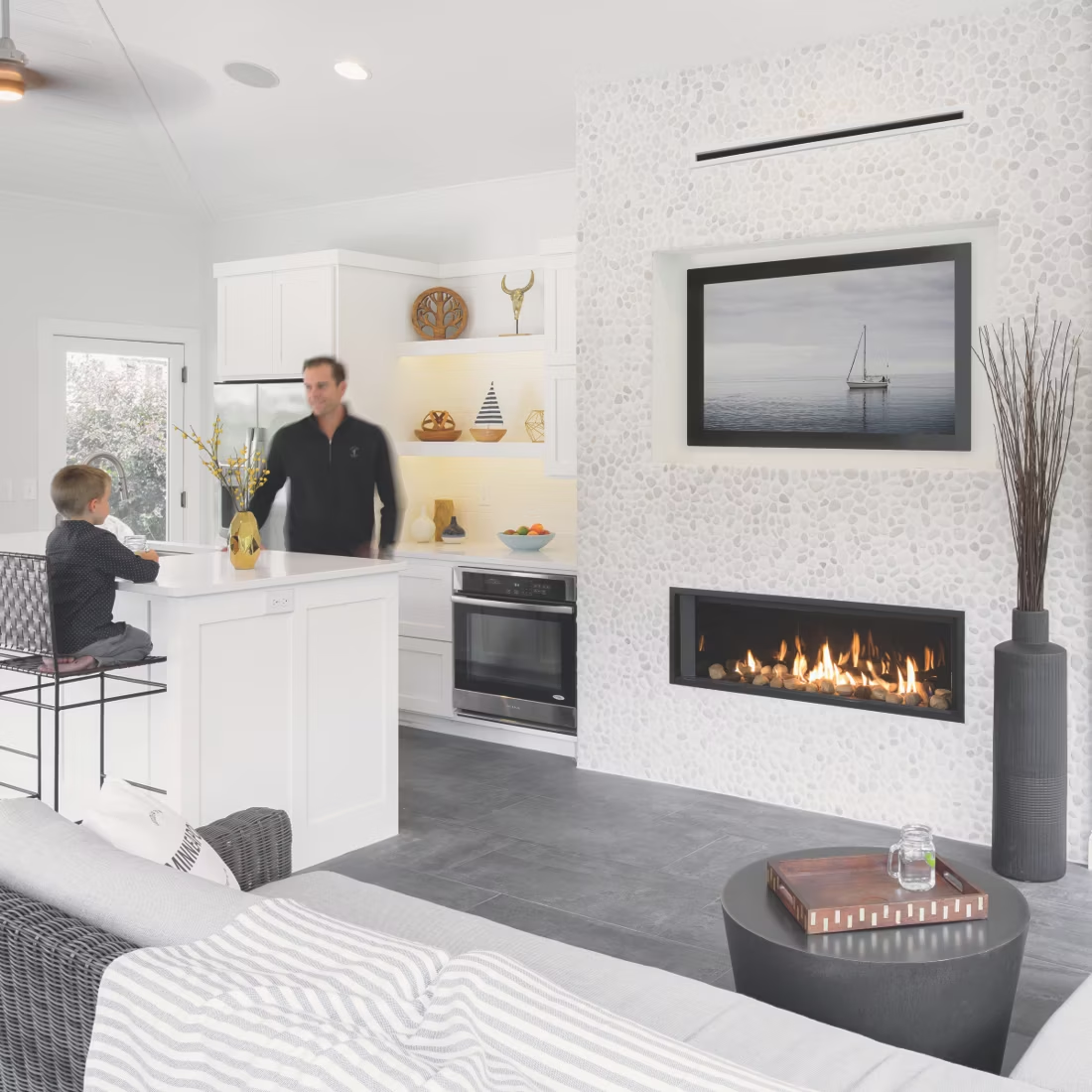
Yes—with an asterisk. Fireplaces are hot and TVs don't like heat. Either put a mantel between them to deflect rising warmth, or choose a fireplace with heat-management technology that creates a cool zone on the wall above—the wall stays around 125 degrees, barely warm, while the room still gets full heat. If you like clean lines and don't want a mantel, heat management is the answer.
Can I install a fireplace myself?
If you're putting a fire in your house on purpose, it's best to work with an expert. Unless you're genuinely experienced in framing, gas line, vent pipe, and the national code on clearances to combustibles, have a professional do it—and ideally the same company that sells you the fireplace, so warranty, service, and liability all live under one roof.
Can a fireplace actually lower my heating bill?
Yes—by creating a comfort zone. A furnace heats every square foot of the house just to warm the one room you're in; a gas fireplace on low burns roughly a sixth of the gas a typical furnace does. Set the furnace around 55–60 degrees as a baseline, then heat the rooms your family actually uses. Families who heat this way commonly save $20–$60 a month.
Stove and Fireplace Dealers in Jim Hogg County
Listings include WhyFire partner dealers, dealers we have verified as authorized for the brands we recommend, and established local businesses that carry hearth products. Every listing shows which one it is. The ones marked Preferred run on WhyFire's software, so they can show you real pricing and book your appointment right here. No manufacturer pays for placement. How we verify dealers →
Martini Brick
Grill Street Outdoor Kitchens
C.c. Chimney
Find your gas fireplace in Jim Hogg County.
Tell us a bit about your home and we'll match you with the right gas fireplace, insert, or stove for Jim Hogg County's mild winters, plus a free Project Guide & Parts List with the exact parts—including the vent kit—and a trusted local dealer to install it.
Find Your Fireplace →