
Instant Warmth for Jersey Village's Mild Winters and Sudden Freezes.
Jersey Village winters rarely demand much from a heating system—until an Arctic blast rolls through the Gulf Coast. A gas fireplace gives you everyday ambiance and heat you can count on when the grid can't.
Every Project Starts From One of These Five Situations
Comfort most nights, backup on the worst ones.
Jersey Village sits in climate zone 2A at just 106 feet of elevation, with an average winter low around 43°F and a short, mild winter heating season—a fraction of what a place like Duluth, MN sees in a single January. Most winters here call for a jacket, not a furnace overhaul. But this incorporated city inside Harris County isn't immune to the occasional hard freeze, and when one hits, it tends to hit the whole region at once.
Natural gas service reaches most of Jersey Village through CenterPoint Energy's distribution network, which also serves as the area's primary electric utility alongside Entergy Texas and San Bernard Electric Cooperative. That overlap matters more than it might seem: February 2021's Winter Storm Uri knocked out electricity to millions of Houston-area homes for days, and homeowners with a properly equipped gas fireplace were among the few who stayed warm without a generator. For Jersey Village, a gas fireplace is as much about that kind of resilience as it is about the cozy, low-maintenance ambiance it delivers on an ordinary Tuesday night.
Three steps. No salesperson until you're ready.
Tell us about your project
Your zip code, your situation, and the fuel you're leaning toward—or let the answers point you to one.
See what's actually available
The brands dealers within 100 miles genuinely carry—real options, never a catalog mirage.
Get your dealer & Project Guide
A trusted local dealer, plus the free Project Guide & Parts List that names every component of the job.
Frequently Asked Questions
How much does a gas fireplace installation cost in Jersey Village?
Most gas fireplace and insert installations in the Jersey Village area run $3,000 to $8,000, depending on the unit, whether you already have a gas line nearby, and the venting path. A direct-vent insert going into an existing masonry fireplace on a home already served by CenterPoint Energy's gas lines tends to land on the lower end. New gas line runs, a full mantel surround build-out, or a fresh gas fireplace in a room without existing infrastructure push toward the higher end. A local dealer will confirm the number after seeing your home.
Can I convert my existing wood-burning fireplace to gas?
Yes, and it's a common upgrade in this part of Harris County, where older homes were often built with a traditional masonry fireplace meant for oak, pecan, or mesquite cordwood. A gas insert slides into that existing firebox, uses the current chimney as a liner path, and eliminates the ash, smoke, and firewood storage that Houston's humidity makes especially unpleasant. Conversions here typically run $3,500 to $7,500 depending on whether new gas piping is needed to reach the firebox.
Do I need natural gas, or is propane more common here?
Natural gas is the standard choice in Jersey Village—CenterPoint Energy's distribution lines cover most of the city, so if your home already has gas service for a water heater or range, adding a fireplace is a straightforward tie-in. Propane shows up occasionally for homes just outside the service area or for standalone outdoor installations, but it's the exception rather than the rule here, unlike more rural stretches of Harris County. Most gas fireplace models can run on either fuel with the correct orifice kit, so the choice mainly comes down to what's already plumbed to your house.
Will a gas fireplace keep working if the power goes out?
It depends on the ignition system, and this is worth getting right in a Houston-area home. Standard gas fireplaces with intermittent pilot ignition (IPI) include a battery backup that keeps the unit firing during an outage—but only if the batteries are fresh, which is easy to forget until a storm hits. Valor fireplaces take a different approach: the pilot's thermocouple generates its own electricity, so the fireplace never depends on batteries or the grid at all. After Winter Storm Uri left many CenterPoint-area homes without power for days, that self-powered design is exactly the kind of detail local dealers can walk you through.
What's the difference between a gas fireplace, insert, and stove?
A gas fireplace is a built-in unit installed in a framed wall or new construction opening. A gas insert is sized to slide into an existing masonry firebox, converting an old wood-burning fireplace into a sealed, efficient gas unit. A gas stove is freestanding, sitting on the floor with its own venting, similar in footprint to a wood stove. For most Jersey Village homes with an existing fireplace, an insert is the simplest upgrade; new builds or additions without a firebox usually call for a built-in fireplace instead.
Do I need a permit to install a gas fireplace in Jersey Village?
Yes. The City of Jersey Village requires a building permit for gas fireplace installations, and any new or modified gas line needs a permit tied to a licensed gas-fitter, coordinated with CenterPoint Energy as the local distribution utility. Most hearth dealers in the area handle this paperwork directly as part of the install, including scheduling the final inspection, so you're not left coordinating separate trades yourself.
Are vent-free gas fireplaces allowed in Jersey Village?
Texas permits vent-free (ventless) gas fireplaces, and they show up in some Jersey Village homes for supplemental warmth in a den or bonus room, since they don't require any exterior venting. That said, direct-vent units—which draw combustion air from outside and exhaust byproducts through a sealed pipe—remain the more common and generally recommended choice locally, especially in tightly sealed, well-insulated newer homes where indoor air quality matters. If you're weighing a vent-free unit, a local dealer can walk through the room-sizing and ventilation rules that apply.
How often should a gas fireplace be serviced?
Plan on an annual inspection, ideally in early fall before the first cool snap. A technician checks the burner, pilot assembly, gas connections, and glass seal, and confirms the venting is clear—birds and wasps occasionally nest in exterior vent caps here during the warmer months, which is a Gulf Coast quirk worth checking for. Expect to pay in the neighborhood of $150 to $250 for a standard annual service call through a local hearth or HVAC provider.
Gas vs. wood—which makes more sense in Jersey Village?
With only a short, mild winter heating season and winter lows averaging in the low 40s, few Jersey Village homes need wood as a serious heat source—it's more of an occasional-use choice here than a necessity. Wood also comes with real downsides in this climate: Gulf Coast humidity makes dry, seasoned cordwood harder to store, and oak, pecan, or mesquite left stacked outside can draw termites, a genuine concern in Harris County. Gas sidesteps all of that—instant on-off operation, no ash, no pest risk, and (with the right ignition system) heat that keeps working through a grid outage. For most homes here, gas is the more practical everyday choice, with wood reserved mostly for outdoor fire pits or occasional ambiance.
Can I put a TV above my fireplace?
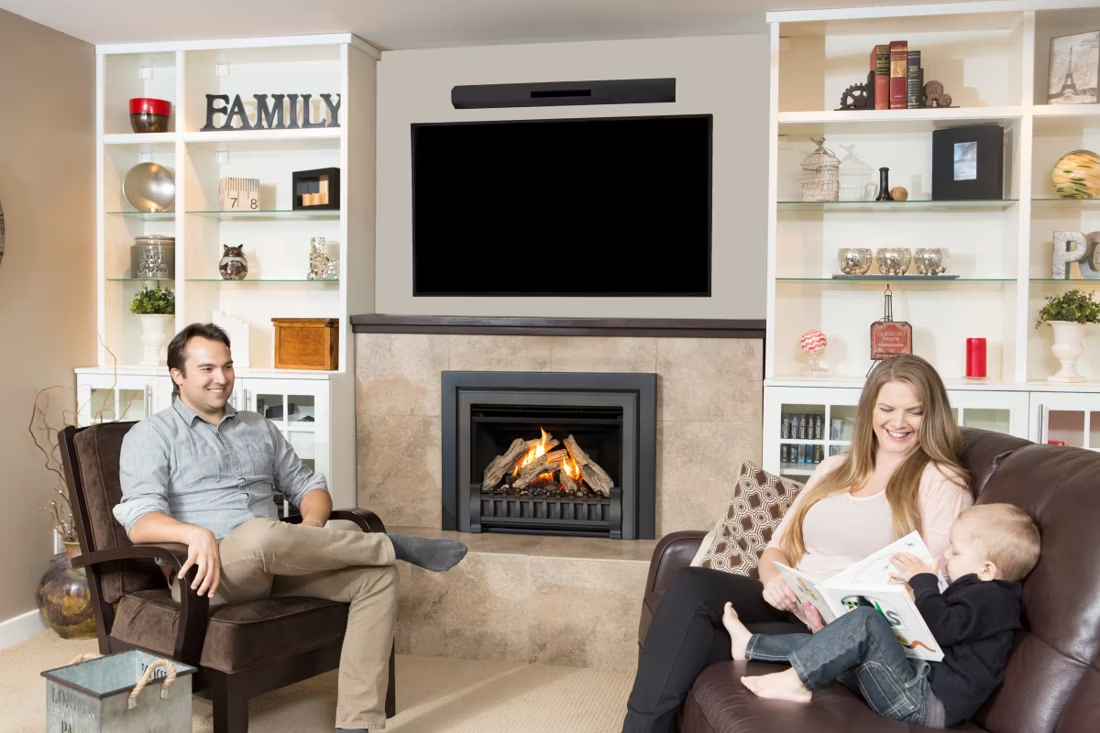
Yes—with an asterisk. Fireplaces are hot and TVs don't like heat. Either put a mantel between them to deflect rising warmth, or choose a fireplace with heat-management technology that creates a cool zone on the wall above—the wall stays around 125 degrees, barely warm, while the room still gets full heat. If you like clean lines and don't want a mantel, heat management is the answer.
Is my gas fireplace wasting gas?
If it was installed more than 15 years ago, probably. Older gas fireplaces keep a standing pilot light burning all the time, and that little flame can cost a couple hundred dollars a year. Newer models use pilot-on-demand ignition—the pilot lights only when you use the fireplace and goes out when you turn it off.
What is an in-home preview and do I need one?
It's a visit where a hearth professional measures your space, confirms the model you picked actually works in your home, and walks the specs—framing, gas line, venting, finish work—before anything is ordered. Some details you just can't know until you see the house. Never make a down payment without one; it's the single most-skipped step that burns buyers.
Can a fireplace actually lower my heating bill?
Yes—by creating a comfort zone. A furnace heats every square foot of the house just to warm the one room you're in; a gas fireplace on low burns roughly a sixth of the gas a typical furnace does. Set the furnace around 55–60 degrees as a baseline, then heat the rooms your family actually uses. Families who heat this way commonly save $20–$60 a month.
Nearby Dealers
Hearth shops serving Jersey Village and the surrounding area. Every listing shows whether it is a WhyFire partner, a dealer we have verified as authorized for the brands we recommend, or a local business carrying hearth products. No manufacturer pays for placement. How we verify dealers →
All Thingz U Need Inc
EarthCore Industries
Tru Lite Gas Products
Cunningham Gas Products
Patio 1
Patio 1
USA Supreme Services, LLC
South Texas Brick
Creekstone Custom
The Fire Box Inc.
Creekstone Outdoors
All Fired Up Fireplace & Outdoor
Find your gas fireplace in Jersey Village.
Tell us about your home and we'll match you with a trusted local dealer and send over a free Project Guide & Parts List—the exact parts, vent kit, and installer recommendation for your Jersey Village gas fireplace project.
Find Your Fireplace →