
Find dependable gas heat for Hudspeth County's cold desert nights.
From Sierra Blanca and Dell City to Fort Hancock and the ranch country along the Rio Grande, propane and gas heat keep Hudspeth County homes warm when winter cold fronts roll through. Find the right unit and connect with a trusted local dealer.
Every Project Starts From One of These Five Situations
Propane keeps the ranch country warm.
Hudspeth County spans roughly 4,571 square miles of Chihuahuan Desert in far West Texas, stretching from the outskirts of El Paso to Sierra Blanca—the county seat—and out to Dell City near the Guadalupe Mountains foothills and Fort Hancock along the Rio Grande. With only about 1,870 residents spread across that much land, this is ranch and farm country, and homes here run the gamut from older mobile housing to newer builds with plenty of glass facing the desert. Climate Zone 3B means winters are short and mild compared to most of the country, but cold fronts still push nighttime lows into the 20s, and older, less-insulated homes lose that heat fast.
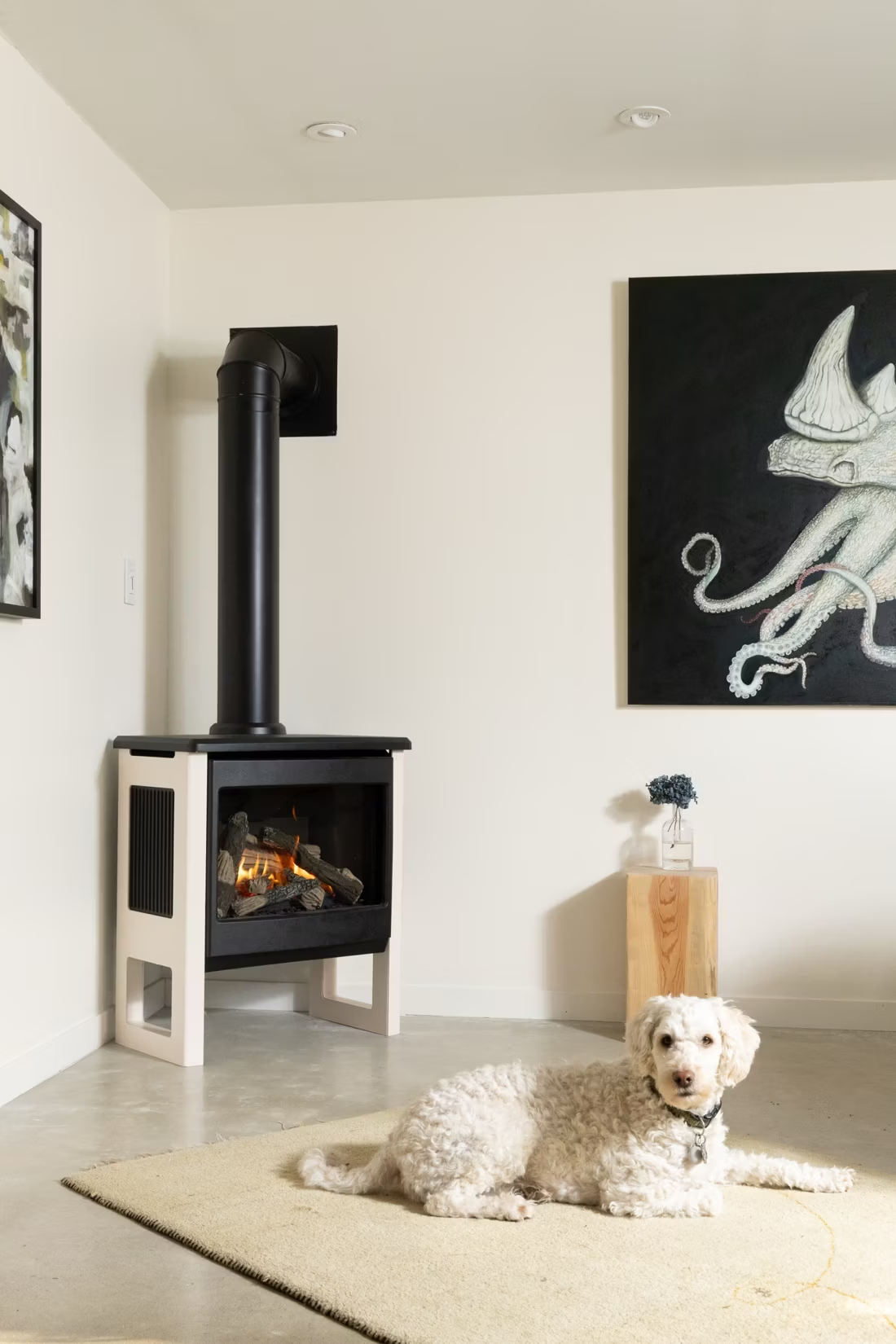
With a population this sparse, natural gas pipeline infrastructure barely reaches beyond the edges of the El Paso service area, so most Hudspeth County homes and ranches rely on propane delivered by tank rather than piped gas. That makes propane-fired fireplaces, inserts, and stoves the practical, reliable choice for supplemental or even primary heat—especially since propane keeps working during the winter power interruptions that occasionally hit rural feeder lines out toward Dell City and Esperanza. Electric heat is standard here too for homes with steady grid service, but propane gives ranch families a backup that doesn't depend on the grid staying up.
Three steps. No salesperson until you're ready.
Tell us about your project
Your zip code, your situation, and the fuel you're leaning toward—or let the answers point you to one.
See what's actually available
The brands dealers within 100 miles genuinely carry—real options, never a catalog mirage.
Get your dealer & Project Guide
A trusted local dealer, plus the free Project Guide & Parts List that names every component of the job.
Frequently Asked Questions
How much does a gas fireplace installation cost in Hudspeth County?
Costs in rural West Texas counties like Hudspeth generally run in the $3,500 to $9,000 range for a propane fireplace, insert, or stove, though the exact number depends heavily on whether you already have a propane tank and line in place. A propane insert going into an existing masonry fireplace with gas already run is on the lower end. A new freestanding unit at a ranch property without existing propane infrastructure—tank set, line run, and venting—lands toward the higher end. Because so few homes here are on piped natural gas, expect your installer to quote propane tank and delivery setup as part of the project if you don't already have service.
Should I use propane or natural gas for my fireplace?
For nearly all of Hudspeth County, propane is the answer. Piped natural gas service is essentially limited to areas close to the El Paso metro edge, and most homes in Sierra Blanca, Dell City, Fort Hancock, and the surrounding ranch land run on propane for cooking, water heating, and space heat already. A gas fireplace or insert here almost always means a propane-rated unit, either tied into an existing tank or set up with a new one by a local propane supplier. If you happen to be close enough to El Paso's gas footprint to have natural gas at the meter, your installer can configure most units for either fuel.
What size gas fireplace or insert do I need for my home?
Sizing depends on square footage, ceiling height, and how leaky the building envelope is—a real factor in a county with a lot of older mobile homes and ranch houses built decades ago without much insulation. A smaller direct-vent unit is usually plenty for a single living area or a compact home, while larger ranch houses or homes with open floor plans benefit from a bigger unit or a second zone-heat source in a far bedroom or addition. Because Hudspeth County winters are mild overall (Climate Zone 3B), most homeowners are sizing for comfort and backup heat during cold fronts rather than for extreme sustained cold—a local dealer can walk through your specific home during an in-home consultation.
Will my gas fireplace work if the power goes out?
Yes, in most cases. Units with intermittent pilot ignition (IPI) include a battery backup that kicks in automatically when grid power drops, so the fireplace still lights and runs on demand—just keep fresh batteries on hand. Valor fireplaces take a different approach: their pilot generates its own electricity through the thermocouple, so there are no batteries to maintain at all. That distinction matters out here—rural feeder lines serving Dell City, Esperanza, and the more remote parts of the county can see longer outage windows than in-town service, and a fireplace that runs without grid power or fresh batteries is a real advantage during a winter storm.
What's the difference between a gas fireplace, insert, and stove?
A gas fireplace is a built-in unit framed into a wall, typically used in new construction or a remodel. A gas insert is built to slide into an existing masonry fireplace opening, converting it into a sealed, efficient heat source that vents through the existing chimney. A gas stove is a freestanding cabinet-style unit that sits on the floor, similar to a wood stove but running on propane. For Hudspeth County homes with an existing wood-burning fireplace that rarely gets used, an insert is often the simplest upgrade. Ranch homes without an existing fireplace usually go with a freestanding stove or a new built-in unit instead.
Do I need a permit to install a gas fireplace in Hudspeth County?
Much of unincorporated Hudspeth County does not enforce a residential building code, so many rural installations don't require a county building permit the way they would in a city. That said, propane tank placement and gas line work still have to follow NFPA 58 setback and safety standards, which your propane supplier or installer will handle as a matter of course. If your property falls within Sierra Blanca or another incorporated area, check with local officials before installing—but for most ranch and rural properties in the county, the bigger compliance concern is proper propane tank siting and licensed gas-fitter work, not a permit application.
Vented vs. vent-free gas fireplaces—which should I choose?
Vented (direct-vent) units draw combustion air from outside and exhaust it back outside through sealed venting, which makes them the safer, more universally recommended choice regardless of climate. Vent-free units burn fuel directly into the room and are legal in Texas, but they release some combustion byproducts indoors and come with strict room-sizing and ventilation rules. In Hudspeth County's dry desert air, indoor humidity from a vent-free unit is rarely a comfort issue the way it can be in humid climates, but the combustion byproduct concern still applies. For most homes, a direct-vent propane fireplace or insert is the better long-term choice, especially in smaller, tightly sealed rooms common in older ranch construction.
How often should my gas fireplace be serviced?
An annual inspection is recommended for any propane appliance, including fireplaces, inserts, and stoves. A technician checks the burner, pilot assembly, gas connections, and venting, and cleans the glass and interior. This matters even more for propane systems with tanks exposed to Hudspeth County's temperature swings and dust, since fittings and regulators can be affected by heat cycling. Given the distance to certified service techs from more remote parts of the county—Dell City and Esperanza in particular—it's worth scheduling service in late summer or early fall before the first cold front, rather than waiting until a unit acts up mid-winter.
Why isn't wood heat more common in Hudspeth County?
Oak, pecan, and mesquite grow along the Rio Grande bosque near Fort Hancock and in scattered draws elsewhere in the county, and mesquite in particular is a familiar wood locally—mostly for grilling and smoking, not home heating. With mild Climate Zone 3B winters, no significant local timber industry, and no organized firewood supply chain, very few Hudspeth County homes are set up for wood-burning heat, and pellet stoves aren't a meaningful presence here either given the sparse population and lack of local retail support. Propane fireplaces and inserts fill that role instead, delivering reliable heat without needing a woodpile or a chainsaw.
What's the difference between an insert and a zero-clearance fireplace?
An insert is a fireplace that slides into a pre-existing wood-burning fireplace—if you don't have one, there's nothing to insert it into. A zero-clearance fireplace is built into a framed wall, which makes it the answer for remodels and new construction. Simple test: existing masonry fireplace means insert; blank or framed wall means zero-clearance.
Can I put a TV above my fireplace?
Yes—with an asterisk. Fireplaces are hot and TVs don't like heat. Either put a mantel between them to deflect rising warmth, or choose a fireplace with heat-management technology that creates a cool zone on the wall above—the wall stays around 125 degrees, barely warm, while the room still gets full heat. If you like clean lines and don't want a mantel, heat management is the answer.
Can a fireplace actually lower my heating bill?
Yes—by creating a comfort zone. A furnace heats every square foot of the house just to warm the one room you're in; a gas fireplace on low burns roughly a sixth of the gas a typical furnace does. Set the furnace around 55–60 degrees as a baseline, then heat the rooms your family actually uses. Families who heat this way commonly save $20–$60 a month.
What is an in-home preview and do I need one?
It's a visit where a hearth professional measures your space, confirms the model you picked actually works in your home, and walks the specs—framing, gas line, venting, finish work—before anything is ordered. Some details you just can't know until you see the house. Never make a down payment without one; it's the single most-skipped step that burns buyers.
Stove and Fireplace Dealers in Hudspeth County
Listings include WhyFire partner dealers, dealers we have verified as authorized for the brands we recommend, and established local businesses that carry hearth products. Every listing shows which one it is. The ones marked Preferred run on WhyFire's software, so they can show you real pricing and book your appointment right here. No manufacturer pays for placement. How we verify dealers →
Jack White Building Specialties
Southwest Chimney Sweeps Inc
Find your gas fireplace in Hudspeth County.
Tell us a bit about your home in Hudspeth County and we'll match you with a trusted local dealer, plus a free Project Guide & Parts List—the exact parts, vent kit included, for your specific project.
Find Your Fireplace →