
Instant heat for Howe's mild winters.
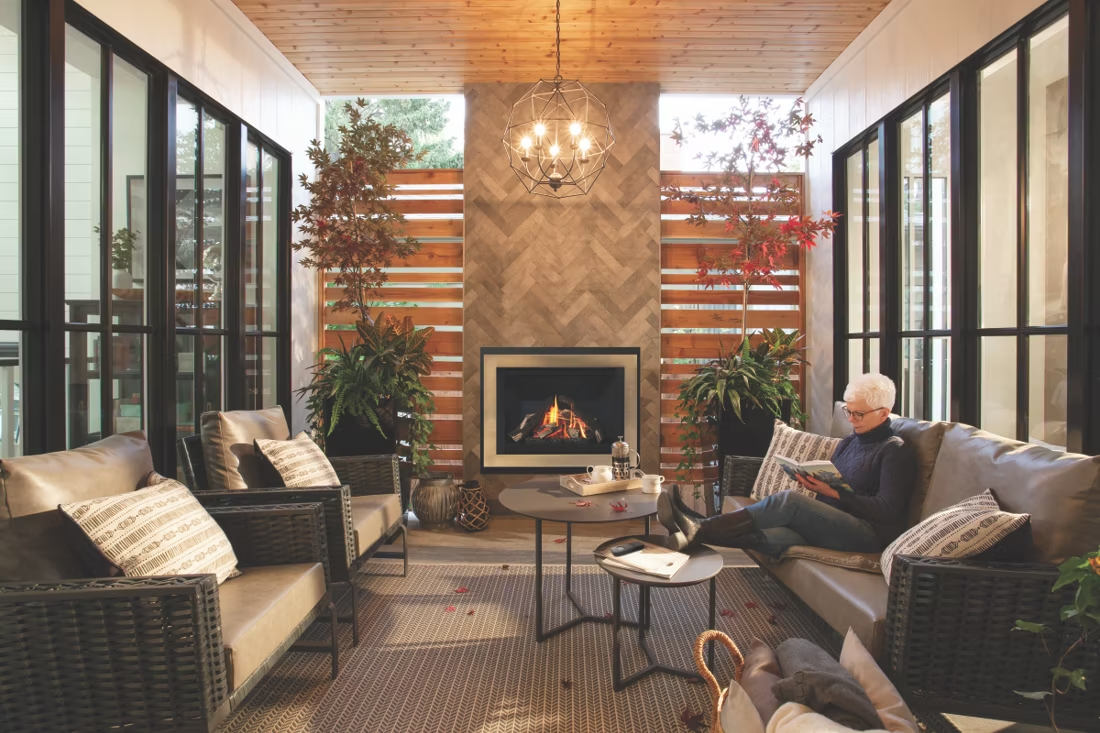
A flip-of-a-switch fire for the occasional cold snap and everyday ambiance. Find the right gas unit and connect with a trusted local dealer near Grayson County.
Every Project Starts From One of These Five Situations
Comfort heat, not survival heat.
Howe sits in Grayson County along the US-75 corridor between Sherman and the Dallas suburbs, in climate zone 3A. Winters here are mild by national standards—average lows sit around 34°F and the town has a light winter heating load, a fraction of what a place like Duluth, Minnesota racks up in a single hard winter. Nobody in Howe is heating a home through a subzero night; the appeal of a gas fireplace here is instant, clean warmth on the handful of genuinely cold days each winter, plus the visual and comfort value the rest of the year.
Because Howe is a small town of around 3,500 residents, gas service varies by address—some in-town properties have access to piped natural gas, while many homes on the outskirts and in unincorporated Grayson County run on propane tanks instead. Either fuel works fine in a modern direct-vent fireplace or insert. Electric service through Oncor Electric Delivery, Texas-New Mexico Power, or Denton County Electric Cooperative (depending on your exact address) keeps the lights on most of the year, but North Texas does see occasional ice storms that knock out power for days—which is exactly when a gas fireplace with battery-backup ignition earns its keep.
Three steps. No salesperson until you're ready.
Tell us about your project
Your zip code, your situation, and the fuel you're leaning toward—or let the answers point you to one.
See what's actually available
The brands dealers within 100 miles genuinely carry—real options, never a catalog mirage.
Get your dealer & Project Guide
A trusted local dealer, plus the free Project Guide & Parts List that names every component of the job.
Frequently Asked Questions
How much does a gas fireplace installation cost in Howe?
Expect a typical gas fireplace or insert installation in the Howe area to run somewhere between $3,000 and $8,500. The low end covers a direct-vent insert going into an existing masonry fireplace where propane or gas service is already run to the house. The high end covers new construction or a remodel where a contractor has to frame a chase, run new venting, and either extend a gas line or set a new propane tank. Homes outside Howe city limits on propane sometimes add tank rental or purchase costs on top of the install—your local dealer will spell that out during the in-home estimate.
Can I convert my existing wood-burning fireplace to gas?
Yes, and it's a common project in this part of Grayson County, where a lot of older homes were built with open masonry fireplaces meant for oak, pecan, or mesquite firewood. A gas insert or log set can go into that same firebox, using the existing chimney (often with a stainless liner) as the vent path. Since wood heat isn't really a practical necessity in Howe's mild winters, most homeowners making this switch are doing it for convenience and cleaner operation rather than giving up much in the way of heat output. Cost typically lands in the same $3,000–$8,500 range as a new install, depending on whether new gas or propane line work is needed.
Should I plan for natural gas or propane in Howe?
It depends on where in Howe you're located. Some in-town addresses have access to piped natural gas, while properties further out—including much of unincorporated Grayson County around Howe—rely on propane delivered by a local supplier and stored in an above-ground or buried tank. Both fuels work in the same fireplace models; your installer just sets the correct orifice and regulator for whichever you have. If you're unsure which service reaches your address, that's one of the first things a local hearth dealer will confirm before quoting the job.
Will my gas fireplace still work if the power goes out?
Most modern gas fireplaces will, which matters more in North Texas than people expect—ice storms occasionally take down power across Oncor, TNMP, and Denton County Electric Co-op territory for a day or more at a time. Units with intermittent pilot ignition (IPI) run on small AA batteries that kick in automatically when grid power drops, so the fireplace lights and heats the room just like normal. Valor fireplaces go a step further and generate their own electricity through the pilot's thermocouple, needing no batteries at all. Either option gives a Howe household a real source of heat and light during a winter outage—ask your local dealer which ignition system a given unit uses.
What's the difference between a gas fireplace, gas insert, and gas stove?
A gas fireplace is a fully built-in unit, framed into a wall—the right choice for new construction or a remodel. A gas insert drops into an existing masonry firebox, which fits a lot of Howe's older homes with wood fireplaces that see little actual use. A gas stove is a freestanding cabinet unit that sits out on a hearth pad, useful in a room that never had a fireplace at all, like a converted garage or an addition. For most homeowners here with an existing fireplace, an insert is the simplest upgrade; for a new room, a stove is often less invasive to install than a full built-in.
Do I need a permit to install a gas fireplace in Howe?
Generally yes—new gas fireplace installations require a building permit and gas line inspection, handled through the City of Howe if you're inside city limits or Grayson County if you're outside them. The gas or propane line connection has to be done by a licensed installer regardless of jurisdiction. Most hearth dealers who work in Grayson County pull these permits as part of the job, so you're not stuck coordinating the county office, a gas fitter, and an installer separately.
Are vent-free gas fireplaces a good option in Howe?
They're legal in Texas and can make sense here more than in colder states, since a vent-free unit is often installed for occasional ambiance rather than daily heating load. Vent-free fireplaces burn fuel directly into the room without external venting, so they must be sized correctly for the room and typically include an oxygen depletion sensor. Vented, direct-vent units remain the more common and more universally recommended choice—they draw combustion air from outside and vent exhaust back out, with no indoor air quality tradeoffs. Since Howe has no air quality non-attainment restrictions to navigate either way, the choice mostly comes down to installation flexibility versus the cleaner performance of a vented unit. A local dealer can walk through both for your specific room.
How often does a gas fireplace need to be serviced?
Plan on an annual inspection, even in a mild climate like Howe's where the unit might only run heavily a few weeks a year. A technician checks the burner, pilot assembly, gas connections, and venting, and cleans the glass and interior. Because gas fireplaces here often see light, seasonal use rather than daily winter duty, it's easy to let service slide—but a yearly check, usually $150–$250, catches pilot and ignition issues before they turn into a no-heat situation during that one week in January when you actually need it.
Should I even consider wood, or is gas the better fit for Howe?
For most Howe homeowners, gas is the more practical choice. With average winter lows around 34°F and a light winter heating load overall, this area simply doesn't demand the sustained heat output that makes wood stoves the backbone of home heating in colder parts of the country. Wood-burning fireplaces still exist here, often burning local oak, pecan, or mesquite, but they're used more for atmosphere on a cool evening than for keeping a house warm. Gas delivers that same evening-fire experience without hauling wood or cleaning ash, plus the option of instant heat during a winter power outage if you choose a battery-backup or self-powered ignition system.
Why is my open fireplace making my house colder?
Open fireplaces suck—literally. As the fire burns, it consumes air your furnace already paid to heat and pulls it out through the chimney, so the house is actually colder after the fire goes out than before you lit it. An insert fixes this: it seals the chimney, puts fixed glass across the front, and turns that hole in your house into a real heat source.
Is my gas fireplace wasting gas?
If it was installed more than 15 years ago, probably. Older gas fireplaces keep a standing pilot light burning all the time, and that little flame can cost a couple hundred dollars a year. Newer models use pilot-on-demand ignition—the pilot lights only when you use the fireplace and goes out when you turn it off.
Can a fireplace actually lower my heating bill?
Yes—by creating a comfort zone. A furnace heats every square foot of the house just to warm the one room you're in; a gas fireplace on low burns roughly a sixth of the gas a typical furnace does. Set the furnace around 55–60 degrees as a baseline, then heat the rooms your family actually uses. Families who heat this way commonly save $20–$60 a month.
Can I install a fireplace myself?
If you're putting a fire in your house on purpose, it's best to work with an expert. Unless you're genuinely experienced in framing, gas line, vent pipe, and the national code on clearances to combustibles, have a professional do it—and ideally the same company that sells you the fireplace, so warranty, service, and liability all live under one roof.
Nearby Dealers
Hearth shops serving Howe and the surrounding area. Every listing shows whether it is a WhyFire partner, a dealer we have verified as authorized for the brands we recommend, or a local business carrying hearth products. No manufacturer pays for placement. How we verify dealers →
Fan & Flame
Ntx Bbq Supply
Sweeps N Ladders
Polar Bear Chimney Sweep
Heffley's Hearth & Home
Nolen's Home Market
Find your gas fireplace in Howe.
Tell us a bit about your home and we'll put together a free Project Guide & Parts List—the right gas fireplace or insert, the exact vent kit and parts, and a trusted local dealer near Howe to install it.
Find Your Fireplace →