
Warmth without the woodpile in Houston County.
With winters this mild—average lows near 36°F and only a light dusting of chilly nights each year—an electric fireplace gives Houston County homes real supplemental warmth and the look of a fire, with no chimney, no venting, and no wood to split. Find the right unit and connect with a trusted local dealer.
Every Project Starts From One of These Five Situations
Mild winters, modern convenience.
Houston County sits in the Piney Woods of East Texas, a climate zone 2A county where winter lows average around 36°F and the heating season is short—just a light dusting of chilly nights each year, a fraction of what a place like Duluth or Fargo racks up in a single hard month. Oak, pecan, and mesquite are common locally and plenty of Houston County households still burn wood for tradition or backup heat, but for day-to-day comfort in a living room, sunroom, or home office, many homeowners around Crockett and the smaller communities scattered through the county are turning to electric fireplaces instead.
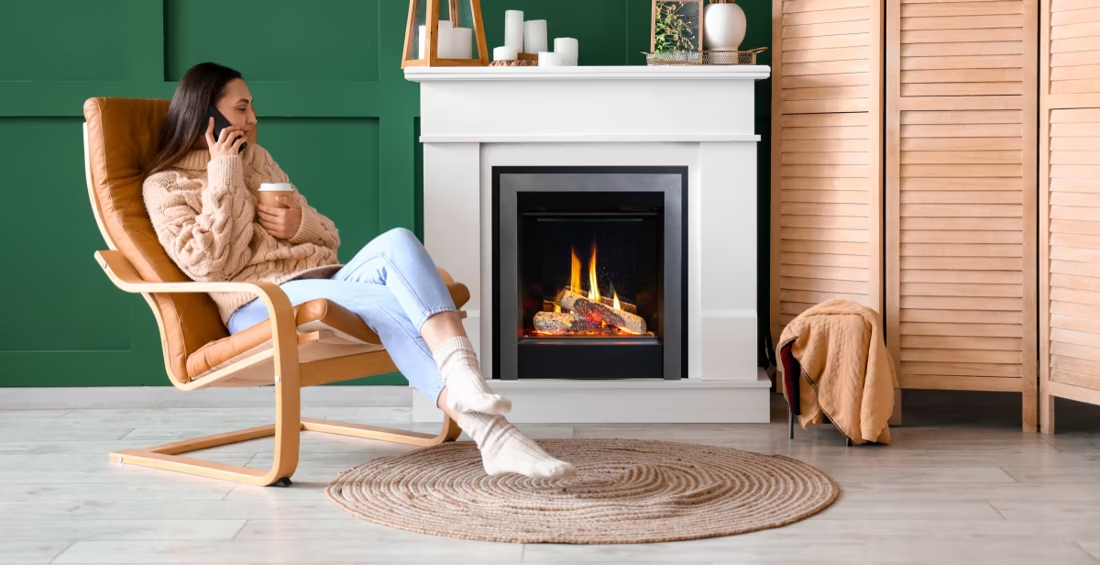
An electric fireplace or insert plugs into (or is wired to) a standard outlet, produces real supplemental heat for a room, and skips the chimney, venting, and combustion-air requirements that come with wood or gas. That matters in a county this size—with roughly 9,500 residents spread across small towns and rural properties served by Houston County Electric Cooperative, finding a local installer who also handles gas line work or masonry chimney repair isn't always straightforward, but nearly any qualified electrician or hearth dealer can handle an electric unit cleanly and quickly. For older farmhouses, manufactured homes, and rental properties throughout the county, that simplicity is often the deciding factor.
Three steps. No salesperson until you're ready.
Tell us about your project
Your zip code, your situation, and the fuel you're leaning toward—or let the answers point you to one.
See what's actually available
The brands dealers within 100 miles genuinely carry—real options, never a catalog mirage.
Get your dealer & Project Guide
A trusted local dealer, plus the free Project Guide & Parts List that names every component of the job.
Frequently Asked Questions
How much does an electric fireplace installation cost in Houston County?
Plug-in electric fireplace inserts and stoves are the most affordable option, typically running $200 to $1,500 installed since most simply slide into an existing opening or sit against a wall on a standard 120-volt circuit. Built-in linear or wall-mounted units that require framing, a recessed opening, or a new dedicated circuit run higher—often $2,000 to $4,000 once an electrician is involved. Given Houston County's mild winters, most homeowners here are buying for supplemental heat and ambiance rather than a whole-home heating solution, which keeps most projects toward the lower end of that range.
What size electric fireplace do I need for a Houston County home?
Because winter lows in Houston County average around 36°F and hard freezes are the exception rather than the rule, most homeowners size an electric fireplace for a single room rather than the whole house—a 1,500-watt unit comfortably supplements heat in a living room or den up to roughly 400 square feet. Larger built-in units with higher wattage can stretch further, but few Houston County homes need the heat output that would be standard equipment in a colder climate zone. A local dealer can size the unit to your specific room rather than the whole home's square footage.
Do I need a permit to install an electric fireplace in Houston County?
In most cases, no—a plug-in electric fireplace insert or stove doesn't require a building permit since there's no venting, gas line, or structural chimney work involved. If your installation involves adding a new dedicated electrical circuit or wall-mounting a built-in unit that requires an electrician to run new wiring, that electrical work may need a permit through the local jurisdiction, and a licensed electrician will typically pull it as part of the job. This is one of the simplest fuel types to install specifically because it sidesteps the combustion permitting that wood and gas installations require in Texas.
Electric vs. wood—which makes more sense in Houston County?
Wood heat has deep roots in this part of East Texas—oak, pecan, and mesquite are all common locally and burn well, and a wood stove or fireplace still works during a power outage, which matters if an ice storm knocks out lines. But with a heating season made up of only a light dusting of chilly nights each year and lows rarely dropping much below the mid-30s, most Houston County homes don't need wood as a primary heat source the way a colder climate would. Electric fireplaces make sense as the lower-maintenance option for everyday ambiance and light supplemental warmth, while a wood stove remains a smart backup for the occasional ice event or extended outage.
Will an electric fireplace actually heat my home during a Houston County cold snap?
An electric fireplace is built for supplemental heat, not whole-house heating, but in a county where winter lows average around 36°F and only dip toward freezing on the occasional night, that's usually all the extra warmth a room needs. A 1,500-watt unit can meaningfully raise the temperature in a den, bedroom, or sunroom during a cold front, working alongside your central HVAC rather than replacing it. If your household loses power during an ice storm, remember that electric units—unlike wood stoves—won't run at all without electricity, so it's worth keeping that in mind if backup heat is a priority.
What's the difference between an electric insert, wall-mount, and freestanding stove?
An electric insert is built to slide into an existing fireplace opening, masonry or zero-clearance, and is a popular choice for Houston County homes that already have a fireplace but want to retire the wood-burning and ash cleanup. A wall-mounted or built-in linear unit is designed into new construction or a remodel—often a modern, low-profile look for a great room or primary bedroom. A freestanding electric stove looks like a traditional wood stove but plugs in, which works well in a room without any existing fireplace or chimney, including many of the manufactured and mobile homes common throughout the county.
Do I need a dedicated electrical circuit for my electric fireplace?
Small plug-in units under 1,500 watts generally run fine on a standard household circuit, as long as it isn't already loaded down with other appliances. Larger built-in units, or any installation where the fireplace will run for extended periods as supplemental heat, often call for a dedicated 20-amp circuit to avoid tripping breakers. Houston County Electric Cooperative serves most of the county outside city limits, and a licensed electrician can confirm whether your home's existing panel and wiring can support the unit you're considering before installation day.
How much does it cost to run an electric fireplace in Houston County?
A typical 1,500-watt electric fireplace costs roughly 15 to 20 cents an hour to run at full heat, depending on your rate through Houston County Electric Cooperative or your city provider if you're inside Crockett limits. Because Houston County's heating season is short—just a light dusting of chilly nights each year—most households aren't running these units around the clock for months at a time the way a colder climate would. Running one for a few hours on cool evenings from November through February typically adds only a modest amount to a monthly bill.
Electric vs. pellet stove—which is right for my home?
Pellet stoves, using bagged pellets from brands like Forest Energy or Lignetics, burn real fuel and put out more heat than an electric unit, but they require a vent, an annual cleaning, and electricity to run the auger and blower regardless. Electric fireplaces skip the venting and fuel handling entirely, which is appealing for a county with mild winters where heavy-duty heat output usually isn't the goal. If you want the ritual of a real flame and more substantial heat output for occasional cold snaps, pellet is worth a look; if convenience and simple installation matter more, electric is generally the easier path in Houston County.
Do electric fireplaces actually produce heat?
Yes—most put out around 4,800–5,000 BTUs from a standard outlet, which comfortably warms a bedroom, office, or den as a comfort-zone heater. What they won't do is carry a whole house the way wood, gas, or pellet can. Think of electric as ambiance-first with honest supplemental heat: flames on with no heat in July, flames plus warmth in January.
Can I put a TV above my fireplace?
Yes—with an asterisk. Fireplaces are hot and TVs don't like heat. Either put a mantel between them to deflect rising warmth, or choose a fireplace with heat-management technology that creates a cool zone on the wall above—the wall stays around 125 degrees, barely warm, while the room still gets full heat. If you like clean lines and don't want a mantel, heat management is the answer.
What is an in-home preview and do I need one?
It's a visit where a hearth professional measures your space, confirms the model you picked actually works in your home, and walks the specs—framing, gas line, venting, finish work—before anything is ordered. Some details you just can't know until you see the house. Never make a down payment without one; it's the single most-skipped step that burns buyers.
Can a fireplace actually lower my heating bill?
Yes—by creating a comfort zone. A furnace heats every square foot of the house just to warm the one room you're in; a gas fireplace on low burns roughly a sixth of the gas a typical furnace does. Set the furnace around 55–60 degrees as a baseline, then heat the rooms your family actually uses. Families who heat this way commonly save $20–$60 a month.
Stove and Fireplace Dealers in Houston County
Listings include WhyFire partner dealers, dealers we have verified as authorized for the brands we recommend, and established local businesses that carry hearth products. Every listing shows which one it is. The ones marked Preferred run on WhyFire's software, so they can show you real pricing and book your appointment right here. No manufacturer pays for placement. How we verify dealers →
Fieldstone & Fireplaces
East Texas Brick Co.
Tdi Air Conditioning
Aaa Overhead Door Company
Tri-Supply - Conroe
Fireplace & Patio Shop
Lyne Home Products
The Chimney Guy -Seven Points
Clay Structures Inc
All Fired Up Fireplace & Outdoor
Creekstone Outdoors
Find your electric fireplace in Houston County.
Tell us a bit about your home and we'll put together a free Project Guide & Parts List—the right electric fireplace or insert for your space, plus a trusted local dealer to install it.
Find Your Fireplace →