
Add Real Warmth to Highlands Without the Vent Work.
With winter lows averaging just 41°F, Highlands doesn't need a wood stove or gas line—it needs a fireplace that plugs in and looks good year-round. We'll match you with a local dealer who can size and install it right.
Every Project Starts From One of These Five Situations
A mild Gulf Coast climate with modest heating needs.
Highlands sits at just 33 feet of elevation along the San Jacinto River east of Houston, in a climate zone (2A) built for air conditioning, not furnaces. With only about 1,436 heating degree days a year and average winter lows in the low 40s, most homes here run a heat pump or central system for the handful of genuinely cold nights each winter. Wood stoves and pellet stoves are essentially nonexistent in this part of Harris County—there's no cutting-permit culture, no cordwood supply chain, and no real heating need to justify the chimney work. Electric fireplaces fill a real gap instead: ambiance most of the year, with enough supplemental heat to take the chill off a guest room, sunroom, or primary bedroom when a January cold front rolls through.
Because electric units don't need a flue, a gas line, or masonry, they install almost anywhere—a stud wall, a media console cutout, or a recessed niche in new construction. Electricity in Highlands comes through CenterPoint Energy or Entergy Texas depending on your exact location, with residential rates running roughly 13.7 to 14.2 cents per kWh, so even daily use for ambiance adds only a few dollars a month to the bill. The tradeoff worth knowing upfront: an electric fireplace draws from the same grid as everything else in your house, so during a widescale outage—the kind Harris County saw during Winter Storm Uri in February 2021—it won't run without a generator or battery backup, unlike a wood stove.
Three steps. No salesperson until you're ready.
Tell us about your project
Your zip code, your situation, and the fuel you're leaning toward—or let the answers point you to one.
See what's actually available
The brands dealers within 100 miles genuinely carry—real options, never a catalog mirage.
Get your dealer & Project Guide
A trusted local dealer, plus the free Project Guide & Parts List that names every component of the job.
Frequently Asked Questions
How much does it cost to install an electric fireplace in Highlands?
Plug-in electric fireplaces and stoves that just need a standard 120V outlet typically run $200 to $800 for the unit, with little to no install labor if you're placing it against an existing wall outlet. Built-in electric fireplaces or wall inserts that require a dedicated circuit, in-wall wiring, or custom framing for a mantel surround usually land between $1,500 and $4,000 installed, depending on whether an electrician needs to run new wiring. Because Highlands homes rarely have existing chimneys to retrofit, most electric installs here are new builds or media wall conversions rather than insert replacements.
Do I need a permit to install an electric fireplace in Highlands?
Highlands is unincorporated, so permitting for home electrical work falls under Harris County's permit office rather than a city building department. A simple plug-in unit generally doesn't trigger a permit. If your project involves running a new dedicated circuit, adding a 240V line for a larger built-in unit, or cutting into a wall for a recessed installation, that electrical work typically does require a permit and should be pulled by a licensed electrician—most local dealers coordinate this as part of the install rather than leaving it to the homeowner.
Will an electric fireplace actually heat my home in Highlands?
For whole-home heat, no—electric fireplaces are built for zone heating, typically 400 to 1,500 watts, enough to warm a single room by a few degrees. But given that Highlands only sees about 1,436 heating degree days a year and winter lows average 41°F, that's usually plenty. Most homeowners here use an electric unit to take the edge off a bedroom or sunroom on the coldest nights while their central heat pump handles the rest of the house, rather than relying on it as a primary heat source the way a homeowner in a place like Duluth or Fargo would need to with a wood stove.
What's the difference between a plug-in electric fireplace and a built-in insert?
A plug-in electric fireplace or stove is freestanding or wall-mounted and runs off a standard outlet—no wiring changes needed, and it can move with you if you relocate. A built-in electric insert or linear unit is installed into a wall cavity or custom cabinetry, often on its own dedicated circuit, and is designed to look permanent, similar to a gas fireplace. For Highlands homeowners doing a media wall or fireplace feature in a living room, a built-in linear unit tends to look more finished; for a bedroom, sunroom, or rental property, a freestanding plug-in unit gets you most of the benefit with far less work.
How much does it cost to run an electric fireplace on my Highlands electric bill?
Most electric fireplaces draw around 1,500 watts on the heat setting. At CenterPoint Energy's typical residential rate near 13.7 cents per kWh, running a unit for 5 hours a day costs roughly $10 to $12 a month; at Entergy Texas rates closer to 14.2 cents per kWh, expect slightly more. Running the flame effect alone without heat—common for ambiance during Highlands's long mild season—draws only 30 to 100 watts and costs pennies a day. Either way, it's far cheaper to operate than most homeowners expect, especially compared to running central heat for the same purpose.
Will my electric fireplace work during a power outage?
No—electric fireplaces run entirely on grid power, so they'll go dark along with everything else in your home during an outage. Harris County residents who lived through Winter Storm Uri in February 2021 know this firsthand: homes with gas or wood-burning appliances had a fallback heat source, homes relying solely on electric heat did not. If backup heat during outages is a priority for your Highlands home, a local dealer can walk you through a battery backup option or point you toward a propane or natural gas unit as a secondary source alongside your electric fireplace.
Is an electric fireplace a good fit for manufactured or mobile homes in Highlands?
Yes—this is actually one of the strongest use cases for electric units in this part of Harris County, where manufactured and modular homes are common. Electric fireplaces don't require the wall penetrations, roof jacks, or clearance-to-combustible rules that wood or gas units need, which makes them far simpler to install in a manufactured home's thinner wall assemblies. A local dealer can confirm which freestanding or built-in models are rated for manufactured housing and help you avoid units that assume standard stick-frame wall depth.
Electric vs. gas—which is right for my Highlands home?
Gas fireplaces, which are common and well-supported in this area through CenterPoint Energy's natural gas network, put out real heat (typically 20,000-40,000 BTU) and can double as a legitimate secondary heat source. Electric fireplaces put out far less heat but cost less upfront, need no venting or gas line, and install almost anywhere. For Highlands's mild climate, where the fireplace is doing more ambiance work than actual heating most of the year, electric is often the simpler and cheaper choice for a bedroom, den, or accent wall. For a primary living space where you want the fireplace to genuinely contribute to comfort on cold fronts, gas is usually the better fit.
What size electric fireplace do I need for my room?
Sizing an electric fireplace is mostly about visual scale rather than BTU output, since heating a whole room isn't usually the goal in Highlands's climate. A good rule of thumb is 1 inch of fireplace width for every 1 to 1.5 square feet of wall it's mounted on—a 12-foot living room wall typically suits a 50- to 60-inch linear unit, while a bedroom accent wall might only need a 36- to 40-inch model. If supplemental heat for a specific room matters to you, look for a unit with a stated heating capacity in square feet rather than assuming bigger automatically means warmer; most 1,500-watt units are rated for 400 to 1,000 square feet regardless of physical size.
Can I put a TV above my fireplace?
Yes—with an asterisk. Fireplaces are hot and TVs don't like heat. Either put a mantel between them to deflect rising warmth, or choose a fireplace with heat-management technology that creates a cool zone on the wall above—the wall stays around 125 degrees, barely warm, while the room still gets full heat. If you like clean lines and don't want a mantel, heat management is the answer.
Does an electric fireplace need a vent or chimney?
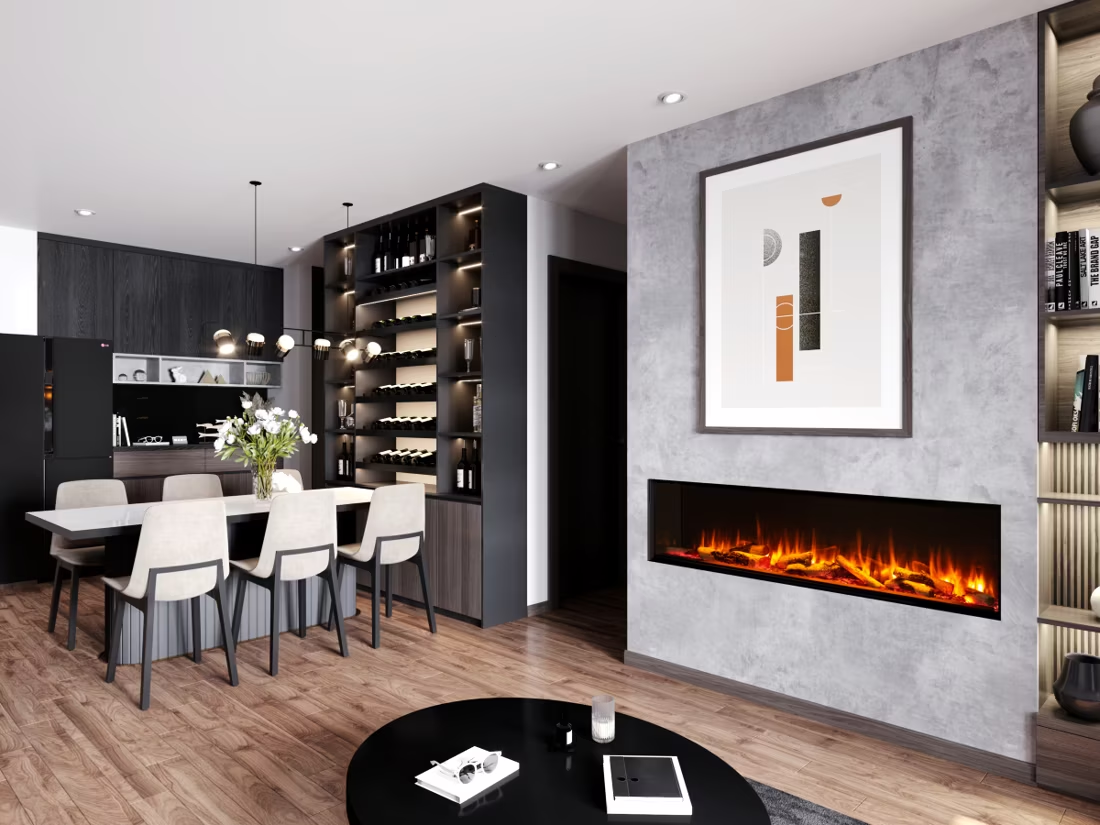
No—that's its superpower. An electric fireplace needs a wall and an outlet, period. No vent pipe, no gas line, no clearances to design around, which is why it works in bedrooms, offices, apartments, and walls where venting a gas or wood unit would be impractical or impossible. Installation is typically the simplest and least expensive of any fireplace type.
What is an in-home preview and do I need one?
It's a visit where a hearth professional measures your space, confirms the model you picked actually works in your home, and walks the specs—framing, gas line, venting, finish work—before anything is ordered. Some details you just can't know until you see the house. Never make a down payment without one; it's the single most-skipped step that burns buyers.
Can a fireplace actually lower my heating bill?
Yes—by creating a comfort zone. A furnace heats every square foot of the house just to warm the one room you're in; a gas fireplace on low burns roughly a sixth of the gas a typical furnace does. Set the furnace around 55–60 degrees as a baseline, then heat the rooms your family actually uses. Families who heat this way commonly save $20–$60 a month.
Nearby Dealers
Hearth shops serving Highlands and the surrounding area. Every listing shows whether it is a WhyFire partner, a dealer we have verified as authorized for the brands we recommend, or a local business carrying hearth products. No manufacturer pays for placement. How we verify dealers →
The Fire Box Inc.
South Texas Brick
USA Supreme Services, LLC
Tru Lite Gas Products
Patio 1
EarthCore Industries
Creekstone Custom
Creekstone Outdoors
Cunningham Gas Products
All Thingz U Need Inc
Patio 1
Electric Service in Highlands
An electric fireplace's heater draws about 1,500 watts—pennies per hour at local rates.
Entergy Texas Inc.
San Bernard Electric Coop, Inc
Find your electric fireplace in Highlands.
Tell us about your room, your wiring situation, and what you're hoping to get out of it, and we'll put together a free Project Guide & Parts List for your Highlands project—the right unit, the wiring requirements, and a trusted local dealer to install it.
Find Your Fireplace →