
Warmth on Demand, Built for the Valley's Mild Winters.
Electric fireplaces suited to Hidalgo's short, mild heating season—plug-in ambiance with a real heat boost when a cold front actually rolls through the Rio Grande Valley.
Every Project Starts From One of These Five Situations
Electric heat matches how little heat Hidalgo actually needs.
Hidalgo sits in the Rio Grande Valley at just 98 feet of elevation, one of the mildest heating climates in the continental United States. With an average winter low of 53°F and only a very short, mild heating season each year, this is about as far as you can get from the cordwood-and-catalytic-stove climate of a place like International Falls, Minnesota, which faces a winter heating load many times greater most winters. Local hardwoods like oak, pecan, and mesquite are prized around here for smoking brisket, not for keeping a house warm through January—there just isn't enough cold most winters to justify a wood-burning setup.
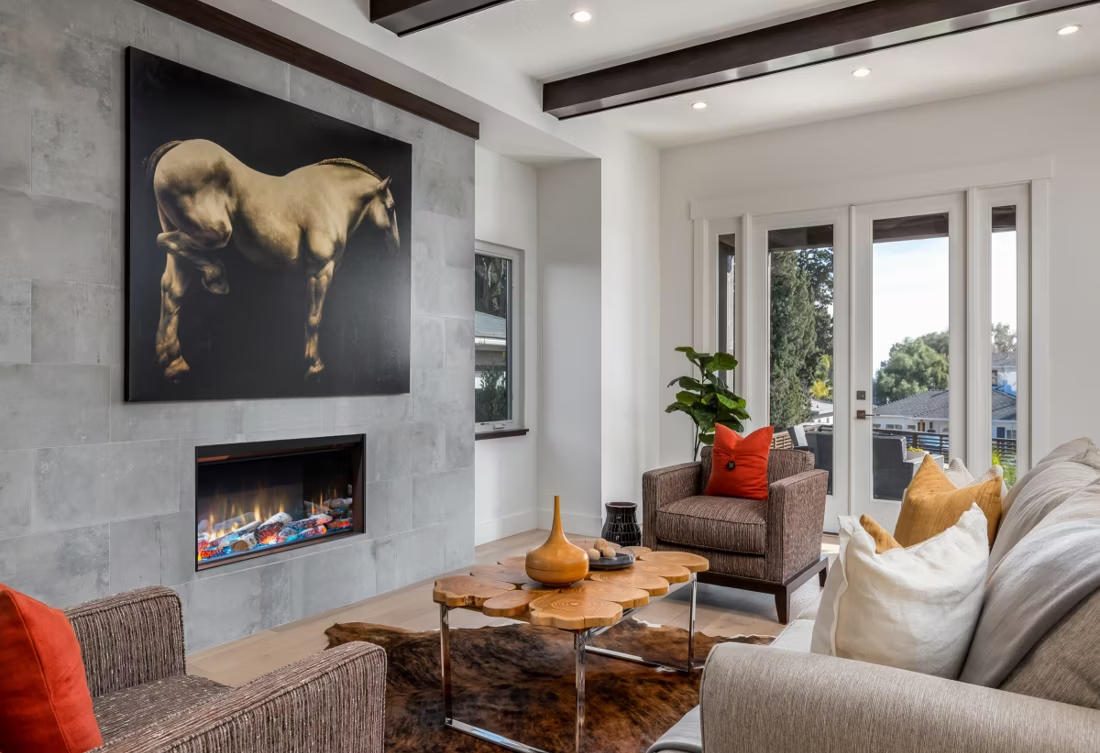
That's exactly why electric fireplaces make sense in Hidalgo. There's no chimney to build, no gas line to run, and no wood to stack—just a unit that plugs in or ties into a dedicated circuit and delivers instant ambiance with a boost of heat on the handful of nights each winter that actually call for it. AEP Texas Central, Oncor Electric Delivery, and Magic Valley Electric Cooperative all serve homes in and around Hidalgo, and at a residential rate near 10.2 cents per kWh, running a 1,500-watt electric fireplace costs roughly 15 cents an hour—cheap enough to leave on for the ambiance alone.
Three steps. No salesperson until you're ready.
Tell us about your project
Your zip code, your situation, and the fuel you're leaning toward—or let the answers point you to one.
See what's actually available
The brands dealers within 100 miles genuinely carry—real options, never a catalog mirage.
Get your dealer & Project Guide
A trusted local dealer, plus the free Project Guide & Parts List that names every component of the job.
Frequently Asked Questions
How much does an electric fireplace installation cost in Hidalgo?
Electric fireplace installation in Hidalgo is far less involved—and less expensive—than wood or gas. A basic plug-in insert or freestanding unit typically runs $200 to $600 installed, since it just needs a standard 120-volt outlet. A built-in wall unit or a full mantel package with a linear electric firebox usually falls between $1,200 and $3,500, mostly driven by carpentry and, if you don't already have an outlet in place, the cost of an electrician running a dedicated circuit. There's no venting, chimney, or gas line to budget for, which is a big part of why electric costs less here than in colder markets.
Do I need a permit to install an electric fireplace in Hidalgo?
Most electric fireplace installs in Hidalgo don't require a permit at all, since there's no combustion, venting, or gas line involved—a plug-in unit is treated like any other appliance. If you're adding a built-in unit that needs a new dedicated electrical circuit, that portion of the work typically does need an electrical permit through the City of Hidalgo Building Department, and it should be pulled by a licensed electrician regardless of whether the paperwork is technically required.
Why is electric more common than wood-burning stoves in Hidalgo?
Hidalgo's climate simply doesn't generate the heating demand that wood or pellet stoves are built for—with only a very short, mild heating season each year and winter lows that average 53°F, a cordwood stove sized for a Rio Grande Valley home would rarely get used enough to justify the chimney, the wood storage, or the smoke. Oak, pecan, and mesquite are abundant locally, but you'll find them in backyard smokers far more often than woodstoves. Electric fireplaces fit the actual use case here: mostly ambiance, with a real heat boost on the occasional cold snap.
Will an electric fireplace still work if the power grid goes down?
It's worth being honest about this: an electric fireplace depends entirely on grid power, so during a wide-scale outage—like the February 2021 winter storm that knocked out power across much of Texas, including areas served by AEP Texas Central and other Rio Grande Valley utilities—an electric unit won't run at all. If backup heat during a grid failure is a real concern for your household, a vented gas fireplace with battery-backed ignition is a better hedge. For everyday ambiance and supplemental warmth in a normal Hidalgo winter, electric is the simpler, cheaper choice.
How much does it cost to run an electric fireplace in Hidalgo?
At the Rio Grande Valley's typical residential rate of about 10.2 cents per kWh, a standard 1,500-watt electric fireplace costs roughly 15 cents an hour to run on heat mode, or well under a penny an hour for just the flame effect without heat. Whether you're billed through AEP Texas Central, Oncor, or Magic Valley Electric Cooperative depends on your exact address in Hidalgo County, but the rates are close enough that it doesn't meaningfully change the math.
Electric vs. gas fireplace—which is right for my Hidalgo home?
Gas is also a solid option in Hidalgo, and plenty of homes here have natural gas or propane service. Gas fireplaces put out real, sustained heat and can keep working during a power outage with the right ignition system, which matters given Texas's grid history. Electric fireplaces cost less to install, need no venting or gas line, and can go anywhere there's an outlet—including apartments, interior walls, and rentals where gas isn't an option. For a home used mainly for ambiance and light supplemental heat, electric is usually the simpler and cheaper route; for a household that wants real backup heat during outages, gas is worth the extra investment.
Can I install an electric fireplace in a home that never had a chimney?
Yes—this is one of the biggest advantages of electric in a market like Hidalgo, where a lot of homes were built without a fireplace or chimney at all. An electric insert, wall-mounted linear unit, or mantel package can go into almost any interior wall or existing opening without masonry work, roof penetration, or venting. That makes it a realistic option for homes that could never justify building a chimney for the handful of cold nights South Texas gets each year.
What type of electric fireplace works best for a Hidalgo home?
For most Hidalgo homes, a wall-mounted linear electric fireplace is the popular choice—it delivers a modern look with minimal installation and doesn't require structural changes. Recessed inserts that fit into an existing wall cavity or mantel package units styled like a traditional fireplace are common too, especially for living rooms that want a more classic look. Brands like Dimplex, Touchstone, and Napoleon all make units sized for both small supplemental spaces and larger great rooms—a local dealer can help match wattage and size to your room.
Is an electric fireplace enough heat for a Hidalgo winter?
For the vast majority of Hidalgo winters, yes. With an average winter low around 53°F and a heating season that barely lasts through the year, a 1,500-watt electric fireplace is plenty to take the chill off a room on a cool December or January evening. Central air conditioning systems here already include heat strips or a heat pump for the handful of colder days, so the fireplace's job is mostly ambiance with a bit of supplemental warmth—not carrying a full heating load the way it would in a colder climate.
Does an electric fireplace need a vent or chimney?
No—that's its superpower. An electric fireplace needs a wall and an outlet, period. No vent pipe, no gas line, no clearances to design around, which is why it works in bedrooms, offices, apartments, and walls where venting a gas or wood unit would be impractical or impossible. Installation is typically the simplest and least expensive of any fireplace type.
Do electric fireplaces actually produce heat?
Yes—most put out around 4,800–5,000 BTUs from a standard outlet, which comfortably warms a bedroom, office, or den as a comfort-zone heater. What they won't do is carry a whole house the way wood, gas, or pellet can. Think of electric as ambiance-first with honest supplemental heat: flames on with no heat in July, flames plus warmth in January.
Can a fireplace actually lower my heating bill?
Yes—by creating a comfort zone. A furnace heats every square foot of the house just to warm the one room you're in; a gas fireplace on low burns roughly a sixth of the gas a typical furnace does. Set the furnace around 55–60 degrees as a baseline, then heat the rooms your family actually uses. Families who heat this way commonly save $20–$60 a month.
Does a fireplace add value to my home?
On average, a fireplace adds back to the home about the same amount you spent installing it. Add the monthly savings from heating the rooms you actually use instead of the whole house—often hundreds of dollars a year—and the value case is strong before you even count what a fire does for how your family uses the room.
Nearby Dealers
Hearth shops serving Hidalgo and the surrounding area. Every listing shows whether it is a WhyFire partner, a dealer we have verified as authorized for the brands we recommend, or a local business carrying hearth products. No manufacturer pays for placement. How we verify dealers →
Grill Street Outdoor Kitchens
Electric Service in Hidalgo
An electric fireplace's heater draws about 1,500 watts—pennies per hour at local rates.
Aep Texas Central Company
Oncor Electric Delivery Company LLC
Magic Valley Electric Coop Inc
Find your electric fireplace in Hidalgo.
Tell us a bit about your home and we'll match you with a trusted local dealer and send you a free Project Guide & Parts List for your electric fireplace project in Hidalgo.
Find Your Fireplace →