
Heat your home with the gas that built this county.
Instant heat for a county that produces more gas than most Texans ever think about—from Canadian's municipal natural gas lines to propane tanks out on the ranch. Find the right gas fireplace, insert, or stove, and connect with a trusted local dealer.
Every Project Starts From One of These Five Situations
Gas fits the Panhandle better than a wood pile ever could.
Hemphill County sits in the eastern Texas Panhandle, anchored by Canadian on the banks of the Canadian River, with a population of just 2,330 spread across ranch land, wheat country, and the rolling breaks along the river. Winters here are short and comparatively mild by Panhandle standards—the average winter low sits around 23°F, and the county logs roughly 4,175 heating degree days a year, meaning real cold shows up in bursts rather than settling in for months. The grassland and mesquite-brush terrain means standing timber is scarce; the oak, pecan, and mesquite that do grow along the river bottoms are more valued locally for smoking meat than for heating a house, so wood stoves and pellet stoves see little use here.
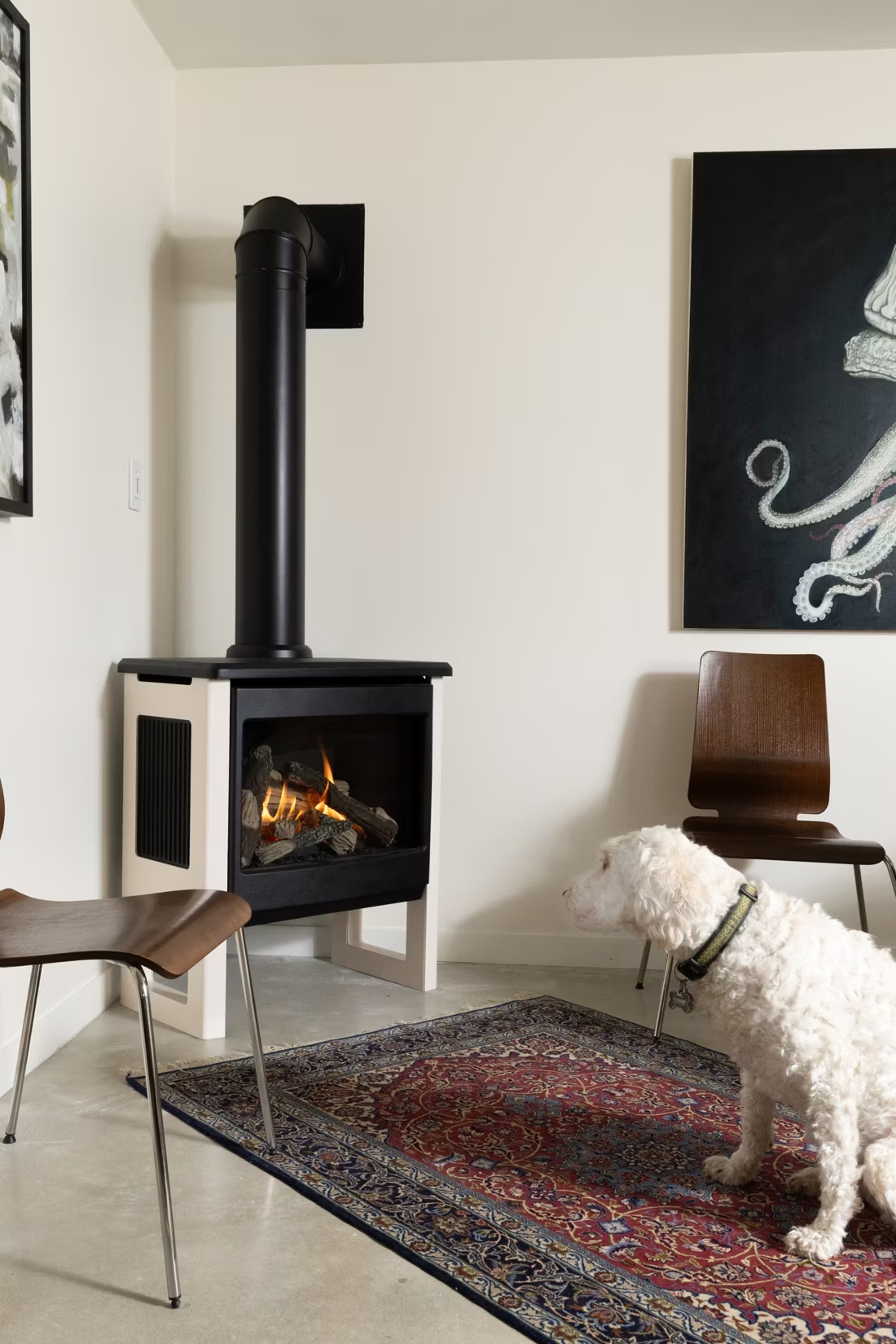
What the county lacks in trees, it makes up for in gas. Hemphill County sits atop part of the Anadarko Basin, one of the most productive natural gas fields in the country, and Canadian's municipal utility draws on that same resource to supply natural gas within city limits. Outside town, on the ranches and homesteads that make up most of the county, propane fills the gap. With no air quality restrictions or burn advisories to worry about, a gas fireplace or insert gives Hemphill County homeowners instant, reliable heat for the cold snaps that do roll through—without hauling wood or feeding a pellet hopper.
Three steps. No salesperson until you're ready.
Tell us about your project
Your zip code, your situation, and the fuel you're leaning toward—or let the answers point you to one.
See what's actually available
The brands dealers within 100 miles genuinely carry—real options, never a catalog mirage.
Get your dealer & Project Guide
A trusted local dealer, plus the free Project Guide & Parts List that names every component of the job.
Frequently Asked Questions
How much does a gas fireplace installation cost in Hemphill County?
A gas fireplace installation in Hemphill County typically runs $3,500 to $9,000, depending on whether you're adding a direct-vent insert to an existing masonry fireplace or running a new gas line and vent for a built-in unit in new construction. Homes already tied into Canadian's natural gas system are usually on the lower end since no propane tank is needed; ranch homes outside city limits that need a new propane tank and buried line typically land higher. Because Hemphill County's population is small and spread across open ranch land, some installers travel in from Pampa or Amarillo—factor a modest trip charge into rural quotes.
Can I convert my existing wood fireplace to gas?
Many of the older homes in and around Canadian were built with a wood-burning fireplace, often framed with local oak or mesquite—but with the county's grassland terrain offering little standing timber, most of those fireplaces see occasional use at best. Converting to a gas insert is a common upgrade: a technician runs a gas line to the existing masonry firebox and installs a direct-vent or vent-free insert, giving you instant heat without hauling wood. Expect the conversion to run toward the lower end of the installation range, especially if the home already has gas service.
Do I need natural gas, or can I use propane?
It depends on where you are. Canadian, the county seat, has a municipal natural gas system that draws on the same Anadarko Basin gas fields that have anchored Hemphill County's economy for decades—homes in town can usually tap into that line directly. Outside city limits, on the ranches and scattered homesteads that make up most of the county's 2,330 residents, propane is the standard fuel, delivered and stored in an above-ground tank. Either fuel works fine in a modern gas fireplace; your installer sets the orifice and regulator to match.
Will my gas fireplace work during a power outage?
Yes, most direct-vent gas fireplaces with intermittent pilot ignition (IPI) include a battery backup that keeps the unit running when the power goes out—a real advantage during the ice storms and high wind events that occasionally knock out power across rural Hemphill County. Valor fireplaces go a step further: the pilot's thermocouple generates its own electricity, so there's no battery to remember at all. Worth asking about if your ranch or homestead is on a line that sees occasional outages.
What's the difference between a gas fireplace, gas insert, and gas stove?
A gas fireplace is a built-in unit framed into a wall—the right call for new construction. A gas insert slides into an existing masonry firebox, which fits a lot of the older ranch homes around Canadian built with local stone or brick. A gas stove is a freestanding unit that sits on its own hearth pad, a good option for a shop, bunkhouse, or a room without an existing chimney. Most Hemphill County homeowners with an old wood fireplace choose the insert route since it reuses the chimney they already have.
Do I need a permit to install a gas fireplace in Hemphill County?
Within Canadian city limits, gas fireplace installations go through the city building office, which requires both a building permit and sign-off on the gas line work. Outside city limits, in unincorporated Hemphill County, permitting is lighter, but a licensed gas-fitter should still handle any new line work regardless of address—that's true whether you're on municipal gas or propane. Most hearth dealers who serve the county handle the paperwork as part of the installation.
What's the difference between vented and vent-free gas fireplaces?
Vented, direct-vent gas fireplaces draw combustion air from outside and exhaust it back outside—the standard choice for a main living area and the option most local dealers recommend. Vent-free units burn without any external venting and are legal in Texas, which makes them a practical option for a bunkhouse, shop, or outbuilding that doesn't have an existing chimney or the ability to run a vent through the wall. For a primary living space in a Hemphill County home, though, a vented unit is still the better call—no room-size restrictions, no oxygen-depletion sensor to manage, and no moisture released into the house.
How often should my gas fireplace be serviced?
An annual inspection is recommended for any gas fireplace—checking the burner, pilot, gas connections, and venting, and cleaning the glass. Because Hemphill County is thinly populated, some service techs come in from Pampa or Amarillo on a set schedule rather than on demand, so it's worth booking early in the fall before the first cold snap rather than waiting until a unit acts up mid-winter.
Gas vs. electric—which is right for my home?
With Hemphill County's grassland terrain offering little in the way of heating-grade timber—the oak, pecan, and mesquite that grow along the Canadian River are prized more for smoking brisket than for stove wood—the real choice for most homeowners here is gas versus electric. Gas delivers genuine heat output and the option of battery-backup operation during power outages, which matters on ranches served by lines that can go down in a bad ice storm. Electric fireplaces cost less to install and plug into any outlet, but they add ambiance more than real warmth and depend entirely on the grid staying up. For a primary heat source or storm backup, gas is the more capable option; for a low-cost accent in a bedroom or den, electric works well.
Is my gas fireplace wasting gas?
If it was installed more than 15 years ago, probably. Older gas fireplaces keep a standing pilot light burning all the time, and that little flame can cost a couple hundred dollars a year. Newer models use pilot-on-demand ignition—the pilot lights only when you use the fireplace and goes out when you turn it off.
Can I put a TV above my fireplace?
Yes—with an asterisk. Fireplaces are hot and TVs don't like heat. Either put a mantel between them to deflect rising warmth, or choose a fireplace with heat-management technology that creates a cool zone on the wall above—the wall stays around 125 degrees, barely warm, while the room still gets full heat. If you like clean lines and don't want a mantel, heat management is the answer.
Can I install a fireplace myself?
If you're putting a fire in your house on purpose, it's best to work with an expert. Unless you're genuinely experienced in framing, gas line, vent pipe, and the national code on clearances to combustibles, have a professional do it—and ideally the same company that sells you the fireplace, so warranty, service, and liability all live under one roof.
Does a fireplace add value to my home?
On average, a fireplace adds back to the home about the same amount you spent installing it. Add the monthly savings from heating the rooms you actually use instead of the whole house—often hundreds of dollars a year—and the value case is strong before you even count what a fire does for how your family uses the room.
Stove and Fireplace Dealers in Hemphill County
Listings include WhyFire partner dealers, dealers we have verified as authorized for the brands we recommend, and established local businesses that carry hearth products. Every listing shows which one it is. The ones marked Preferred run on WhyFire's software, so they can show you real pricing and book your appointment right here. No manufacturer pays for placement. How we verify dealers →
Giblet Stove Sales
Find your gas fireplace in Hemphill County.
Tell us a bit about your home in Hemphill County and we'll match you with a trusted local dealer, plus a free Project Guide & Parts List—the exact parts, including the vent kit, for your gas fireplace project.
Find Your Fireplace →