
Find your electric fireplace in Hays County.
Mild Hill Country winters mean most Hays County homes don't need a furnace-grade heat source in the living room—they need ambiance, a little supplemental warmth on cold snaps, and zero venting hassle. Find the right unit and connect with a trusted local dealer.
Every Project Starts From One of These Five Situations
A mild climate that rewards a simpler fireplace.
Hays County sits in climate zone 2A, with an average winter low around 39°F and only about 1,620 heating degree days a year—a fraction of what a place like Duluth, MN or Fargo, ND racks up in a single month. San Marcos, Kyle, Buda, Dripping Springs, and Wimberley get cold snaps, and the occasional hard freeze rolls through the Hill Country, but the county doesn't have the sustained cold that makes wood or pellet heat a practical necessity here. That's reflected in what local dealers actually stock: wood stoves and pellet appliances are rare requests, while electric fireplaces are a steady, mainstream choice for both new construction and remodels.
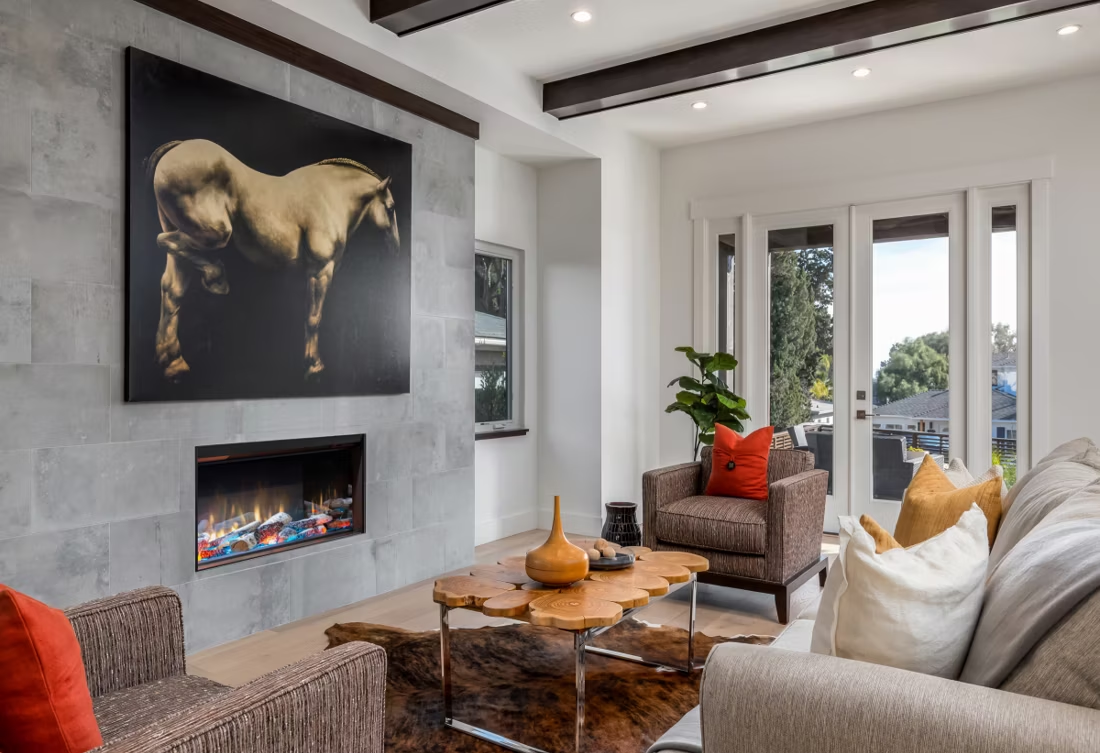
With no combustion, no chimney, and no fuel storage, an electric fireplace goes into a Kyle starter home, a San Marcos rental near Texas State, or a Dripping Springs custom build with the same ease—plug it in or have an electrician run a dedicated circuit, and you're done. It won't replace your HVAC on a 100-degree August day, but on the county's occasional 20s-and-30s nights, a properly placed electric insert or built-in adds real, controllable supplemental heat to the room you actually live in, without altering your gas line, your chimney, or your homeowners insurance.
Three steps. No salesperson until you're ready.
Tell us about your project
Your zip code, your situation, and the fuel you're leaning toward—or let the answers point you to one.
See what's actually available
The brands dealers within 100 miles genuinely carry—real options, never a catalog mirage.
Get your dealer & Project Guide
A trusted local dealer, plus the free Project Guide & Parts List that names every component of the job.
Frequently Asked Questions
How much does an electric fireplace installation cost in Hays County?
Most electric fireplace projects in Hays County run in two very different cost brackets. A plug-in unit—a freestanding stove-style heater or a wall-mount model on an existing outlet—can be self-installed for the cost of the appliance alone, typically $300 to $1,500. A built-in electric fireplace or insert set into a wall, cabinet, or existing masonry firebox requires framing, trim work, and often a dedicated 120V or 240V circuit run by a licensed electrician, which pushes total project cost to roughly $1,500 to $4,000 depending on the unit and whether drywall or mantel work is involved. Because there's no venting or gas line to size, electric installs are consistently the least expensive fireplace project in the county.
Do I need a permit or an electrician to install an electric fireplace?
A plug-in electric fireplace that runs off an existing standard outlet generally doesn't require a permit—it's treated like any other large appliance. A built-in unit that needs a new dedicated circuit does require an electrician, and in most Hays County jurisdictions (the City of San Marcos, City of Kyle, City of Buda, or unincorporated county areas under the Hays County Development Services office) that electrical work needs a permit and inspection. Your local dealer or installer will typically tell you upfront which category your project falls into and handle the permit paperwork if one's required.
Is an electric fireplace enough heat for a Hays County winter?
For most of the county, yes—as supplemental heat. With only about 1,620 heating degree days a year and winter lows averaging in the high 30s, an electric fireplace comfortably takes the edge off a cold evening in the room it's installed in, while your central HVAC system handles the rest of the house and the rare harder freeze. Where electric falls short is as a true whole-home primary heat source; it's built and marketed for zone heating and ambiance, not for carrying a Hill Country home through a sustained cold spell the way a wood stove does in a place like Bozeman, MT.
What about wood or pellet stoves—do those make sense here?
Not really, and it's worth saying plainly: with Hays County's mild winter profile, wood and pellet stoves are uncommon installs. A small number of homeowners on larger Dripping Springs or Wimberley properties with existing oak, pecan, or mesquite on hand still install a wood stove for ambiance or backup heat, and pellet fuel is technically available regionally through brands like Forest Energy and Lignetics—but neither fuel sees meaningful local dealer stock or demand the way electric and gas do. If you're weighing wood specifically for emergency backup heat, talk to a local dealer about whether it's worth the chimney and venting investment for your situation, or whether a generator paired with your existing HVAC covers the same need more simply.
Will my electric fireplace still work if the power goes out?
No—and this is the one honest gap worth planning around in Hays County after Winter Storm Uri in February 2021 showed how a grid failure can coincide with the coldest weather of the year. An electric fireplace needs power to run its heater and, on most models, even its flame effect. If you specifically want fireplace heat that works during an ERCOT-driven outage, a gas fireplace or insert (where natural gas or propane service is available) or a wood stove are the only options that keep producing heat with no electricity. Many Hays County homeowners pair an electric fireplace for everyday ambiance and zone heat with a separate backup plan—generator, gas appliance, or both—for true grid-outage scenarios.
What's the difference between an electric insert, a built-in, and a freestanding electric stove?
An electric insert is sized to slide into an existing masonry or wood-burning firebox, instantly converting an old fireplace—common in older San Marcos homes—into a clean, no-maintenance heat source. A built-in electric fireplace is designed into new framing or a cabinet during a remodel or new construction, popular in the newer Kyle and Buda subdivisions. A freestanding electric stove is a standalone unit you place anywhere near an outlet, with no construction required at all—the simplest option for renters or anyone not ready to modify a wall. All three run on the same basic electric heating technology; the choice comes down to whether you have an existing firebox, new construction, or a rental.
How much does an electric fireplace add to my electric bill?
Most electric fireplaces draw around 1,500 watts on the heater setting, which costs roughly 15 to 20 cents per hour to run depending on your rate—noticeably less than most people expect, especially compared to running central heat for the whole house. Rates and providers vary by where you are in the county: San Marcos Electric Utility serves customers within city limits, while Pedernales Electric Cooperative (PEC) serves much of the surrounding unincorporated county, including areas around Dripping Springs and Wimberley. Given the county's short heating season, even daily use during the coldest weeks adds only a modest amount to a winter bill.
Can I install an electric fireplace in a rental or apartment in San Marcos?
Yes, and it's one of the more common uses for electric fireplaces in the county given how many renters live near Texas State University. A plug-in freestanding or wall-mount unit requires no permanent modification, no landlord approval for electrical work, and can move with you when your lease ends. It's the lowest-friction way to add real supplemental heat and ambiance to an apartment or rental home without any of the construction, venting, or permitting considerations that come with a built-in unit.
Are there rebates or efficiency incentives for electric fireplaces in Hays County?
Electric fireplaces generally don't qualify for the kind of efficiency rebates you'd see on a heat pump or high-efficiency HVAC system, since they're classified as supplemental zone heating rather than a home's primary heating source. Some electric providers, including Pedernales Electric Cooperative, periodically run broader energy-efficiency rebate programs worth checking for other home upgrades, but for the fireplace itself, the real savings case is simple: because there's no venting, gas line, or chimney to install or maintain, the total installed cost and ongoing operating cost are both lower than any other fuel option in the county.
Can I put a TV above my fireplace?
Yes—with an asterisk. Fireplaces are hot and TVs don't like heat. Either put a mantel between them to deflect rising warmth, or choose a fireplace with heat-management technology that creates a cool zone on the wall above—the wall stays around 125 degrees, barely warm, while the room still gets full heat. If you like clean lines and don't want a mantel, heat management is the answer.
Does an electric fireplace need a vent or chimney?
No—that's its superpower. An electric fireplace needs a wall and an outlet, period. No vent pipe, no gas line, no clearances to design around, which is why it works in bedrooms, offices, apartments, and walls where venting a gas or wood unit would be impractical or impossible. Installation is typically the simplest and least expensive of any fireplace type.
Can I install a fireplace myself?
If you're putting a fire in your house on purpose, it's best to work with an expert. Unless you're genuinely experienced in framing, gas line, vent pipe, and the national code on clearances to combustibles, have a professional do it—and ideally the same company that sells you the fireplace, so warranty, service, and liability all live under one roof.
How much should I budget for a fireplace?
For an average home—covering the fireplace, the vent pipe, and basic installation—a budget between $3,900 and $5,500 gives you a lot of options across wood, gas, and pellet. By the time you add finish work, gas line, and electrical, the average complete installation lands between $5,000 and $12,000 all-in. In a remodel or new build, a good rule is to put about 2.5% of the total project cost toward the fireplace.
Stove and Fireplace Dealers in Hays County
Listings include WhyFire partner dealers, dealers we have verified as authorized for the brands we recommend, and established local businesses that carry hearth products. Every listing shows which one it is. The ones marked Preferred run on WhyFire's software, so they can show you real pricing and book your appointment right here. No manufacturer pays for placement. How we verify dealers →
Crafted Flames
EarthCore Industries
Backyard & Patio Store - Austin
Jules Design Bar
Tri-Supply - Austin
Find your electric fireplace in Hays County.
Tell us a bit about your home and we'll match you with the right electric fireplace or insert, plus a free Project Guide & Parts List with the exact parts and your recommended local Hays County dealer.
Find Your Fireplace →