
Find the right gas fireplace for your Harrison County home.
Mild East Texas winters mean gas heat here is mostly about ambiance and steady zone comfort, not survival heat. Get matched with a trusted local dealer who knows what actually installs well in Marshall, Hallsville, and the surrounding county.
Every Project Starts From One of These Five Situations
Comfort heat for a mild East Texas winter.
Harrison County sits in climate zone 3A with a short, mild winter season and an average winter low around 33 degrees—a fraction of what a place like Duluth or Fargo deals with in a single January. Nights below freezing happen, but they're the exception, not the rule. That changes the calculus on gas fireplaces here: instead of being sized to carry a house through a hard winter, most units in Marshall, Hallsville, Waskom, and Karnack are chosen for the look of real flame, quick evening warmth in a den or living room, and the ability to click on with a switch rather than build and tend a fire.
Piney Woods homes in Harrison County lean toward oak, pecan, and mesquite for wood heat, but a growing share of homeowners are pairing that tradition with a gas insert or fireplace for daily convenience—especially in newer construction and remodels where running a gas line is straightforward. Whether you're on natural gas service in Marshall or relying on a propane tank out in the rural parts of the county, a properly vented gas unit gives you instant heat, a clean glass front with no ash or soot, and a backup option worth having during the occasional ice storm that knocks out power for a day or two.
Three steps. No salesperson until you're ready.
Tell us about your project
Your zip code, your situation, and the fuel you're leaning toward—or let the answers point you to one.
See what's actually available
The brands dealers within 100 miles genuinely carry—real options, never a catalog mirage.
Get your dealer & Project Guide
A trusted local dealer, plus the free Project Guide & Parts List that names every component of the job.
Frequently Asked Questions
How much does a gas fireplace installation cost in Harrison County?
Costs vary based on whether you're converting an existing masonry fireplace or starting fresh, and whether you're on natural gas or propane. A gas insert dropped into an existing fireplace with a gas line already nearby tends to run on the lower end of a typical range; a new built-in unit in a remodel—with framing, direct-vent work, and a gas line extension—runs higher, especially if a propane tank has to be set. Because Harrison County's mild climate means most buyers are choosing size and features for ambiance rather than raw BTU output, a local dealer can often steer you toward a smaller, less expensive unit than you'd need in a colder part of the state.
Can I convert my existing wood fireplace to gas?
Yes, and it's a common project for older homes in Marshall and Hallsville with an existing masonry fireplace. A gas insert with a stainless liner runs through your current chimney, so you keep the look of the fireplace but get push-button flame instead of tending oak or pecan logs. It's a particularly good fit if you already burn wood occasionally for the smell and ritual but want a low-maintenance option for regular weeknight use.
Do I need natural gas, or can I use propane?
Either works, and which one makes sense depends on where you are in the county. Homes in and around Marshall with natural gas service already running to the house have the simplest path—no tank, no deliveries. Out in the more rural stretches of Harrison County, propane is the standard, with a tank set on the property and periodic refills from a regional supplier. Most gas fireplace models can be configured for either fuel; your installer sets the correct orifice and regulator for whichever you have.
Will my gas fireplace work if the power goes out?
Most will, which matters more in Harrison County than the mild average winter suggests—ice storms occasionally roll through East Texas and knock out power for a day or more. Units with intermittent pilot ignition (IPI) typically run on AA battery backup that kicks in automatically when the power drops, so the fireplace lights on demand just as it would normally. Some manufacturers, like Valor, generate their own electricity through the pilot's thermocouple, so there's no battery to remember at all. Ask your local dealer about the ignition system on any model you're considering if outage backup matters to you.
What's the difference between a gas fireplace, insert, and stove?
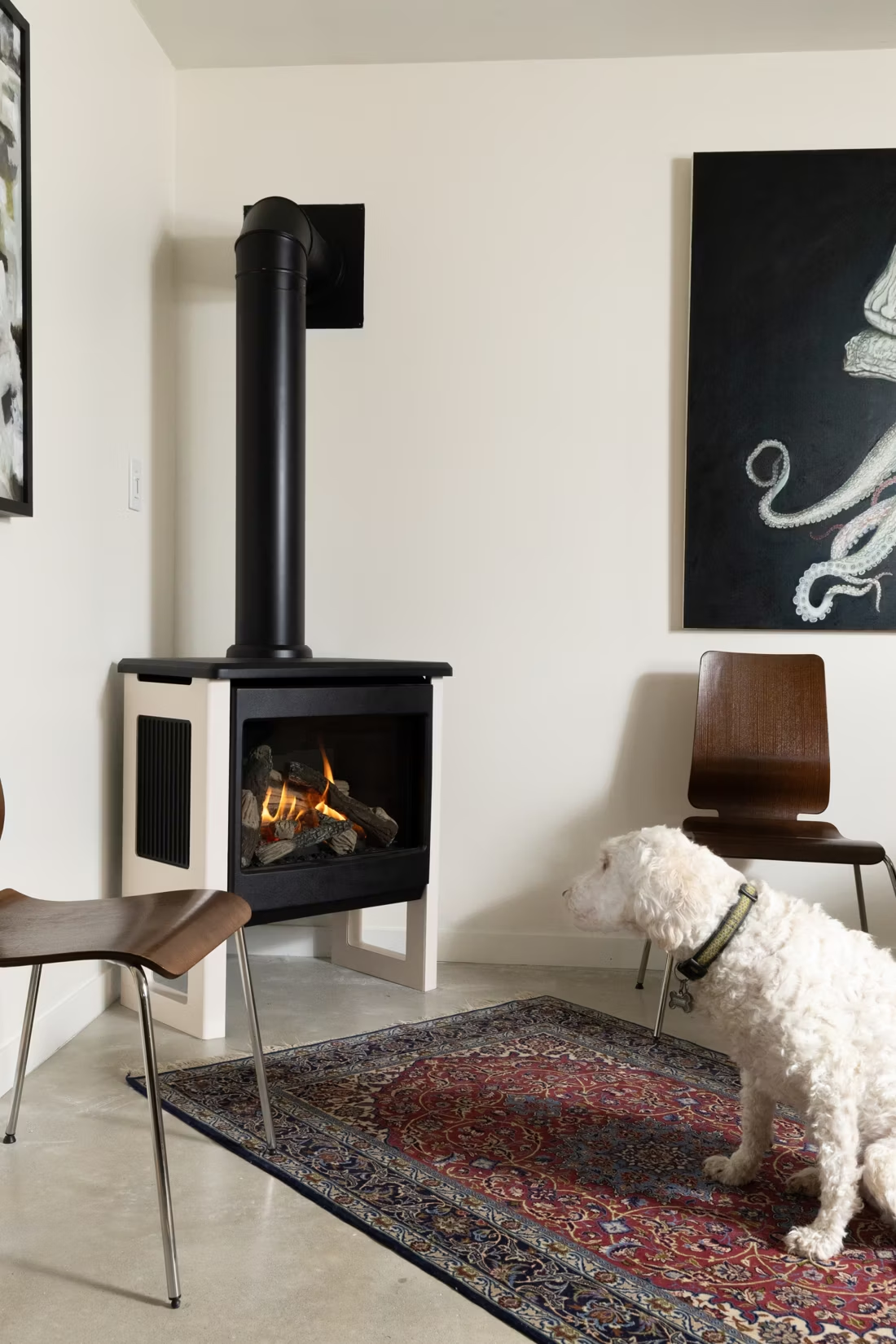
A gas fireplace is a built-in unit framed into a wall—the right call for new construction or a full remodel. A gas insert slides into an existing masonry fireplace opening and uses your current chimney as the vent path, which suits the many older homes around Marshall and Karnack with a fireplace already in place. A gas stove is a freestanding cabinet unit, similar in footprint to a wood stove, and works well in a room without an existing fireplace or chimney. For most Harrison County homeowners upgrading an existing hearth, the insert is the simplest and most common choice.
Do I need a permit to install a gas fireplace in Harrison County?
Generally yes—a building permit and a gas line permit are required for new gas fireplace installations, with gas line work needing a licensed gas-fitter. Requirements and the specific permitting office differ slightly between the city of Marshall and unincorporated parts of the county, so it's worth confirming with your installer before work starts. Most established local dealers handle the permitting and inspection coordination as part of the install, so this isn't something you have to manage yourself.
What's the difference between vented and vent-free gas fireplaces?
Vented (direct-vent) units draw combustion air from outside and exhaust exhaust gases back outside through a sealed pipe—they're the cleaner, safer, and most universally code-compliant option. Vent-free units burn without any outside venting at all, which makes installation simpler but releases some water vapor and combustion byproducts into the room, so they come with strict room-size and ventilation rules. Vent-free is legal in Texas, but for most Harrison County homes, direct-vent is the more common recommendation since it delivers real heat output without any indoor air quality trade-off. A local dealer can walk you through both if you're weighing the choice.
How often should my gas fireplace be serviced?
Plan on an annual inspection, ideally before the first cool nights in October or November. A technician checks the burner, pilot assembly, venting, and gas connections, and cleans the glass and interior—a lighter lift than chimney sweeping for a wood-burning unit, but still important for safety and for keeping the pilot and ignition system reliable through Harrison County's short but real cold snaps.
Gas vs. wood—which is right for my home?
Wood, using local oak, pecan, or mesquite, gives you the authentic fire experience, lower fuel cost if you're cutting or sourcing your own, and heat that doesn't depend on electricity or gas service. Gas gives you instant on-off convenience, no ash or smoke, and a consistent flame without tending. Given Harrison County's mild winters—average lows only dipping into the 30s—many homeowners here choose gas simply for the daily convenience and clean look, keeping wood heat, if at all, as a secondary option for cooler evenings or power outages. A local dealer can help you weigh both against your actual home and how you plan to use it.
Why is my open fireplace making my house colder?
Open fireplaces suck—literally. As the fire burns, it consumes air your furnace already paid to heat and pulls it out through the chimney, so the house is actually colder after the fire goes out than before you lit it. An insert fixes this: it seals the chimney, puts fixed glass across the front, and turns that hole in your house into a real heat source.
What's the difference between an insert and a zero-clearance fireplace?
An insert is a fireplace that slides into a pre-existing wood-burning fireplace—if you don't have one, there's nothing to insert it into. A zero-clearance fireplace is built into a framed wall, which makes it the answer for remodels and new construction. Simple test: existing masonry fireplace means insert; blank or framed wall means zero-clearance.
Can I install a fireplace myself?
If you're putting a fire in your house on purpose, it's best to work with an expert. Unless you're genuinely experienced in framing, gas line, vent pipe, and the national code on clearances to combustibles, have a professional do it—and ideally the same company that sells you the fireplace, so warranty, service, and liability all live under one roof.
Does a fireplace add value to my home?
On average, a fireplace adds back to the home about the same amount you spent installing it. Add the monthly savings from heating the rooms you actually use instead of the whole house—often hundreds of dollars a year—and the value case is strong before you even count what a fire does for how your family uses the room.
Stove and Fireplace Dealers in Harrison County
Listings include WhyFire partner dealers, dealers we have verified as authorized for the brands we recommend, and established local businesses that carry hearth products. Every listing shows which one it is. The ones marked Preferred run on WhyFire's software, so they can show you real pricing and book your appointment right here. No manufacturer pays for placement. How we verify dealers →
Custom-Bilt Cabinet & Supply
Acme Brick
Fireplace Specialties
Bradley Brick LLC
Get your Harrison County gas fireplace Project Guide.
Tell us about your home and we'll match you with a trusted local Harrison County dealer and send over a free Project Guide & Parts List—the right unit, the vent kit, and what it takes to get it installed correctly.
Find Your Fireplace →