
Electric fireplaces made for Hamilton County's mild winters.
With winter lows averaging 34°F and a short heating season, Hamilton County homes rarely need a furnace-sized fix. Find the right electric fireplace or insert for your space, and connect with a trusted local dealer.
Every Project Starts From One of These Five Situations
A short heating season favors electric heat.
Hamilton County sits where the Cross Timbers meet the edge of the Hill Country, with the county seat of Hamilton and small communities like Hico, Carlton, and Pottsville spread across ranchland along the Leon River and Cowhouse Creek. With a heating season just a fraction as demanding as what a place like Duluth, MN sees in a single winter, most homes here need heat for only a handful of weeks. Oak, pecan, and mesquite are the wood species locals know well from cookfires and the occasional wood stove, but for day-to-day comfort in a Zone 3A climate this mild, a full wood-burning setup is often more than the season calls for.
That's where electric fireplaces earn their keep. There's no chimney, no gas line, and no venting to plan around—which matters in a county where a lot of the housing stock is older farmhouses, mobile homes, and manufactured homes with limited structural options for masonry or direct-vent work. Power comes through Hamilton County Electric Cooperative Association for most of the county, and a plug-in electric insert or a hardwired wall unit on its own 20-amp circuit is often the simplest way to add real, visible heat to a bedroom, sunroom, or living area without touching the rest of the house's heating system.
Three steps. No salesperson until you're ready.
Tell us about your project
Your zip code, your situation, and the fuel you're leaning toward—or let the answers point you to one.
See what's actually available
The brands dealers within 100 miles genuinely carry—real options, never a catalog mirage.
Get your dealer & Project Guide
A trusted local dealer, plus the free Project Guide & Parts List that names every component of the job.
Frequently Asked Questions
How much does an electric fireplace installation cost in Hamilton County?
A plug-in electric insert or freestanding unit that drops into an existing fireplace opening or media console typically runs $300 to $900 including the unit itself, since no venting or gas work is involved. A built-in wall-mount or linear electric fireplace that requires a dedicated circuit run by an electrician usually lands between $1,200 and $2,500, depending on wall framing and how far the unit sits from the breaker panel. Because there's no chimney or flue involved, electric is consistently the least expensive fireplace option available to Hamilton County homeowners.
What size electric fireplace do I need?
Most electric fireplaces are rated for zone heating a single room rather than a whole house—figure 400 to 1,500 square feet per unit depending on the model and your insulation. For a lot of Hamilton County's older farmhouses and manufactured homes, that's the right scale anyway: you're heating the room you're actually in, not running ductwork through an entire house for a heating season that's only a few weeks long. A local dealer can size the BTU output to your specific room, especially in manufactured homes where wall cavity depth and electrical service can limit which units fit.
Do I need a permit to install an electric fireplace in Hamilton County?
A simple plug-in electric insert that uses an existing outlet typically doesn't require a permit—there's no gas line, no venting, and no structural change involved. A built-in unit that needs a new dedicated circuit is electrical work, and in unincorporated Hamilton County that's best handled by a licensed electrician who pulls the appropriate electrical permit and has the work inspected. Local dealers who install built-in units usually coordinate this directly, which saves you from tracking down the county building office yourself.
Electric vs. wood or gas—which makes sense for my Hamilton County home?
With winter lows averaging in the mid-30s and a heating season that's short by any standard, electric fireplaces cover a lot of ground here—no fuel storage, no venting, and heat exactly where you want it. Wood still has a place on ranch properties and older homesteads where a real fire from local oak, pecan, or mesquite matters, or where backup heat during a power outage is a real concern. Gas or propane fits homes that want instant, higher-output heat without hauling firewood. For a lot of Hamilton County households, electric ends up being the easiest add-on for a spare room or remodel, while wood or gas stays the choice for a primary hearth or storm backup.
Will my electric fireplace work if the power goes out?
No—electric fireplaces need power to run, which is worth planning around in Hamilton County given the occasional ice storm or ERCOT grid strain that can knock out rural electric service for hours at a time. Hamilton County Electric Cooperative Association generally restores outages quickly in this area, but if backup heat during a winter storm is a real priority for your household, pairing an electric fireplace for everyday zone heating with a wood stove or fireplace insert for storm backup is a common approach among longtime county residents.
What's the best type of electric fireplace for a Hamilton County home?
For older farmhouses in and around Hamilton or Hico with an existing masonry fireplace opening, an electric insert is usually the simplest upgrade—it fits into the space you already have and eliminates the need for a working chimney. For newer construction or remodels, wall-mount linear electric fireplaces from brands like Dimplex and Napoleon give a clean, modern look without any venting requirements. For manufactured and mobile homes, which make up a meaningful share of housing in the county, electric is often the only fireplace-style heat source that meets HUD code without special listed venting components—a local dealer can confirm what's approved for your specific home.
Can I install an electric fireplace in a manufactured or mobile home?
Yes, and it's one of the more common installs in rural Hamilton County. Manufactured homes built to HUD code have specific restrictions on combustion appliances and venting, which rules out most wood and many gas options without a listed, home-specific venting kit. Electric fireplaces sidestep that entirely—plug-in units need nothing more than a standard outlet, and even hardwired wall units just need a properly sized circuit, which a local electrician can confirm your home's panel can support.
How much maintenance does an electric fireplace need?
Very little. There's no chimney to sweep, no creosote, and no combustion byproducts to worry about, since electric units produce heat with a resistance coil or infrared element rather than a flame. Occasional dusting of the heater vents, an annual check that the blower fan moves air freely, and eventual LED bulb replacement on flame-effect models cover most of what's needed. That low-maintenance profile is part of why electric fireplaces are popular as a secondary heat source in Hamilton County homes that already have a wood stove or central system doing the heavy lifting.
Does using an electric fireplace actually save on heating costs?
It can, if you use it the way it's designed to be used—as zone heat for the room you're actually occupying, letting you turn down the thermostat on the central system for the rest of the house. Given Hamilton County's mild, short heating season, a lot of homeowners find that a single electric unit in a living room or bedroom covers most of their heating needs for the season, with the central system only kicking in during the occasional hard freeze. Check with Hamilton County Electric Cooperative Association directly for any current efficiency or appliance rebate programs, since these vary year to year.
Can I put a TV above my fireplace?
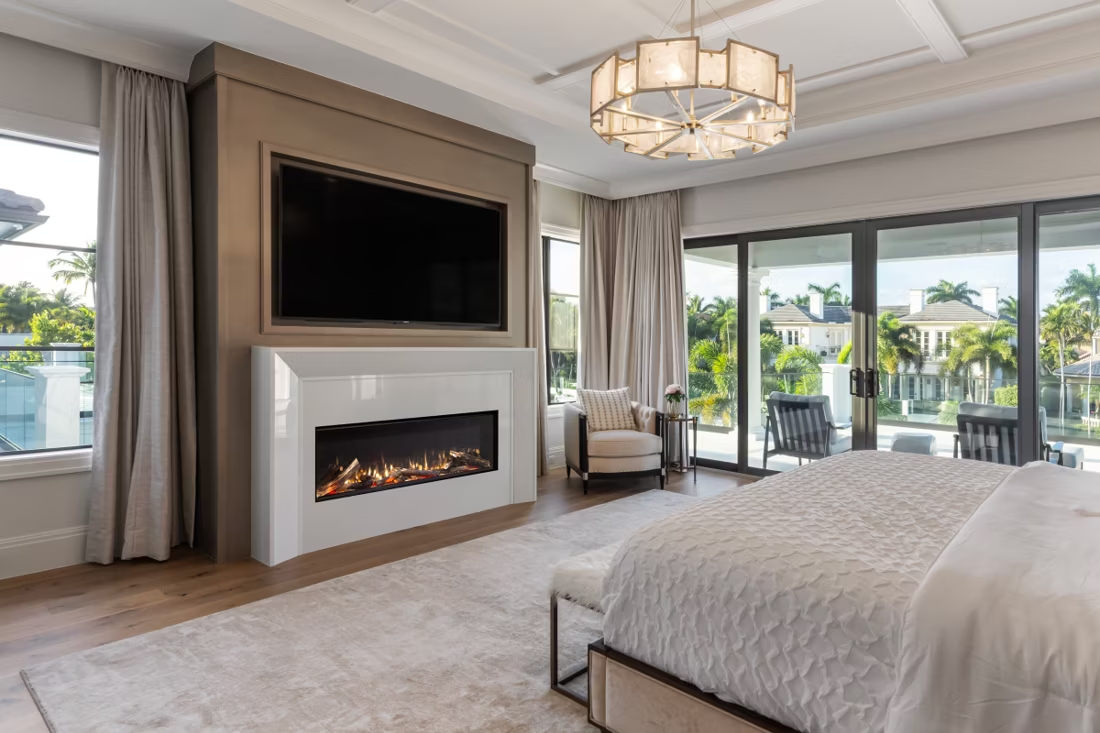
Yes—with an asterisk. Fireplaces are hot and TVs don't like heat. Either put a mantel between them to deflect rising warmth, or choose a fireplace with heat-management technology that creates a cool zone on the wall above—the wall stays around 125 degrees, barely warm, while the room still gets full heat. If you like clean lines and don't want a mantel, heat management is the answer.
Do electric fireplaces actually produce heat?
Yes—most put out around 4,800–5,000 BTUs from a standard outlet, which comfortably warms a bedroom, office, or den as a comfort-zone heater. What they won't do is carry a whole house the way wood, gas, or pellet can. Think of electric as ambiance-first with honest supplemental heat: flames on with no heat in July, flames plus warmth in January.
Can a fireplace actually lower my heating bill?
Yes—by creating a comfort zone. A furnace heats every square foot of the house just to warm the one room you're in; a gas fireplace on low burns roughly a sixth of the gas a typical furnace does. Set the furnace around 55–60 degrees as a baseline, then heat the rooms your family actually uses. Families who heat this way commonly save $20–$60 a month.
Should the dealer who sells my fireplace also install it?
Ideally, yes. A fireplace project involves vent pipe, gas line, electrical, and often tile or stone. Hire three or four separate trades and you own the liability and the game of telephone between them. One company selling and installing means one accountable party, start to finish—ask about factory training, on-time completion records, and what happens if an inspection fails.
Stove and Fireplace Dealers in Hamilton County
Listings include WhyFire partner dealers, dealers we have verified as authorized for the brands we recommend, and established local businesses that carry hearth products. Every listing shows which one it is. The ones marked Preferred run on WhyFire's software, so they can show you real pricing and book your appointment right here. No manufacturer pays for placement. How we verify dealers →
C&G Products
Backyard And Patio Store - Waco
Darden Building Materials
Find your electric fireplace in Hamilton County.
Tell us a bit about your home and we'll match you with the right electric fireplace or insert, plus a free Project Guide & Parts List and a trusted local dealer to install it.
Find Your Fireplace →