
Find your electric fireplace in Gray County.
No gas line, no chimney, no venting headaches—just plug-in warmth and ambiance for Panhandle homes from Pampa to McLean. Get matched with a trusted local dealer.
Every Project Starts From One of These Five Situations
Simple heat for a moderate Panhandle winter.
Gray County sits in the Texas Panhandle at roughly 4,175 heating degree days—a real winter by Texas standards, with average lows around 23°F, but nowhere near the sustained cold of places like Fargo ND or Bismarck ND. That moderate climate zone (4B) is exactly where electric fireplaces make the most sense: homeowners in Pampa, McLean, and the rural county don't need a unit capable of carrying whole-home heat through a brutal overnight stretch. They need supplemental warmth and a good-looking focal point in a living room or bedroom, often paired with existing central HVAC that already does the heavy lifting.
Because there's no combustion involved, electric fireplaces skip the permitting, venting, and chimney work that wood and gas installs require in Gray County. That's a real advantage for homeowners in older Pampa homes without existing masonry, or in newer builds where running gas line or a Class A chimney isn't in the budget. The tradeoff is honest: electric units are zone heaters, not primary furnaces, and they go dark in a power outage—worth knowing if you're weighing this against wood heat using local oak, pecan, or mesquite for storm-season backup.
Three steps. No salesperson until you're ready.
Tell us about your project
Your zip code, your situation, and the fuel you're leaning toward—or let the answers point you to one.
See what's actually available
The brands dealers within 100 miles genuinely carry—real options, never a catalog mirage.
Get your dealer & Project Guide
A trusted local dealer, plus the free Project Guide & Parts List that names every component of the job.
Frequently Asked Questions
How much does an electric fireplace installation cost in Gray County?
Most electric fireplace installations in Gray County run $400 to $1,200, and that range covers the vast majority of projects—a wall-mounted unit with a nearby outlet, or a small insert dropped into an existing mantel opening. Costs land on the higher end when a dedicated 120V or 240V circuit needs to be run by an electrician, which is common in older Pampa homes with older panels, or when the unit is being built into new cabinetry or a custom wall surround. There's no gas line, no venting, and no chimney work to price in, which is a big part of why electric stays affordable compared to wood or gas installs in the county.
Do I need a permit to install an electric fireplace in Gray County?
In most cases, no—a plug-in electric fireplace or a unit wired into an existing outlet doesn't trigger a building permit. If your installer needs to add a new dedicated circuit or run new wiring to support a larger built-in unit, that electrical work may require a permit through the applicable city or county building office (Pampa has its own building department; unincorporated Gray County falls under the county). A licensed electrician will know which side of that line your project falls on, and most local dealers coordinate this as part of the install.
Will an electric fireplace actually heat my room, or is it just for looks?
A quality electric fireplace will genuinely heat a room—most units put out around 4,700 to 5,000 BTU, enough to comfortably warm a 400-to-1,000-square-foot space depending on insulation and ceiling height. In Gray County's climate, where winter lows average 23°F rather than the sub-zero stretches you'd see in Duluth MN, that's plenty to take the chill off a living room or bedroom without leaning on central heat. What it won't do is replace your furnace for the whole house—think zone heat for the room you're actually sitting in, not a standalone heating system.
What happens to my electric fireplace during a power outage?
It goes off, full stop—there's no battery backup or standby mode. That's the honest tradeoff against wood heat in a county where storms and Panhandle ice events do knock out power on occasion. If backup heat during outages is a real concern for your household, it's worth talking to a local dealer about pairing an electric fireplace for daily convenience with a wood stove or insert as a genuine off-grid backup, especially given the local availability of oak, pecan, and mesquite firewood.
What's the difference between an electric fireplace, insert, and stove?
An electric fireplace is typically a wall-mounted or built-in unit designed to look like a framed fireplace, often with a realistic flame display. An electric insert is sized to slide into an existing masonry or wood fireplace opening, letting you convert an old, drafty hearth into a clean, low-maintenance heat source without touching the chimney. An electric stove is a freestanding cabinet-style unit that mimics a wood stove's footprint. For Gray County homes with an existing fireplace opening they'd rather not use for wood or gas, an insert is usually the simplest retrofit; new construction or rooms without an existing hearth are better suited to a built-in or wall-mount fireplace.
Are electric fireplaces cheaper to run than gas or wood in Gray County?
Day to day, electric fireplaces are inexpensive to operate for supplemental use—most units cost a few cents per hour on a typical residential electric rate, since you're only drawing power when the room actually needs a boost. They won't beat the fuel economics of burning self-cut oak or mesquite for primary heat, and they can't compete with a gas insert's raw output on the coldest nights. But for the way most Gray County households actually use a secondary heat source—an hour or two in the evening, ambiance more than necessity—the low upfront cost and negligible running cost make electric hard to beat on total cost of ownership.
Can an electric fireplace be installed in a manufactured or mobile home?
Yes, and it's one of the more common electric fireplace projects in rural Gray County, where manufactured and mobile homes are common outside Pampa. Electric units avoid the combustion clearance and venting rules that make wood or gas installs complicated in manufactured housing. The main consideration is electrical—confirming the home's panel and wiring can support the unit's draw, particularly for larger built-in models. A local dealer familiar with manufactured-home installs can walk through this during a home visit.
How long does an electric fireplace last, and what maintenance does it need?
Most electric fireplaces run 8 to 12 years with light maintenance—periodically dusting the heating element and vents, and occasionally replacing the LED bulbs that power the flame effect on older models. There's no chimney to sweep, no gas line to inspect, and no creosote or soot buildup to worry about, which is part of the appeal for Gray County homeowners who want warmth without an annual service call. If the flame effect or heat output starts to fade, it's usually a simple parts fix rather than a full replacement.
Electric vs. wood—which makes more sense for my Gray County home?
Wood, using locally available oak, pecan, or mesquite, offers real BTU output, works without electricity during outages, and fits the self-sufficient streak common in rural Gray County households. Electric offers instant on-off convenience, zero venting or permitting hassle, and a low installed cost—but it's supplemental heat only and depends entirely on grid power. For a primary living space where you want ambiance and a quick warm-up without any combustion, electric is a strong fit. For genuine backup heat when the power's out during a Panhandle ice storm, wood is the more resilient choice. Several local households run both.
Can I put a TV above my fireplace?
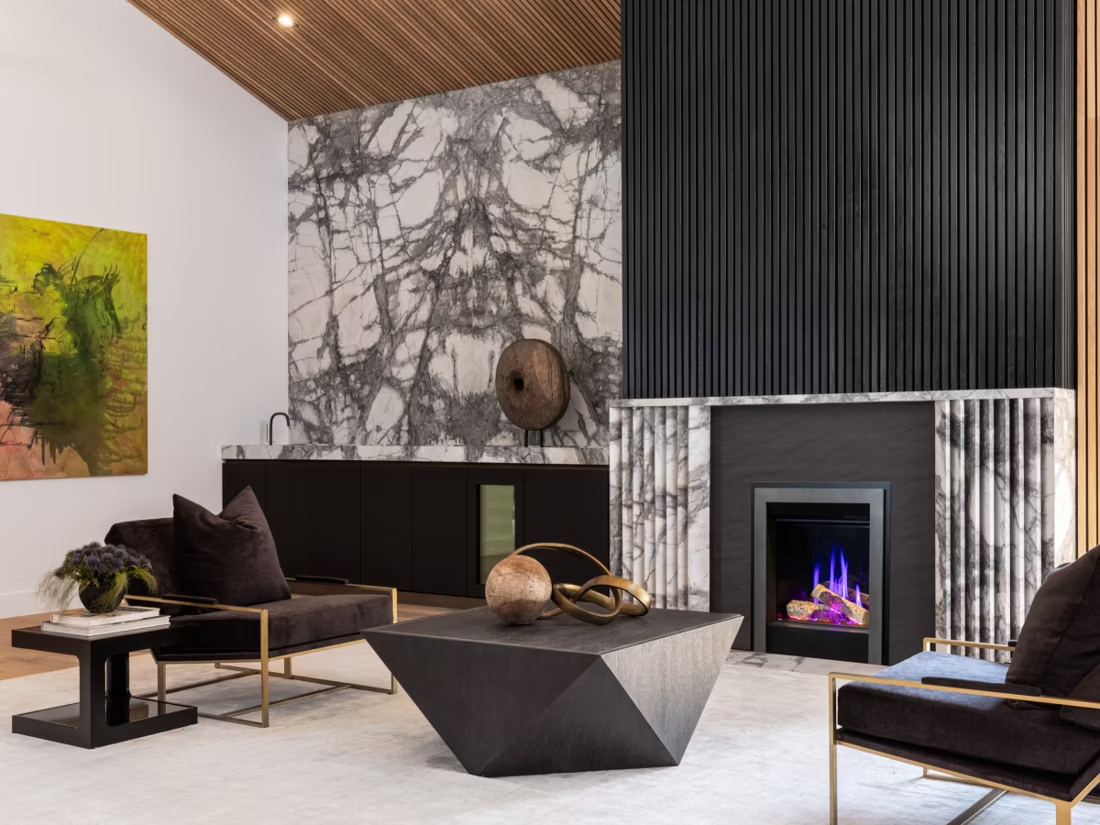
Yes—with an asterisk. Fireplaces are hot and TVs don't like heat. Either put a mantel between them to deflect rising warmth, or choose a fireplace with heat-management technology that creates a cool zone on the wall above—the wall stays around 125 degrees, barely warm, while the room still gets full heat. If you like clean lines and don't want a mantel, heat management is the answer.
Do electric fireplaces actually produce heat?
Yes—most put out around 4,800–5,000 BTUs from a standard outlet, which comfortably warms a bedroom, office, or den as a comfort-zone heater. What they won't do is carry a whole house the way wood, gas, or pellet can. Think of electric as ambiance-first with honest supplemental heat: flames on with no heat in July, flames plus warmth in January.
What is an in-home preview and do I need one?
It's a visit where a hearth professional measures your space, confirms the model you picked actually works in your home, and walks the specs—framing, gas line, venting, finish work—before anything is ordered. Some details you just can't know until you see the house. Never make a down payment without one; it's the single most-skipped step that burns buyers.
Does a fireplace add value to my home?
On average, a fireplace adds back to the home about the same amount you spent installing it. Add the monthly savings from heating the rooms you actually use instead of the whole house—often hundreds of dollars a year—and the value case is strong before you even count what a fire does for how your family uses the room.
Stove and Fireplace Dealers in Gray County
Listings include WhyFire partner dealers, dealers we have verified as authorized for the brands we recommend, and established local businesses that carry hearth products. Every listing shows which one it is. The ones marked Preferred run on WhyFire's software, so they can show you real pricing and book your appointment right here. No manufacturer pays for placement. How we verify dealers →
West Texas Brick
Reid's Appliance Services
Panhandle Outdoor Living & Fireplaces
Boyd's Equipment
Get your free Project Guide & Parts List.
Tell us about your Gray County home and we'll match you with a trusted local dealer, plus a free plan for your electric fireplace project—the exact parts list and a recommended installer, no pressure and no guesswork.
Find Your Fireplace →